 Bellingham Roofing
 Roof Repair for Birchwood Homes
Birchwood is one of the older, more established residential pockets of Bellingham, and that means a lot of the roofs here have been through a few decades of Whatcom County weather. Some have been re-roofed once already; others are still on original materials that were never quite right for this climate to begin with. Either way, when something starts leaking, sagging, or shedding granules into the gutters, the fix needs to account for what the roof has already survived, not just what's visible on the surface today.
Roof repair sounds simple until you're the one standing on a ladder trying to figure out whether a stain on the ceiling is coming from the spot directly above it or from water that traveled three feet down a rafter first. In a neighborhood like Birchwood, with its mix of home ages and roof types, getting that diagnosis right is most of the job. The patch itself is usually the easy part.
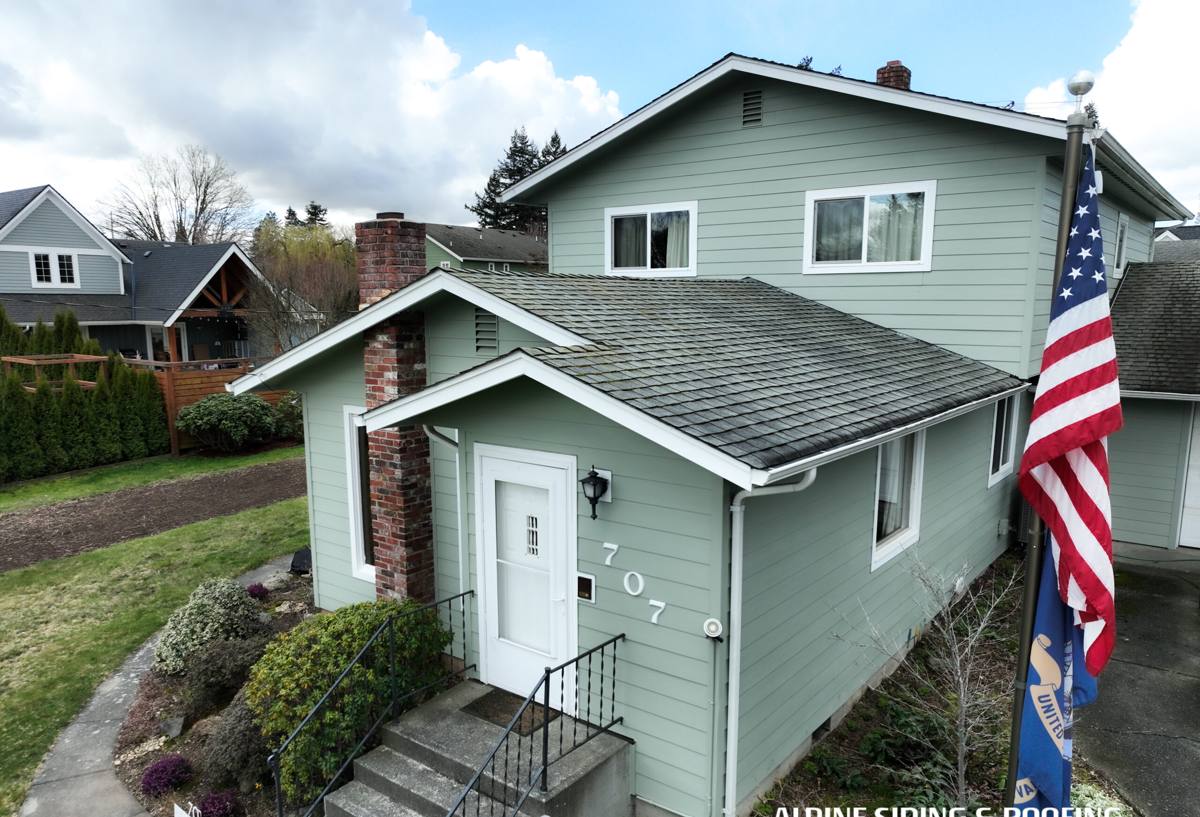
Why Roofs in Birchwood Wear the Way They Do
Bellingham sits close enough to the water that salt-laden air is a real factor, even a few miles inland. Combined with the driving rain that comes through on winter storms and a moss season that can run most of the year in shaded, north-facing sections of Birchwood, roofs here take on a specific pattern of wear that's different from what you'd see in a drier part of Washington.
Salt Air and Metal Fatigue
Salt air accelerates corrosion on anything metal: flashing, fasteners, valley metal, gutter hangers, even the metal caps on some ridge vents. A nail that would last thirty years inland might start rusting and losing its grip on shingles in half that time closer to the water. When we're repairing a roof in this neighborhood, we're checking fastener condition and flashing metal a lot more carefully than we would on a job further from Bellingham Bay.
Driving Rain and Wind-Driven Water
Rain that falls straight down is forgiving. Rain that's being pushed sideways by wind off the water is not — it finds every gap in flashing, every lifted shingle tab, every place where a seal has started to fail. Whatcom County storms regularly deliver that kind of weather, and a roof that's "mostly fine" in calm conditions can still leak badly during a driving rain event because water is being forced uphill under laps that were never designed to handle that pressure.
Moss and Moisture Retention
Birchwood's tree cover is part of what makes the neighborhood pleasant to live in, but shaded roof sections stay damp far longer after a rain than sections that get regular sun. That moisture holds moss growth, and moss holds even more moisture against the roofing material. Over a few seasons, that cycle lifts shingle edges, breaks down the surface layer, and creates the kind of soft, spongy decking that turns a small repair into a bigger one if it's ignored.
What a Roof Repair Actually Needs to Address
A lot of repair calls start with "there's a leak" and end with us finding two or three separate issues that were all contributing. A repair done right accounts for the whole picture, not just the drip.
- The actual point of water entry, which is often not directly above the interior stain
- The condition of the decking underneath — soft, delaminated, or sound
- Flashing at every penetration: chimneys, vents, skylights, and roof-to-wall transitions
- Fastener condition, especially on older roofs where corrosion has set in
- Moss and debris buildup that's holding moisture against the surface
- Gutter and downspout function, since a clogged or misaligned gutter can mimic or worsen a roof leak
Skipping any one of these means you might stop today's drip but leave the conditions in place for the next one.
Our Repair Process
1. Inspection Before Anything Else
We get up on the roof and trace the leak path, not just patch the spot where water showed up inside. This includes checking attic space where accessible, since that's often the clearest evidence of where water is actually entering and how far it's traveled.
2. Honest Scope
We tell you what we found, what it means, and what the options are — including if a repair is genuinely the right call versus a section that's better replaced. We're not in the business of selling a full re-roof when a repair will hold up, and we're not going to patch over decking that's already failed just to keep the invoice small.
3. The Repair Itself
Depending on what we find, that might mean replacing a section of shingles and underlayment, resetting or replacing flashing, sistering or replacing damaged decking, or a combination. We match materials as closely as possible so the repair blends in and performs consistently with the rest of the roof.
4. Cleanup and Check
We clear moss and debris from the surrounding area while we're up there, since leaving it in place undermines the repair we just made. We also do a basic check of nearby flashing and gutter sections, because problems in this climate rarely show up in just one spot.
Repair vs. Replacement: How We Think About It
Not every roof problem needs a repair, and not every repair problem needs a full roof. Here's roughly how we weigh it:
| Factor | Leans Toward Repair | Leans Toward Replacement |
|---|---|---|
| Roof age | Under 15-20 years, still within expected lifespan | Near or past expected service life for the material |
| Extent of damage | Localized to one section, valley, or penetration | Widespread granule loss, curling, or multiple leak points |
| Decking condition | Sound, dry, no soft spots found | Soft, delaminated, or water-stained across a wide area |
| Moss/moisture history | First occurrence, caught early | Repeated moss buildup with visible mat and lifted shingles |
| Prior repairs | None, or one clean repair on record | Multiple patch jobs stacked over the years |
None of these factors decide anything alone — a young roof with a bad valley detail can still need more than a patch, and an older roof with one isolated issue can often be repaired cleanly. That's why the inspection matters more than the age of the roof by itself.
Cost Factors Homeowners Should Know
Roof repair pricing varies a lot based on what's actually wrong, so broad ranges only go so far. What tends to move the number:
- Roof pitch and accessibility — steeper or harder-to-reach sections take more time and safety setup
- How many separate areas need attention versus one contained spot
- Whether decking replacement is needed underneath the roofing material
- Flashing complexity — a simple vent boot is quick, a chimney with failed step flashing is not
- Material match availability, especially on older roofs where the original product may be discontinued
Most straightforward, single-area repairs land in a modest range measured in a few hundred to low thousands of dollars, while jobs involving decking replacement or multiple flashing points run higher. We'll always give you a specific number after we've actually seen the roof, not a guess over the phone.
Signs a Birchwood Homeowner Shouldn't Ignore
- A ceiling stain that appears or grows after a windy, wet storm specifically
- Visible moss mats on north-facing or shaded roof sections
- Granules collecting in gutters or at downspout outlets
- Shingle tabs that look lifted or curled at the edges, especially near valleys
- Rust streaking below metal flashing or vent stacks
- Daylight visible through the roof deck from inside the attic
Any one of these on its own might be minor. Two or three together usually means it's worth having someone look before the next storm rolls through.
Why It Matters That We Already Work in This Neighborhood
A crew that works Birchwood regularly already has a feel for which sections of the neighborhood sit in heavier shade, which streets catch more wind off the water, and how the tree canopy in different pockets affects moss growth and moisture retention. That context speeds up diagnosis and means less guesswork about what's driving a particular leak. It also means we're a known, findable crew if a repair needs a follow-up visit down the line, rather than a company that did one job and disappeared.
We treat every Birchwood repair as part of a long-term relationship with the roof, not a one-off transaction. That shapes how we scope the work, what materials we recommend, and how straight we are with you about what can wait and what can't.
Get a Free, No-Pressure Estimate
If you're dealing with a leak, a suspicious stain, or a roof that's overdue for a look after a rough winter, we're happy to come take a look. There's no obligation and no pressure — just an honest assessment of what your roof needs and what it would cost to fix it right. Use the form below to get started.