 Bellingham Roofing
 Building New in Barkley Means Getting the Windows Right the First Time
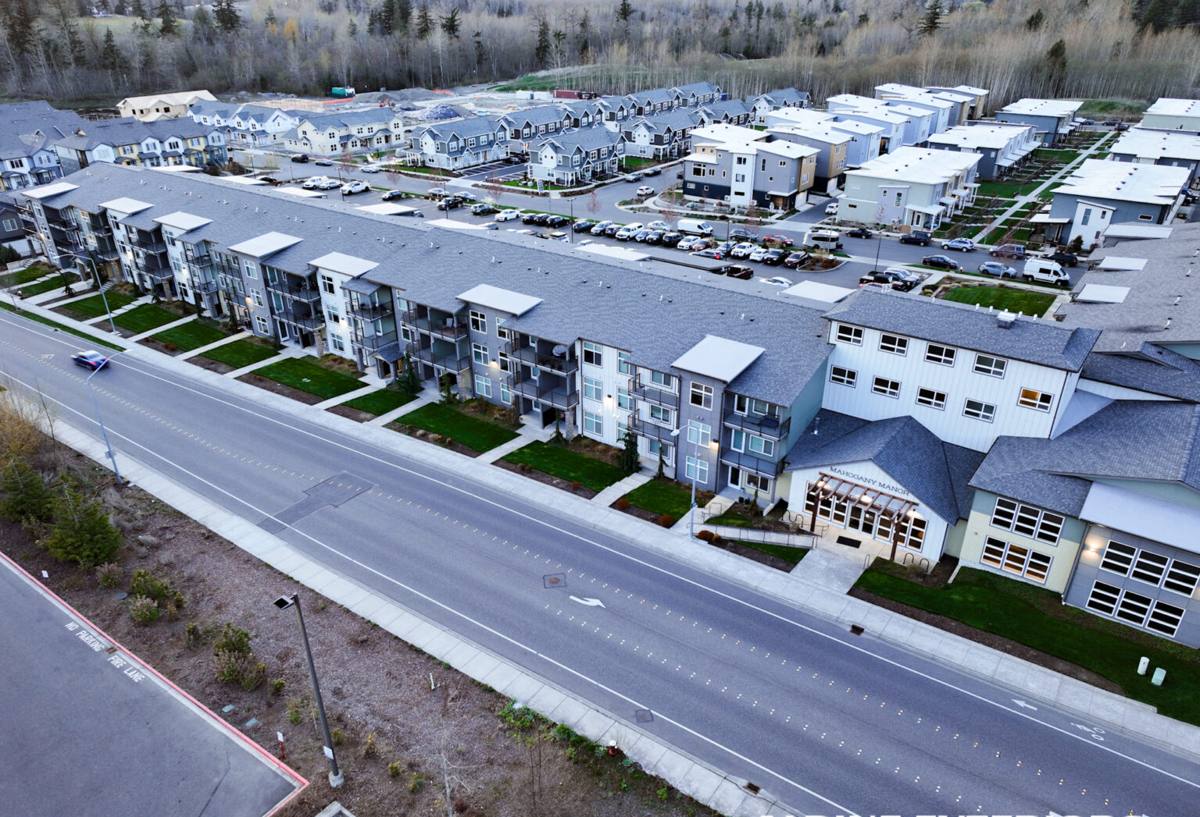
Barkley is one of the areas in Bellingham where new construction is still happening at a steady pace — new homes, townhomes, and infill builds going up on lots that didn't have a house on them last year. If you're building new, you get one shot to install windows correctly before siding, trim, and interior finishes cover up the evidence. There's no "we'll deal with it later" on a new build. Whatever goes in around the window opening now is what's protecting that wall for the next several decades.
Bellingham sits on Bellingham Bay in Whatcom County, and that location shapes what a window assembly has to survive here: salt-laden air moving in off the water, long stretches of driving, wind-blown rain rather than gentle vertical rain, and a mossy, damp season that can stretch from fall through spring. None of that is exotic — it's just the normal cost of building in the Pacific Northwest marine climate. But it means a window installation that would pass fine in a drier inland climate can fail here within a few years if the flashing details are wrong.
What "New-Construction" Windows Actually Are
New-construction windows are different from replacement windows, and the difference matters. New-construction (or "flanged" or "nail-fin") windows have a flange around the perimeter of the frame that gets fastened directly to the wall sheathing, then integrated into the weather-resistive barrier (WRB) and flashing system before siding goes on. Replacement windows, by contrast, are built to fit inside an existing frame without disturbing the siding around them.
On a new build, you want true flanged units installed as part of the wall assembly — not a replacement-style window shoehorned into new framing. Using the wrong window type, or installing the right window type with the wrong sequence, is one of the most common ways new construction ends up with a leak that doesn't show up until years later.
Why the Sequence Matters More Than the Window Itself
A high-end window installed out of sequence with the WRB and flashing will leak. A mid-range window installed in the correct sequence, with proper sill pan flashing and shingle-lapped house wrap, will hold up. The window is only one piece of a layered water-management system — sill pan, side flashing, head flashing, and WRB all have to overlap in the right order, like shingles on a roof, so water is always directed outward and down, never trapped behind the siding.
What a Correct Installation Involves
- A sloped sill pan flashing under the window, so any water that gets past the window has somewhere to go besides the framing
- Back dam or raised back edge on the sill pan to stop water from running backward into the wall cavity
- Self-adhered flashing tape at the jambs, lapped over the sill pan and under the head flashing
- Head flashing integrated under the WRB above the window, not just caulked on top of it
- Correct fastening of the nail fin per the window manufacturer's schedule — under-fastening lets the window move, over-fastening can distort the frame
- Compatible sealants and tapes — some flashing tapes and window frame materials don't bond well together, and that's a detail worth confirming before install, not after
- Insulation and air-sealing around the rough opening, not just at the exterior — gaps here waste energy and can create condensation points
Materials That Hold Up in a Marine Climate
Window frame material matters more here than it would in a dry inland climate, because the frame is dealing with constant moisture cycling, salt air, and UV exposure between rain events. There's no single "correct" material for every project — it depends on budget, the home's design, and how much maintenance the owner wants to take on — but the trade-offs are worth understanding upfront.
| Frame Material | How It Handles Local Conditions | Maintenance |
|---|---|---|
| Vinyl | Good moisture and salt-air resistance, budget-friendly, wide availability | Low — occasional cleaning |
| Fiberglass | Very stable in temperature and moisture swings, holds paint well if a custom color is wanted | Low |
| Wood-clad (exterior clad, wood interior) | Strong performance if flashing and cladding are intact; the wood interior gives a traditional look | Moderate — exterior cladding needs periodic inspection at joints |
| Aluminum | Durable but conducts heat and cold; can be more prone to condensation in our wet winters unless thermally broken | Low, but check thermal break quality |
For most new builds in Barkley, vinyl and fiberglass units cover the majority of budgets and perform well when installed correctly. Wood-clad windows show up more on higher-end or design-driven homes where the interior look matters as much as the exterior performance.
Energy Performance for Whatcom County Winters
Whatcom County winters aren't extreme in temperature, but they're long, damp, and gray, which puts a premium on windows that don't lose heat or invite condensation. Two numbers on the NFRC label matter most for a new build here:
- U-factor — lower is better, measures how much heat escapes through the window. Look for units that meet or beat current Washington State Energy Code requirements for our climate zone.
- SHGC (Solar Heat Gain Coefficient) — how much solar heat passes through. For a house with a lot of west or south glass, this affects both winter heat gain and summer comfort.
Double-pane, argon-filled, low-E glass is standard on new construction now and performs well here. Triple-pane is worth discussing for homes with unusually large glass areas or specific energy goals, but it's not a blanket requirement for every Barkley build — it's a conversation about the specific house and budget.
Our Process on New Builds
On new construction, timing and coordination matter as much as the install itself. Our process:
- Plan review and window schedule check — confirming window sizes, types, and rough opening dimensions match the framing before anything is ordered.
- Rough opening inspection — checking that openings are square, plumb, and correctly sized before windows arrive on site.
- Sill pan and flashing installation — done in the correct sequence with the WRB, before the window ever goes in.
- Window setting and fastening — leveled, plumbed, and fastened to the window manufacturer's specifications.
- Head flashing and WRB integration — completing the water-shedding layers above and around the unit.
- Interior air-sealing and insulation — closing gaps at the rough opening from the inside.
- Final check — operation, seal, and squareness confirmed before siding crews or trim carpenters move forward.
We coordinate directly with builders and general contractors on the schedule so windows go in at the right point in the build sequence — not too early, not so late that it holds up siding.
Mistakes We See When Window Installation Gets Rushed
Most window problems on new construction don't come from a bad window — they come from the installation being rushed or done out of sequence, often because of schedule pressure to close in the house. The most common issues we get called to fix later are: sill pans skipped or installed flat instead of sloped, flashing tape applied in the wrong order relative to the WRB, caulk used as a substitute for proper flashing instead of a supplement to it, and window fasteners driven through trim or siding after the fact instead of through the nail fin as designed. Every one of these is preventable when the sequence is followed the first time — and every one of these is expensive to fix after the siding is on.
What to Confirm Before Windows Go In
- Window schedule matches the approved plans and rough openings
- Sill pan flashing is sloped and includes a back dam
- Flashing tape is compatible with both the WRB and the window frame material
- Fastening follows the window manufacturer's published schedule
- NFRC labels are checked against Washington State Energy Code requirements before ordering
- Interior rough opening gaps are planned for air-sealing, not left for someone else to handle later
- Installer has liability insurance and is willing to put the flashing sequence in writing
Why a Crew That Already Works Barkley Matters
Barkley's mix of new residential and mixed-use construction means local crews see the same lot conditions, the same inspectors, and the same weather windows over and over. That familiarity shows up in small but real ways — knowing how much lead time to build in around Bellingham's wetter months, understanding what Whatcom County inspectors look for on flashing details, and having a working relationship with the builders and framers already active in the area. A crew that's installed windows on other Barkley builds isn't guessing at how this climate treats a wall assembly over time — they've already seen what holds up and what doesn't.
If you're framing a new home or addition in Barkley and want windows installed the way this climate actually requires, we're happy to walk the plans with you and give you a straightforward, no-pressure estimate — just fill out the form below.