 Bellingham Roofing
 Why Silver Beach Homes Need a Different Approach to Windows
Silver Beach sits close enough to the water and to Bellingham's damp, marine-influenced weather that windows here work harder than windows do almost anywhere else in Washington. Salt-tinged air off the bay, long stretches of driving rain, and a moss season that can run from fall well into spring all put steady pressure on window frames, seals, and glazing. A window that would coast along fine in a drier inland climate can start showing problems in Silver Beach within a few years if it wasn't built or installed with this environment in mind.
Energy efficiency and weather resistance are really the same conversation here. A window that leaks air is usually also a window that's letting in moisture at the frame edges, and moisture is what starts rot, fogs up double-pane glass, and lets mold get a foothold around the sill. When we talk about energy-efficient windows for Silver Beach, we're talking as much about keeping water and salt-laden air out as we are about lowering a heating bill.
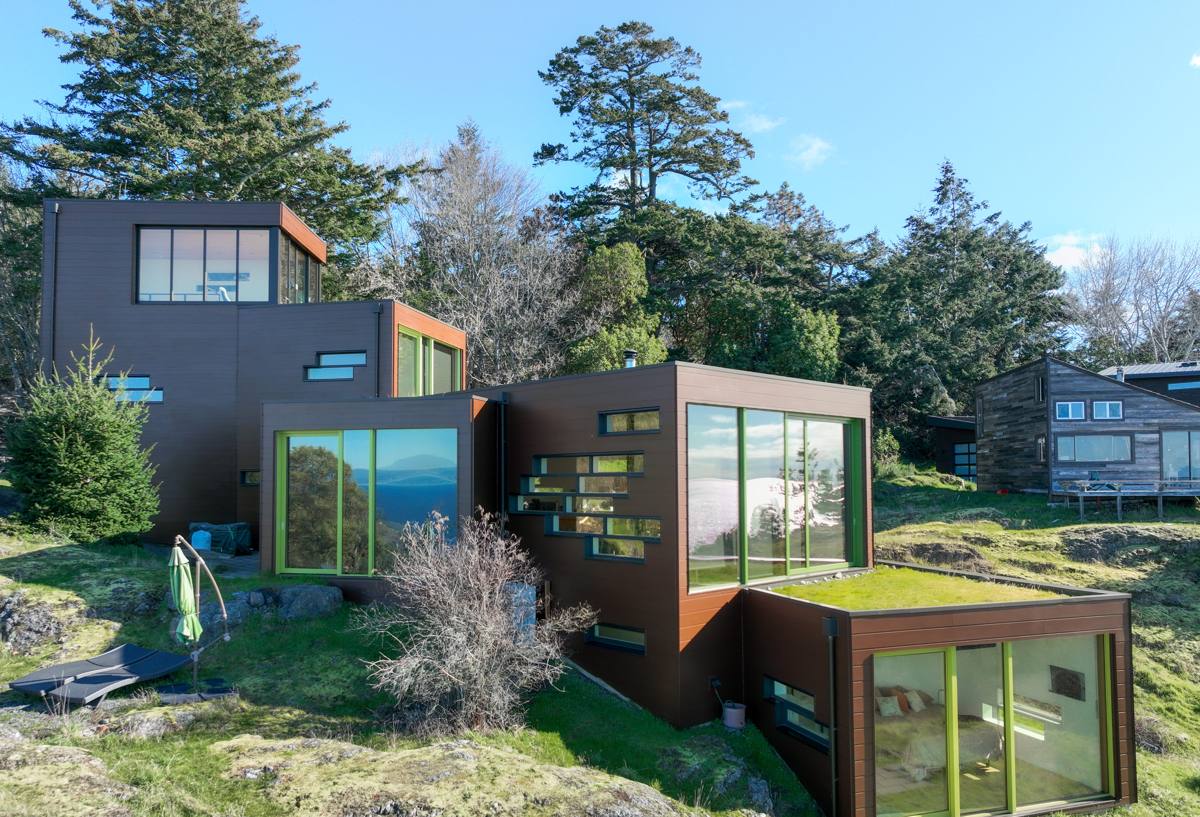
What Bellingham's Climate Does to Windows Over Time
Salt Air and Metal Fatigue
Homes closer to the water deal with airborne salt that settles on window hardware, aluminum frame components, and exposed fasteners. Over years, this accelerates corrosion on lower-grade hardware, pits weep holes so they stop draining properly, and can discolor or pit unprotected metal trim. It's a slow process, but it's steady, and it's part of why we pay attention to hardware quality and finish, not just the glass, when we spec a window for this area.
Driving Rain and Wind-Driven Water
Whatcom County storms often bring rain sideways, not straight down. That means water is pushed against the upper sash, into horizontal joints, and against flashing details that a calmer climate would never test. A window that's watertight in a still rain can still leak in a wind-driven one if the flashing and sill pan weren't detailed correctly during install. This is one of the most common causes of "mystery" leaks homeowners see around window trim.
Moss, Shade, and Prolonged Dampness
Silver Beach's tree cover and the region's long wet season mean many homes have windows that sit in shade for much of the year and rarely get a full dry-out between rains. That prolonged dampness is exactly what moss, algae, and mildew need to take hold on sills, exterior trim, and even between glass and frame if seals have started to fail. Wood trim in these shaded, damp spots needs either the right protective detailing or a switch to a material that doesn't feed organic growth.
What "Energy-Efficient" Actually Means for This Climate
Energy efficiency in a window comes down to a handful of measurable factors, and in a marine climate like Bellingham's, some matter more than others.
- U-factor — how well the window resists heat transfer; lower is better for our cool, wet winters.
- Air infiltration rating — how much air leaks through the assembly under wind pressure; critical given how often Silver Beach sees sustained wind and rain together.
- Condensation resistance — how well the window resists interior fogging, which matters in a climate with big humidity swings between indoor heating and outdoor damp.
- Frame material behavior in moisture — how the frame itself holds up to years of damp exposure, not just how it performs on a lab bench.
Solar heat gain, which gets a lot of attention in sunnier climates, matters less here simply because Bellingham doesn't get the same intensity or duration of direct sun. We still check it, but we don't let it drive the decision the way infiltration and moisture performance do.
Frame Materials: Trade-Offs for a Marine Climate
There's no single "best" frame material — every option is a set of trade-offs, and the right call depends on the home, its exposure, and the homeowner's maintenance appetite.
| Material | Strengths in This Climate | Trade-Offs |
|---|---|---|
| Vinyl | Won't rot, doesn't corrode from salt air, low maintenance, good value | Frame flexes more in temperature swings; quality varies a lot between manufacturers |
| Fiberglass | Very stable dimensionally, holds paint well, excellent moisture resistance | Higher upfront cost than vinyl |
| Wood (clad exterior) | Classic look, good insulator, works well on older/historic homes | Exposed wood needs diligent upkeep in a damp, shaded, moss-prone setting |
| Aluminum | Strong, slim sightlines | Conducts heat and cold readily and is more prone to salt-air corrosion unless properly finished; we use it selectively |
For most Silver Beach homes, we lean toward vinyl or fiberglass because they hold up to salt air and sustained dampness with the least ongoing maintenance. Where a home has real wood-frame character worth preserving, exterior-clad wood windows can still make sense — it's a maintenance conversation, not a right-or-wrong one.
What a Correct Installation Involves
The window unit itself is only part of the equation. In a climate that pushes rain sideways and keeps humidity high for months, the installation details are what actually determine whether a window performs for 20-plus years or starts leaking in five.
Sill Pan and Flashing
A proper sill pan gives any water that gets past the window a way out instead of a place to pool. Flashing needs to be integrated with the home's existing water-resistive barrier, not just caulked over the top, so water sheds down and out rather than behind the siding.
Air and Vapor Sealing
Low-expansion foam or backer rod and sealant around the frame perimeter closes the air gaps that account for a lot of a window's real-world energy loss — gaps that don't show up in a lab-tested U-factor number.
Weep Hole and Drainage Checks
Weep holes need to be clear and correctly placed so any incidental water drains out instead of sitting in the frame track, where it feeds corrosion and, on wood-adjacent details, rot.
Fastening and Hardware Grade
Corrosion-resistant fasteners and hardware matter more here than in a drier inland climate. Standard-grade hardware that's fine 50 miles east can start showing rust streaks near the water within a few seasons.
Signs a Silver Beach Home Needs Window Attention
- Visible fog or moisture between panes of a double- or triple-glazed unit
- Drafts you can feel near the frame edges, especially during windy, wet weather
- Soft or discolored wood trim around the window exterior
- Moss or dark streaking building up on sills or exterior trim
- Difficulty opening, closing, or latching a window that used to operate smoothly
- Rising heating bills without any other obvious explanation
- Condensation forming on the inside of the glass regularly through fall and winter
Any one of these on its own might just be a minor issue. Several at once, especially on the same wall or elevation, usually points to a window or its flashing reaching the end of its useful life.
Repair, Replace, or Reseal? Making the Right Call
Not every window problem means full replacement. We look at the frame condition, the glass seal, and how the unit was installed originally before recommending anything.
| Situation | Typical Fix |
|---|---|
| Fogged glass, frame still sound | Glass unit (insulated glass) replacement within the existing frame |
| Drafts from failed weatherstripping or sealant | Reseal and hardware service |
| Soft or rotted frame material | Full window replacement, often with corrected flashing detail |
| Chronic leaking despite past caulking attempts | Investigate flashing and sill pan, not just surface sealant |
| Old single-pane or poorly performing double-pane throughout the home | Whole-home or phased replacement plan for consistent energy performance |
We'll always tell you honestly when a repair will hold and when it's just delaying a replacement you'll need anyway. Chasing repeated caulk-and-patch fixes on a frame that's already failing usually costs more over time than doing the replacement once, correctly.
Why Local Experience in Silver Beach Matters
A crew that regularly works this specific pocket of Bellingham knows which elevations of a Silver Beach home tend to take the worst wind-driven rain, which older homes in the area were built with detailing that doesn't hold up to today's moisture loads, and how much shade and moss exposure a given lot typically sees through the wet months. That local pattern recognition changes real decisions — how a sill pan gets detailed, which frame material gets recommended, and where extra attention on flashing is worth the time.
It also means fewer surprises. A crew unfamiliar with Whatcom County's rain patterns might install a window correctly by a drier-climate standard and still leave it vulnerable to the kind of sideways, sustained rain Silver Beach sees several times a winter. We build our process around what actually happens to windows in this specific setting, not a generic install checklist.
Our Process
- On-site assessment of existing windows, frame condition, and any moisture or drainage issues
- Honest recommendation on repair versus replacement, with reasoning explained in plain terms
- Product and frame material selection matched to the home's exposure and your maintenance preferences
- Correct installation with proper sill pan, flashing integration, and air sealing
- Final walkthrough and operation check on every window before we consider the job done
If your Silver Beach home has windows that are drafty, fogged, sticking, or just older than you'd like to think about, we're happy to take a look and give you a straight answer on what it needs. Reach out for a free, no-pressure estimate using the form below.