 Bellingham Roofing
 Windows Built for the Way Edgemoor Actually Weathers
Edgemoor sits close to Bellingham Bay, under mature tree cover, with homes that range from older character-era builds to newer construction on wooded and view lots. That combination — salt-laden air off the water, heavy tree shade that keeps siding and trim damp longer, and Whatcom County's long stretch of wind-driven rain — is hard on windows in ways that inland neighborhoods simply don't deal with. A window that performs fine in a dry, sunny climate can fail early here if it wasn't selected and installed with this specific exposure in mind.
This page is about one job: custom window installation and replacement for Edgemoor homes, done in a way that accounts for the bay air, the rain load, and the moss and moisture that come with living under tree cover this close to the water.
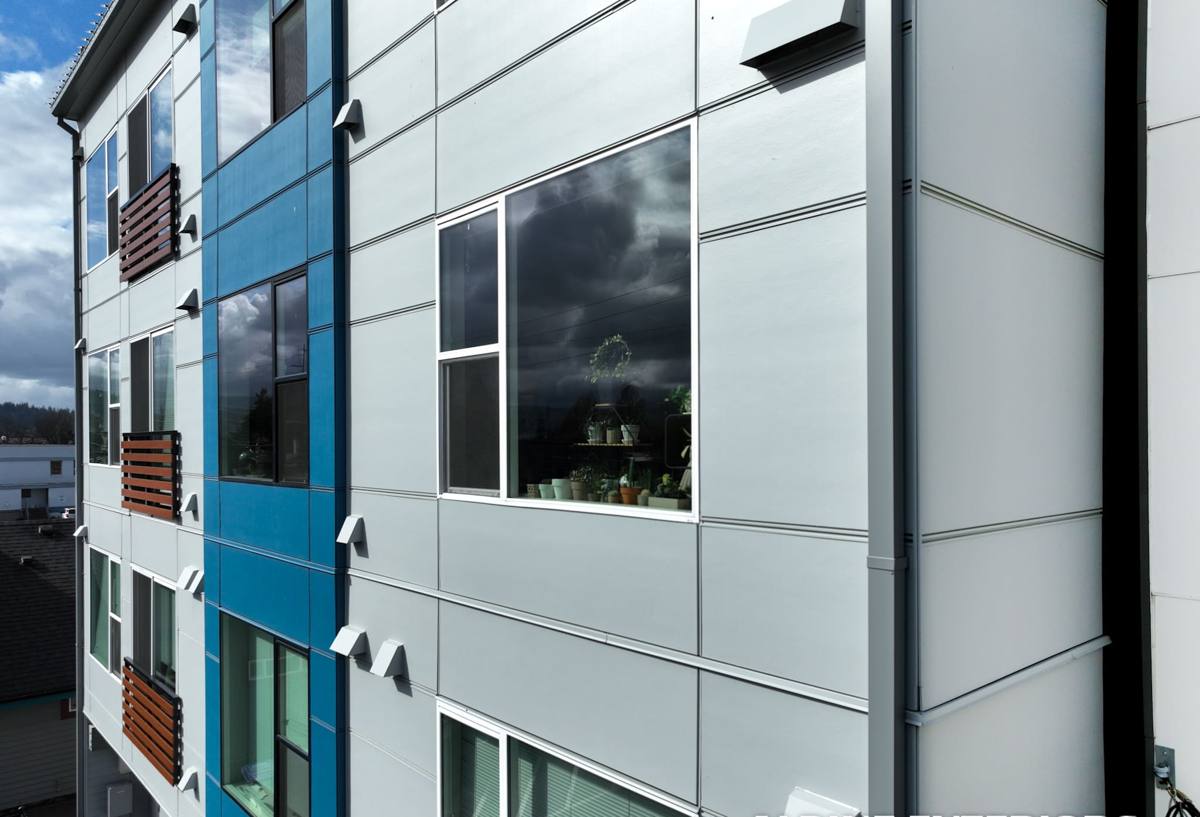
What Bellingham Bay's Climate Does to Ordinary Windows
Salt air and hardware corrosion
Homes near the water take in airborne salt even without a direct ocean view. Over years, that salt attacks unprotected metal — window hardware, screen frames, and especially aluminum components that aren't finished for coastal exposure. Locks get stiff, hinges corrode, and finishes chalk out faster than the manufacturer's literature suggests. It's not dramatic failure; it's a slow, steady wearing down that most homeowners don't notice until a window won't latch properly anymore.
Driving rain and flashing failures
Whatcom County doesn't just get rain — it gets wind-driven rain that hits window openings sideways, not straight down. That matters because a lot of window problems aren't actually window problems; they're flashing and water-management problems. If the opening isn't flashed correctly, wind-driven rain finds its way behind the trim and into the wall cavity, and you won't see it until there's a stain, a soft spot, or a musty smell showing up on an interior wall.
Moss, shade, and trapped moisture
Edgemoor's tree cover is part of what makes the neighborhood attractive, but it also means less direct sun on siding and window trim, longer drying times after storms, and a real moss season that can creep onto sills, tracks, and exterior casing if wood surfaces aren't properly sealed and maintained. Moss holds moisture against the surface it's growing on — that's the core issue, more than the moss itself.
Choosing the Right Window Materials for a Bay-Adjacent, Shaded Lot
There's no single "best" window material for every home — the right choice depends on your home's age, exposure, and how much maintenance you want to take on. Here's how the common options hold up specifically under Edgemoor's conditions:
| Material | Moisture & salt-air resistance | Maintenance | Best fit |
|---|---|---|---|
| Vinyl | Good — won't rot or corrode; UV can affect color over decades | Low | Most homes wanting reliable performance without upkeep |
| Fiberglass | Very good — dimensionally stable in wet/dry cycles, holds paint well | Low to moderate | Homes wanting a wood look with less long-term risk |
| Wood / wood-clad | Requires diligent sealing; exposed wood is vulnerable near tree cover and salt air | High | Character homes where matching original look matters |
| Aluminum | Prone to corrosion and condensation in marine climates unless thermally broken | Moderate | Limited use; we recommend it selectively for this area |
We're not going to tell you a given brand or material is "bad" — every one of these has legitimate uses. Our standard for Edgemoor jobs is that whatever we install has to handle sustained damp exposure and occasional salt air without needing constant attention, because that's the honest reality of the site conditions here.
Glass and Performance: What Actually Matters in a Marine Climate
Manufacturers market a long list of glass options, but for a shaded, damp, coastal-adjacent property, a few things matter more than the rest of the spec sheet:
Condensation resistance
Homes near the bay tend to run more interior humidity, especially in winter. Windows with poor condensation resistance will fog and drip on the interior side, which over time can damage sills and trim. This is a bigger practical concern here than in a dry climate.
Double vs. triple pane
Double-pane, low-E, argon-filled units are the standard baseline and perform well for most Edgemoor homes. Triple-pane adds real value on north-facing or heavily shaded walls where the extra insulating layer helps with both comfort and condensation control — it's a reasonable upgrade to discuss for specific rooms rather than an automatic upgrade for the whole house.
Washington State Energy Code
Replacement windows in Bellingham need to meet current Washington State Energy Code requirements for U-factor. We size and spec every window to meet code as a baseline, then talk with you about whether it makes sense to go beyond that minimum for a particular exposure.
What a Correct Installation Actually Involves
Flashing and water management
This is the part that matters most and shows the least. Proper installation means correctly lapped flashing tape, a sloped sill pan so any water that does get past the exterior seal drains back out instead of pooling, and sealant used in the right places — not as a substitute for proper flashing, which is a common shortcut that fails quietly for years before it's noticed.
Sizing and structural realities of older homes
Many Edgemoor homes have openings that don't match today's standard window sizes exactly, especially in older sections of the neighborhood. That means either sourcing accurately sized custom units or handling the framing modifications correctly — guessing here leads to gapping, air leaks, and rushed trim work to hide the mismatch.
Finish work
Interior and exterior trim need to be sealed and finished in a way that matches the home and holds up to the local moisture cycle — this is where a lot of the long-term moss and rot problems either get prevented or get built in.
Our Process, Start to Finish
- On-site assessment: We look at existing window condition, framing, exposure to weather and shade, and any signs of past water intrusion before recommending anything.
- Material and glass selection: We walk through the honest trade-offs for your specific openings — not a one-size-fits-all pitch.
- Accurate measurement and ordering: Custom windows are built to your actual openings, not assumed standard sizes.
- Removal and prep: Old units are removed carefully, and we inspect the framing and sheathing underneath for hidden moisture damage before anything new goes in.
- Installation with proper flashing: Sill pans, flashing tape, and sealant applied in the correct sequence — this is non-negotiable regardless of the window brand.
- Interior and exterior finish: Trim, caulking, and paint or stain matched to the home.
- Final walkthrough: We check operation, sealing, and appearance with you before calling the job done.
Maintenance Checklist for Edgemoor Homeowners
A well-installed window still needs a small amount of upkeep, especially under tree cover near the bay. A few minutes a couple times a year goes a long way:
- Clear moss and debris from sills, tracks, and exterior trim before it holds moisture against the surface
- Check that weep holes on vinyl and fiberglass frames aren't blocked, so water can drain out
- Rinse salt residue off exterior frames and hardware periodically, especially on wind-exposed sides of the house
- Inspect exterior caulking annually and re-seal any cracked or separated joints
- Operate locks and hardware a few times a year so corrosion doesn't set in unnoticed
- Watch for soft trim, peeling interior paint near the frame, or musty smells — early signs of a water intrusion issue
Why It Matters That We Already Work in Edgemoor
A crew that mostly installs windows in dry, inland conditions doesn't think about flashing details, drainage, or material choice the same way a crew that works this stretch of Bellingham Bay does. We know that "meets code" is a floor, not a finish line, in a neighborhood with this much shade, this much wind-driven rain, and this much salt exposure. We also know the practical side — permitting through the City of Bellingham or Whatcom County depending on your property, realistic timelines around our wetter months, and how to sequence work so openings aren't left exposed longer than necessary.
That local familiarity isn't a marketing line — it changes real decisions, like which sill pan detail to use on a heavily shaded north wall, or when triple-pane glass is actually worth it versus when it isn't.
Get a Straight Answer for Your Home
Every Edgemoor property is a little different — sun exposure, tree cover, age of the home, and how the original windows were installed all factor in. If you're dealing with drafts, fogging, sticking hardware, or just want a straight assessment of what your windows need, we're happy to take a look. Reach out for a free, no-pressure estimate — we'll tell you what we actually see, not just what's easiest to sell.