 Bellingham Roofing
 Siding Repair in Barkley: A Job That Needs Local Knowledge
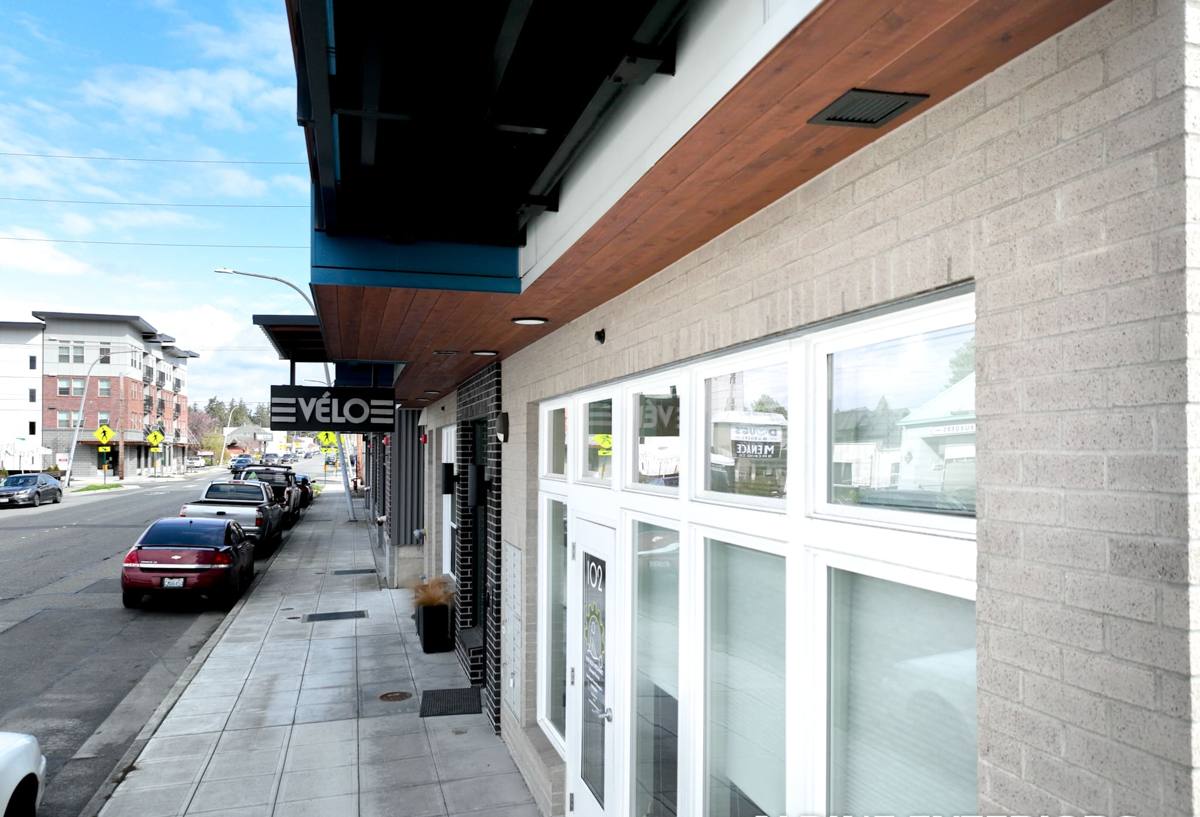
Barkley is one of the more visible pockets of Bellingham — a mix of newer residential development, mixed-use buildings, and homes built across a range of decades, sitting close enough to Bellingham Bay that salt-laden air is a daily fact of life rather than an occasional nuisance. Siding repair here isn't a one-size-fits-all job. A crack that's cosmetic on a south-facing wall in a drier part of Whatcom County can be a moisture entry point on a north-facing wall in Barkley that never gets a full day of sun to dry out between storms.
We work Barkley regularly, which means we're not guessing at how the neighborhood's exposure, tree cover, and building mix behave over a Bellingham winter. That local pattern recognition is a big part of what separates a repair that lasts from one that reopens in eighteen months.
What Barkley Siding Is Actually Up Against
Three things drive most of the siding repair calls we get in this part of Bellingham:
Salt Air
Proximity to the bay means airborne salt settles on exterior surfaces year-round. It accelerates corrosion on fasteners and metal trim, and it breaks down paint films faster than homeowners expect, especially on the sides of a house that face the water or catch the prevailing wind off it.
Driving Rain
Whatcom County doesn't just get a lot of rain — much of it arrives sideways, driven by wind off the Strait. That matters because siding is designed to shed water running down its face, not water being pushed sideways and upward into laps, seams, and trim joints. Repairs that don't account for wind-driven rain tend to fail at exactly the spots where water gets forced where it shouldn't go.
A Long Moss Season
Bellingham's moss season runs long — realistically most of the year in shaded, damp spots. Moss and algae hold moisture against the siding surface far longer than open air would, which softens caulk, degrades paint, and in wood-based products can accelerate rot at butt joints and lower courses long before the rest of the wall shows any obvious damage.
Signs a Barkley Home Needs Siding Repair
Some damage is obvious. A lot of it isn't, until it's expensive. Here's what we tell Barkley homeowners to walk their exterior and check for, especially heading into fall:
- Soft or spongy spots when you press on the siding, particularly near the bottom courses and around windows
- Visible gaps or separation at seams, corners, and trim joints
- Paint that's peeling, bubbling, or chalking heavily in patches rather than evenly across the whole wall
- Dark staining or streaking below joints, nail heads, or window flashing
- Moss or algae buildup that's thick enough to hold visible moisture after a dry day
- Warped, bowed, or buckled panels or boards
- Rust streaks below fasteners or metal trim
- Interior signs — musty smell, peeling interior paint, or soft drywall near an exterior wall
Any one of these on its own might be minor. Several together, or any of them near a known trouble spot (an old deck ledger, a window without adequate flashing, a lower corner that never gets sun), is worth a closer look before another wet season sets in.
What a Correct Repair Actually Involves
A lot of "siding repair" in this region is really just cosmetic patching — cutting out a bad board, tacking in a replacement, and caulking the edges. That approach can look fine for a season and still fail, because it doesn't address why the original section failed in the first place.
| Patch-and-Caulk Approach | Correct Repair Approach |
|---|---|
| Replace only the visibly damaged piece | Open up the area to check the water-resistive barrier, flashing, and framing behind it |
| Caulk over gaps at seams and trim | Rebuild proper drainage and lap details so water sheds instead of pooling |
| Match paint color as closely as possible | Confirm the replacement material and finish will weather at the same rate as the surrounding wall |
| Assume the cause of failure is fixed | Identify and correct the actual moisture source — bad flashing, missing kickout, poor grading, failed caulk joint |
| Short-term appearance fix | Addresses the underlying cause so the same spot doesn't fail again in a year or two |
The difference matters most in a climate like ours. If the water intrusion path isn't corrected, a Bellingham winter of driving rain will find its way back into the same spot, and the next repair costs more than the first one would have.
Repair or Replace? How We Make That Call
Not every issue calls for full replacement, and not every issue should be patched. We look at a handful of factors before recommending either direction:
| Factor | Leans Toward Repair | Leans Toward Replacement |
|---|---|---|
| Extent of damage | Isolated to one or two areas | Spread across multiple walls or elevations |
| Underlying cause | Identifiable and fixable (one flashing detail, one joint) | Systemic — original installation issues throughout |
| Material condition | Surrounding siding still sound and weathering evenly | Surrounding siding is aging out or a mismatched material |
| Age of siding | Well within expected service life | Near or past the point where matching materials becomes impractical |
| Moisture history | Single, correctable event (one storm, one failed seal) | Recurring pattern across seasons |
We'll tell you honestly which side of that line your project falls on. A repair that's really a stopgap on a wall that needs replacement isn't a good use of your money, and we're not going to sell it to you as one.
Why We Repair and Replace With James Hardie Fiber Cement
When a repair calls for replacing sections of siding — or when the damage points toward full replacement of a wall or elevation — we install James Hardie fiber cement, and only James Hardie. We don't install vinyl, LP SmartSide, Cemplank, Allura, primed spruce, or cedar, and that standard applies to repair work the same as it does to full siding jobs.
Part of the reason is specific to a climate like Barkley's. Vinyl can become brittle and crack under wide temperature swings and is limited in how well it seals against wind-driven rain at seams. Wood products, including cedar and primed spruce, are the most exposed to the rot and moisture damage that our long moss season and constant dampness create, and they demand a repainting and recaulking schedule that's hard to keep up with here. Engineered wood products like LP SmartSide can swell or delaminate at cut edges and joints if moisture gets past the factory treatment, which is exactly the failure point we see most in this region's driving rain.
James Hardie fiber cement is non-combustible, holds its factory ColorPlus finish far longer than field-applied paint, and its HZ5 product line is engineered for the moisture and temperature conditions of the Pacific Northwest specifically. That doesn't mean Hardie siding is immune to problems — poor installation, bad flashing, or ignored moss buildup will cause issues on any siding material. But when we do have to open up a wall for a repair, we're confident in what we're putting back, and we back that with a strong transferable manufacturer warranty. That's not something we can say with the same confidence about the other materials, which is why we've standardized on one system rather than juggling several.
Our Siding Repair Process in Barkley
Every repair job follows the same basic sequence, whether it's a single section or several walls:
- On-site assessment. We look at the visible damage and check adjacent areas, flashing, and drainage details that aren't obvious from the ground.
- Diagnose the cause. We identify what actually let water or damage in — not just where it shows up.
- Honest scope and recommendation. We tell you whether it's a targeted repair, a larger section replacement, or something that should be planned as a full re-side, and why.
- Correct the source, not just the symptom. Flashing, drainage planes, and joint details get fixed as part of the repair, not left for next time.
- Match and finish. Where we're patching into existing Hardie siding, we match profile and color as closely as the product line allows; where blending isn't realistic, we'll tell you upfront.
- Clean site, clear documentation. You know what was done, why, and what to keep an eye on going forward.
Why a Crew That Already Works in Barkley Matters
Siding repair in a specific neighborhood benefits from a crew that's already familiar with it. We know which Barkley elevations tend to take the brunt of wind-driven rain off the bay, which shaded pockets grow moss fastest, and what the mix of building ages and construction styles in the area tends to mean once a wall gets opened up. That's not something you can fully substitute with a generic inspection checklist — it's pattern recognition built from working the same streets and the same weather, repeatedly.
It also means faster, more accurate estimates. We're not learning Barkley's exposure and drainage quirks on your dime; we already know what to check first.
Ready for an Honest Look at Your Siding
If you're seeing early warning signs — soft spots, staining, moss buildup, or paint that's failing faster than it should — it's worth getting an honest assessment before another wet Bellingham season pushes a small repair into a bigger one. We'll walk your Barkley property, tell you plainly what we find, and give you a straightforward recommendation, whether that's a targeted repair or something larger. Reach out for a free, no-pressure estimate using the form below.