 Bellingham Roofing
 Siding Replacement for York Homes in Bellingham
York is one of Bellingham's older, established neighborhoods, and that means a lot of the housing stock has been standing through decades of Pacific Northwest weather. Whatcom County's marine climate is not gentle on exterior materials. Homes here deal with salt-tinged air moving in off the Strait, long stretches of driving rain that comes in sideways more often than straight down, and a moss season that can stretch from fall through spring. Siding that looked fine ten or fifteen years ago is often quietly failing underneath by the time it shows visible damage.
This page is about one thing specifically: replacing siding on a York home the right way, with a material and installation approach built for this exact climate. We do not do generic siding work. We install James Hardie fiber cement siding, exclusively, and everything below explains why that matters for a house in this part of Bellingham.
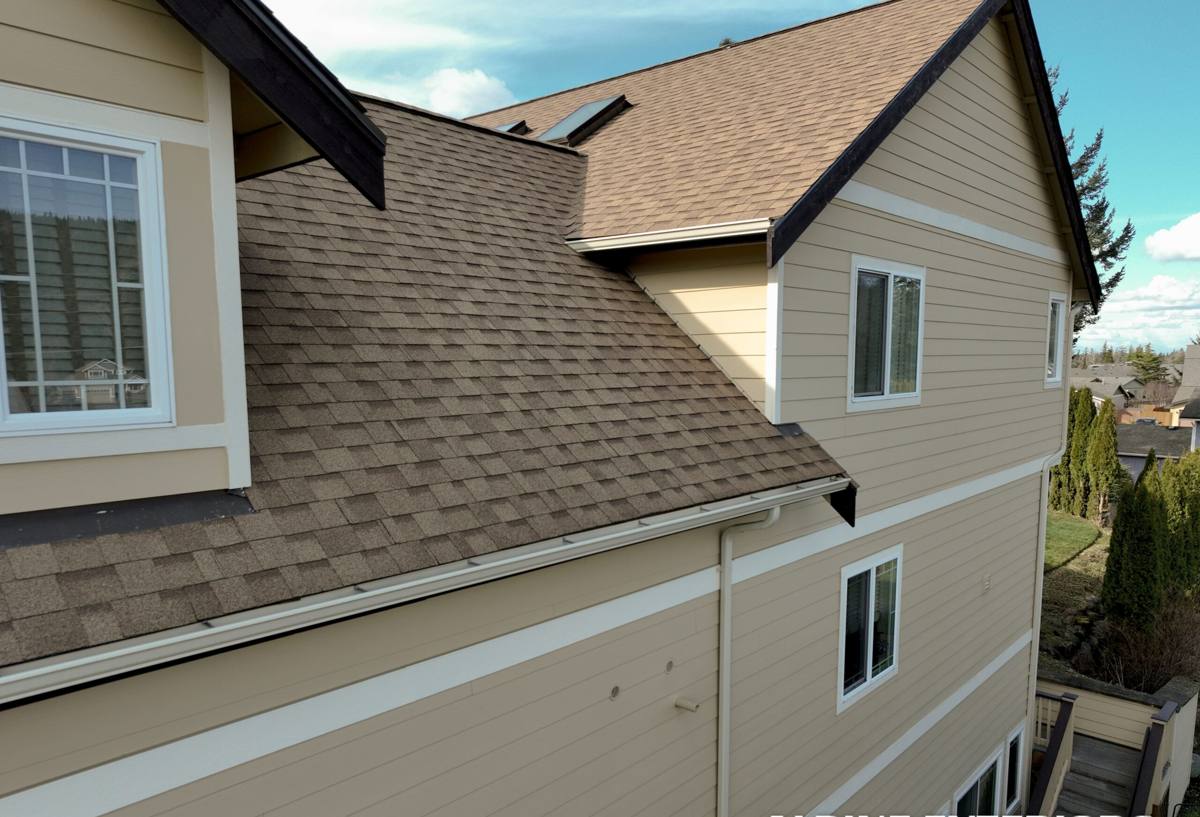
What Bellingham's Climate Does to Siding Over Time
Understanding why siding fails here helps explain why replacement — not another round of patching — is often the right call.
Salt Air and Moisture
Bellingham sits close enough to saltwater that airborne salt is a real factor in material breakdown. Salt-laden moisture accelerates corrosion on fasteners, trim, and any metal flashing components, and it can degrade certain siding finishes and adhesives faster than a dry inland climate would.
Driving Rain
Wind-driven rain doesn't just wet a wall surface — it gets pushed laterally and can work its way behind poorly lapped siding, undersized flashing, or old caulk joints that have shrunk and cracked. Once water gets behind the siding, the sheathing and framing underneath take the damage, often invisibly for years.
Moss and Organic Growth
Shaded lots, mature trees, and consistent damp conditions make York a good environment for moss, algae, and mildew growth on exterior surfaces. Porous or wood-based siding gives these organisms something to hold onto and feed on. Left unaddressed, sustained moss growth traps moisture against the siding surface and speeds up rot, especially at butt joints and lower courses near grade.
Signs a York Home Needs Siding Replacement, Not Repair
Not every siding issue calls for a full tear-off. But there's a point where patching stops being cost-effective and starts masking a bigger problem. Watch for:
- Soft, spongy, or crumbling areas when you press on the siding, especially near the bottom courses and around window and door trim
- Paint that won't hold no matter how often it's redone — usually a sign moisture is moving through the material from behind
- Visible warping, buckling, or gaps between siding boards
- Persistent moss or algae staining that returns within a season of cleaning
- Cracked or missing caulk at seams, corners, and penetrations that keeps reappearing after resealing
- Rising energy bills with no other clear cause, which can point to compromised weather barrier performance
- Interior signs like musty odors, peeling interior paint near exterior walls, or visible staining on interior sheetrock
If you're seeing two or more of these on a York home, it's worth having someone look at what's happening underneath the siding, not just the surface.
Why We Install Only James Hardie Fiber Cement
We made a deliberate decision to install one siding system: James Hardie fiber cement. We don't install vinyl, LP SmartSide, primed spruce, cedar, or other fiber cement brands. That's not a marketing position — it's a standard we hold because of what we've seen these products do, or fail to do, in exactly the kind of climate York homes sit in.
Fiber cement is made from cement, sand, and cellulose fibers, which makes it non-combustible and dimensionally stable. It doesn't absorb moisture the way wood-based products do, and it doesn't expand and contract with humidity swings the way vinyl does. James Hardie specifically engineers regional product lines — its HZ5 formulation is built for climates like ours, with freeze-thaw cycling, sustained moisture, and coastal exposure factored into the material itself. The ColorPlus factory-applied finish is baked on under controlled conditions rather than field-painted, which matters in a region where on-site paint adhesion is harder to control given how often conditions are damp.
None of this means other products are junk — vinyl is inexpensive and low-maintenance in the right setting, and cedar has real visual appeal. But for a York home dealing with salt air, driving rain, and moss pressure year after year, we've found fiber cement holds up in ways that justify making it the only thing we put on a wall.
What a Correct Siding Replacement Job Actually Involves
The siding itself is only part of the system. A siding replacement that's done right addresses everything between the studs and the finished surface, not just what's visible from the street.
Tear-Off and Inspection
Full removal of the old siding lets us actually see the sheathing and framing condition. This is where hidden rot, mold, or insect damage from years of moisture intrusion gets found and dealt with before it's covered back up.
Water-Resistive Barrier
A properly installed weather-resistant barrier goes on over the sheathing before any siding. In a driving-rain climate, how this barrier is lapped, taped, and integrated with flashing matters as much as the siding brand on top of it.
Flashing at Every Penetration
Windows, doors, vents, hose bibs, light fixtures — every penetration through the siding plane is a potential water entry point. Correct flashing details at each one are what actually keep a home dry, far more than the siding material itself.
Proper Fastening and Clearances
James Hardie has specific installation requirements — fastener type and spacing, minimum clearance from grade, deck surfaces, and roof lines, and gapping at joints. Skipping these details is one of the most common ways fiber cement installations fail prematurely, and it's also grounds for a voided manufacturer warranty.
Trim, Caulking, and Finish Work
Corner boards, trim around openings, and caulk joints are finish details, but they're also functional water-management components. Rushed trim work is a common source of the leaks that show up two or three years after a "new" siding job.
Our Process for a York Siding Replacement
We approach every project on the same core steps, adjusted to the specifics of the house:
- On-site assessment — We look at the current siding condition, check for moisture damage at trim, corners, and low areas, and note anything specific to the lot, like tree cover or drainage patterns that affect moss and moisture exposure.
- Scope and product selection — We walk through which James Hardie profile and finish fit the home's style and your preferences, and explain what full tear-off versus targeted replacement makes sense for.
- Written estimate — A clear breakdown of scope, materials, and cost before any work starts, with no vague allowances.
- Tear-off and inspection — Old siding comes off, sheathing is checked, and any needed repairs are addressed and documented before new material goes on.
- Weather barrier and flashing installation — Done to manufacturer spec, with particular attention to lapping direction given our prevailing wind-driven rain.
- Siding installation — Installed to James Hardie's fastening, clearance, and joint specifications, which also protects your ability to register the manufacturer warranty.
- Final walkthrough — We review the finished work with you directly, not just leave a punch list unaddressed.
Having worked on homes throughout York and the surrounding Bellingham neighborhoods, we're familiar with the mix of older single-family homes, mid-century construction, and newer infill that makes up this part of the city — and with how differently those different eras of construction respond to moisture over time.
What Drives the Cost of a Siding Replacement
Every home is different, but the same handful of factors determine cost on nearly every project:
| Factor | How It Affects Cost |
|---|---|
| Home size and wall area | More square footage means more material and labor, the largest single driver of total cost |
| Current siding removal | Multiple layers of old siding or hidden damage found during tear-off add labor and repair costs |
| Sheathing and framing repair | Rot or moisture damage discovered underneath the old siding needs to be fixed before new siding goes on |
| Siding profile and finish | Lap width, panel style, and ColorPlus finish selection all affect material pricing |
| Trim and architectural detail | Homes with more corners, dormers, or trim work require more cutting, fitting, and finish labor |
| Access and site conditions | Multi-story sections, tight lot lines, or landscaping that limits staging can add time |
We don't quote a job until we've actually looked at these factors on your specific home — broad estimates without an inspection tend to be wrong in one direction or the other.
How Fiber Cement Compares to Other Siding Options
Homeowners doing their research deserve an honest look at the alternatives, not just a sales pitch for what we install:
| Material | Performance in This Climate | Trade-Off |
|---|---|---|
| James Hardie fiber cement | Non-combustible, dimensionally stable, engineered finish resists moisture and salt exposure well | Higher upfront material and installation cost than vinyl |
| Vinyl siding | Low maintenance and inexpensive, but can warp or crack under temperature swings and impact | Panels expand and contract more, seams can allow water intrusion over time |
| Cedar or wood siding | Attractive natural appearance, but highly vulnerable to moisture, rot, and moss in a wet climate | Requires ongoing painting, sealing, and moisture monitoring to last |
| LP SmartSide (engineered wood) | More moisture-resistant than raw wood, but still wood-based and reliant on intact factory coating | Damage to the coating exposes the substrate to moisture absorption |
Choosing a Siding Contractor in York
Whether you go with us or someone else, use this checklist before signing anything:
- Ask for proof of manufacturer certification if fiber cement is being installed — correct installation is what keeps the warranty valid
- Get a written scope that specifies weather barrier, flashing, and fastening details, not just "siding replacement"
- Confirm whether full tear-off is included or if they're proposing to side over existing material
- Ask how they handle unexpected sheathing damage found during tear-off, and how that's priced
- Check that they carry proper licensing and insurance for exterior work in Washington
- Ask about their experience with homes in this specific climate zone, not just general siding volume
A contractor who already understands what Whatcom County's rain and salt air do to a wall assembly is going to make different decisions on your job than one working from a generic playbook.
Ready to Get Your York Home Assessed?
If your siding is showing wear, or you just want an honest read on whether repair or replacement makes sense, we're happy to take a look. We'll give you a straightforward assessment and a written estimate with no pressure to sign anything on the spot — use the form below to request a free estimate.