 Bellingham Roofing
 Windows in Silver Beach Face a Long, Wet Fight
Silver Beach is one of Bellingham's older residential pockets, which means a lot of the housing stock still carries its original or first-generation replacement windows. Those windows were built for a different era of glass and frame technology, and Whatcom County's climate has not been kind to them. Between salt-tinged marine air, months of driving rain, and a moss season that seems to start earlier every year, window assemblies here take a beating that homes in drier climates simply don't experience.
Window replacement in this neighborhood isn't just a cosmetic upgrade. Done right, it's a moisture-management project first and an aesthetic one second. Get the flashing, sealing, and frame selection wrong, and you're setting up the next 10 years of rot, mold, and callbacks. Get it right, and the window becomes one less thing you have to think about for a couple of decades.
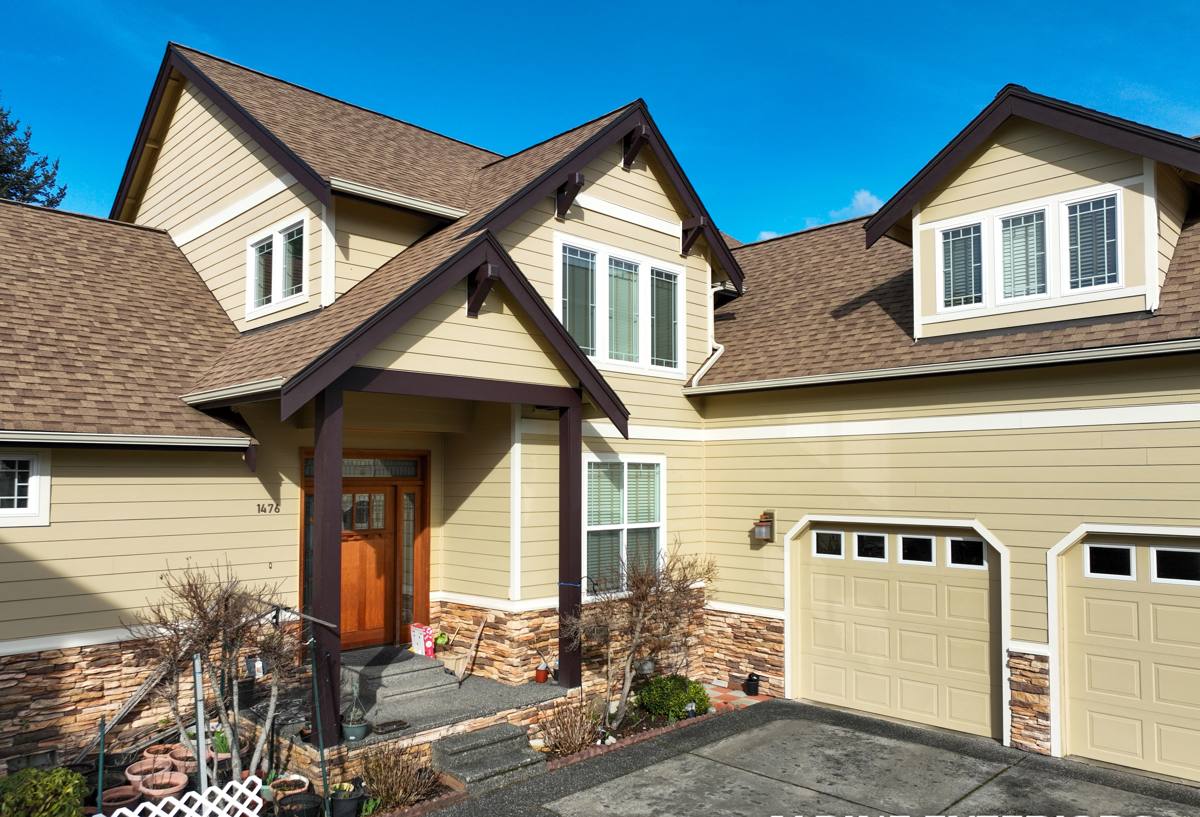
What Bellingham's Climate Does to Old Windows
Wind-Driven Rain
Bellingham doesn't just get rain — it gets rain pushed sideways by wind coming off the water. Older single-pane and early dual-pane windows, along with their original wood or aluminum frames, were rarely sealed with the kind of weather-resistive barrier detailing that modern building codes require. Over years of exposure, water finds its way behind trim boards and into wall cavities through gaps that were never a problem in a calmer, drier climate.
Salt Air and Corrosion
Homes closer to the water deal with airborne salt that accelerates corrosion on aluminum frames, hardware, screws, and fasteners. Hinges stick, locks seize, and weep holes clog faster than they would inland. It's a slow process, but it's constant, and it's one of the reasons hardware quality matters as much as glass quality when you're replacing windows here.
Moss, Algae, and Trapped Moisture
Whatcom County's moss season stretches long — shaded, north-facing walls and window sills that don't get much direct sun can stay damp for weeks at a stretch. Moss and algae growth on sills and trim isn't just unsightly; it holds moisture against wood and caulk joints, which shortens the life of both. Sills with poor drainage slope are especially prone to this.
Condensation and Temperature Swings
Bellingham's mix of cool, humid air outside and heated interiors in winter creates ideal conditions for condensation on older, poorly insulated glass. Persistent condensation between panes is a clear sign a window's seal has failed — and it's also a moisture source that can migrate into the surrounding frame and wall assembly if left alone.
Signs Your Silver Beach Home Needs Window Replacement
- Fogging or moisture trapped between panes — the seal has failed and the insulating gas (if any) is gone
- Soft, spongy, or discolored wood at the sill or frame corners
- Windows that are difficult to open, close, or lock — often a sign of frame swelling or warping
- Visible daylight or a noticeable draft around the frame when it's windy outside
- Paint that keeps peeling or bubbling on interior trim near the window, even after repainting
- Persistent moss or algae staining on sills that returns within a season of cleaning
- A noticeable rise in heating costs without other explanation
- Outside noise (traffic, wind) that seems louder than it should be for the room
Any one of these on its own might just call for a repair or a re-caulk. Several of them together, especially on a home more than 20-25 years old, usually mean the windows and their surrounding flashing have reached the end of their useful life.
What a Correct Window Replacement Job Involves
It Starts Before the New Window Ever Shows Up
The most important part of a window replacement happens before installation — measuring the rough opening accurately, inspecting the surrounding sheathing and framing for hidden water damage, and confirming the window unit's specifications match both the opening and the home's exposure. Skipping this step is how homeowners end up with a window that looks fine for a year or two and then leaks.
Removal and Inspection
Once the old window is out, the opening gets inspected for rot, soft framing, or previous water intrusion that was hidden behind the trim. In a wet climate like this one, it's common to find some degree of moisture damage around older windows, particularly at the bottom corners of the sill. Any compromised wood should be repaired or replaced before the new unit goes in — installing a new window into a damaged opening just locks the problem inside the wall.
Flashing and the Weather-Resistive Barrier
This is where most long-term failures actually originate, and it's the step that separates a correct installation from a fast one. Proper flashing tape and pan flashing at the sill, integrated correctly with the home's existing weather-resistive barrier, is what keeps wind-driven rain from working its way behind the window over time. In a climate that gets as much sideways rain as Bellingham does, this detail isn't optional — it's the whole point.
Setting, Shimming, and Sealing
The window gets shimmed level and plumb, fastened per the manufacturer's schedule, and insulated around the frame gap with a low-expansion foam or backer rod rather than packed too tight (which can bow the frame). Exterior sealant goes on last, at the joints designed to be sealed — not as a substitute for proper flashing underneath.
Interior and Exterior Finish Work
Trim, casing, and sill work get finished to match the home, and everything is tested — opening, closing, locking, and checking for square — before the job is called done.
Choosing the Right Window for This Climate
Frame material matters more here than in drier parts of the country, because the material has to hold up to sustained moisture exposure and, closer to the water, salt air. There's no single "best" material for every home — it depends on budget, the home's style, and how much upkeep you want to take on.
| Frame Material | Moisture & Salt-Air Performance | Maintenance | Typical Fit |
|---|---|---|---|
| Vinyl | Very good — won't rot or corrode | Low — occasional cleaning | Most budget-to-mid-range replacements |
| Fiberglass | Excellent — highly stable, resists moisture and salt exposure | Low | Higher-end replacements, exposed or wind-heavy sites |
| Wood-Clad | Good on the exterior (clad), but interior wood still needs care | Moderate to high | Homes prioritizing a traditional wood interior look |
| Aluminum | Weaker in salt air — prone to corrosion and heat loss | Moderate | Limited use; we typically steer homeowners away from it near the water |
We don't install aluminum-frame replacement windows in most Silver Beach applications. It's not that aluminum is a bad material everywhere — it's that in a marine climate with salt exposure and heavy rain, it corrodes faster and conducts heat and cold more readily than vinyl or fiberglass, which shows up as both higher energy bills and shorter hardware life. That's a trade-off we'd rather be upfront about than sell around.
Glass Packages
For this climate, we generally recommend double-pane, low-E glass with argon gas fill as the baseline, and triple-pane for north-facing rooms, homes closer to the water with more wind exposure, or homeowners specifically trying to cut heating costs and outside noise. Low-E coatings help manage both winter heat loss and the glare off the water on clear days.
Our Process for Silver Beach Window Replacement
- Free on-site estimate — we look at the actual windows and openings, not just a photo or a phone description, since hidden moisture damage is common in this area
- Honest scope — a clear breakdown of what needs replacing now versus what can wait, and why
- Product selection — matched to the window's exposure (wind, sun, proximity to water) and your budget
- Scheduling — timed around the forecast where possible, since exposed openings need dry conditions to install correctly
- Installation — proper flashing and sealing first, cosmetic finish work last
- Walkthrough — every window opened, closed, and checked with you before we consider the job finished
Cost Factors to Expect
Every home is different, but the same handful of factors drive most of the cost variation we see on window replacement jobs in this neighborhood.
| Factor | Why It Affects Cost |
|---|---|
| Number and size of windows | Larger openings and picture windows cost more in material and labor |
| Frame material | Fiberglass generally costs more upfront than vinyl but needs less long-term upkeep |
| Glass package | Triple-pane and specialty coatings add cost but also add performance |
| Hidden damage | Rotted sills or framing found during removal add repair time before the new window goes in |
| Access and site conditions | Second-story or hard-to-reach windows take more labor and equipment |
As a broad range, full-frame window replacements in this area typically run somewhere in the low-to-mid hundreds per window for standard vinyl units on the low end, up to well over a thousand per window for larger openings, fiberglass, or triple-pane glass. The only way to know what your home actually needs is a walk-through — anything else is a guess.
Why Hiring a Crew That Already Works Silver Beach Matters
A window replacement crew that regularly works Bellingham's older neighborhoods has already seen what this specific combination of moisture, salt air, and moss does to different eras of construction. That matters at the moment the old window comes off the wall and the crew finds out what's actually behind it. It also matters in the product recommendation stage — knowing which frame materials hold up here and which ones create maintenance headaches down the line isn't something you get from a national catalog. It comes from doing the work in this climate, on homes like yours, season after season.
If your Silver Beach windows are drafty, fogged, hard to operate, or just showing their age, we're happy to take a look and give you a straight answer about what's going on and what it would take to fix it. Reach out for a free, no-pressure estimate using the form below.