 Bellingham Roofing
 Siding Built for Where You Live: Silver Beach
Silver Beach sits close enough to the water that salt-laden air is part of daily life, and that changes what a house needs from its exterior. Homes here take a steady combination of moisture, wind-driven rain off Bellingham Bay, and long stretches of shaded, damp ground that keeps moss and algae active for most of the year. Siding that would hold up fine a few miles inland can start failing early in this kind of exposure. When we talk with Silver Beach homeowners about a siding replacement, the conversation almost always starts with what the old siding couldn't handle, not just what it looks like now.
This page walks through what that means in practice: the conditions your siding is actually fighting, what a correctly done replacement involves, how our process works from first look to final walkthrough, and why we've standardized on one product system instead of offering the usual lineup of options.
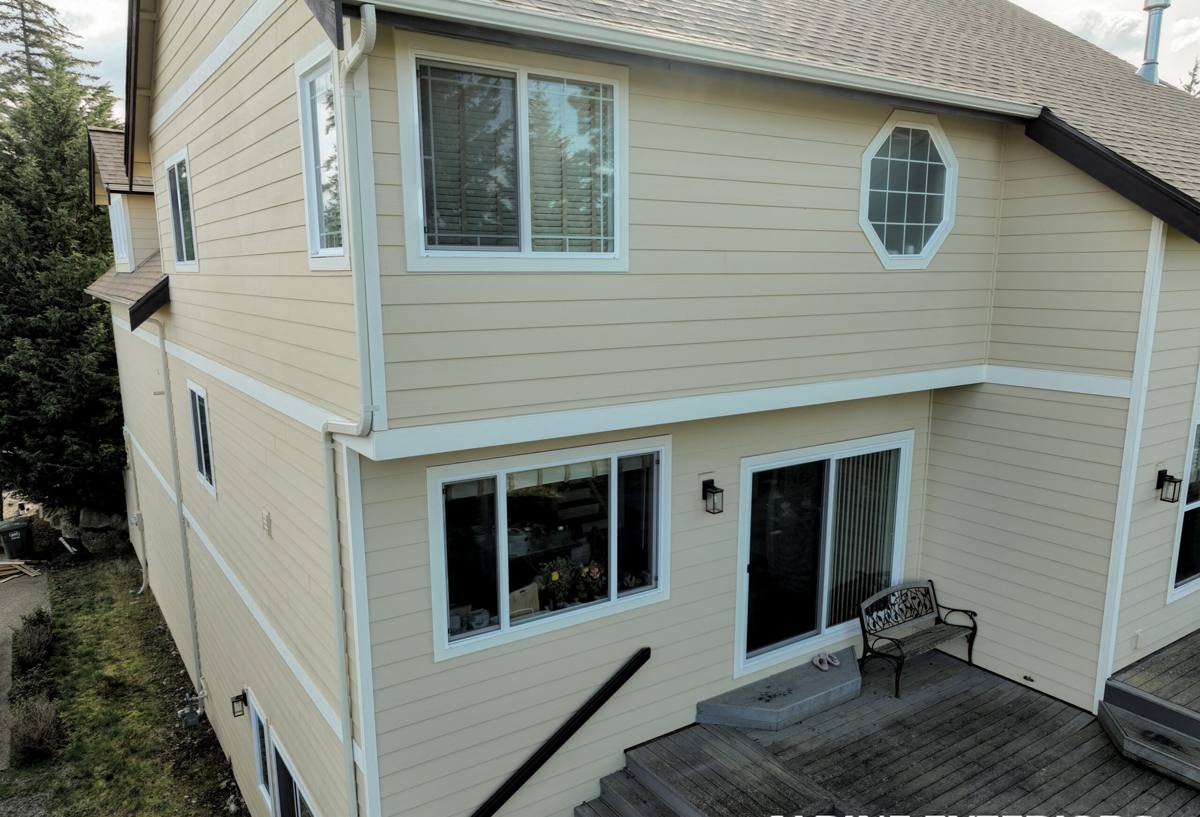
What Silver Beach's Climate Does to Siding
Salt Air and Corrosion
Proximity to Bellingham Bay means airborne salt settles on exterior surfaces more than most homeowners realize. It accelerates corrosion of fasteners, trim hardware, and any metal components in a siding system, and it can degrade certain coatings faster than manufacturers' general climate ratings account for. Siding systems and fastener choices that aren't rated for coastal exposure tend to show it first at seams, corner posts, and anywhere metal meets wood or fiber cement.
Driving Rain
Wind off the water doesn't just bring rain — it drives it sideways into wall assemblies, especially on west- and southwest-facing elevations. That puts real pressure on lap joints, butt seams, and anywhere flashing and siding meet. A siding product with poor water resistance, or an installation with sloppy seam and flashing work, will let moisture behind the cladding long before the surface shows visible damage.
Moss and Algae Season
Whatcom County's wet season runs long, and shaded, north-facing walls near mature trees stay damp for weeks at a time. That's exactly the environment moss and algae need. Porous or textured siding surfaces give organic growth something to grip, and once it's established it holds moisture against the wall even longer — a cycle that shortens the life of whatever's underneath.
Why We Only Install James Hardie Fiber Cement
We install one siding system: James Hardie fiber cement with a factory ColorPlus finish. We don't offer vinyl, LP SmartSide, Cemplank, Allura, primed spruce, or cedar as alternatives, and that's a deliberate standard, not a lack of options. Each of those products has real strengths, but each also has a trade-off that matters more in a place like Silver Beach than it would somewhere drier and more sheltered:
- Vinyl can warp or become brittle with UV and temperature swings, and its seams and J-channels give wind-driven rain more paths to work with.
- Wood products (cedar, primed spruce) require ongoing painting and sealing to resist moisture, and in a long wet season the maintenance window is smaller than homeowners expect.
- LP SmartSide is engineered wood — better than untreated wood, but still wood at its core, meaning cut edges and joints need diligent sealing to keep moisture out over the long run.
- Other fiber cement brands (Cemplank, Allura) compete on the same basic material, but we standardized on Hardie specifically for its factory finish system, its climate-engineered product lines, and the depth of support behind its warranty.
James Hardie fiber cement is non-combustible, dimensionally stable, and doesn't feed moss and algae the way wood fiber or vinyl can once grime builds up. Its ColorPlus finish is baked on at the factory under controlled conditions, which gives it more consistent resistance to fading and moisture intrusion than field-applied paint. For a coastal-adjacent neighborhood dealing with salt air and long wet stretches, that combination is what actually holds up.
What a Correct Siding Replacement Involves
Replacing siding is not a cosmetic swap — it's a rebuild of your home's weather barrier, and skipping steps here is where most premature failures start. A replacement done right includes:
- Full tear-off and inspection of the wall sheathing underneath, checking for rot, soft spots, or prior water damage that has to be addressed before new siding goes on.
- Repair of any compromised sheathing or framing found during tear-off — this is not optional, and it's the step that gets skipped when a job is priced too low.
- A correctly lapped weather-resistive barrier installed so that water is directed outward and down, not trapped behind the siding.
- Proper flashing at every penetration — windows, doors, vents, and any fixture that breaks the wall plane — since this is where wind-driven rain finds its way in first.
- Correct fastening per Hardie's installation specifications, including fastener spacing, type, and corrosion resistance suited to coastal exposure.
- Properly sized gaps and sealed joints at seams, corners, and trim to allow for material movement without opening a path for water.
- Soft or spongy spots when you press on the siding, especially near the bottom courses or around windows
- Visible warping, buckling, or gaps opening at seams and corners
- Persistent moss or algae staining that keeps returning after cleaning
- Peeling or bubbling paint, or fading that's uneven across different elevations
- Rust streaks near fasteners or metal trim
- Any musty smell or visible staining on interior walls that back up to exterior siding
Every one of these steps matters more in Silver Beach's conditions than they would in a drier, more sheltered part of the county. A weather barrier lapped the wrong direction or a flashing detail done casually might not show a problem for a year or two — but with this much driving rain, it will show eventually.
Our Process, Start to Finish
1. On-Site Assessment
We look at your home's specific exposure — which elevations take the most wind-driven rain, where moss and algae are already established, and what condition the current siding and sheathing are in. This isn't a generic estimate; it's specific to how your house sits relative to the water and tree cover.
2. Product and Color Selection
We walk through Hardie's HZ5 product line (engineered for wetter, harsher climates like ours) and ColorPlus finish options, so you're choosing colors and profiles that fit both your home and the exposure it faces.
3. Tear-Off and Sheathing Repair
Old siding comes off, sheathing gets inspected, and any damage is repaired before anything new goes on. We won't cover up a problem to save a step.
4. Weather Barrier and Flashing
This is the part of the job you won't see once it's finished, and it's the part that determines whether your new siding lasts. We install the weather-resistive barrier and flashing to spec, every time.
5. Hardie Installation
Siding goes on per manufacturer specifications for fastening, clearances, and joint treatment — no shortcuts on spacing or sealing.
6. Final Walkthrough
We go over the finished work with you, point out anything you should know for long-term care, and make sure you're clear on what the warranty covers.
Cost Factors for Silver Beach Homes
Every home is different, but these are the variables that most affect what a Silver Beach siding replacement runs:
| Factor | Why It Matters Here |
|---|---|
| Sheathing condition | Homes with long-term moisture exposure near the water often need more repair work under the old siding than expected |
| Number of elevations facing prevailing wind/rain | West- and southwest-facing walls typically need more attention to flashing and seam detail |
| Existing moss/algae buildup | Heavier organic growth can mean more prep work and sometimes indicates trapped moisture worth investigating further |
| Trim and detail complexity | Homes with more corners, windows, and architectural detail require more flashing and cutting work |
| Siding profile and color choice | Hardie offers multiple plank widths, textures, and ColorPlus colors at different price points |
Why a Crew That Already Works Silver Beach Matters
Siding installation isn't one-size-fits-all across Whatcom County. A crew that's replaced siding elsewhere in Bellingham but hasn't worked the specific exposure near the water can miss details that matter here — like which elevations need extra flashing attention, or how much clearance to leave given how long surfaces stay damp in this neighborhood. A crew that already knows Silver Beach's conditions builds those lessons into every step, rather than treating your home like a generic job.
There's also a practical trust factor: a local crew is accountable to the neighborhood it works in. That's a different relationship than a company that shows up once and moves on to the next county.
Signs Your Siding May Already Be Failing
If you're seeing any of these, especially on walls that face the water or stay shaded most of the day, it's worth having it looked at before the underlying sheathing is affected.
Ready to Talk About Your Home
If your Silver Beach home is showing wear from salt air, driving rain, or a moss problem that won't quit, we'd be glad to take a look and give you a straight answer about what it needs. Fill out the form below for a free, no-pressure estimate — no obligation, just an honest look at your options.