 Bellingham Roofing
 Siding Repair Built for Silver Beach's Conditions, Not a Generic Checklist
Silver Beach is one of the older, well-established residential pockets on the north end of Bellingham, and the housing stock reflects it — a mix of mid-century homes, remodeled ramblers, and newer infill construction sitting under mature tree canopy on lots that see a lot of shade and a lot of moisture. Siding here doesn't fail because homeowners neglect it. It fails because the combination of driving rain off Bellingham Bay, salt-laden marine air, and long stretches of low sun and high humidity is genuinely hard on exterior building materials, year after year, decade after decade. A repair job that ignores that reality just buys a homeowner a few dry seasons before the same problem reappears somewhere else on the wall.
This page is about one thing: doing siding repair correctly for a Silver Beach home, using materials and methods that actually hold up to Whatcom County's climate, not a one-size-fits-all patch job.
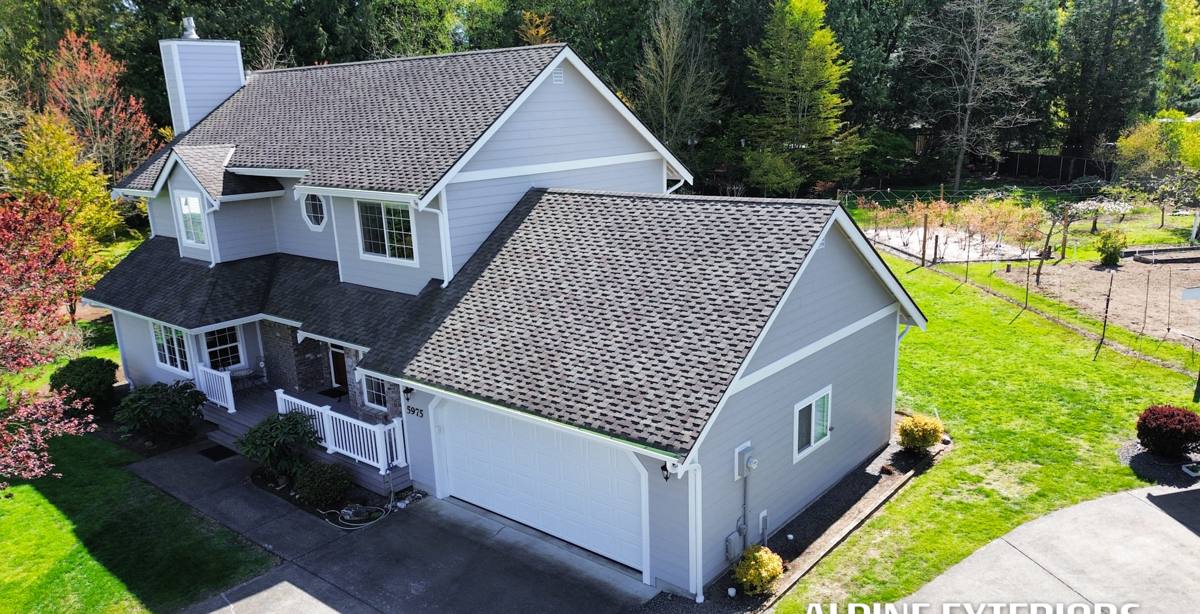
What Bellingham's Climate Actually Does to Siding
Three factors do most of the damage to siding in this part of Whatcom County, and they compound each other:
Driving rain
Bellingham doesn't just get a lot of rain — it gets wind-driven rain, which behaves very differently than a straight-down shower. Wind pushes water sideways into lap joints, butt seams, and anywhere caulk or flashing has started to fail. Over time, water finds its way behind the siding rather than running off the face of it, and that's where the real damage happens: in the sheathing and framing you can't see, not just the siding surface you can.
Salt air
Homes closer to Bellingham Bay and the broader Puget Sound corridor deal with a slow, steady exposure to salt-laden air. Salt is corrosive to metal fasteners, flashing, and trim, and it accelerates the breakdown of paint films and lower-grade composite materials. It's a quieter threat than a rainstorm, but it's constant, and it's one reason coastal Pacific Northwest homes age differently than inland ones.
Moss, mildew, and a long wet season
Silver Beach's tree cover is an asset for shade and privacy, but it also means siding on north- and east-facing walls can stay damp for days after a storm, with limited direct sun to dry it out. That's exactly the environment moss, algae, and mildew need to take hold. Once organic growth establishes itself on a wall, it holds moisture against the surface and speeds up whatever deterioration is already happening underneath.
Signs a Silver Beach Home Needs Siding Repair
Most siding problems give warning signs well before they become structural. Homeowners who catch these early save real money, because a targeted repair is a fraction of the cost of replacing rotted sheathing or framing.
- Soft or spongy spots when you press on the siding, especially near the bottom courses or below windows
- Visible cracking, buckling, or warping on individual boards or panels
- Paint that's peeling, bubbling, or failing faster in one area than the rest of the house
- Dark staining or streaking that keeps coming back after cleaning — often a sign of trapped moisture, not just surface dirt
- Gaps opening up at seams, corners, or where siding meets trim, window casings, or the foundation
- Persistent moss or algae growth on shaded walls that keeps returning within a season of cleaning
- A musty smell or visible moisture on interior walls that back up to an exterior wall showing siding damage
- Nail heads popping out, or fasteners that have rusted and stained the siding around them
Repair or Replace? How We Make That Call
Not every damaged section needs a full re-side, and we don't push replacement when a repair will genuinely hold. The honest answer depends on how far the damage has spread and what's underneath the siding once we open it up.
| Factor | Repair is usually the right call | Replacement is usually the right call |
|---|---|---|
| Extent of damage | Isolated to one wall, corner, or a handful of boards/panels | Damage is spread across multiple elevations or the whole house |
| Sheathing condition | Sheathing is sound once siding is removed | Sheathing is soft, delaminated, or rotted over a wide area |
| Age and material | Existing siding is Hardie or another sound material, still within its useful life | Existing siding is old cedar, primed spruce, or degraded composite nearing end of life |
| Color/profile match | A close match is achievable, or the repaired section is low-visibility | Discontinued color or profile makes a seamless patch impossible on a visible elevation |
| Root cause | Root cause (flashing, caulking, a single failure point) can be fixed directly | Root cause is systemic — original installation errors repeating across the house |
We'll tell you plainly which category your home falls into, and why, before any work starts.
What a Correct Siding Repair Actually Involves
A repair that's done right isn't just pulling off a damaged board and nailing up a new one. It's a sequence, and skipping steps is exactly how the same spot fails again in two or three years.
1. Diagnose before you cut
We remove enough siding to see what's actually happening behind it — not just the visible damage, but the flashing, house wrap, and sheathing condition around it. This tells us whether we're looking at a surface repair or something that's already spread into the wall assembly.
2. Fix the water path, not just the symptom
If water is getting behind the siding because of a caulking failure, missing kick-out flashing, a bad window seal, or a butt joint that was never properly lapped, replacing the board without fixing that entry point just delays the next repair. We address the cause first.
3. Confirm the water-resistive barrier is intact
The house wrap or building paper behind the siding is the home's real defense against bulk water. If it's torn, sagging, or improperly lapped, we repair or replace it before anything goes back on the wall.
4. Replace with the right material, properly fastened
New material goes in following manufacturer-spec fastening patterns, gaps, and clearances — including ground clearance and proper flashing at any horizontal joints, which is one of the most commonly skipped details in lower-cost repair work.
5. Match finish and caulk correctly
Caulk only where it belongs — over-caulking siding joints traps moisture instead of shedding it, which is a common mistake that creates new problems. On ColorPlus-finished material, we work with the factory finish system rather than fighting it with field paint that won't perform or weather the same way.
Why We Repair (and Replace) Only With James Hardie Fiber Cement
Our company made a deliberate decision to install and repair with James Hardie fiber cement siding exclusively — not vinyl, not LP SmartSide, not Cemplank, Allura, primed spruce, or cedar. That's not a marketing position; it's a standard we hold because of what we consistently see on homes in this climate.
Fiber cement doesn't absorb water the way wood-based products can, which matters enormously in a market with Bellingham's rain volume and long damp season. It's non-combustible, which is an increasing consideration for insurance and wildfire-adjacent risk across the Pacific Northwest. Hardie's ColorPlus factory finish is baked on under controlled conditions, which holds color and resists the fading and chalking that field-applied paint is prone to — especially on walls that take direct salt air and UV exposure. And Hardie's HZ product lines are engineered specifically for climate zones like ours, with formulations suited to high-moisture, freeze-adjacent regions.
We're not going to tell you every other siding product is worthless — vinyl and engineered wood both have legitimate uses and reasonable homeowners choose them for real reasons, usually upfront cost. But when a Silver Beach homeowner asks us to patch failing wood or composite siding, we're honest that we don't install those materials, and we'll explain exactly why fiber cement is what we recommend going back on that wall, especially for any section facing years more of this climate.
What We Repair vs. What We'll Recommend Replacing
| Existing siding | Our approach |
|---|---|
| James Hardie fiber cement | Direct repair — matching plank/panel, proper flashing and fastening, ColorPlus-compatible finish work |
| Cedar or primed spruce | We'll assess and repair minor issues, but flag ongoing maintenance burden and recommend fiber cement for future replacement of affected sections |
| Vinyl or LP SmartSide | We'll be direct about the limits of a patch on these materials and provide a fiber cement quote as the long-term fix |
Why Hiring a Crew That Already Works Silver Beach Matters
Siding repair is a trade where local knowledge shows up in the details. A crew that already works in Silver Beach and the surrounding Bellingham neighborhoods knows how tree-shaded lots behave differently than open ones, understands the wind-driven rain patterns that hit certain elevations harder than others, and has already seen how homes of this era were originally built and where their common failure points tend to be. That's the difference between a repair that's cosmetically fine and one that's actually built to hold up through the next several wet seasons.
There's also a practical side: a local crew can respond faster if a repair uncovers something unexpected, sources matching Hardie material without shipping delays, and stands behind the work because they're not going anywhere — this is the market we work in every year, not a one-off job.
Maintaining Siding After a Repair in This Climate
A correct repair sets your siding up to perform, but a little seasonal attention keeps it that way — particularly on shaded Silver Beach lots where moss and mildew have every advantage.
- Rinse siding gently once or twice a year, focusing on north- and east-facing walls that dry slowest
- Keep gutters clear so overflow isn't running down the siding face during heavy storms
- Trim back branches and shrubs that keep siding shaded and damp longer than necessary
- Walk the exterior after major windstorms and check caulking at trim, windows, and joints
- Address small issues — a lifted piece of trim, a hairline gap at a seam — before the next rainy season, not after
Get an Honest Look at What Your Siding Needs
If you're seeing damage, staining, or recurring moss on your Silver Beach home, we're happy to take a look, tell you plainly whether it's a repair or something bigger, and walk you through what correcting it the right way actually involves. There's no pressure and no cost to get our read on it — use the form below to request a free estimate.