 Bellingham Roofing
 New Roof Installation for Silver Beach Homes
Silver Beach sits close enough to the water that homes here take on a different kind of weather than roofs just a few miles inland. Salt-laden air moves through the trees, wind-driven rain comes in sideways off the water more often than most homeowners expect, and the tree canopy that makes the neighborhood so pleasant to live in also means a long, wet moss season on anything with north-facing exposure or heavy shade. A new roof installed here needs to be specified and built with that combination in mind, not just installed the same way you'd do it on a dry, open lot on the other side of town.
This page covers what a correct new roof installation looks like specifically for Silver Beach conditions — the materials that hold up, the details that actually stop leaks, and what our process looks like from first look to final walkthrough.
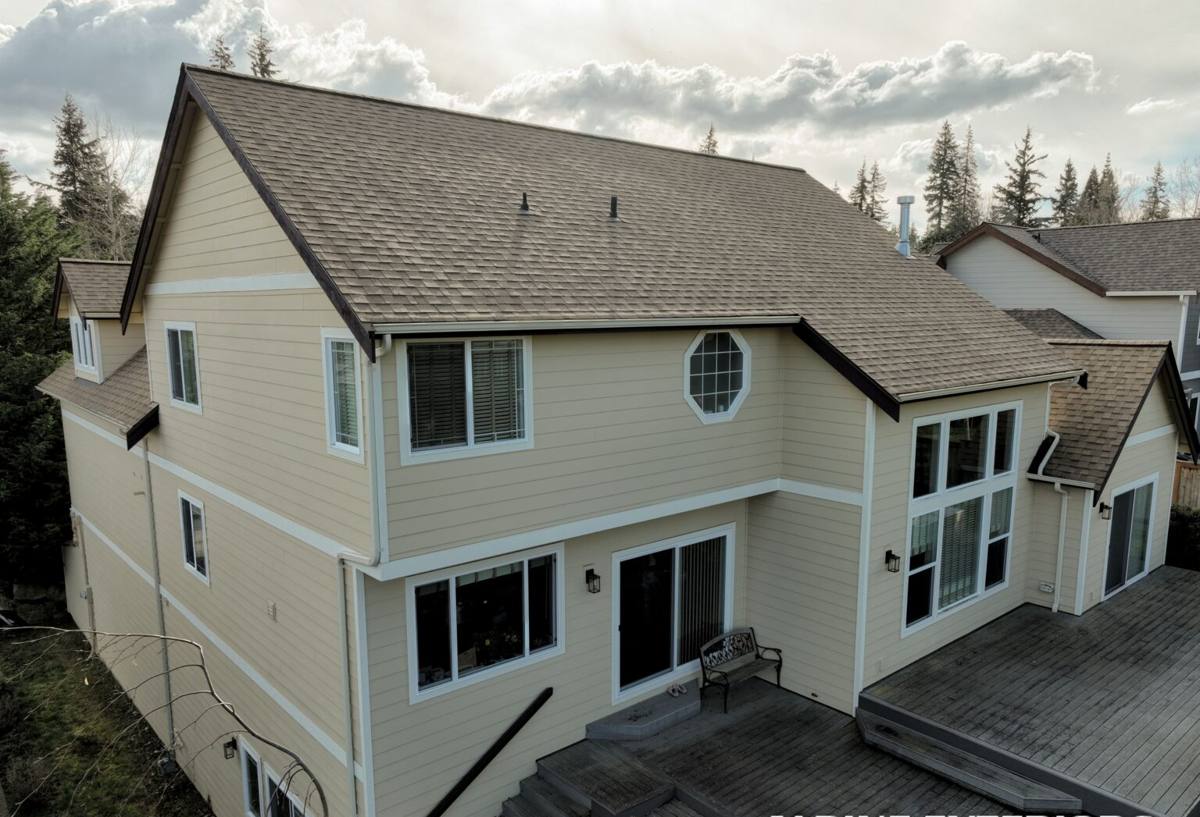
What Silver Beach's Climate Does to a Roof
Bellingham and the rest of Whatcom County sit in a Pacific maritime climate, but proximity to water and tree cover change how that climate actually hits a given roof. A few things we see consistently on homes in and around Silver Beach:
- Salt air acceleration: Airborne salt speeds up corrosion on exposed metal — nails, flashing, vent stacks, and gutter hardware age faster here than they would further inland.
- Driving rain, not just steady rain: Wind off the water pushes rain sideways during storms, which stresses vertical laps, sidewall flashing, and any transition where two roof planes or a wall meet the roof.
- Extended moss season: Shade from mature trees keeps shaded slopes damp for weeks at a stretch, which is exactly the environment moss and moisture-loving algae need to establish and spread.
- Freeze-thaw cycling: Not extreme cold, but enough freeze-thaw swings each winter to work water into any gap that wasn't sealed correctly the first time.
None of this means a roof in Silver Beach is doomed to fail early. It means the installation has to account for these forces on purpose, from material selection down to how the fasteners are driven.
Why "Standard" Installation Isn't Enough Here
A roof that would perform fine in a dry, open subdivision can underperform in Silver Beach if it's built to a generic spec. The difference usually isn't the shingle or panel itself — it's the underlayment system, the flashing details, the fastener choice, and the attention paid to shaded, moss-prone slopes. That's the part of the job that doesn't show up in a sales brochure but shows up in your gutters five years later.
Choosing the Right Roofing Material
There's no single "best" roofing material for every home — the right choice depends on your roof's pitch, how much shade it gets, your budget, and how long you want to go before the next major roof project. Here's how the common options stack up for a salt-air, high-moisture, moss-prone setting like Silver Beach:
| Material | How it handles salt air & moisture | Moss resistance | Typical lifespan here |
|---|---|---|---|
| Architectural asphalt shingle | Good, especially with algae-resistant granules and quality underlayment | Moderate — needs periodic cleaning on shaded slopes | 25–30 years |
| Standing seam metal | Excellent when properly coated fasteners and finishes are used | High — sheds moisture quickly, little for moss to grip | 40–50+ years |
| Composite/synthetic shake | Good — doesn't absorb moisture like wood | Moderate to high depending on product | 30–50 years |
| Cedar shake (natural wood) | Requires ongoing maintenance in this climate | Low without regular treatment and cleaning | 20–30 years with upkeep |
We don't install natural cedar shake as a standard offering. It can look great, but in a shaded, damp, salt-air environment it demands a maintenance schedule most homeowners don't want to keep up with, and the moisture retention makes it a poor match for exactly the conditions Silver Beach roofs face. If you want that look, composite shake products give you a similar profile with far less long-term burden — that's a trade-off we're happy to walk through honestly.
What a Correct Installation Actually Involves
The shingle or panel you choose matters less than most homeowners think. What actually determines whether a roof holds up in this climate is what's underneath and around it. Here's what we consider non-negotiable on any new roof install in this neighborhood:
Underlayment System
A synthetic underlayment with a full self-adhered ice-and-water membrane at eaves, valleys, and any low-slope transition. In a driving-rain climate, the underlayment is your real waterproofing layer — the roof covering above it is the first line of defense, not the only one.
Flashing Details
Step flashing at every sidewall, counterflashing where the roof meets siding or chimneys, and properly lapped valley flashing. This is where the vast majority of "mystery leaks" originate on older roofs, and it's the detail most likely to get shortcut on a rushed install.
Fastener Selection
Corrosion-resistant fasteners throughout — this matters more in a salt-air setting than almost anywhere else in the county. Standard fasteners can start showing rust streaks and losing holding strength years before they should in this environment.
Ventilation
Balanced intake and exhaust ventilation so moisture from inside the home doesn't get trapped against the underside of the roof deck. Poor ventilation shortens the life of any roofing material and contributes to deck rot you won't see until it's already advanced.
Moss-Prone Slope Treatment
Zinc or copper strips near the ridge on shaded, moss-prone slopes give you ongoing, low-maintenance moss suppression without chemical treatments that need to be reapplied every year.
Our Installation Process
Every new roof we install in Silver Beach follows the same sequence — we don't skip steps to save a day, and we don't add unnecessary ones to pad the invoice.
- On-site assessment: We walk the roof and attic (not just look from the ground), check deck condition, ventilation, and existing flashing, and note shade patterns that affect moss risk.
- Written estimate: A clear scope with material options, so you're comparing apples to apples rather than guessing what's included.
- Tear-off and deck inspection: Old roofing comes off, and we inspect the deck underneath — any soft or damaged sheathing gets replaced before anything new goes down, not covered over.
- Underlayment and flashing installation: The waterproofing layer and all flashing details go in first, before the finish material is ever considered "the roof."
- Roofing material installation: Installed to manufacturer spec, with attention to the details above that matter most for this climate.
- Ventilation check and final details: Ridge, soffit, and any powered ventilation confirmed to be working as a balanced system.
- Cleanup and walkthrough: Site cleaned, debris and nails swept from the yard and driveway, and we walk the finished roof with you.
Signs Your Roof May Need Full Replacement
Not every roofing problem calls for a full new roof — sometimes a repair is the honest answer. These are the signs that usually mean replacement is the more sensible path:
- Shingles that are cupping, curling, or losing granules across large sections of the roof, not just one spot
- Multiple past repairs in different areas, suggesting the underlying material is simply past its service life
- Soft spots or sagging in the roof deck when walked
- Persistent moss growth that keeps returning within a season or two of cleaning
- Daylight visible through the attic roof boards, or consistent moisture staining on attic sheathing
- A roof already at or past the upper end of its expected lifespan for its material
Why Local Experience Matters for This Job
A roofing crew that primarily works dry, inland jobs can install a technically sound roof and still miss the details that matter most near the water. Knowing which slopes in a shaded, waterside neighborhood will hold moisture longest, which flashing details fail first under driving rain, and which fastener and metal choices actually hold up against salt air isn't something you learn from a spec sheet — it's something you learn by doing this work, in this climate, on homes like yours. We work throughout Bellingham and Whatcom County, and Silver Beach's particular mix of shade, water proximity, and wind-driven rain is a pattern we've built our process around rather than a surprise we're solving for the first time.
What to Ask Any Roofer Bidding This Job
Whoever you hire, it's worth asking these questions before you sign anything:
- What underlayment system do you use, and is ice-and-water membrane included at valleys and eaves?
- What flashing materials and fastener types do you use, given the salt air in this area?
- Is deck inspection and any necessary sheathing replacement included in the estimate, or billed separately if found?
- What ventilation changes, if any, does the plan include?
- What's the manufacturer's warranty, and what's covered under your own workmanship warranty?
- Are you licensed and insured in Washington State, and can you provide proof?
A contractor who answers these clearly and specifically, without dodging into vague reassurances, is one worth taking seriously.
Get a Free, No-Pressure Estimate
If your roof is showing its age or you're planning ahead for a replacement, we're happy to take a look and give you a straight answer — whether that's a full new roof, a repair, or simply a timeline for when replacement makes sense. Use the form below to request a free estimate for your Silver Beach home, with no pressure and no obligation.