 Bellingham Roofing
 Why Silver Beach Decks Wear Differently Than Decks Inland
Silver Beach sits close enough to open water that homes here deal with a mix most inland Whatcom County properties don't: salt-laden air moving in off the water, driving rain that comes in sideways during fall and winter storms, and shaded, damp corners where moss and algae never really stop growing. None of that is unusual for Bellingham. But it does mean a deck built the same way it would be in a drier, more sheltered part of the county tends to show problems sooner here — soft spots, discoloration, slippery boards, and hardware that corrodes ahead of schedule.
Salt Air and Metal Fasteners
Salt air speeds up corrosion on anything metal that isn't rated for it — screws, joist hangers, post bases, and railing brackets. On a deck near the water, the fasteners and hardware matter as much as the decking boards themselves. Standard exterior-grade screws that would be fine a few miles inland can start rusting and staining composite boards within a couple of seasons out here.
Driving Rain and Standing Water
Wind-driven rain doesn't just fall on a deck, it gets pushed under railings, into board gaps, and against ledger connections at the house. If the substructure underneath isn't sloped and vented correctly, water sits instead of draining, and that trapped moisture is where rot in the framing and mold under the boards both get started — even when the decking surface itself is composite and technically "waterproof."
A Long Moss Season
Bellingham's moss season runs long — often eight months or more in shaded, north-facing, or tree-covered yards, which describes a lot of Silver Beach lots. Moss and algae on a deck surface aren't just cosmetic. They hold moisture against the board, create a genuinely slick walking surface, and if left to build up in board gaps and around posts, they can trap grit that scratches the surface finish over time.
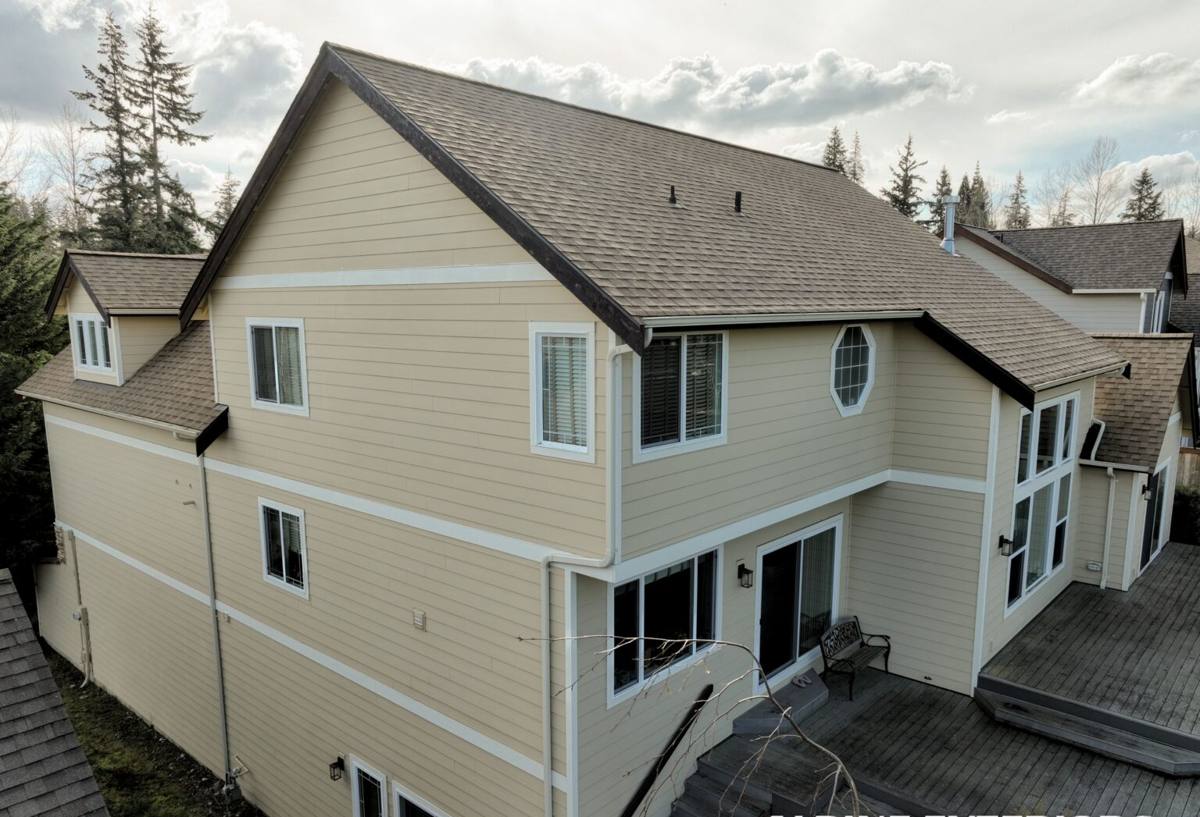
What Composite Decking Actually Solves (and What It Doesn't)
Composite decking is a good fit for this climate because it doesn't absorb water and swell, split, or splinter the way wood does, and it doesn't need annual staining or sealing. That's a real advantage in a place where a deck spends a good chunk of the year wet. What composite doesn't do is eliminate moisture problems underneath the deck. It also doesn't clean itself — moss and algae will grow on composite just as they will on wood, because they're feeding on airborne spores and organic debris sitting on the surface, not on the material itself. Anyone who tells you composite decking is maintenance-free in a climate like this isn't giving you the full picture; it's lower-maintenance, not no-maintenance.
What a Correctly Built Composite Deck Looks Like Underneath
Substructure and Ventilation
The framing underneath a composite deck does the real work of keeping the whole structure sound, and it's the part most homeowners never see once the project is done. That means pressure-treated joists rated for ground contact where they're close to grade, adequate airflow underneath so damp air can escape instead of sitting against the wood, and joist spacing tightened up from typical wood-deck standards, since composite boards flex differently under load than solid lumber.
Fasteners and Hidden Clips
We use fasteners and hidden fastening systems rated for coastal or high-moisture exposure, not generic exterior-grade hardware. Hidden clip systems also matter here for a practical reason beyond appearance — they don't create the screw-head pockets where standing water and grime collect on the surface, which cuts down on the spots where moss and mildew tend to start.
Ledger Boards and Flashing
Where the deck attaches to the house, the ledger board and flashing are doing the job of keeping wind-driven rain from working its way behind the siding and into the wall structure. This connection is one of the most common places we find water damage on older decks we're asked to replace, and it's worth getting right the first time rather than patching around it later.
Choosing a Composite Board for This Climate
Not all composite decking is built the same, and the differences matter more in a wet, salt-air climate than they would somewhere dry. The biggest factor is whether a board is fully capped — meaning a protective polymer shell wraps the entire board — or only capped on the top and sides, or not capped at all. Fully capped boards resist moisture absorption and staining the best, which is exactly what a Silver Beach deck needs.
| Decking Type | Moisture & Moss Resistance | Typical Maintenance | Best Fit For |
|---|---|---|---|
| Fully capped composite | Strong — shell resists absorption and staining | Periodic wash-down, no sealing | Shaded, wet, or salt-exposed lots |
| Traditional (uncapped) composite | Weaker — core can absorb moisture over time | More frequent cleaning; watch for swelling at cut ends | Drier, more sheltered locations |
| Cellular PVC | Very strong — no wood fiber content to absorb water | Low; surface cleaning only | Waterfront or deep-shade properties |
| Pressure-treated wood | Depends entirely on ongoing sealing and staining | Annual cleaning, sealing, and inspection | Owners who want a traditional look and don't mind upkeep |
We'll walk you through these trade-offs honestly during your estimate — including where a board's cut ends, fastener holes, and picture-frame edges need extra attention regardless of brand, since those are the spots where moisture finds its way in first.
Our Process, Start to Finish
- On-site assessment of the existing structure (or the build site, for a new deck), grade, drainage path, and sun/shade exposure.
- Honest discussion of board options and hardware suited to this specific lot — not a one-size-fits-all pitch.
- A written estimate that separates substructure work from decking material, so you can see where the cost is actually going.
- Framing and structural work, built or reinforced to current code with fasteners and connectors rated for wet, salt-exposed conditions.
- Decking installation with attention to board spacing, expansion gaps, and drainage at every ledger and post connection.
- A final walkthrough covering how the deck will behave through a Bellingham winter and what upkeep it actually needs.
Living With a Composite Deck in a Moss-Prone, Rainy Climate
A composite deck built correctly for this area still needs a little seasonal attention — just far less than a wood deck would. Most of it comes down to keeping organic debris from sitting on the surface long enough to feed moss and algae growth, and keeping an eye on the structure underneath.
- Sweep off fallen leaves and needles regularly, especially in fall — wet organic debris left on the surface is what feeds moss and mildew.
- Rinse the deck a few times a year with plain water and a stiff (non-metal) bristle brush; avoid pressure washers on composite unless you know the manufacturer's PSI limits.
- Keep board gaps and drain paths clear of debris so water can shed off the deck instead of pooling.
- Check railing posts and stair connections annually for any looseness, which can signal moisture reaching fasteners underneath.
- Look underneath the deck once a year for standing water, sagging joists, or discoloration on the framing — problems here start below the surface, not on top of it.
- Trim back overhanging branches where practical to cut down on shade and falling debris that accelerate moss growth.
What Drives Cost on a Silver Beach Composite Deck
Every deck project has its own cost drivers, but a few factors come up consistently on jobs in this part of Bellingham. Site access and slope matter more here than on a flat inland lot — a deck built into a grade or with limited equipment access takes more labor to frame correctly. Height off grade affects both structural requirements and railing code compliance. And board selection has a real range: fully capped composite and PVC cost more up front than uncapped composite or wood, but they typically cost less over the life of the deck once you account for maintenance and earlier replacement of lower-grade material.
We give straightforward, itemized estimates rather than a single lump number, so you can see exactly what you're paying for in framing versus decking material versus hardware — and where there's room to adjust the scope if needed.
Why Local Experience in Silver Beach Matters
A contractor who's worked this specific stretch of Bellingham already knows which lots hold water longer, which yards stay shaded most of the day, and how exposed a given site is to wind off the water. That's not something you can fully account for from a generic spec sheet — it comes from having built and repaired decks in these conditions before. It also means we're familiar with Whatcom County permitting and inspection requirements for deck construction, so there are no surprises partway through the project. Hiring a crew that already understands this climate isn't about a sales pitch — it's the difference between a deck that's built to the letter of the code and one that's actually built to hold up here.
If you're planning a new composite deck or replacing an aging one in Silver Beach, we're glad to take a look and walk you through honest options for your specific lot. Use the form below to request a free, no-pressure estimate — there's no obligation, just a straight assessment of what your deck actually needs.