 Bellingham Roofing
 Edgemoor Sits Right Where Bellingham's Climate Gets Toughest on Siding
Edgemoor's location along Bellingham Bay is part of what makes it such a desirable place to live — and part of what makes siding maintenance here more demanding than in a lot of Whatcom County. Homes closer to the water take on salt-laden air that accelerates corrosion of fasteners, trim, and any exposed metal flashing. Add in the region's long stretch of driving rain off the Sound and the deep shade many Edgemoor lots enjoy from mature trees, and you get conditions that keep siding damp far longer than homes in drier, more open parts of the county. That combination — salt, moisture, and shade — is exactly what drives moss and algae growth, and it's why siding that looks fine from the street can be hiding real damage underneath.
We're not describing a hypothetical here. It's the pattern we see on service calls throughout this part of Bellingham: siding that fails first at the bottom courses near grade, around window and door trim, and on north-facing walls that rarely get direct sun to dry out between storms.
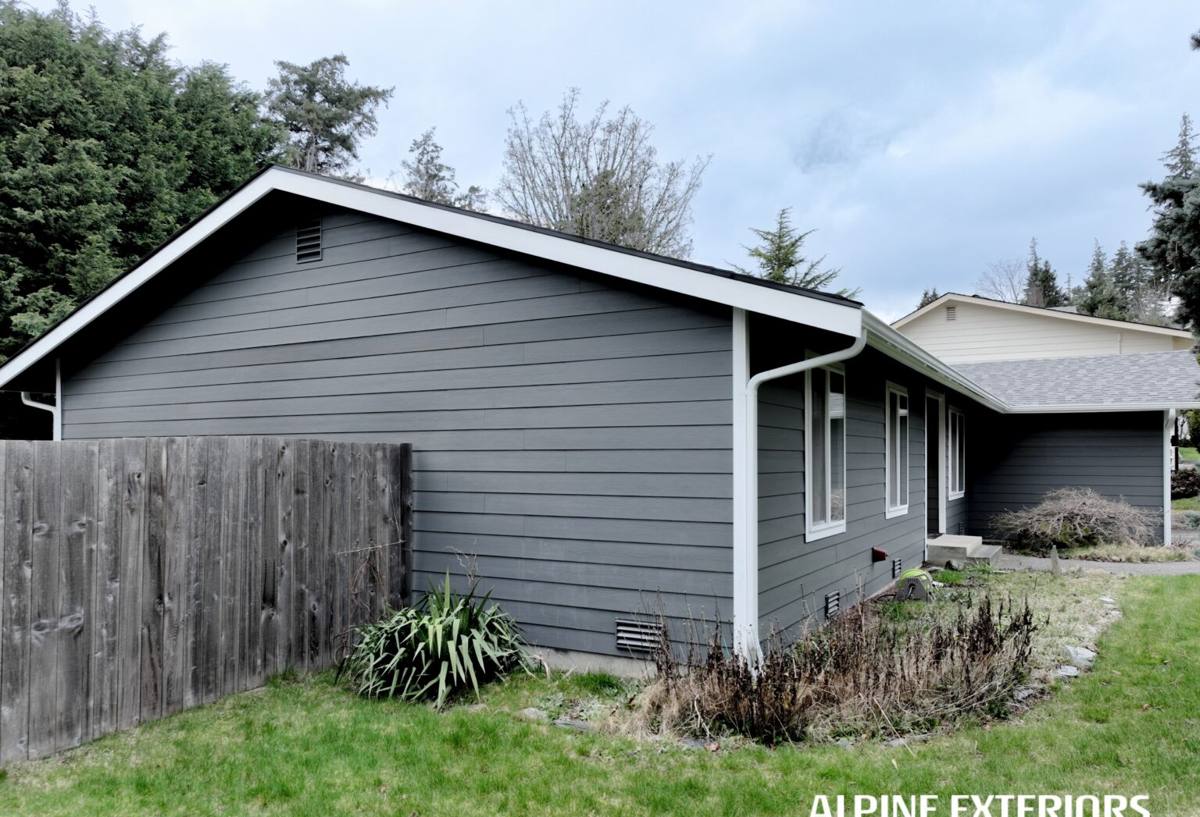
Signs an Edgemoor Home Needs Siding Repair, Not Just a Cleaning
Moisture Damage Signs
Soft or spongy spots when you press on siding, dark staining that doesn't wash off, and paint that's bubbling or peeling in specific spots (rather than uniformly across a wall) are all signs that moisture has gotten behind the surface. On wood-based products, this often means active rot. On fiber cement, it's more often a sign of a failed joint, a caulking gap, or flashing that's letting water track behind the panel.
Moss and Algae Growth
A little surface algae on a shaded wall is cosmetic. Moss that's established itself in seams, laps, or butt joints is different — it holds water against the siding continuously, which is a much bigger problem than the green color itself. If moss keeps coming back to the same spots no matter how often it's cleaned off, that's usually a sign the siding detail in that area isn't shedding water the way it should.
Cracking, Warping, and Gaps
Cracked boards, warped panels, or gaps that have opened up at seams let wind-driven rain in directly. On a bay-adjacent property, wind-driven rain isn't an occasional event — it's a regular part of the weather pattern, so gaps that would be minor elsewhere become active entry points here.
What a Correct Siding Repair Actually Involves
A repair that only addresses what's visible on the surface tends to fail again within a season or two, especially in a climate like this one. Doing it right means treating the visible damage as a symptom and finding the cause.
- Removing the damaged siding far enough back to expose the house wrap and flashing underneath, not just the boards that look bad
- Checking for water staining, mold, or rot in the sheathing itself before closing anything back up
- Confirming flashing at windows, doors, and butt joints is lapped correctly so water sheds outward, not behind the wall
- Re-sealing or replacing house wrap that's torn, missing, or improperly overlapped
- Matching new material — profile, reveal, and finish — so the repair doesn't stand out as a patch
- Using fasteners and flashing details rated for coastal, high-moisture exposure
Skipping any of these steps is how a $400 patch turns into a $4,000 sheathing replacement two years later. On Edgemoor homes specifically, we pay extra attention to grade clearance and drainage around the foundation, since low spots near the water table can keep the bottom courses of siding damp longer than the rest of the wall.
Repair vs. Replacement: How We Decide
Not every damaged section needs a full re-side, and we'd rather tell you that up front than sell you more than the house needs. The table below covers the factors we actually weigh on a job walk.
| Factor | Repair Usually Makes Sense | Replacement Usually Makes Sense |
|---|---|---|
| Extent of damage | Isolated to one or two wall sections | Recurring damage across multiple elevations |
| Sheathing condition | Dry, sound wood behind the siding | Rot or soft sheathing found during tear-off |
| Siding material | Existing James Hardie in good general condition | Aging wood, vinyl, or LP product nearing end of life |
| Age of siding | Under 10-15 years, well maintained | Original siding from a much older build |
| Moisture history | First-time issue, clear cause identified | Chronic moss, staining, or water intrusion over years |
When the underlying structure is sound, a targeted repair is the honest answer and the cheaper one. When we find rot in the sheathing or damage spread across several walls, patching it is a short-term fix that costs more in the long run — and we'll walk you through exactly why before recommending it.
Our Process for Edgemoor Siding Repair Calls
- On-site inspection. We look past the damaged section to check surrounding walls, trim, and grade drainage, since problems in this climate rarely stay isolated.
- Diagnosis and written scope. You get a clear explanation of what's causing the damage and what fixing it correctly requires — not just a price.
- Material matching. We source James Hardie product that matches your home's existing profile and ColorPlus finish as closely as possible.
- Removal and inspection behind the siding. This is the step that gets skipped by crews trying to move fast, and it's the one that actually determines whether the repair holds.
- Correct reinstall. Proper flashing laps, fastener spacing, and clearances to grade, done to manufacturer spec so the warranty stays intact.
- Cleanup and walkthrough. We show you what we found and what we did about it.
Why We Only Repair and Replace with James Hardie Fiber Cement
We don't install vinyl, LP SmartSide, primed spruce, cedar, or other fiber cement brands, and that's a deliberate standard, not a limitation of what we're capable of doing. In a climate like Bellingham's — with sustained damp seasons, salt air near the bay, and heavy moss pressure — the material behind the paint matters as much as the workmanship in front of it.
James Hardie's fiber cement is non-combustible, doesn't swell or rot the way wood-based products can when moisture gets past a seam, and its HZ5 product line is specifically engineered for climates with freeze-thaw cycles and prolonged wet weather, which describes most Pacific Northwest winters. The factory-applied ColorPlus finish also matters for repair work specifically: it holds color and resists the kind of fading and moss staining that makes field-painted repairs look mismatched within a year or two. And because it's backed by a strong, transferable manufacturer warranty when installed to spec, a repair done right today stays protected long after we've left the job site.
We understand not every home we're called to already has Hardie siding on it. When that's the case, we're upfront about what a repair on a different material can and can't accomplish, and what moving to Hardie during a larger project would look like — no pressure, just the honest trade-offs.
Maintenance Checklist to Protect Edgemoor Siding Between Service Visits
A little seasonal attention goes a long way toward keeping repairs from becoming necessary in the first place, especially on shaded or bay-facing walls.
- Rinse moss and algae off siding gently at least once a year, before it establishes in seams and joints
- Trim back branches and shrubs that keep walls in constant shade or trap moisture against the siding
- Check and re-caulk gaps around windows, doors, and trim every couple of years
- Keep gutters clear so overflow isn't running down exterior walls
- Confirm grade and mulch beds slope away from the house and don't bury the bottom edge of the siding
- Walk the exterior after major windstorms and check for loose or cracked panels
Why a Crew That Already Works Edgemoor Makes a Real Difference
Siding repair isn't one-size-fits-all across Whatcom County. A crew that regularly works Edgemoor and the surrounding Bellingham neighborhoods already knows which details matter most this close to the bay — where moss tends to establish first, which wall orientations take the worst of the driving rain, and how much clearance to grade actually holds up over a Bellingham winter. That familiarity shortens the diagnosis, since we're not guessing at causes we've never seen in this specific setting. It also means we're realistic with you about timelines and weather windows, since scheduling exterior work around this area's rain patterns is part of doing the job properly rather than rushing between storms.
If your Edgemoor home has siding damage, staining that won't wash off, or areas that keep growing moss no matter how often they're cleaned, we're happy to take a look. Reach out for a free, no-pressure estimate using the form below — we'll give you an honest read on what's actually going on and what it would take to fix it right.