 Bellingham Roofing
 Siding That Has to Work Year-Round in York
York is one of Bellingham's older, established neighborhoods, which means a lot of the homes here were sided decades ago under very different building standards — and very different expectations for what siding needs to survive. Whatcom County's marine climate is not gentle on exterior walls. Homes close to Bellingham Bay deal with salt-laden air that accelerates corrosion on fasteners and trim. Everyone in the area deals with driving, wind-blown rain that hits siding sideways instead of straight down, and a moss season that can run eight months or longer in shaded, north-facing exposures common on older lots with mature trees.
When we talk about "siding installation for York," we mean something more specific than swapping old boards for new ones. It means choosing a product engineered for this climate and installing it in a way that actually manages the moisture this region throws at a house all year. That is the whole focus of this page: what York homes need, what correct installation looks like, and why the product we use — and the products we deliberately don't — matters here more than in drier parts of the country.
What Salt Air, Rain, and Moss Actually Do to Siding
Salt Air and Metal Fasteners
Proximity to Bellingham Bay means airborne salt is a real factor, not a coastal cliché. Salt accelerates galvanic corrosion on nails, screws, and flashing, especially where dissimilar metals meet. Siding installed with the wrong fastener type, or without corrosion-resistant flashing at penetrations, will show rust streaking and loosened boards years before the siding material itself has failed.
Driving Rain and Wall Assemblies
Bellingham's rain rarely falls straight down. Wind off the water pushes it sideways and up under laps, trim, and butt joints. A wall assembly built for this needs a continuous weather-resistive barrier, correctly lapped flashing, and siding that won't wick or swell when it gets wet repeatedly. This is where a lot of older siding systems in York show their age — water finding its way behind the cladding and staying there.
The Long Moss Season
Shaded exposures, mature landscaping, and persistent damp conditions add up to a moss and algae season that runs much of the year in parts of Whatcom County. Moss holds moisture against the siding surface, and on materials that aren't dimensionally stable or properly finished, that constant dampness is what eventually causes swelling, delamination, or paint failure — long before the siding is structurally "old."
Why We Install Only James Hardie Fiber Cement
We standardized on James Hardie fiber cement siding exclusively. We don't install vinyl, LP SmartSide, Cemplank, Allura, primed spruce, or cedar, and we think homeowners deserve an honest explanation of why — not just a sales pitch for the brand we happen to carry.
Vinyl siding is inexpensive and low-maintenance, but it expands and contracts significantly with temperature swings, can warp or crack in cold snaps, and is not rated as a fire-resistant cladding. LP SmartSide and other engineered wood products use a wood-strand core that, once its factory coating is compromised at a cut edge or fastener puncture, can absorb moisture and swell — a real risk in a climate with York's rain and moss exposure. Cemplank and Allura are also fiber cement, and both are reasonable products in the abstract, but we've made a business decision to install one system, know it inside and out, and stand fully behind it, rather than spread our crews across multiple product lines with different installation specs, trim details, and warranty terms. Primed spruce and cedar are beautiful materials, but they need real maintenance — repainting, caulking, and moisture monitoring — on a schedule most homeowners don't want to keep up with, especially in a climate this wet.
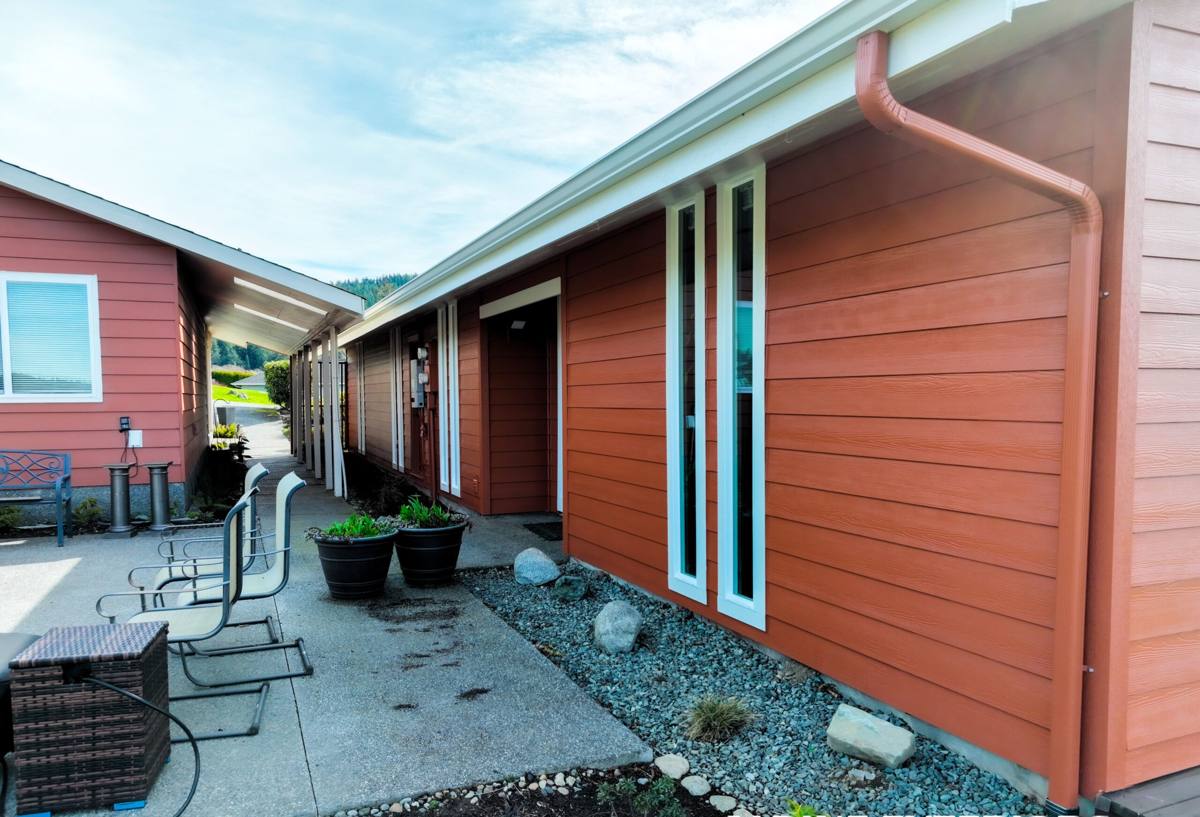
James Hardie fiber cement is non-combustible, dimensionally stable in wet-dry cycling, and available in HZ5 and HZ10 formulations engineered specifically for climate zones like ours. The ColorPlus factory finish is baked on under controlled conditions, which holds color and resists fading and moisture intrusion far better than field-applied paint. That combination — the right base material, the right climate engineering, and a durable factory finish — is why this is the only siding we put on homes.
What a Correct Installation Actually Involves
Fiber cement siding is only as good as the wall assembly behind it. A rushed or corner-cut install can undermine even the best siding material. Here's what we consider non-negotiable on every job, including in York.
Weather-Resistive Barrier and Flashing
Every project starts with a continuous, properly lapped weather-resistive barrier over the sheathing. Window and door flashing gets installed shingle-style so water is directed out and down, never into the wall cavity. Given how much wind-driven rain this area sees, this step is where most long-term failures either get prevented or get built in.
Fastening and Clearances
James Hardie publishes specific fastener, spacing, and clearance requirements — including minimum gaps between siding and roof lines, decks, and grade — and following them to the letter is what keeps the manufacturer's warranty valid. It also directly addresses moisture and moss risk: proper ground clearance and drainage keep the bottom courses from sitting in damp conditions where moss and rot take hold first.
Caulking, Trim, and Cut Edges
Every cut edge of fiber cement siding needs to be sealed or primed per manufacturer spec before installation, and trim details around windows, corners, and penetrations need to shed water rather than trap it. This is detail work, and it's where an experienced crew separates itself from a fast one.
Our Process, Start to Finish
We walk every York project through the same sequence, adjusted for the specific house:
- On-site assessment of existing siding, sheathing condition, and any moisture or moss damage already present
- Removal of old siding and inspection of sheathing, with repair or replacement of any compromised wood before new material goes up
- Installation of a continuous weather-resistive barrier and correctly lapped flashing at every window, door, and penetration
- Installation of James Hardie fiber cement panels or lap siding to manufacturer fastening and clearance specifications
- Sealing and priming of all field-cut edges per Hardie spec
- Trim, corner, and detail work finished to shed water away from the wall assembly
- Final walkthrough covering warranty registration and basic care going forward
Choosing a Product Line and Finish for a York Home
James Hardie's HZ5 and HZ10 lines are engineered for different climate demands, and picking the right one depends on the specific exposure of the house — how much direct weather it takes, shading, and elevation. ColorPlus finishes come in a range of colors that are factory-baked for consistency and resist the fading and chalking that field-applied paint eventually shows.
| Consideration | What It Means for a York Home |
|---|---|
| Climate engineering (HZ5/HZ10) | Matched to moisture and temperature exposure specific to Whatcom County conditions |
| ColorPlus factory finish | Reduces repainting frequency compared to field-applied coatings, holds up better under prolonged damp and moss exposure |
| Panel vs. lap profile | Depends on the home's existing architecture — many York homes suit a traditional lap profile that matches the neighborhood's older housing character |
| Trim and accessory system | Using Hardie's own trim system keeps expansion rates and warranty coverage consistent across the whole exterior |
Cost Factors on a Siding Installation Project
Every home is different, and we don't quote firm numbers without seeing the house, but the same handful of factors drive cost on most York projects.
| Factor | Why It Affects Cost |
|---|---|
| Sheathing condition | Rot or moisture damage found during tear-off requires repair before new siding can go on |
| House size and complexity | More corners, gables, and window/door openings mean more trim and flashing detail work |
| Existing siding removal | Some older homes have layered siding or materials that require extra labor to remove safely |
| Product line and finish | HZ5 vs. HZ10 and specific ColorPlus colors carry different material costs |
| Access and site conditions | Mature landscaping, tight lots, or difficult access can affect staging and labor time |
Why a Crew That Already Works in York Matters
Siding contractors who work across Whatcom County regularly, rather than occasionally, tend to build a better instinct for how a particular neighborhood's housing stock behaves. In an established area like York, that means recognizing common sheathing conditions in older homes, knowing which exposures take the worst wind-driven rain, and understanding where moss tends to establish itself first because of tree cover and shading patterns typical of the area. That familiarity doesn't replace a proper on-site inspection, but it does mean fewer surprises once tear-off starts, and a crew that isn't guessing at how Bellingham's climate interacts with a given house.
Signs It May Be Time to Replace Siding
- Visible warping, buckling, or gaps between boards
- Persistent moss or algae growth that returns quickly after cleaning
- Soft spots or give when pressing on the siding surface
- Paint that's peeling or blistering repeatedly in the same spots
- Rising interior utility costs alongside visible drafts near exterior walls
- Rust staining around fasteners or trim
Get a Straightforward Look at Your Siding
If your York home is showing any of the signs above, or you're just planning ahead for a siding project, we're happy to come take a direct look and walk you through what we'd recommend and why — no pressure, no obligation. Use the form below to request a free estimate.