 Bellingham Roofing
 Why Sehome Decks Wear Out Faster Than Homeowners Expect
Sehome sits close enough to Bellingham Bay and the surrounding waterways that salt-laden air is a constant, low-grade stress on exterior wood and hardware. Add Whatcom County's long wet season, driving rain that comes in sideways off the water, and a moss season that can stretch from fall through spring, and you have a climate that is genuinely hard on decks. Most deck failures we see in this neighborhood aren't dramatic. They're slow: a ledger board that's been damp for years, joists that were never properly flashed, fasteners that corroded from the inside out, or decking boards that trapped moisture under a layer of moss and never fully dried between storms.
None of this is unique to any one house in Sehome. It's a function of the neighborhood's exposure and Bellingham's marine climate in general. A deck built with standard techniques and materials that would hold up fine in a drier inland climate often shows real wear here in half the time. That's the gap a correct replacement is meant to close.
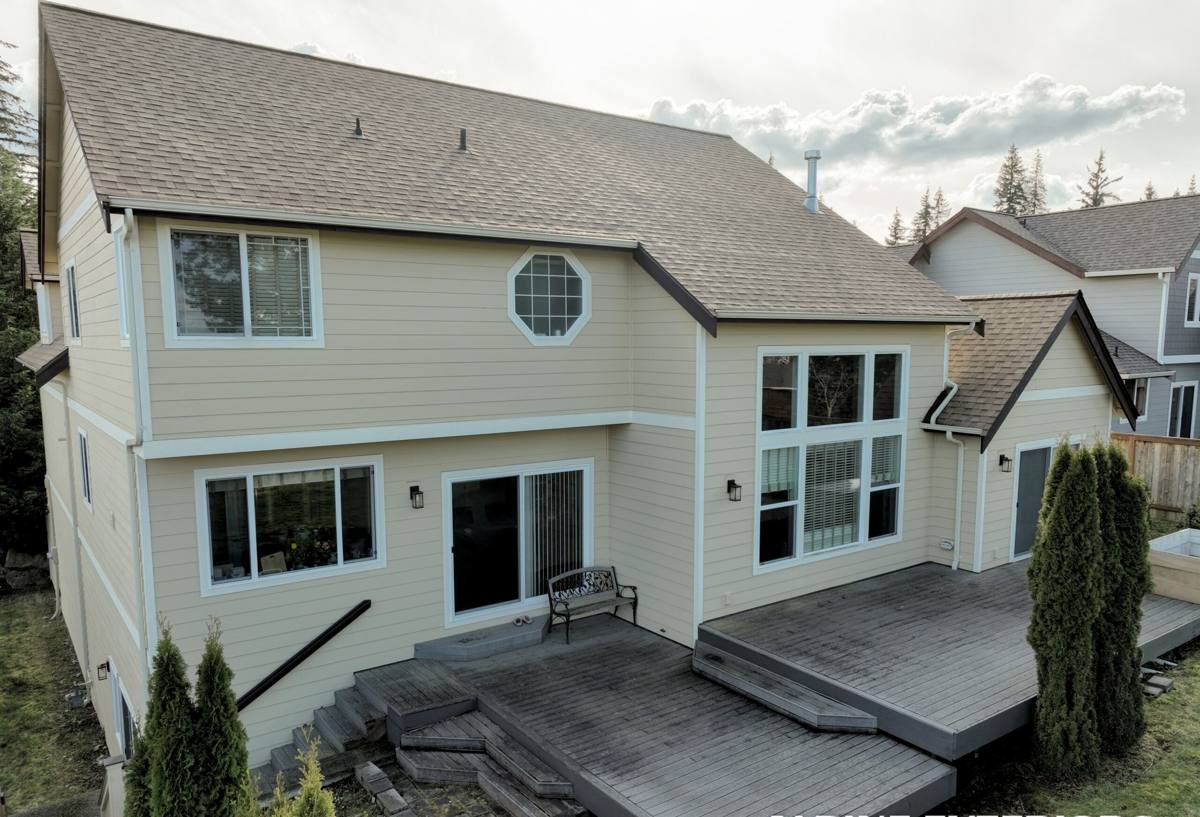
Signs a Deck Needs Replacement, Not Another Repair
Homeowners often ask whether a sagging or soft-feeling deck can just be patched. Sometimes it can. But there's a point where repair stops being the honest recommendation, and we'll tell you plainly when we think you've hit it.
- Soft or spongy decking boards, especially near the house or in shaded, north-facing sections that stay damp longest
- Visible rot or dark staining at the ledger board where the deck attaches to the house
- Rusted, streaking, or failing fasteners and joist hangers
- Persistent moss or algae growth that returns within weeks of cleaning
- Noticeable bounce, movement, or gaps that have widened over a season or two
- A structure that predates current flashing and ledger-attachment standards
If a deck is showing one or two of these on the surface, targeted repair may genuinely be enough. If several are present, or the damage traces back to the ledger or framing, replacement is usually the more honest and more cost-effective path — repeated patch jobs on a failing structure rarely save money in the long run.
What a Correct Deck Replacement Actually Involves
Starting Below the Surface
A deck replacement that's done right starts with what you can't see once the decking boards go down. That means confirming footings are sound and appropriately sized, framing lumber is rated for exterior use, and joist spacing matches the decking material you've chosen — composite and wood often call for different spacing to avoid flex over time.
The Ledger and Flashing Connection
The single most common point of failure on older decks in this climate is the ledger-to-house connection. If flashing wasn't installed correctly, or wasn't installed at all, water works its way behind the ledger board and into the rim joist and wall framing over years of driving rain. A correct replacement re-flashes this connection properly, with materials and a lap sequence designed to shed water away from the house rather than trap it against the framing.
Fasteners and Hardware
In a marine-air environment, fastener choice matters more than most homeowners realize. Standard hardware can corrode well before the wood around it fails, especially with pressure-treated lumber, which is more corrosive to certain metals. We use hardware and fasteners rated for treated lumber and coastal exposure so the connections don't become the weak point again in a few years.
Drainage and Airflow Underneath
Moss and rot both thrive where air can't move and water can't drain. Part of a correct rebuild is making sure the space under the deck isn't trapping moisture — grading, gaps, and ventilation all play a role in how long the new structure actually lasts through repeated wet seasons.
Choosing Decking Material for Bellingham's Climate
There's no single "best" decking material — there's a best fit for your budget, how much upkeep you want to do, and how the deck will be used. Here's how the common options actually compare under Sehome's conditions.
| Material | Moisture Resistance | Moss/Algae Resistance | Maintenance | Typical Lifespan |
|---|---|---|---|---|
| Pressure-treated lumber | Good if properly sealed | Fair — needs regular cleaning | Annual cleaning, periodic staining/sealing | 15-20 years with upkeep |
| Cedar | Naturally decent, degrades with age | Fair, better in sun-exposed areas | Regular sealing to preserve color and resistance | 15-20 years with upkeep |
| Composite decking | Excellent | Good, varies by product surface texture | Occasional washing, no sealing/staining | 25-30+ years |
| PVC decking | Excellent | Good | Occasional washing | 25-30+ years |
In shaded, north-facing, or heavily tree-covered yards — common throughout Sehome — moss resistance and drainage matter as much as the material itself. A composite board on a poorly ventilated frame will still grow moss in the seams; a wood deck with excellent airflow underneath can outperform expectations. Material choice and structural design work together, not separately.
Our Deck Replacement Process
- On-site assessment. We inspect the existing deck, ledger connection, footings, and framing to determine what's salvageable versus what needs to go, and give you an honest read on repair versus replacement.
- Material and layout discussion. We walk through decking options, railing, and any layout changes, with real trade-offs explained — not just upsells.
- Permitting. Most deck replacements in Bellingham require a permit, particularly for structural work or decks above a certain height. We handle the paperwork and inspections as part of the job.
- Demolition and disposal. The old structure comes out cleanly, with attention to protecting the house siding and foundation during removal.
- Framing and flashing. New footings if needed, correctly sized joists, and a properly flashed ledger connection — the part of the job that determines how long everything else lasts.
- Decking, railing, and finish work. Installed to the manufacturer's spacing and fastening specs for your chosen material.
- Final walkthrough. We review the finished deck with you, including basic care guidance specific to the material you chose.
Permits and Code in Bellingham and Whatcom County
Deck replacement isn't always a simple swap of old boards for new ones. If the footprint changes, the deck is elevated, or the structural connection to the house is being redone, permitting and inspection are typically required under Bellingham's building code. Skipping this step can create real problems later — at resale, with insurance, or if the work doesn't hold up to inspection down the line. We build permitting into the project timeline rather than treating it as an afterthought, so there are no surprises partway through.
Caring for a New Deck Through Bellingham's Wet Season
Even a correctly built deck benefits from some seasonal attention, especially given how long moss season runs here. A little routine care goes a long way toward protecting the investment.
- Sweep debris and standing leaves off the deck regularly through fall — trapped organic matter holds moisture and feeds moss
- Rinse or gently wash the surface a few times a year to discourage algae and moss buildup
- Check that gaps between boards stay clear so water can drain rather than pool
- For wood decks, reseal or restain on the schedule recommended for the specific product used
- Inspect railings and stair connections annually for looseness
- Keep gutters and downspouts near the deck clear so runoff isn't draining directly onto or under the structure
Cost Factors to Expect
Every deck replacement is different, but the same handful of variables drive most of the cost difference between projects. Understanding them upfront makes it easier to plan a realistic budget.
| Factor | How It Affects Cost |
|---|---|
| Deck size and shape | Larger footprints and multi-level or non-rectangular designs increase material and labor |
| Decking material | Composite and PVC cost more upfront than wood but typically less over the deck's lifetime |
| Structural condition | Rotted framing, damaged rim joists, or foundation issues add scope beyond a straight resurface |
| Height and railing requirements | Elevated decks need more substantial railing and sometimes additional permitting |
| Access to the site | Tight side yards or limited equipment access can add labor time |
We provide a written estimate that breaks these factors down for your specific deck rather than a flat per-square-foot number that doesn't account for your home's actual condition.
Why a Crew That Already Works Sehome Matters
A contractor who works regularly in Sehome and greater Bellingham has already seen how the neighborhood's exposure to salt air and sustained wet weather plays out on real decks over time — which framing details tend to fail first, which materials hold up and which don't, and where moss and drainage problems typically start. That local pattern recognition shows up in small but meaningful decisions: how flashing gets lapped, which hardware gets specified, how much airflow gets built into the substructure. It's the difference between a deck that's built to a generic standard and one that's built for the conditions it will actually face here, year after year, through another wet Bellingham winter.
If your Sehome deck is showing its age or you're planning ahead for a replacement, we're happy to take a look and give you a straightforward assessment — no pressure, no obligation. Request a free estimate using the form below and we'll get back to you to schedule a time.