 Bellingham Roofing
 Roof Replacement Built for York's Weather
The York neighborhood sits inside Bellingham's marine climate zone, which means the roof over a York home is dealing with a different combination of stresses than a roof in a drier part of the state. Salt-laden air off the water accelerates corrosion on fasteners, flashing, and metal components. Long stretches of driving rain push water sideways, testing every seam, valley, and penetration on the roof. And Whatcom County's mild, damp winters give moss and algae months at a time to gain a foothold on north-facing slopes and shaded sections. None of this is exotic — it's just what a roof here has to shed, year after year, for decades. A roof replacement that ignores any one of these factors tends to fail early in ways a homeowner doesn't see coming until there's a stain on a ceiling.
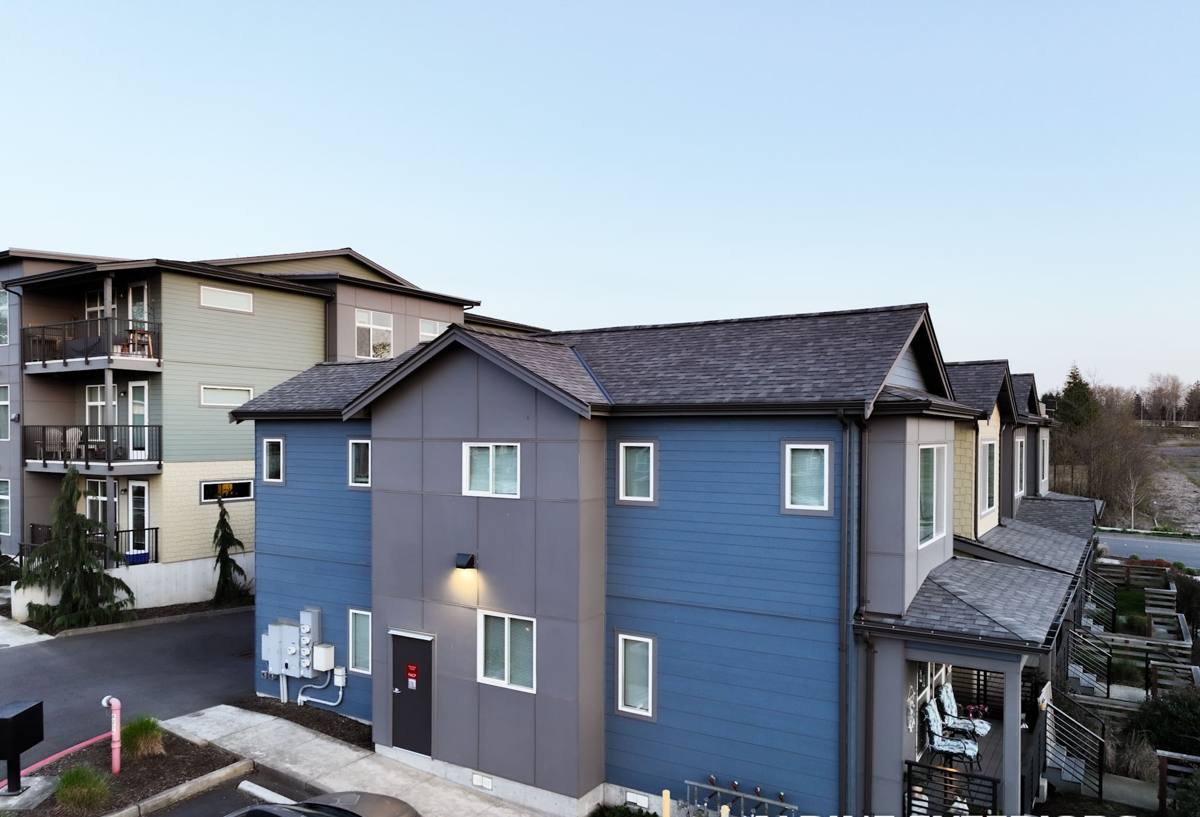
How to Tell a York Roof Needs Replacing, Not Patching
Not every roof problem calls for a full replacement, and a straight answer on that is part of doing this job honestly. Here's how we tell the difference.
Inside the house
Recurring ceiling stains that reappear after a patch, soft or spongy spots in an attic floor, daylight visible through the roof deck, or a musty smell in the attic during Bellingham's wetter months are all signs the roofing system as a whole — not just one shingle or one flashing detail — has been letting moisture in for a while.
From the ground and the attic
Shingles that are cupping, curling, or losing their granules in sheets (rather than just a few worn spots) mean the material itself is past its service life. Widespread moss growth that's lifted shingle edges, rusted or failing flashing around chimneys and vents, and a roof that's already had two or more tear-offs' worth of layers are all reasons a replacement makes more sense than another round of repairs. If a roof is doing its job and the damage is localized, we'll say so and recommend a repair instead — a full replacement should be the right call, not the default one.
What a Correct Roof Replacement Actually Involves
Tear-off and deck inspection
A proper replacement starts with a full tear-off down to the deck, not an overlay. That's the only way to actually see what's underneath — rotten sheathing, old water staining, undersized rafters, or evidence of past leaks that were covered up rather than fixed. Any soft or damaged decking gets replaced before anything new goes down. Skipping this step is the single most common shortcut that leads to a roof failing well before its rated lifespan.
Underlayment and flashing
Given how much sustained, wind-driven rain this region gets, underlayment choice matters more here than in drier climates. Synthetic underlayment and self-adhered membrane in vulnerable zones — eaves, valleys, and around penetrations — give the roof a real second layer of defense if wind ever drives water under the primary roofing material. New flashing at every chimney, skylight, vent pipe, and wall intersection is non-negotiable; flashing failures, not worn-out shingles, are the most common source of active leaks we find on roofs that are otherwise still serviceable.
Ventilation
A roof deck that can't breathe traps moisture, which speeds up rot and, in winter, contributes to ice damming even in a climate as mild as Bellingham's. Balanced intake and exhaust ventilation is part of a correct install, not an upsell — it protects the deck and framing from the inside as much as good underlayment protects it from the outside.
Choosing a Roofing Material for Whatcom County Conditions
There's no single "right" material for every York roof — it depends on the home's roofline, the budget, and how much long-term maintenance the owner wants to take on. Here's how the common options stack up against the specific pressures of salt air, heavy rain, and a long moss season.
| Material | Moss/algae resistance | Wind & rain performance | Maintenance | Relative cost |
|---|---|---|---|---|
| Standard asphalt composition shingle | Fair — improves with algae-resistant granules | Good when properly fastened and flashed | Periodic moss treatment and gutter clearing | Lowest |
| Algae-resistant / architectural shingle | Better — copper or zinc granules slow regrowth | Good, thicker profile handles wind-driven rain well | Lower than standard shingle, still needs occasional treatment | Moderate |
| Standing seam metal | Very good — moss struggles to grip a smooth panel | Excellent shedding of heavy, sustained rain | Low, but fasteners and coastal-grade metals matter near salt air | Higher |
| Cedar shake | Poor without diligent upkeep — moisture-retentive by nature | Decent, but sensitive to installation quality | High — regular treatment needed to resist rot and moss | Higher |
Our default recommendation for most York homes is a mid- to upper-tier architectural shingle or a standing seam metal roof, both of which handle this area's rain volume and moss pressure with the least ongoing fuss. We're generally cautious about cedar shake here — not because it's a bad product, but because its moisture-retentive, high-maintenance nature is a poor match for a climate that already gives moss and rot every advantage. If a homeowner wants that look and is prepared for the upkeep it demands, we'll install it correctly and explain what that maintenance schedule actually looks like.
What Drives the Cost of a Roof Replacement in York
Every estimate is specific to the house, but the same handful of factors move the price up or down on almost every job:
- Roof pitch and complexity — steep or multi-plane roofs take longer and require more safety setup than a simple gable.
- Number of layers to remove — tearing off two layers of old roofing costs more in labor and disposal than one.
- Decking condition — rot found once tear-off starts means replacement lumber, which can't always be quoted precisely up front.
- Material choice — the table above gives a rough sense of where each option lands relative to the others.
- Access — tight lots, mature trees, or limited driveway space can affect staging and dump trailer placement.
- Flashing and ventilation scope — a roof with many penetrations (skylights, multiple vents, chimneys) needs more detail work than a simple roofline.
We walk every one of these through with the homeowner before work starts, so the number on the estimate reflects the actual roof, not a generic square-footage guess.
Our Process, Start to Finish
- On-site inspection and honest assessment of whether replacement or repair is the right call.
- Written estimate covering material options, scope, and a realistic cost range.
- Scheduling built around Bellingham's weather windows, aiming for stretches of drier days.
- Full tear-off, deck inspection, and any necessary sheathing repair.
- New underlayment, flashing, ventilation components, and roofing material installed to manufacturer specification.
- Full site cleanup, including a magnetic sweep for stray nails and staples.
- Final walkthrough with the homeowner and warranty paperwork provided.
Living with Moss, Algae, and Salt Air After Replacement
A new roof still needs a little seasonal attention in this climate — mostly small things that make a real difference over the roof's lifespan.
- Keep gutters clear, especially in fall, so water isn't backing up under the roof edge.
- Trim back tree limbs that shade the roof and drop debris on north-facing slopes.
- Have moss growth treated before it spreads, rather than waiting until it's visibly lifting shingle tabs.
- Check attic ventilation isn't blocked by insulation or storage.
- After major windstorms off the water, a quick visual check for lifted flashing or displaced material is worth the five minutes.
Permits and What to Expect During the Project
Roof replacement in Bellingham typically requires a building permit, and we handle that process as part of the job rather than leaving it to the homeowner. Expect noise and some debris during tear-off, a dump trailer or roll-off staged on the property for the duration, and a crew working to get the roof dried in as quickly as weather allows — an open deck sitting exposed overnight is never the plan if we can help it. We'll walk through the schedule and what days work will actually happen on before the first shingle comes off.
Why a Crew That Already Works in York Matters
A roofer who's worked other homes in and around York isn't guessing at what this neighborhood's roofs are up against — they've already seen how moss builds up on a shaded north slope here, how far driving rain off the water can push under a poorly flashed valley, and what a Whatcom County winter does to a roof that wasn't ventilated correctly. That local track record also means faster response if a warranty question ever comes up, and a crew that isn't learning the area's weather patterns on your roof for the first time. For a homeowner comparing bids, that local familiarity is worth weighing alongside price.
If your York home's roof is showing its age, or you just want a straight answer on repair versus replacement, we're happy to take a look. Fill out the form below for a free, no-pressure estimate.