 Bellingham Roofing
 Why Windows in Puget Take More Punishment Than Windows Inland
Homes in the Puget area sit in a spot where three weather factors stack on top of each other: salt-laden air off the water, wind-driven rain that comes in sideways rather than straight down, and a long, damp moss season that can stretch from fall through spring. Any one of those is manageable on its own. Together, over years, they wear out window frames, seals, and hardware faster than most manufacturers' warranty language assumes.
Salt air is corrosive to metal hardware — hinges, locks, balance systems — even when it's not visibly rusted. Driving rain finds any gap in flashing or sealant and pushes water sideways and upward, not just down, which is why so many failures show up at the top and sides of a window rather than the sill. And the extended damp season here in Whatcom County means wood trim, sills, and even some vinyl components stay wet longer between drying cycles, which is exactly the condition moss, algae, and rot need to take hold.
None of this means Puget homes need exotic materials. It means the installation details — flashing sequence, sealant choice, drainage paths — matter more here than they would in a drier climate, and a window that's a good product but poorly installed will still fail early.
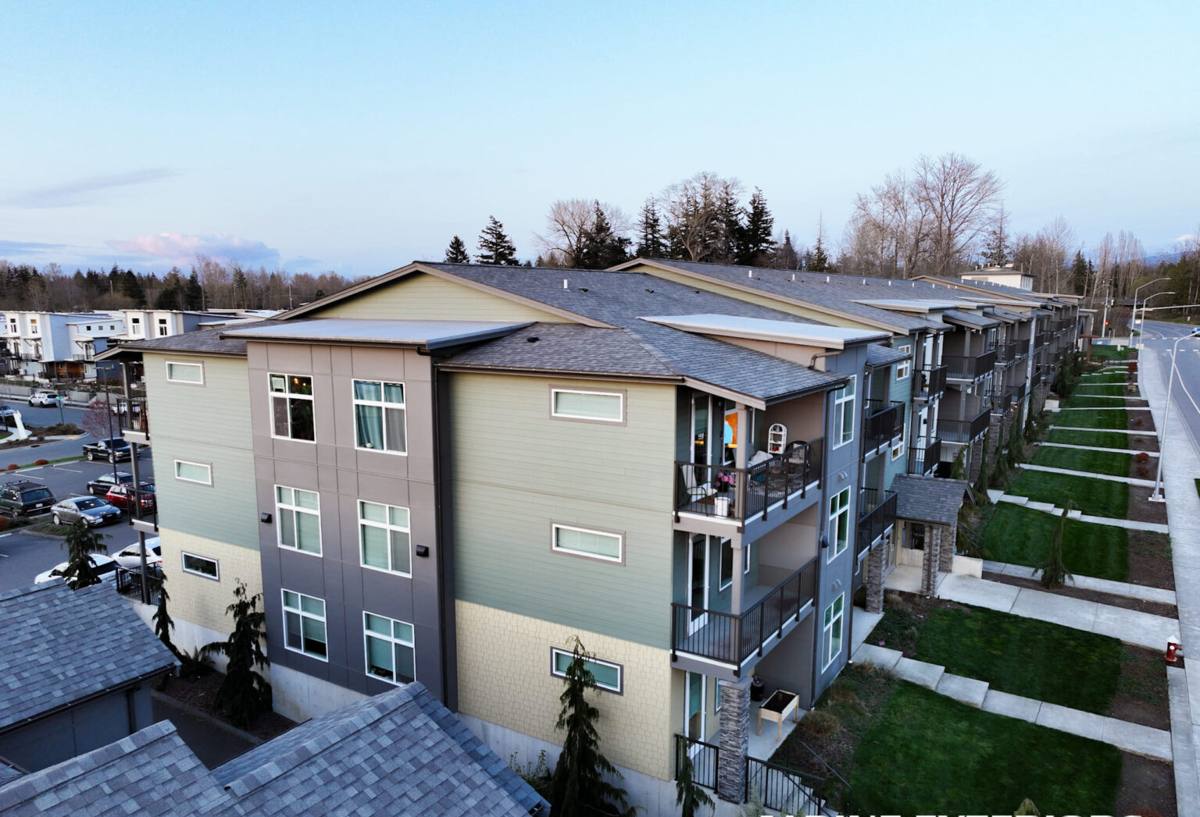
Signs Your Current Windows Are Losing the Battle
Most window failure in this climate is gradual, so homeowners often live with early warning signs for a year or two before calling anyone. Watch for:
- Fogging or a hazy film between the panes of double-pane glass (a sign the seal has failed and the gas fill is gone)
- Persistent drafts you can feel near the frame, even with the window latched
- Wood sashes or sills that feel soft, spongy, or swollen when pressed
- Visible moss, algae, or black staining on the frame, sill, or trim
- Windows that are hard to open, close, or lock — often a sign the frame has shifted or swollen
- Condensation building up on the inside of the glass during cold, wet stretches
- Peeling or bubbling paint on wood trim near the window
- A noticeable jump in heating costs without any other explanation
Any one of these on its own might just need a repair. Several together, especially on windows that are 15-25 years old, usually mean replacement will cost less over time than continuing to patch.
What a Correct Window Replacement Job Actually Involves
Frame Material Matters More Here Than in Drier Climates
Vinyl, fiberglass, and clad-wood frames all perform differently once they're exposed to years of coastal moisture. Solid wood frames without cladding are the most vulnerable — they look good initially but need diligent, ongoing maintenance to keep water out of the wood fibers. Vinyl handles moisture well and needs little upkeep, but lower-grade vinyl can become brittle over time. Fiberglass and quality clad-wood options tend to hold up the longest in marine-influenced climates because they resist both moisture absorption and the expansion/contraction cycle that eventually loosens seals.
Flashing and Water Management Make or Break the Install
This is the part of the job that's invisible once it's done, and it's also the part most likely to be rushed on a lower-quality install. Correct flashing means water that gets behind the siding or trim has a clear path back out, away from the wall sheathing — not a path that lets it pool at the sill or track down into the framing. In a climate with as much driving rain as we get here, a window installed without proper head flashing, sill pans, and sealant sequencing can look fine for a year or two and then start causing hidden rot that's expensive to fix later.
Glass and Glazing for Marine Exposure
Standard double-pane, low-E glass is usually the right call for this area — it balances energy performance with cost, and it doesn't require the added upkeep of specialty coatings. What matters more than the glass package itself is that the spacer system and seal are rated for sustained humidity exposure, since that's the failure point that shows up as fogging between panes a few years down the road.
Comparing Window Frame Options for This Climate
There's no single "best" window material — the right choice depends on your home's style, your budget, and how much upkeep you're willing to do. Here's how the common options stack up specifically against salt air, driving rain, and prolonged dampness:
| Frame Material | Moisture & Salt Air Resistance | Maintenance Needed | Typical Lifespan Here |
|---|---|---|---|
| Vinyl | Good — won't rot or corrode | Low — occasional cleaning | 20-30 years |
| Fiberglass | Very good — stable in wet/dry cycles | Low | 30-40 years |
| Aluminum-clad wood | Good on the exterior; interior wood still needs protection | Moderate | 25-35 years |
| Solid wood (uncoated) | Weakest without diligent upkeep | High — regular repainting/sealing | 15-25 years, shorter if neglected |
We'll walk through which option fits your home during the estimate rather than pushing one product line — the right answer often varies window by window depending on sun and rain exposure on that particular wall.
How Our Replacement Process Works
On-Site Assessment
We start by looking at each window individually, not just quoting from a floor plan. That means checking the sill and frame condition, looking for existing water damage or soft wood, and noting which walls take the most direct rain exposure — those often get prioritized differently than more sheltered windows on the same house.
Install Day
Old windows come out carefully so we can inspect the framing and sheathing underneath before anything new goes in. If there's hidden rot or water damage from a prior installation, we address it before the new window goes in rather than sealing a known problem behind new trim. New flashing, sill pans, and sealant go in per the manufacturer's specifications, and the new window is set, shimmed, and secured for proper drainage — not just for a tight visual fit.
Final Walkthrough and Inspection
Once installation is complete, we test operation, check seals, and walk the job with you before we consider it done. Any trim or paint touch-up work is finished at this stage, and we clean up the work area so you're not left with debris.
Why a Crew That Already Works in Puget Makes a Difference
A lot of window problems we get called out to fix started as a reasonable installation somewhere else — just not one calibrated for this exposure. A crew that regularly works in and around Puget has already seen how the housing stock here ages: which wall orientations take the worst weathering, which older flashing details tend to fail first, and which frame types have held up versus which ones haven't. That local pattern recognition shortens the assessment phase and reduces the odds of a callback for something that should have been caught during the estimate.
It also matters for permitting and code compliance. Requirements can vary between jurisdictions in Whatcom County, and a crew that pulls permits locally on a regular basis knows what inspectors will actually check.
Cost Factors Worth Understanding Before You Get Quotes
Window replacement pricing varies widely based on a handful of factors, and understanding them helps you compare quotes accurately instead of just comparing bottom-line numbers:
- Frame material — vinyl is typically the most budget-friendly; fiberglass and clad-wood cost more up front but often less over the life of the window
- Number and size of openings — larger or custom-sized windows cost more than standard sizes
- Condition of the existing framing — hidden rot discovered during removal adds cost, but skipping that repair costs more later
- Full-frame replacement vs. insert replacement — insert replacement is cheaper but only appropriate when the existing frame is still sound
- Access and site conditions — second-story or hard-to-reach windows take more time and equipment
We'll break these out clearly on any estimate so you can see what's driving the number, not just a single lump-sum figure.
Protecting Your Investment Through Moss Season and Beyond
New windows installed correctly need very little from you, but a few habits extend their life meaningfully in this climate. Rinse accumulated grime and salt residue off frames a couple of times a year, especially after winter storms. Keep gutters and downspouts clear so water isn't sheeting down over window heads. Check caulking annually where the frame meets siding or trim, since sealant is the one component that wears out faster than the window itself. And if you notice moss starting to establish on a sill or trim piece, remove it early — it holds moisture against the surface and accelerates whatever wear is already happening underneath.
If your windows are showing any of the signs above, or you're simply planning ahead for a home in the Puget area, we're happy to take a look and give you a straightforward, no-pressure estimate. Use the form below to get started.