 Bellingham Roofing
 Why New Roof Installation in Puget Is Different From a Standard Job
Puget sits close enough to Bellingham Bay that salt-laden air is a constant factor, and it sits far enough into the Pacific Northwest's wet belt that "driving rain" isn't a rare storm event — it's a normal Tuesday for a good chunk of the year. Add in the region's long, damp moss season and you have a set of conditions that will find every weak point in a roofing system faster than almost anywhere else in the state. A roof that would perform fine in a drier inland climate can fail early here if it wasn't detailed for what Puget actually throws at it.
That's the honest starting point for any new roof installation in this neighborhood: this isn't just about picking a shingle color. It's about underlayment choice, flashing detail, ventilation, and material selection all being decided with wind-driven rain, salt exposure, and moss growth in mind from day one.
Is It Time to Replace, or Can the Roof Be Repaired?
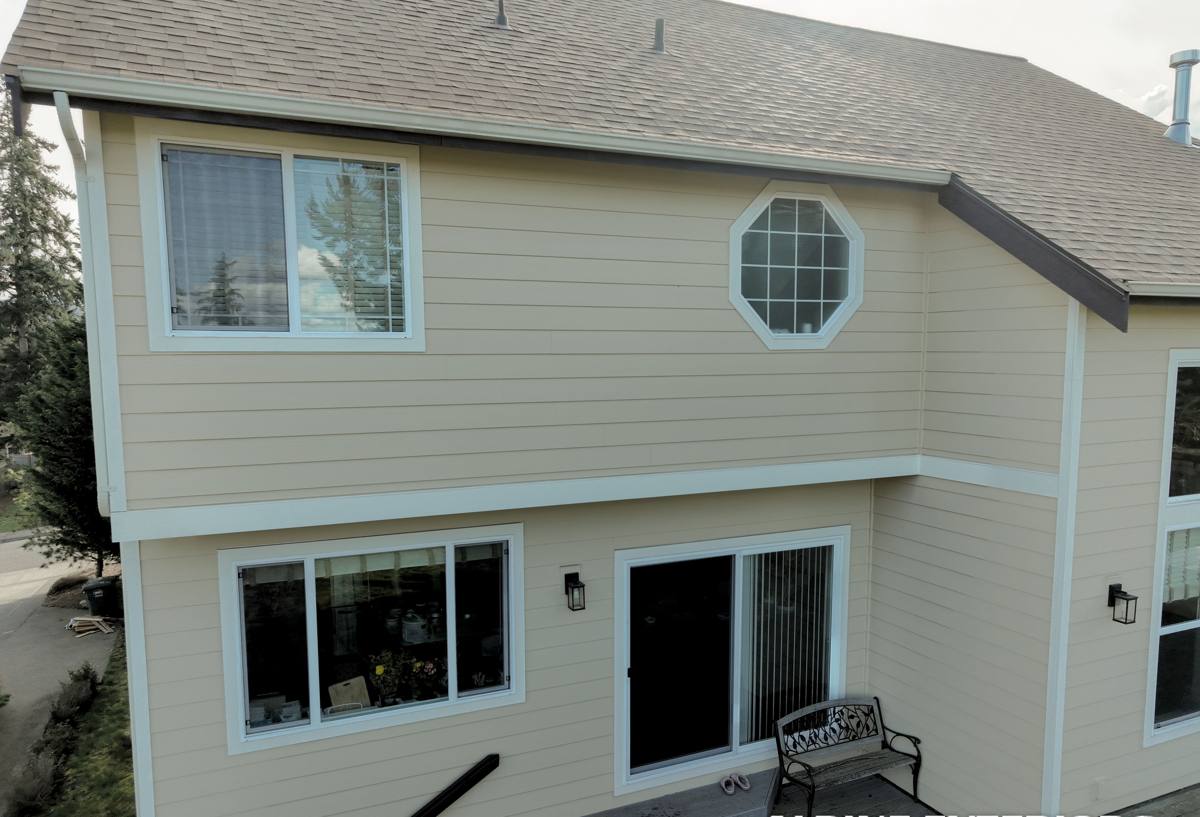
Not every roofing problem in Puget means a full tear-off. A cracked pipe boot, a section of lifted shingles from a windstorm, or a flashing leak around a chimney can often be repaired without replacing the whole system, provided the underlying roof deck and majority of the field are still sound. Replacement becomes the right call when the damage is spread across the roof rather than isolated, or when the roof is old enough that repairing one area just means the next failure is a matter of time.
Some signs point clearly toward replacement rather than patching:
- Granule loss heavy enough that shingles look bald or the color has gone patchy and inconsistent
- Moss or algae growth that keeps returning within a season or two of cleaning, even after treatment
- Soft or spongy decking felt underfoot, or daylight visible through the roof deck from the attic
- Multiple past repairs in different areas of the same roof within a few years
- Shingles curling, cupping, or cracking across large sections rather than one localized spot
- Interior staining on ceilings or in the attic that reappears after every heavy rain
If you're seeing one or two of these, a repair may still make sense. If several apply at once, a new roof is usually the more cost-effective path — repeated repairs on a roof that's fundamentally worn out rarely save money in the long run.
Roofing Materials That Actually Hold Up in Whatcom County Weather
Material choice matters more here than in drier climates because the roof has to manage constant moisture cycling, resist moss colonization, and tolerate the corrosive edge that salt air puts on metal fasteners and flashing. There's no single "best" material for every Puget home — it depends on roof pitch, budget, and how the house is shaded by surrounding trees — but here's how the common options compare on the factors that matter most in this climate.
| Material | Moss/Algae Resistance | Wind-Driven Rain Performance | Maintenance Burden |
|---|---|---|---|
| Architectural (laminate) asphalt shingles | Good with algae-resistant granules; still needs periodic cleaning in shaded areas | Strong when properly nailed and sealed at laps | Low to moderate |
| Standing seam metal roofing | Excellent — moss struggles to gain a foothold on a smooth, sloped metal surface | Excellent; fewer seams and laps for water to find | Low, but fastener and coating quality matter in salt air |
| Synthetic/composite shingles | Good; resists moisture absorption better than organic materials | Strong | Low |
| Cedar shake | Poor without diligent upkeep — the wet, shaded microclimate common in Puget is exactly what moss and rot favor | Moderate; performs best with rigorous maintenance | High |
We're upfront with homeowners about cedar shake specifically: it can look great, but in a climate that stays damp for months at a stretch, it demands a level of ongoing maintenance most people don't want to sign up for. That's a trade-off worth knowing before you commit, not a knock on the material itself — it simply asks more of the owner in a place like this.
Underlayment and Fasteners Matter as Much as the Shingle
What's under the visible roofing material does most of the real work in a climate like this. A synthetic underlayment rated for high moisture exposure, paired with an ice-and-water shield at eaves, valleys, and penetrations, gives the roof a real second line of defense when wind pushes rain sideways under the shingle tabs — which happens regularly in exposed parts of Bellingham. Fastener material matters too: in a salt-air environment, corrosion-resistant nails and flashing hold up longer than standard-grade hardware, which can start rusting and staining a roof years before the shingles themselves are worn out.
What a Correctly Installed Roof Actually Includes
A new roof is more than shingles nailed to plywood. Done right, it's a layered system where each component covers for the weaknesses of the one above it. For Puget homes specifically, we pay close attention to:
- Deck inspection and repair — any soft, delaminated, or water-damaged sheathing gets replaced before anything new goes down, not covered over
- Ice-and-water shield at eaves, valleys, and around every roof penetration, where wind-driven rain is most likely to force its way under the shingle layer
- High-moisture-rated synthetic underlayment across the full roof deck as the primary water barrier beneath the shingles
- Properly lapped and sealed flashing at chimneys, skylights, sidewalls, and any roof-to-wall transitions — flashing failure is one of the most common causes of leaks we find on older Bellingham roofs
- Balanced intake and exhaust ventilation so moisture from inside the home has somewhere to go instead of condensing in the attic
- Algae-resistant shingle granules or metal coatings where the roof sits under tree cover or on a shaded, north-facing slope
Skip any one of these and the roof may still look fine for a year or two — but the failures that show up down the road almost always trace back to a shortcut in one of these areas.
Ventilation and Moss: The Long-Term Battle in This Climate
Moss doesn't just grow on a roof because a house sits near trees — it grows because a roof surface stays damp and shaded long enough for spores to take hold. In Whatcom County's climate, that combination of shade and prolonged moisture is common on north-facing slopes, roofs with heavy tree cover, and any section that doesn't get much direct sun through the fall and winter months. Left unchecked, moss holds moisture against the shingle surface, lifts shingle edges as it grows, and accelerates granule loss.
Proper attic ventilation plays a bigger role in this than most homeowners expect. A roof deck that's too warm relative to the outside air promotes condensation on the underside of the sheathing, which keeps the deck damp from below at the same time moss is working on it from above. Balanced soffit intake and ridge or box-vent exhaust keeps air moving through the attic space, which helps the deck dry properly and reduces the conditions moss needs to thrive. We also install with moss-resistant materials where the roof geometry and tree cover make it likely to be a recurring issue, rather than leaving it as a problem to manage with cleaning alone.
Our Installation Process, Start to Finish
Every new roof we install in Puget follows the same core sequence, adjusted for the specific house:
- On-site inspection and assessment — we look at the existing roof, attic ventilation, decking condition, and any problem areas before recommending a scope of work
- Material selection — walking through the trade-offs between shingle types, metal, and other options based on the roof's pitch, exposure, and your budget
- Tear-off — full removal of the old roofing material down to the deck, so we can actually see what condition the sheathing is in rather than guessing
- Deck repair — replacing any damaged or delaminated plywood or OSB found during tear-off
- Underlayment and ice-and-water shield installation — laid out per manufacturer specification, with extra attention to valleys, eaves, and penetrations
- Flashing installation — new flashing at all transitions, chimneys, and penetrations rather than reusing old, weathered pieces
- Roofing material installation — shingles, metal panels, or your chosen material, installed to manufacturer nailing and exposure specs
- Ventilation check and adjustment — confirming intake and exhaust are balanced for the attic space
- Final walkthrough and cleanup — magnetic sweep for stray fasteners, debris removal, and a walk through the finished roof with you
We don't skip steps to save a day on the schedule. On a roof that has to hold up to this much rain and salt exposure, the steps most tempting to shortcut — deck inspection, flashing replacement, ventilation balancing — are exactly the ones that determine whether the roof lasts.
Permits, Timeline, and What to Expect During the Project
A full roof replacement in Bellingham typically requires a building permit, which we handle as part of the project rather than leaving it to the homeowner. Most straightforward residential tear-off-and-replace jobs take one to three days on-site once materials are on hand, though weather can push that timeline out — we don't install underlayment or shingles in active rain, since doing so compromises the seal and risks trapping moisture under the new roof.
Expect some noise and activity around the house during the tear-off and installation days, debris containment around the work area, and a magnetic sweep of the yard afterward to catch stray nails. We'll walk you through scheduling around Bellingham's wetter stretches of the year in advance, since timing an installation around dry windows matters more here than in a lot of other climates.
What Influences the Cost of a New Roof
Roofing costs vary by roof size, pitch, material, and how much repair the deck needs once the old roofing comes off — we won't quote a number without seeing the actual roof. What we can do is lay out the factors that move the price up or down so you know what you're evaluating when you compare quotes.
| Factor | Why It Matters in Puget |
|---|---|
| Roof pitch and access | Steeper roofs and difficult access take longer and require more safety equipment |
| Deck condition | Years of moisture exposure can mean hidden sheathing damage that isn't visible until tear-off |
| Material choice | Metal and composite materials cost more upfront than asphalt but demand less long-term maintenance in this climate |
| Ventilation upgrades | Older homes often need added intake or exhaust vents brought up to a properly balanced system |
| Flashing complexity | Roofs with multiple valleys, chimneys, or roof-to-wall transitions require more detail work and material |
| Moss/algae history | Roofs with a recurring moss problem may benefit from resistant materials that cost more initially but reduce upkeep |
The cheapest quote isn't always the better value if it skips underlayment upgrades or flashing replacement to hit a lower number — those are the shortcuts that show up as leaks a few winters later.
Why a Crew That Already Works Puget Matters
A roofing crew that works this specific area regularly knows which slopes tend to hold moss, which older homes in the neighborhood are still running undersized attic ventilation, and how the salt air off the bay tends to age exposed metal faster than it would a few miles inland. That's not something you can fully substitute with a generic install checklist — it comes from having actually put roofs on houses in this weather, repeatedly, and seeing what holds up over the following winters and what doesn't.
It also matters for something more practical: warranty and service. A contractor with an established presence in Bellingham is going to be around and reachable if a flashing detail needs a look years down the line, rather than a crew that worked the area once and moved on. When you're evaluating who to hire for a new roof, ask how much of their current work is in this specific area — the answer tells you a lot about how well they understand what your roof actually has to withstand.
Caring for Your New Roof After Installation
A correctly installed roof still benefits from basic upkeep, especially in a climate that stays damp for so much of the year. A short annual routine goes a long way toward protecting the investment:
- Clear debris — leaves, needles, and branches — from valleys and gutters before the fall rains set in
- Watch shaded, north-facing sections for early moss growth and address it before it spreads
- Check attic ventilation isn't blocked by insulation or storage that's crept over the vents
- Have flashing around chimneys and skylights visually checked every couple of years, since these are the most common points of eventual leaks
- Avoid pressure washing shingles directly — it can strip granules and shorten the roof's lifespan
None of this requires much time or money, but skipping it for years at a stretch is how a well-installed roof ends up with an avoidable problem down the road.
If you're weighing repair versus replacement, or just want an honest look at what your roof needs before moss season sets in again, we're happy to walk the roof with you and give you a straight answer. Use the form below to request a free, no-pressure estimate for new roof installation in Puget.