 Bellingham Roofing
 Windows Built for Puget's Waterfront Climate
Homes in the Puget area of Bellingham sit close enough to the water that the air itself becomes part of the maintenance plan. Salt-laden air, wind-driven rain off the Sound, and a moss season that can run half the year put a different kind of stress on windows than you'd see further inland in Whatcom County. A window that performs fine in a dry, sheltered lot can fail years early here if it wasn't chosen and installed with this specific exposure in mind.
Custom windows aren't just about matching an odd-sized opening or getting a particular look, though that matters too. In Puget, "custom" often means selecting frame materials, glazing packages, and flashing details that are simply not optional extras — they're what keeps water and salt out of your wall assembly for the long haul. This page covers what we look for, what we install, and how our process runs for window work specifically in this neighborhood.
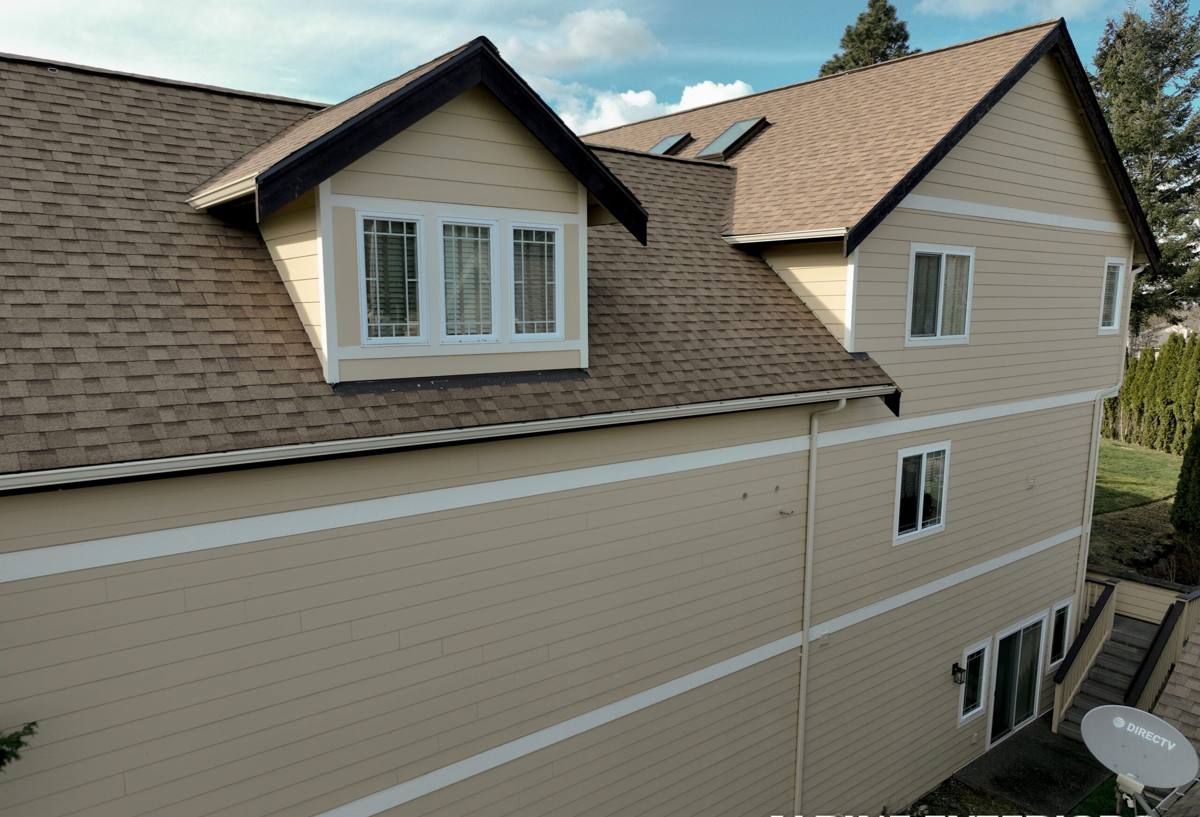
What Salt Air, Driving Rain, and Moss Season Do to Windows
Salt Air and Corrosion
Airborne salt from the Sound settles on every exterior surface, including window frames, hardware, and fasteners. Over time it accelerates corrosion on lower-grade metal components — hinges, cranks, and screws — and can pit unprotected aluminum. It also breaks down cheaper vinyl and paint finishes faster than a standard product warranty assumes, since most warranty testing isn't done in a marine environment.
Driving Rain
Wind off the water doesn't just fall straight down — it drives rain sideways into wall assemblies, testing every seam around a window opening. A window that's watertight in calm conditions can still leak under wind-driven rain if the flashing, sill pan, and sealant details weren't built for lateral water pressure. This is one of the most common causes of hidden rot we find behind older Puget-area windows.
Moss and Prolonged Moisture
Bellingham's long wet season keeps north-facing and shaded window areas damp for extended stretches, which is exactly what moss, algae, and mildew need to take hold. Moss on nearby roofing or siding sheds organic debris that collects in window tracks and sills, holding moisture against the frame and finish far longer than it should sit there.
What This Adds Up To
- Frame and hardware corrosion in salt-exposed, water-facing installations
- Water intrusion at flashing and sealant joints under driving rain
- Wood rot or sheathing damage hidden behind trim on older installs
- Fogged or failed insulated glass units from broken seals
- Moss, mildew, and grime buildup in tracks and sills that traps moisture
- Condensation on interior glass in poorly insulated or improperly sized units
Signs Your Puget Home Needs Window Attention
Most window failures in this area show themselves gradually, not all at once. Here's what we tell homeowners to watch for between now and their next weather season:
- Soft or discolored trim or drywall directly below or beside a window
- Fog or moisture trapped between glass panes (a failed seal, not a cleaning issue)
- Windows that are hard to open, close, or lock — often a sign of frame movement
- Visible gaps, cracked caulk, or daylight around the frame from outside
- A cold draft near the window even when it's fully closed and latched
- Musty smell or visible mildew in the window track or lower corners
- Noticeably higher heating bills without another obvious cause
Any one of these can be minor. Two or three together, especially on a wall that faces the water or prevailing wind, usually means it's time for a closer look before the next storm season.
What a Correct Custom Window Installation Involves
The window unit itself is only part of the job. In a marine-exposed area like Puget, the installation details around the window matter as much as the product, because that's where water actually gets in.
Sill Pan and Flashing
A proper sill pan diverts any water that gets past the window to the outside of the wall, not into the framing. Flashing tape and building paper need to be layered correctly — like shingles — so water always sheds outward and down, never into a seam.
Sealant and Backer Rod
Exterior sealant needs the right joint depth and a compatible backer rod behind it, not just a bead of caulk over a gap. In driving rain, an undersized or poorly adhered sealant joint is often the first thing to fail.
Frame Selection for Exposure
We match frame material to how exposed the specific wall is. A window on a sheltered, inland-facing side of the home doesn't need the same spec as one taking direct wind and salt spray off the water.
Glazing and Condensation Control
Insulated glass units with the right gas fill and low-E coating for our climate reduce interior condensation and help control heat loss during the cold, wet months that make up most of the year here.
Choosing the Right Window Materials for This Climate
There's no single "best" window material for every situation — it depends on exposure, budget, and how the home is used. Here's how the common options actually perform in a salt-air, high-rain environment like Puget:
| Material | Salt/Moisture Resistance | Maintenance | Typical Fit |
|---|---|---|---|
| Vinyl (quality-grade) | Good — won't corrode, some UV/finish wear over time | Low | Most homes, good value |
| Fiberglass | Very good — dimensionally stable, resists warping and pitting | Low | High-exposure walls facing wind/water |
| Wood, clad exterior | Fair — interior wood needs the exterior cladding to stay sealed | Moderate to high | Homes prioritizing interior wood look |
| Aluminum | Poor to fair unless marine-grade — prone to pitting near salt air | Moderate | Specific architectural needs only |
Our default recommendation for anything facing the water or prevailing wind is fiberglass or a quality vinyl with reinforced corners — not because other materials are bad products, but because their maintenance burden and moisture behavior are a poor match for this specific exposure. We'll walk you through the honest trade-offs for your actual wall, not just the showroom pitch.
Our Process, Start to Finish
- On-site assessment: We look at every window opening individually — exposure, existing damage, and any rot or flashing issues, not just measurements.
- Honest scope and estimate: You get a clear breakdown of what's replacement, what's repair, and what's optional, with no pressure to upsell beyond what the home needs.
- Material selection: We recommend frame and glazing options suited to that specific wall's exposure, and explain why.
- Removal and inspection: Old units come out carefully so we can check the framing and sheathing underneath before anything new goes in.
- Correct flashing and installation: Sill pans, flashing, and sealant are installed to shed water outward, matched to the driving-rain conditions this area sees.
- Final check and cleanup: Every window is tested for smooth operation and sealed properly before we consider the job done, and the site is left clean.
Cost Factors for Custom Windows in Puget
Every home and opening is different, so we don't quote a flat per-window number sight unseen. These are the main factors that move the price up or down:
| Factor | Why It Affects Cost |
|---|---|
| Frame material | Fiberglass and premium vinyl cost more upfront but reduce long-term maintenance in salt air |
| Window size and configuration | Custom shapes, larger spans, and multi-panel units require more material and labor |
| Existing damage | Rot or compromised sheathing found during removal adds repair scope before the new window goes in |
| Wall exposure | Water-facing or wind-exposed walls may warrant upgraded flashing and sealant details |
| Glazing package | Higher-performance glass improves comfort and condensation control but costs more than standard glazing |
| Number of openings | Doing multiple windows in one visit is typically more cost-efficient per unit than single replacements |
We'll give you real numbers for your home during the estimate, along with which factors are driving the cost so you can make an informed decision rather than just picking off a price sheet.
Why Hiring a Crew That Already Works Puget Matters
A crew that mainly works drier, inland parts of Whatcom County can still do competent general window work, but they may not default to marine-grade flashing details or corrosion-resistant hardware unless asked. Working regularly in Puget and similar water-facing parts of Bellingham means we already know which walls take the worst of the driving rain, how moss and prolonged dampness show up in window tracks here, and which materials hold up rather than needing early replacement. That local pattern recognition is what keeps a "custom" window job from becoming a callback in three years.
If you're dealing with a drafty, foggy, or hard-to-close window anywhere in the Puget area, we're happy to take a look and give you a straightforward, no-pressure estimate — just fill out the form below.