 Bellingham Roofing
 Decks Built for Puget's Marine Climate
A deck in the Puget area of Bellingham lives a harder life than a deck in a dry inland climate. Between the salt-laden air off the water, the long stretches of driving rain that define a Whatcom County winter, and a moss season that can run from October well into spring, an outdoor structure here is under near-constant pressure. Wood and fasteners that would last decades in Eastern Washington can show real wear here in half that time if the deck wasn't built with this climate in mind from the start.
We build custom decks specifically for this environment. That means choices about materials, fasteners, framing details, and drainage that are different from what a generic deck-building guide would tell you. This page walks through what actually matters for a deck built in Puget, and why those details are worth getting right the first time.
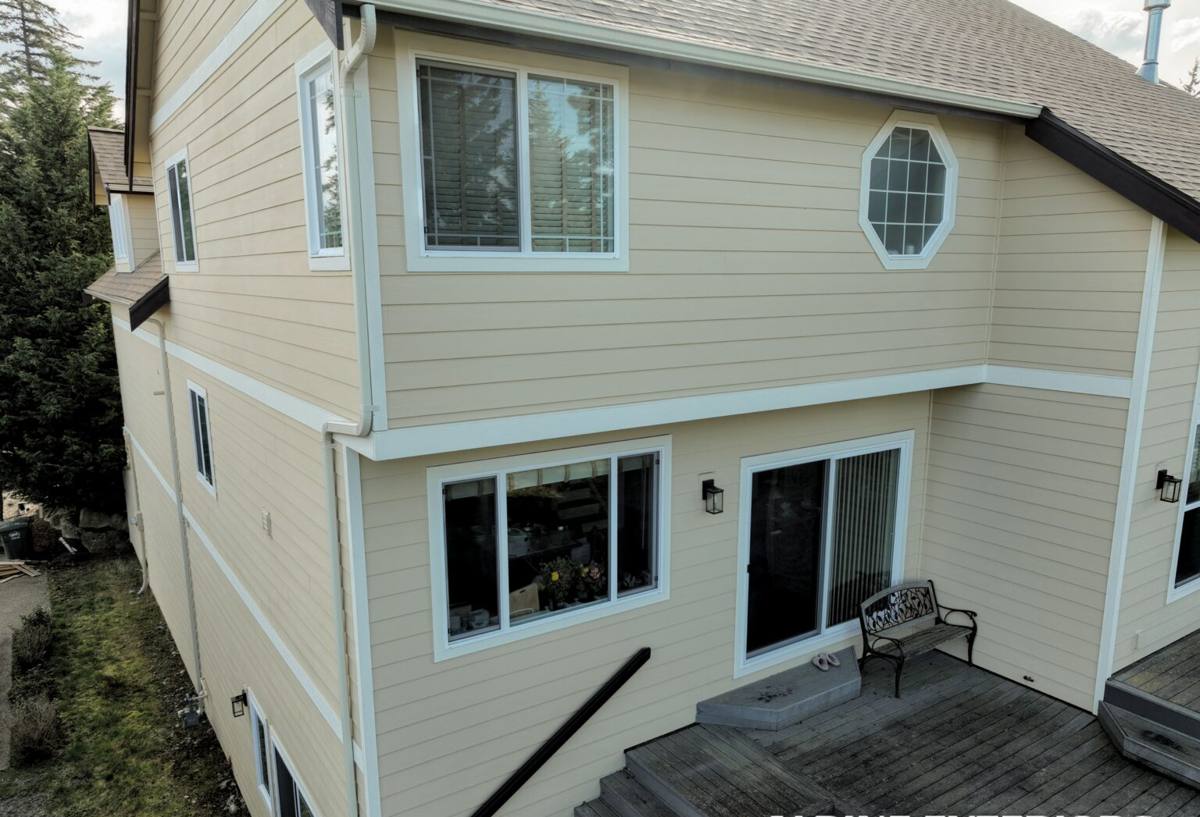
What Salt Air, Rain, and Moss Actually Do to a Deck
Salt Air and Corrosion
Proximity to Puget Sound means airborne salt settles on every exposed surface, including a deck's hardware. Standard galvanized fasteners and connectors can start corroding years before untreated wood would fail structurally. Corrosion at ledger bolts, joist hangers, and post bases is one of the most common hidden problems we find when we're asked to inspect or rebuild an older deck in this area — the boards look fine on top, but the metal holding everything together underneath has been quietly degrading.
Driving Rain and Water Intrusion
Bellingham doesn't get flash-flood rain, it gets long, wind-driven rain that finds its way into every gap, seam, and fastener hole it can. On a deck, that means water tends to collect where the deck meets the house (the ledger board connection), around post bases set in or near grade, and in any spot where boards are laid tight without room to drain. Left alone, this moisture works its way into end grain and fastener holes, which is where rot actually starts — not on the flat, exposed face of a board, which usually looks fine even as the structure underneath is failing.
Moss and Organic Growth
A long, damp moss season means any horizontal wood surface that doesn't get sun or airflow will grow moss, algae, and mildew. Beyond looking bad, moss holds moisture against the wood surface and makes boards slick and genuinely dangerous underfoot, especially on stairs. Decks tucked under tree cover or on the shaded side of a house are the most exposed to this, and design decisions — board spacing, surface texture, drainage — make a measurable difference in how much of a moss problem a homeowner ends up managing.
Choosing the Right Decking Material
There's no single "best" decking material — the right choice depends on budget, how much upkeep a homeowner actually wants to do, and how exposed the site is to sun, shade, and moisture. We walk through these trade-offs honestly rather than pushing whatever has the best margin.
| Material | How It Handles This Climate | Maintenance | Typical Lifespan Here |
|---|---|---|---|
| Pressure-treated lumber | Resists rot with proper treatment, but end grain and cut edges need sealing or they wick water | Annual cleaning, re-sealing every 1-2 years | 15-20 years with upkeep |
| Cedar | Naturally rot- and insect-resistant, ages to a silver-gray patina, but softer and needs consistent care in wet conditions | Cleaning and oiling or staining every 1-2 years | 15-25 years with upkeep |
| Composite decking | Doesn't rot or absorb water like wood; performs well against moss and mildew when boards are properly spaced for drainage | Periodic washing, no staining or sealing | 25-30+ years, manufacturer-warrantied |
| Tropical hardwood | Very dense and naturally weather-resistant, but expensive and demands precise, experienced installation | Occasional oiling to maintain color | 25+ years with upkeep |
For homeowners who want the lowest long-term maintenance in a climate like this, composite decking is usually the right call — it doesn't feed moss the way untreated wood can, and it isn't absorbing rainwater into its structure the way lumber does. For homeowners who want a natural wood look and don't mind a cleaning and coating routine every year or two, cedar remains a solid, honest choice. We'll walk the site with you and give a straight recommendation rather than defaulting to one product for every job.
What Happens Below the Boards Is What Determines the Lifespan
The decking surface is the part everyone sees, but the framing underneath is what determines whether a deck lasts 10 years or 30 in a wet coastal climate. This is where we spend the most attention, and where a lot of older or budget-built decks in this area were cut short.
Ledger Board Flashing
Where a deck attaches to the house is the single most common point of water intrusion and structural failure on residential decks generally, and it's made worse by Bellingham's driving rain. A correctly built ledger connection uses proper flashing that directs water away from the house sheathing and framing, not just a bead of caulk that will eventually fail. We treat this connection as critical, not cosmetic.
Joist and Beam Protection
Joist hangers, structural screws, and post connectors should be rated for exterior and, ideally, coastal use — stainless steel or high-grade coated hardware rather than standard galvanized, given the salt air exposure here. We also use joist tape or a comparable barrier on the tops of joists so fastener penetrations aren't a direct path for water into the wood.
Post Bases and Footings
Posts set directly into concrete or buried in wet soil trap moisture against the end grain, which is exactly where rot starts fastest. Elevated post bases that keep wood off the concrete and out of standing water, combined with footings sized and set to Bellingham's frost and soil conditions, are a basic requirement we don't shortcut.
Drainage Under the Deck
On low-to-grade decks especially, water needs somewhere to go. Proper grading beneath the structure and, where needed, a below-deck drainage system keep water from pooling against posts and footings through a long wet season.
Design Considerations Specific to Puget-Area Homes
Beyond materials and framing, a few design choices make a real difference for decks in this specific area:
- Board orientation and spacing — proper gapping lets water and debris pass through instead of pooling, which directly reduces moss growth
- Sun and shade exposure — decks on shaded, north-facing sides of a house need extra attention to drainage and material choice since they dry out slower between rain events
- Wind exposure — homes with open exposure toward the water may benefit from railing and structural choices that account for higher sustained winds
- Covered vs. open design — a partial roof or pergola over a deck can meaningfully cut down on standing water and moss, at the cost of some sun exposure
- Stair and railing safety — texture and drainage details on stair treads matter more here than in a dry climate, since wet, mossy stairs are a real fall hazard
Our Process, Start to Finish
- On-site walkthrough — we look at sun exposure, drainage, grade, and how the deck will connect to the house before recommending anything
- Honest material and design recommendation — based on your budget, maintenance appetite, and the specifics of the site, not a one-size-fits-all pitch
- Permit handling — we manage the permitting process with the applicable local building authority so you don't have to navigate it yourself
- Framing built to hold up here — proper ledger flashing, corrosion-resistant hardware, elevated post bases, and drainage-conscious layout
- Decking installation — precise spacing and fastening appropriate to the material chosen
- Final walkthrough — we go over the finished deck with you, including what maintenance (if any) it will need going forward
Permits and Local Building Requirements
Most custom decks above a certain height or size require a building permit through the applicable local jurisdiction, and structural elements like ledger attachment, footings, and guardrails are typically inspected. Skipping this step, or hiring a crew that skips it, can create real problems later — from failed home inspections at resale to insurance complications if something goes wrong. We handle the permitting and inspection process as a standard part of the job, not an upsell.
What to Ask Before Hiring a Deck Builder in This Area
Because so much of what determines a deck's lifespan here is invisible once the project is finished — flashing, hardware grade, footing depth — it's worth asking direct questions before signing a contract.
- Will the ledger connection be properly flashed, and can you explain how?
- What grade of fasteners and connectors will be used, given the salt air here?
- Will post bases keep the wood elevated off concrete and grade?
- Is a building permit included, and who's responsible for scheduling inspections?
- What's the realistic maintenance schedule for the material we're choosing?
- Can you show examples of decks you've built in similarly exposed, wet locations?
Why Local Experience Matters for This Job
A deck built to a generic national standard will often survive fine in a mild, dry climate and struggle here. Crews who work regularly in Whatcom County's marine climate know which hardware actually holds up against salt air over years, not just on paper, and which framing shortcuts show up as soft joists and failing ledger connections five years down the road. That knowledge doesn't come from a manual — it comes from repairing and replacing decks that were built without it, and from building enough decks in this specific weather to know what actually lasts.
Get a Free, No-Pressure Estimate
If you're planning a new custom deck or replacing one that hasn't held up to the weather, we're happy to take a look and give you an honest assessment — what the site needs, what materials make sense for your budget and maintenance preferences, and a straightforward estimate. Use the form below to get started.