 Bellingham Roofing
 James Hardie Siding Built for Happy Valley
Happy Valley sits close enough to Bellingham Bay and the Salish Sea that its homes deal with a specific combination of weather most siding products were never designed around: salt-laced marine air, rain that comes in sideways more often than straight down, and a moss season that, on shaded lots and tree-lined streets, can run nine or ten months out of the year. Add in the tree cover that gives the neighborhood its character — mature evergreens and deciduous canopy that keep north-facing walls damp and slow to dry — and you have a set of conditions that will find every weakness in a siding system within a decade if the material or the installation isn't right for it.
We install James Hardie fiber cement siding exclusively on homes in this area, and nothing else — not LP SmartSide, not vinyl, not Cemplank, Allura, primed spruce, or cedar. That's not a marketing line; it's a professional standard we hold because we've watched what Whatcom County's climate does to walls over ten, twenty, and thirty years, and we'd rather stand behind one system we trust completely than offer a menu of options with very different long-term outcomes.
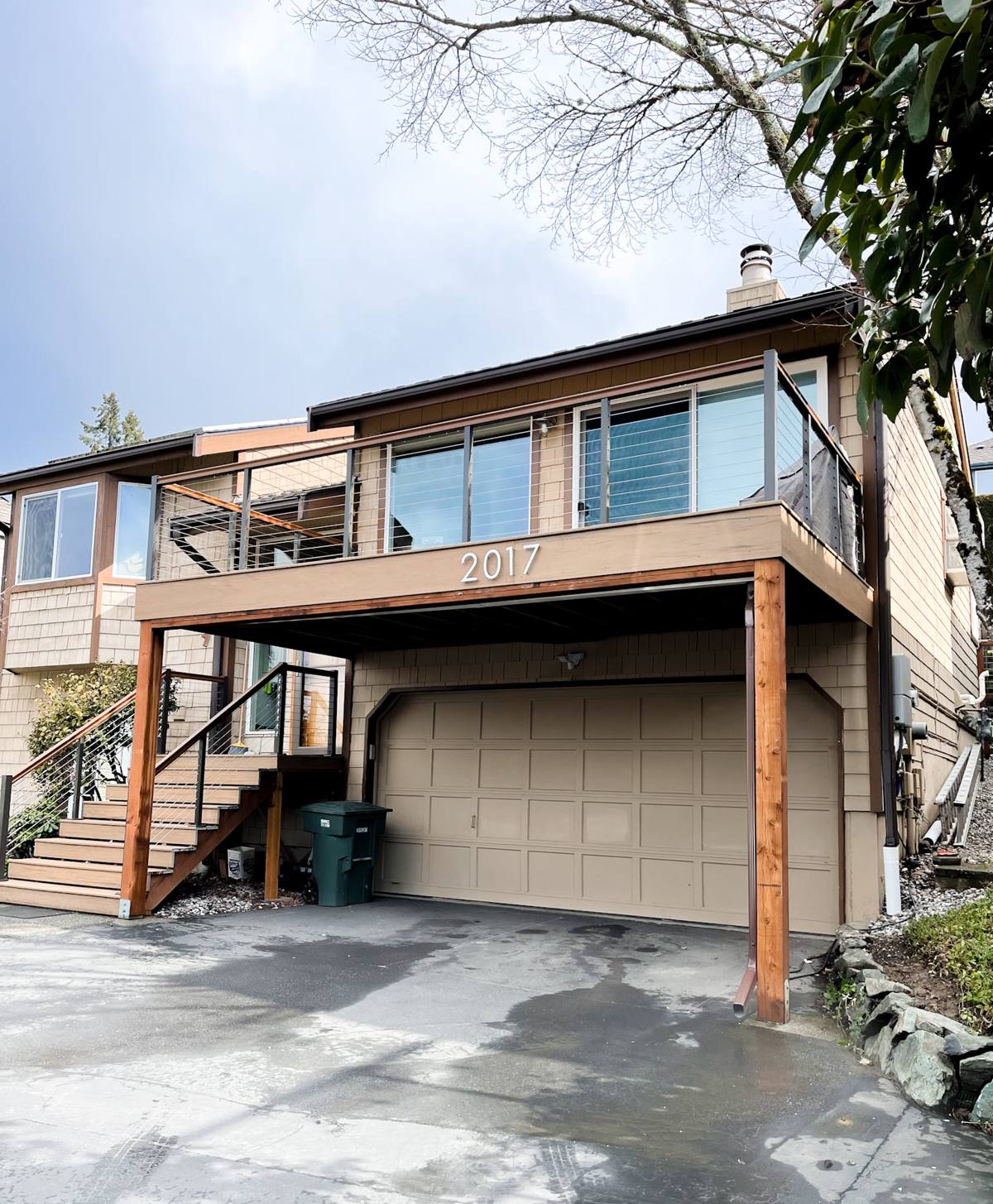
What Happy Valley's Climate Actually Does to a Wall
Salt Air and Slow Corrosion
Homes in Happy Valley aren't right on the water, but they're close enough that salt-tinged air reaches exterior surfaces regularly, especially on days with wind off the bay. Salt exposure doesn't damage siding materials themselves as much as it accelerates corrosion in anything metal attached to the wall — fasteners, flashing, trim accessories. A siding system that isn't specified with corrosion-resistant hardware for this exposure will show rust streaking and loosening fasteners years before the siding material itself would otherwise need attention.
Wind-Driven Rain
Rain in this part of Bellingham rarely just falls — it gets pushed. Wind coming off the water drives rain sideways into walls, seams, and trim details that a straight-down rain would never reach. That means the horizontal laps, corner joints, and window and door transitions on a home's siding take on more water pressure than a inland home in a calmer climate would ever see, and every one of those joints needs to be built to shed water actively, not just sit there and hope gravity handles it.
A Long Moss Season on Shaded Walls
Happy Valley's tree cover is part of what makes the neighborhood pleasant to live in, but it also means a lot of north-facing and shaded walls stay damp for extended stretches, sometimes most of the year on the least sun-exposed sides of a house. That dampness is exactly what moss, algae, and mildew need to take hold. On a siding material that absorbs moisture into its surface, that moss growth isn't just cosmetic — it holds water against the wall longer, which accelerates whatever underlying moisture problems already exist.
Why We Standardized on One Product for This Area
We get asked fairly often why we don't offer a lower-cost alternative alongside James Hardie, especially since vinyl and engineered wood siding are both common choices in this region and other contractors install them well. The honest answer is that Happy Valley's combination of salt air, wind-driven rain, and a genuinely long wet season punishes the weaknesses in those materials faster than it would in a drier climate, and we didn't want to be in the position of installing something we knew would need more attention, sooner, than what we consider standard.
| Material | Behavior in This Climate | Maintenance Burden Here | Realistic Lifespan |
|---|---|---|---|
| James Hardie fiber cement | Dimensionally stable; doesn't absorb moisture or swell at seams | Low; factory finish resists moss staining and fading | 30+ years with proper install |
| LP SmartSide (engineered wood) | Wood-strand core is more sensitive to moisture at cut edges and fastener penetrations | Moderate; edge sealing and touch-up paint need ongoing attention | 15-25 years, climate-dependent |
| Vinyl | Can gap, warp, or rattle loose under sustained wind-driven rain and temperature swings | Low visible upkeep, but trapped moisture behind panels is hard to catch | 20-30 years, variable |
| Cedar | Absorbs moisture readily; shaded, mossy walls stay damp against the wood longer | High; recurring sealing, staining, or repainting | 15-25 years with consistent upkeep |
That table isn't meant to say the other products are unusable — plenty of homes around the region wear them fine for years. It's meant to explain, honestly, why the maintenance curve and long-term risk profile pushed us toward standardizing on fiber cement rather than offering all four and letting the differences show up as a surprise ten years later.
The James Hardie Product Line for This Region
James Hardie engineers its siding by climate zone, and homes in Whatcom County fall into the HZ5 designation — the company's product line built for cooler, wetter regions where moisture cycling and freeze-thaw stress matter more than heat resistance. That's a meaningful distinction: the same-looking board sold in a hot, dry climate isn't necessarily engineered the same way as the one specified for a marine Pacific Northwest wall.
For Happy Valley homes we most often work with HardiePlank lap siding for the main wall field, HardieTrim for corners and window and door casings, and HardieShingle where a homeowner wants a more textured, traditional look on gables or accent walls. All of it comes with Hardie's factory-applied ColorPlus finish, which is baked on under controlled conditions rather than field-painted, and holds color and resists moss staining noticeably better than a surface that depends on paint quality applied outdoors, in the weather, on installation day.
Color and Finish Considerations for This Climate
Darker ColorPlus finishes show pollen, dust, and light surface staining less than very light colors do on shaded, tree-covered lots, though the finish itself resists moss and mildew regardless of shade. We'll talk through color options against your specific lot's sun exposure and tree cover during the walkthrough rather than picking a color in the abstract.
What a Correct Installation Actually Involves
The siding material is only part of the equation. In a climate that pushes rain sideways and keeps walls damp for long stretches, the installation details behind the visible surface matter as much as the board itself:
- House wrap or weather-resistive barrier installed and correctly lapped, shingle-style, before any siding goes on
- A drainage gap or rainscreen behind the siding so moisture that gets past the surface can dry out instead of sitting against the sheathing
- Corrosion-resistant fasteners at the manufacturer's specified spacing — not just enough nails to hold the board up
- Proper minimum clearance at the foundation, roofline, and any horizontal trim so the bottom edge of the siding never sits in standing water or snow
- Flashing correctly lapped at every window, door, and wall penetration, shedding water down and out rather than trapping it behind the cladding
- Factory-cut edges primed with Hardie-approved touch-up product wherever field cuts expose raw fiber cement
- Caulking used only where Hardie's install guide calls for it — not as a substitute for proper flashing and lapping
Skip any one of these steps and the wall can still look right on the day the crew leaves. The failures that come from skipping them — moisture behind the sheathing, soft trim at the base of a wall, premature staining at seams — usually take a wet season or two to surface, which is exactly why a corner-cutting install can pass a walkthrough and still cost a homeowner years later.
Our Process for a Happy Valley Project
Walkthrough and Assessment
We start at the house, looking specifically at which walls take the most wind-driven rain, which ones sit shaded under tree cover long enough to stay damp, and whether the existing wall assembly already has moisture or rot issues that need addressing before new siding goes up. Installing new James Hardie siding over a wall with hidden damage just buries the same problem under a better-looking surface.
Planning the Details Before Install Day
Before crews start cutting material, we work out flashing details, trim transitions, and how the siding meets windows, doors, and rooflines. Deciding these details on paper first, rather than improvising them in the field, is part of what keeps a job from developing the small gaps and shortcuts that show up as problems years down the line.
Installation to Manufacturer Specification
Every fastener pattern, clearance, and flashing detail follows James Hardie's published installation requirements for this climate zone, not a generic national minimum. Following the manufacturer's actual spec is also what keeps Hardie's warranty valid if you ever need to use it.
Final Walkthrough
We walk the finished siding with you, cover what little maintenance James Hardie actually requires, and make sure you know what a healthy wall looks like if you ever want to check it yourself in a few years.
Why Hire a Crew That Already Works This Neighborhood
Happy Valley's mix of tree cover, proximity to the water, and lot-by-lot variation in sun exposure rewards a crew that's already seen how this specific area behaves across multiple wet seasons. Knowing which orientations need extra flashing attention because of shade, how much a rainscreen gap actually earns its keep in a climate this damp versus a drier one, and where salt exposure means upgrading fastener spec beyond the bare minimum — that's judgment built from repetition in this exact area, not something a generic install guide covers. It's the difference between a wall that still looks and performs the same in fifteen years and one that's showing seam staining or soft trim by year five.
Cost Factors for James Hardie Siding Here
James Hardie siding costs more upfront than vinyl and is often comparable to or a bit above quality engineered wood, but the honest way to think about it is total cost over the life of the wall, not just the install invoice. A few things move the price on a given Happy Valley home beyond base square footage:
| Factor | Why It Matters |
|---|---|
| Wall complexity | Dormers, corners, and multiple roof transitions mean more cuts and flashing detail |
| Existing wall condition | Rot or moisture damage found during tear-off needs repair before new siding goes on |
| Siding profile chosen | Lap, shingle, and panel styles use different amounts of material and labor |
| Trim and window detailing | More openings mean more flashing and finish work around each one |
| Access and tree cover | Tight lots, slopes, or overhanging trees can add labor time and setup |
We walk your specific home and give you real numbers rather than a rough per-square-foot guess — two houses with identical square footage in Happy Valley can land at very different costs depending on how many of these factors are actually in play.
Signs Your Current Siding Is Already Behind
If your home already has vinyl, engineered wood, or cedar siding, there are a few signs worth watching for before a small issue becomes a wall-level problem: soft or spongy spots when you press on the siding near the base of the wall, visible gaps or warping at seams, moss that keeps returning to the same spot no matter how often it's cleaned, and paint or finish that's failing unevenly rather than just fading uniformly. Any of these can mean moisture has already found its way behind the surface, and in a climate that stays damp as long as this one does, that kind of hidden moisture doesn't dry out on its own — it just keeps working.
None of that means an immediate full replacement is required. Sometimes it means a repair, sometimes it means watching a spot for another season, and sometimes it does mean the wall assembly has reached the point where replacement is the more honest recommendation than another round of patching.
If you're weighing James Hardie siding for a home in Happy Valley, we're glad to walk the property, talk through what your specific walls need given their sun exposure and tree cover, and give you a straightforward, no-pressure estimate. There's a form below — reach out and we'll set up a time to take a look.