 Bellingham Roofing
 Windows in Happy Valley Take a Different Kind of Beating
Happy Valley sits close enough to Bellingham Bay that salt-laden air is a constant, not an occasional visitor. Combine that with the driving, wind-pushed rain that comes through Whatcom County for months at a stretch, and the deep, damp shade that lets moss colonize anything that holds still long enough — and you've got a set of conditions that will find every weak point in a window system. Frames that are fine in a drier climate will show it here first: swollen sashes, clouded glass, sills that never quite dry out between storms.
This isn't a reason to panic about your windows. It's a reason to be specific about what "good" looks like for a window installed in this neighborhood, rather than relying on generic advice written for a different climate entirely. That's what this page is about.
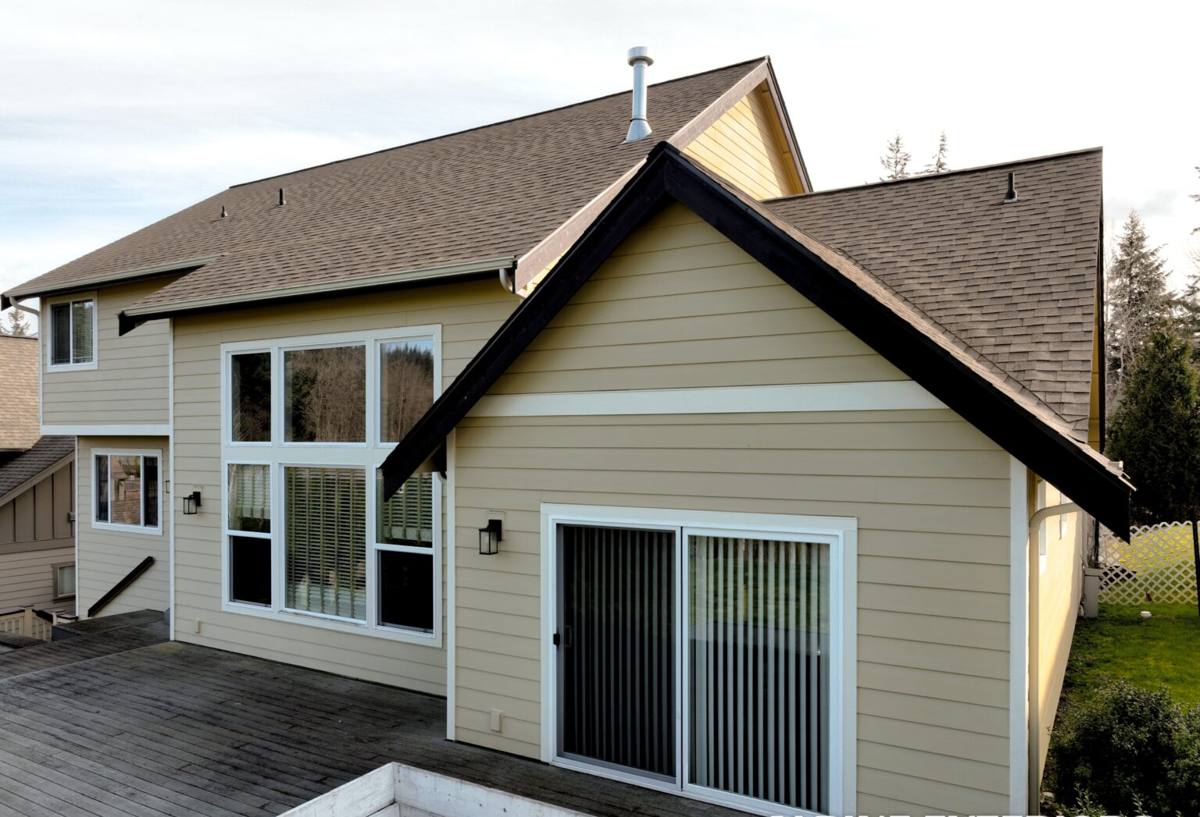
Signs Your Current Windows Are Losing the Fight
Most window failures in this area don't happen all at once — they show up as small, easy-to-ignore signs for a year or two before they become a real problem. Worth checking for:
- Fogging or a permanent haze between the panes (a sign the seal has failed and moisture has gotten into the glass unit itself)
- Soft or discolored wood at the sill or bottom corners of the frame
- Green or black growth building up in the track or on the exterior trim, even after cleaning
- A draft you can feel with your hand held near the frame on a windy day
- Windows that stick, won't stay open, or need to be forced to latch
- Paint or finish that's bubbling or peeling specifically around the window, not the rest of the wall
Any one of these on its own might just mean a caulking touch-up. Several together, especially on a window facing the prevailing weather, usually means the installation or the unit itself has reached the end of its useful life.
What a Correct Installation Actually Involves
Window installation gets treated as simple carpentry — pull the old one out, set the new one in, caulk the edges. In a climate this wet, that shortcut is exactly how you end up with rot inside the wall five years later, hidden behind trim that looks perfectly fine from outside. A correct job is really a water-management job with a window in the middle of it.
Removal and Opening Inspection
Once the old window is out, the rough opening gets inspected before anything new goes in — sheathing, framing, and any existing flashing. This is the one point in the whole job where hidden moisture damage from a previous poor installation is actually visible. Skipping this step means installing a new window against a wall that's already compromised.
Flashing and Water Management
This is the part that matters most in a climate with sustained, wind-driven rain. Flashing tape and a sloped sill pan need to be integrated with the building's water-resistive barrier in the correct shingle-lap order, so any water that gets past the window sheds down and out rather than pooling at the sill or working its way behind the siding. Done correctly, this step is invisible once the window is in — which is exactly why it's the step that gets skipped by installers in a hurry.
Setting, Shimming, and Sealing
The window needs to be shimmed square and plumb, not just tight to the opening, or it will bind and fail to seal properly within a season or two. Insulation around the frame should be a low-expansion type suited for windows — standard foam can bow the frame and cause it to operate poorly. Exterior sealant goes at the joints, never as a substitute for proper flashing underneath it.
Interior and Exterior Finish
Trim gets reset or replaced, and any exterior caulking is finished with a bead that sheds water rather than trapping it against the siding. On homes with wood trim, this is also a natural point to prime any bare wood before it has a chance to take on moisture.
Choosing Window Materials for This Climate
Material choice matters more here than in a drier region, because the frame is dealing with near-constant humidity, salt exposure, and long stretches of shade that slow drying time. There isn't one "best" material for every home — it depends on your siding, your budget, and how much upkeep you want to take on.
| Frame Material | Moisture & Salt Air Resistance | Maintenance | General Cost Position |
|---|---|---|---|
| Vinyl | Very good — won't rot or corrode, though very dark colors can fade faster in sun exposure | Low — occasional cleaning | Budget-friendly |
| Fiberglass | Excellent — dimensionally stable in wet-dry cycling, holds up well to salt air | Low | Mid to higher range |
| Aluminum | Good structurally, but conducts cold and can promote condensation without a thermal break | Low, but watch for corrosion at coastal exposure over time | Mid range |
| Wood or wood-clad | Handsome, but the most vulnerable to this climate without diligent upkeep | High — regular painting/sealing required | Higher range |
We're upfront with homeowners about this table: an all-wood window can be beautiful, but in a neighborhood with this much sustained moisture and shade, it demands a maintenance schedule most people don't keep up with. That's a real trade-off, not a knock on the material — it's why we lean toward vinyl or fiberglass for most Happy Valley homes and reserve wood or wood-clad options for homeowners who understand and want that upkeep.
Glass and Performance Options
For this climate, the glass package matters as much as the frame. A few things worth understanding before you decide:
- Double-pane vs. triple-pane: double-pane with a good low-E coating and argon fill covers most homes here well; triple-pane adds cost and weight for a modest additional performance gain, and makes more sense on a north-facing wall that never sees direct sun
- Low-E coatings: reduce heat loss in winter and help block UV fading of interior furnishings — a reasonable upgrade in almost every case
- Argon or krypton gas fill: improves insulation between panes; argon is standard and cost-effective, krypton is a marginal upgrade usually reserved for narrower gas spaces
- Condensation resistance: in a humid climate, ask about the window's condensation resistance rating — it affects whether you'll see fogging on the interior glass during cold snaps
How Our Process Works
- Free on-site estimate: we look at your existing windows, siding condition, and the specific exposure of each wall to wind and rain
- Straightforward quote: materials, scope, and timeline explained in plain terms, no pressure to decide on the spot
- Scheduling around the weather: we plan installation days with the forecast in mind so openings aren't sitting exposed longer than necessary
- Installation: removal, opening inspection, flashing, setting, and sealing done in sequence, one opening closed up before the next is started
- Walkthrough and cleanup: we check operation on every window with you before we consider the job done, and clean up debris and packaging
Why Local Experience in Happy Valley Actually Matters
A window installer who mostly works inland doesn't think about salt air the same way a crew that works this neighborhood regularly does. It shows up in small decisions — which sealants actually hold up long-term in this exposure, how much slope a sill pan needs given how much rain this area gets, which walls on a typical Happy Valley home take the worst of the weather and deserve extra attention at the flashing details. None of that is exotic knowledge, but it's the difference between an installation that's technically fine and one that's actually built for where it sits.
There's also a practical side to hiring a crew that already works in Bellingham and greater Whatcom County: we're not learning your neighborhood's weather patterns on your job, and we're around afterward if something needs a look.
Keeping New Windows Performing Through Moss Season
A correctly installed window needs very little from you, but a little seasonal attention goes a long way in this climate:
- Clear debris and organic buildup from tracks and sills before it holds moisture against the frame
- Rinse salt residue off exterior frames periodically, especially on walls that face open water or prevailing wind
- Check exterior caulking once a year for cracking or separation, particularly after a hard winter
- Trim back vegetation or overhanging growth that keeps a window in constant shade and slows drying
- Operate every window through its full range at least a few times a year so hardware doesn't seize up
None of this is heavy maintenance — it's the kind of thing that takes minutes and prevents the slow, hidden damage that shows up as a much bigger repair later.
Get a Straightforward Estimate
If your windows in Happy Valley are fogging, drafting, sticking, or just showing their age, it's worth having someone look at them before winter's rain settles in again. We'll give you an honest read on what's actually going on, what it would take to fix it, and a free, no-pressure estimate — no obligation to move forward. The form below gets that conversation started.