 Bellingham Roofing
 Roof Replacement Built for How Happy Valley Actually Weathers
Happy Valley sits close enough to Bellingham Bay and the surrounding tree cover that its homes take a different kind of beating than roofs a few miles inland. It's not one big dramatic event that wears a roof out here — it's the daily combination of salt-tinged air off the water, sideways rain that finds every gap in flashing, and long stretches of shade where moss gets a running start each fall and doesn't let go until late spring. A roof replacement done right for this neighborhood accounts for all three, not just the shingle color the homeowner likes.
This page is about one job, done one way, for one part of Bellingham: full roof replacement for Happy Valley homes. Not a repair patch, not a generic overview of every roofing service we offer — just what it takes to put a roof on a Happy Valley house that will actually hold up to Whatcom County weather.
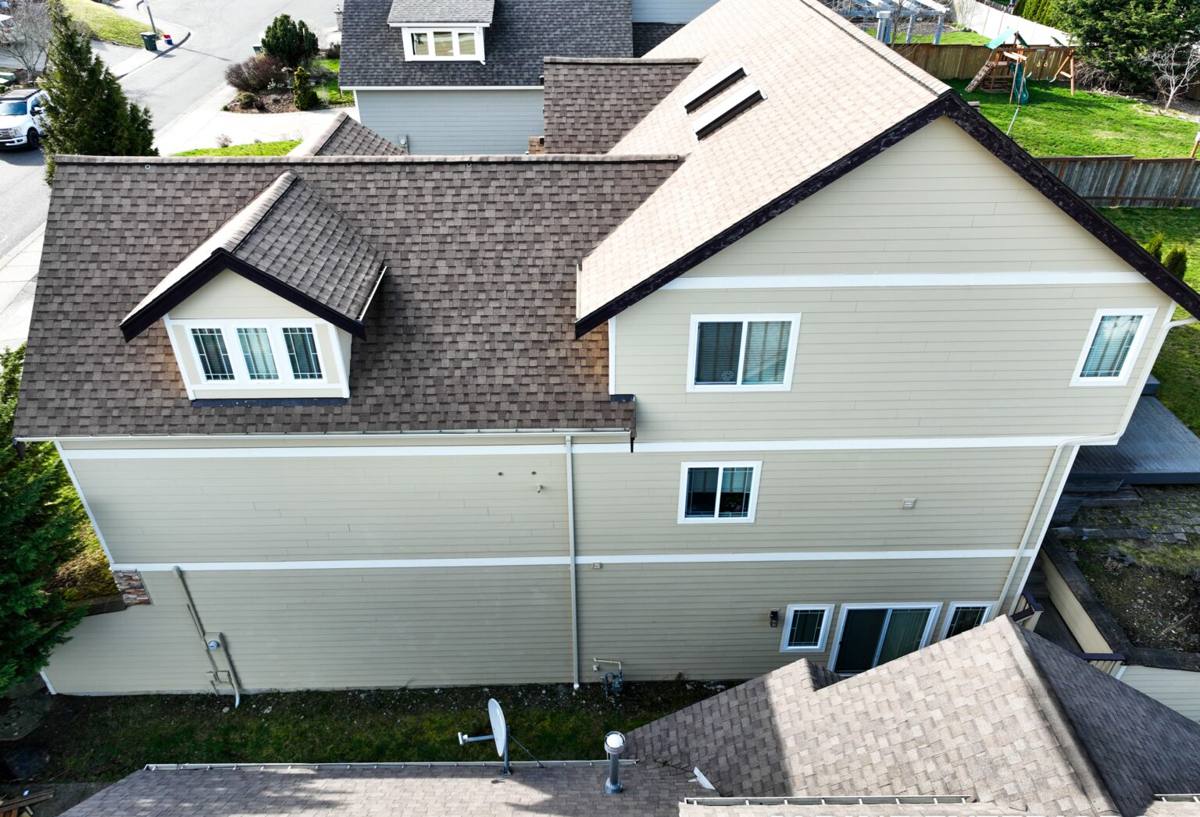
What Bellingham's Climate Does to a Happy Valley Roof
Every coastal Whatcom County neighborhood deals with rain. What sets Happy Valley apart is the combination of factors working on a roof at the same time, year-round.
Salt Air and Metal Fatigue
Proximity to the bay means airborne salt settles on roofing materials, flashing, fasteners, and vents. Over years, that accelerates corrosion on lower-grade metal components — nail heads, drip edge, valley flashing — long before the shingles themselves are due for replacement. A roof spec'd for an inland home without factoring in salt exposure often shows rust streaks and flashing failure years ahead of schedule.
Driving Rain, Not Just Rain
Bellingham's storms frequently come in at an angle, driven by wind off the water. That matters because a roof only needs to shed water straight down to satisfy a basic install — but driving rain pushes water sideways and upward under shingle tabs, around vent boots, and into any seam that isn't properly lapped and sealed. Underlayment quality and installation technique matter more here than in calmer climates.
Moss Season That Doesn't Really End
Tree cover and consistent moisture give moss a long growing window in Happy Valley — often nine months or more depending on sun exposure. Moss isn't just cosmetic. It holds moisture against the roofing surface, lifts shingle edges as it grows, and works its way into fastener holes over time. A roof replacement that doesn't address ventilation and moss resistance is signing the homeowner up for the same problem within a few years.
Signs a Happy Valley Roof Needs Replacement, Not Repair
Not every roof problem calls for a full replacement, and we'll tell you plainly when a repair is the honest answer. But certain signs, especially in combination, point to a roof that's past the point where patching makes sense.
- Granule loss heavy enough that you're finding shingle grit in gutters and downspouts regularly
- Moss that has re-established within a year of cleaning, especially on north-facing slopes
- Curling, cracking, or cupping shingles across multiple sections of the roof, not just one isolated spot
- Soft or spongy decking felt underfoot during inspection — usually a sign moisture has been getting through for a while
- Flashing that's rusted, separated, or was never properly stepped and counter-flashed at walls and chimneys
- Interior signs: ceiling stains, attic moisture, or daylight visible through the roof deck
- Roof age at or past the manufacturer's expected service life for the material and local climate
What a Correct Roof Replacement Actually Involves
A roof replacement is more than swapping old shingles for new ones. Done correctly for a Happy Valley home, the job includes several layers that each do specific work against local conditions.
| Component | Why It Matters Here |
|---|---|
| Tear-off and deck inspection | Confirms the decking underneath is sound before new material goes down — hidden rot from years of moss and moisture is common and needs to be caught, not covered |
| Ice-and-water shield at eaves and valleys | Extra protection where driving rain and ice pose the highest risk of water intrusion |
| Synthetic underlayment | A more reliable water barrier than older felt products, especially under sustained wind-driven rain |
| Corrosion-resistant flashing and fasteners | Reduces the salt-air corrosion that shortens the life of lower-grade metal components |
| Balanced attic ventilation (intake and exhaust) | Keeps the roof deck drier and cooler, which slows moss regrowth and prevents premature shingle aging from trapped heat and moisture |
| Proper valley and penetration detailing | Every vent pipe, skylight, and valley is a potential entry point — correct lapping and sealing is what actually stops leaks |
Our Roof Replacement Process
1. On-Site Inspection and Honest Assessment
We look at the whole roof system — decking, flashing, ventilation, and the shingles themselves — not just the surface. If a repair genuinely solves the problem, we'll say so.
2. Clear, Written Estimate
You get a scope of work and price in writing, with materials specified by name, before any work starts. No verbal promises that don't make it onto paper.
3. Tear-Off and Deck Repair
Old roofing comes off down to the deck. Any rotted or soft decking is identified and replaced — this is not an optional add-on we spring on you mid-job; it's built into how we quote from the start when there's visible risk.
4. Underlayment, Flashing, and Ventilation Install
This is the layer that does the real work against Bellingham's rain and moss. We install it to hold up under wind-driven conditions, not just pass a quick glance.
5. Final Roofing Material Install
Shingles, panels, or the material you've chosen go down to manufacturer spec, with attention to nailing pattern and exposure — details that affect wind resistance and warranty validity.
6. Cleanup and Walkthrough
Magnetic sweep for stray nails, full site cleanup, and a walkthrough so you understand what was done and what to expect going forward.
Choosing Roofing Materials for a Happy Valley Home
Most Happy Valley homes are well served by architectural asphalt shingles rated for wind and moss resistance, but the right choice depends on your roof's exposure, slope, and how much shade it gets.
| Material | Best For | Trade-Offs to Know |
|---|---|---|
| Architectural asphalt shingles | Most homes; good balance of cost, durability, and moss-resistant options | Still needs periodic moss treatment on heavily shaded slopes; quality varies by manufacturer tier |
| Standing seam metal | Steep slopes, homes prioritizing longevity and moss/debris shedding | Higher upfront cost; requires correct fastening and coating to resist salt-air corrosion over time |
| Synthetic/composite shingles | Homeowners wanting a specific look with lower maintenance than wood | Product quality and installer experience vary widely — we're selective about which lines we install and why |
| Cedar shake | Homes matching a specific traditional aesthetic | Higher moisture and moss maintenance burden in this climate; we'll walk you through the upkeep honestly before you commit |
We don't push a single product on every home. What we won't do is install a material or system that we know is a poor match for a shaded, moisture-heavy Happy Valley lot just because it's cheaper up front — we'd rather explain the trade-off and let you decide with full information.
Why Hiring a Crew That Already Works Happy Valley Matters
Roofing crews who mostly work drier, inland areas sometimes under-spec ventilation and flashing details because they've never had to solve for salt air and near-constant moss pressure. A crew already familiar with this stretch of Bellingham knows which slopes in the neighborhood typically hold shade and moisture longest, which detailing choices actually hold up here, and what a permit and inspection process in Whatcom County involves. That local familiarity shows up in fewer callbacks and a roof that performs the way it's supposed to in year five and year fifteen, not just on install day.
What to Ask Before You Hire
- Is the estimate written, itemized, and specific about materials by brand and product line?
- Does the crew carry current Washington State contractor licensing and insurance, and will they provide proof?
- Will the quote address ventilation and flashing, or just shingle replacement?
- What's the manufacturer's and installer's warranty, and what voids each one?
- Does the contractor have recent experience with homes in this specific climate and terrain, not just roofing in general?
- Is there a plan for decking repair if rot is found, and how is that priced?
What Affects the Cost of a Happy Valley Roof Replacement
| Factor | How It Affects Price |
|---|---|
| Roof size and number of facets | More square footage and complexity means more material and labor time |
| Roof pitch and access | Steep or hard-to-access roofs require more safety setup and time |
| Decking condition | Rot discovered during tear-off adds material and labor not visible in a pre-inspection |
| Material chosen | Asphalt, metal, and composite options span a wide cost range |
| Ventilation and flashing upgrades | Bringing an older roof system up to correct ventilation standards adds cost but reduces future problems |
We don't quote a number without seeing the roof first — anyone who does is guessing, and that guess usually turns into a change order later. What we can promise is a written estimate that lays out exactly what you're paying for and why, before a single shingle comes off.
If your Happy Valley roof is showing its age or you're just trying to understand your options, we're happy to take a look. The estimate is free, there's no pressure to commit on the spot, and you'll get a straight answer about whether you need a full replacement or something less. Use the form below to get started.