 Bellingham Roofing
 Fiber Cement Siding in Happy Valley: What the Climate Is Actually Testing
Happy Valley is one of Bellingham's established residential neighborhoods, with a housing stock that spans decades and a good amount of mature tree cover over many lots. That combination matters more than most homeowners realize when it comes to siding. Salt air moving in off the water, rain that gets driven sideways by wind rather than falling straight down, and a moss season that runs long through fall, winter, and much of spring all put steady, cumulative stress on whatever material is covering the outside of a house. None of it does damage in a single afternoon. It's years of that pattern repeating that separates siding holding up from siding that starts failing well before it should.
We install fiber cement siding on homes throughout Happy Valley and the surrounding Bellingham area, and every job is planned around this specific combination of coastal moisture and shade — not a generic weather assumption borrowed from a drier region.
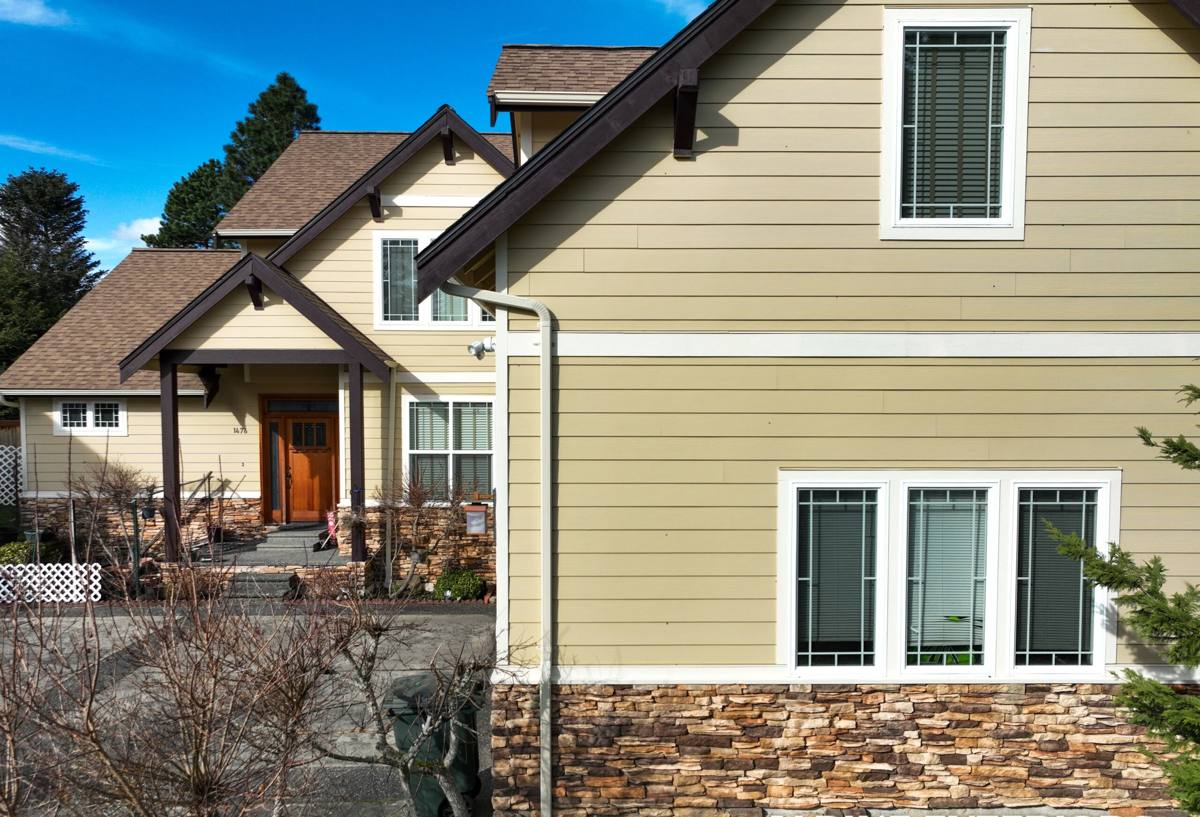
What Happy Valley Homes Specifically Need From Their Siding
A few things tend to show up more often on Happy Valley properties than on newer subdivisions built on open, sun-exposed lots. Established tree canopy keeps north- and shade-facing walls damp longer after a storm passes, which is exactly the condition moss and mildew need to take hold. A mix of older and newer homes means siding conditions vary widely block to block — some houses are on their original cladding well past its intended service life, others have had partial repairs or additions that don't match the original material or detailing. And because Whatcom County's wet season is long, any gap in flashing, caulking, or clearance has more months of exposure each year to turn into a real problem than it would in a drier climate.
That's the backdrop for every recommendation we make in this neighborhood: siding that resists moisture absorption, doesn't feed moss the way bare or lightly coated wood does, and holds its finish without repainting on a short cycle.
Why This Is Different From a Generic Siding Job
A siding product that performs fine in a dry inland climate can struggle here simply because it's never given a real chance to dry out between storms. Shaded, tree-covered lots in Happy Valley extend that wet window even further. The material choice and the installation details both have to account for that, not just the general idea of "it rains a lot in Washington."
Why We Install Only James Hardie Fiber Cement
We don't install vinyl siding, LP SmartSide, primed spruce, cedar, or other fiber cement brands. That's a professional standard, not a limitation on what we're able to install. In a climate like this one, the materials that tend to struggle over time share a common weakness: they either absorb moisture directly, rely on a coating or paint film to keep water out indefinitely, or expand and contract enough with humidity and temperature swings that seams gradually work themselves loose.
James Hardie fiber cement is built to resist exactly that kind of exposure. It's non-combustible, it doesn't swell, rot, or feed moss the way wood-based siding can, and its ColorPlus factory finish is baked on under controlled conditions and warrantied against the fading and chalking that constant moisture and UV cycling cause over time. Hardie also engineers different HZ formulations for different climate zones rather than selling one board for the whole country, which matters in a region that stays wet as long as this one does. Combined with a strong transferable warranty and installation done to the manufacturer's actual specifications, it's the system we're willing to put our name behind for a full Bellingham year, not just for how it looks on install day.
What We Ask Homeowners to Weigh Before Choosing Something Cheaper
Vinyl, engineered wood, and primed wood siding aren't dishonest products — they have legitimate uses in the right climate and budget. But in a salt-air, high-rain, extended-moss environment like Happy Valley's, the maintenance burden and moisture risk on those materials tends to land back on the homeowner within a decade or two, usually as caulking, repainting, or panel replacement that a correctly installed fiber cement system doesn't require nearly as often.
What Correct Fiber Cement Installation Actually Involves
Hardie siding performs the way it's engineered to only when it goes on correctly. That's true everywhere, but the margin for error is smaller in a climate this wet.
Moisture Management Details
Every installation starts underneath the visible siding: a properly lapped and sealed weather-resistive barrier, correctly flashed window and door openings, and drainage paths that direct water out and away from the wall assembly instead of letting it collect behind the cladding. On shaded or tree-covered lots common in Happy Valley, we also pay attention to how long a given wall stays damp after rain and factor that into ventilation gaps and detailing decisions.
Fastening, Clearance, and Trim
Correct fastener type and spacing, proper clearance above grade, roofing, and hardscape, and tight seams at butt joints and corners all matter for long-term performance. Skipping or shortcutting any one of these steps can undercut the material's real-world durability, no matter how good the product itself is. We also match trim and caulking details so repairs or additions down the road blend in rather than becoming a visible patch.
- Weather-resistive barrier lapped and sealed correctly before any siding goes on
- Flashing installed at every window, door, and wall penetration
- Manufacturer-specified fastener type, spacing, and depth
- Proper clearance maintained above grade, decks, and roof lines
- Butt joints and corners sealed to shed water rather than trap it
- Ventilation gap maintained on shaded or slow-drying wall sections
- Final walk-through to confirm finish, caulking, and trim details before we call the job done
Fiber Cement Compared to Other Siding Options
Homeowners in Happy Valley often ask how James Hardie stacks up against the alternatives they've seen priced or advertised elsewhere. Here's an honest comparison based on how each material actually behaves in a coastal, high-rain climate:
| Material | Moisture Behavior | Maintenance Over Time | Relative Lifetime Cost |
|---|---|---|---|
| James Hardie fiber cement | Does not absorb moisture or swell; resists moss growth | Low — factory finish holds its color and doesn't need repainting on a short cycle | Higher upfront, lower over the life of the siding |
| Vinyl siding | Doesn't absorb water but can warp, crack, or gap under sustained wind and temperature swings | Low material maintenance, but panels are hard to repair invisibly and can fail early in exposed conditions | Lower upfront, variable long-term depending on panel life |
| LP SmartSide / engineered wood | Wood-based core is vulnerable if the factory coating is ever compromised at a cut edge or seam | Moderate — depends heavily on installation quality and ongoing caulk and paint upkeep | Mid-range upfront, maintenance costs accumulate over time |
| Cedar or primed spruce | Absorbs moisture directly; prone to rot and moss in shaded, damp conditions | High — regular repainting, caulking, and spot repair expected | Lower or mid upfront, highest ongoing maintenance cost |
Our Process, Start to Finish
We start with an honest, no-pressure look at the existing siding to see what it's actually dealing with, not just what it looks like from the street. That includes checking for soft spots, moisture intrusion at trim and window edges, and how much of the wall assembly underneath is still sound. From there we walk through material and color options, give a clear scope of work, and set a realistic timeline based on the size of the home and the weather window we're working with.
Once work begins, that means removing the old siding, repairing or replacing any damaged sheathing underneath, installing a correctly lapped weather-resistive barrier, flashing every opening and penetration, and installing the Hardie panels or lap siding to manufacturer spec — fastener spacing, clearance, and joint treatment included. We finish with trim, caulking, and a final walk-through so you know exactly what was done and why, before we consider the job complete.
Signs Your Happy Valley Home's Siding Needs Attention
A few warning signs come up often enough on homes in this neighborhood that they're worth checking for directly:
- Persistent green or black staining on shaded or north-facing walls that pressure washing doesn't fully remove
- Soft spots or slight give when pressing near window and door trim
- Siding that's cupping, warping, or separating at seams or corners
- Peeling or bubbling paint that keeps coming back after repainting
- Visible gaps at caulking lines that have opened back up within a year or two
None of these automatically means a full replacement is the answer. But in a climate where moisture problems compound rather than stay static, they're worth having looked at by someone who can tell the difference between a cosmetic issue and one that's already reached the sheathing underneath.
Why Local Installation Experience Matters in Happy Valley
Fiber cement siding is only as good as the installation behind it, and the details that matter most here — flashing sized for wind-driven rain, ventilation planning on shaded lots, fastener choices that hold up under salt air — are the kind of thing a crew learns from working this specific area repeatedly, not from a generic manual. A contractor who already knows how Happy Valley's tree cover, hillside drainage patterns, and coastal exposure interact with a wall assembly is going to make fewer assumptions and catch more of the small things that determine whether siding lasts twenty years or forty.
It also means a straighter answer when something doesn't need full replacement. We're not interested in selling a new siding job to a homeowner who just needs a repair, and being a known, local presence in this community is part of what keeps that honesty in check.
If your Happy Valley home needs new siding, a repair assessment, or just an honest opinion on what's really happening behind an aging wall, we're glad to take a look. Reach out using the form below to schedule a free, no-pressure estimate.