 Bellingham Roofing
 Windows Built for Happy Valley's Version of Weather
Happy Valley sits close enough to Bellingham Bay that homes here take on a specific mix of weather stress: salt-laden air rolling off the water, wind-driven rain that hits window frames sideways rather than straight down, and a wet season that stretches long enough to grow moss on anything that stays damp too long. None of that is unique to one street or one style of house. It's a Whatcom County reality, and it shows up first at the weak points of a house — and windows are one of the biggest weak points there is.
A window isn't just glass in a frame. It's a system of seals, flashing, weep paths, and hardware that all have to work together to keep water moving out instead of in. When any one part of that system is installed wrong or wears out, the failure doesn't usually show up as a dramatic leak. It shows up slowly — a soft spot in the sill, a musty smell in the room, condensation that won't quit, paint that keeps bubbling in the same corner year after year.
What "Custom" Actually Means Here
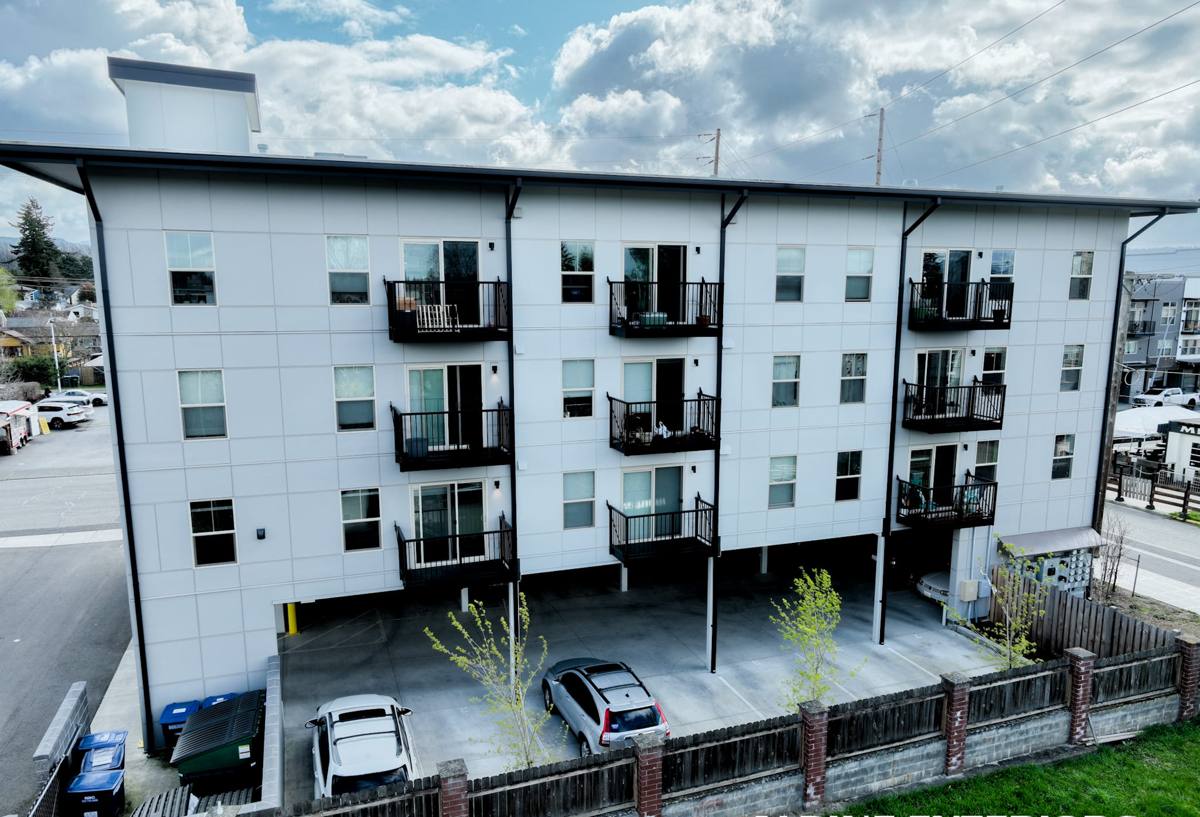
We use the word "custom" deliberately, not as a sales term. Very few homes in an established Bellingham neighborhood have perfectly standard, off-the-shelf window openings. Older homes settle. Additions get framed to fit the space available, not a catalog size. Replacement windows that don't account for this end up shimmed, caulked over gaps, or slightly out of square — all of which give water a path in.
Custom in our world means:
- Measuring each opening individually, not assuming uniform sizing across a wall or a house
- Choosing frame material and glass package based on that specific window's sun, wind, and rain exposure
- Matching sightlines and trim profiles so replacement windows don't look like an obvious retrofit
- Building the flashing and sealing plan around the actual wall assembly behind the window, not a generic install checklist
That last point matters more in this climate than almost anywhere else. A window that's a perfect fit in a dry inland climate can still fail here if it's not flashed and sealed for sustained wind-driven rain.
The Three Things Working Against Your Windows
Salt Air
Proximity to the bay means airborne salt settles on exterior surfaces, including window frames and hardware. Over years, this accelerates corrosion on lower-grade metal components — hinges, locks, balance hardware — and can degrade certain finishes faster than a manufacturer's inland warranty testing accounts for. This is a bigger factor for aluminum-frame windows and lower-grade hardware than it is for vinyl or well-clad fiberglass.
Driving Rain
Bellingham doesn't just get a lot of rain — it gets a lot of wind-driven rain, which behaves differently than a straight downpour. Wind pushes water sideways and upward into gaps that a vertical rain would never reach. Flashing details that would be fine in a calmer climate can leak here because the water is arriving from an angle the original installer didn't plan for.
Moss Season
Whatcom County's long wet season keeps exterior wood and trim damp for extended stretches, which is exactly what moss and algae need to take hold. On windows, this shows up on sills, exterior trim, and anywhere water sits instead of draining. Moss holds moisture against the surface it's growing on, which slowly breaks down paint, caulk, and eventually the substrate underneath — whether that's wood trim or the sheathing behind it.
Frame Materials: What Actually Holds Up Here
There's no single "best" window material for every house — it depends on the home's age, exposure, and how it's trimmed. But some materials handle this specific climate mix better than others.
| Material | Coastal / Salt Air Durability | Moisture Behavior | Maintenance Burden |
|---|---|---|---|
| Vinyl | Strong — won't corrode or rust | Doesn't absorb water; seals are the main concern | Low |
| Fiberglass | Very strong — stable in temperature and humidity swings | Dimensionally stable, resists warping | Low to moderate |
| Wood / Wood-clad | Moderate — cladding protects the wood, but exposed wood needs upkeep | Bare wood is vulnerable to prolonged damp exposure | Higher — regular paint/finish upkeep |
| Aluminum | Weaker in salt air unless finish-rated for coastal use | Conducts cold, prone to condensation | Moderate |
For most Happy Valley homes, we lean toward vinyl or fiberglass frames for their resistance to the salt and moisture cycle, reserving wood or wood-clad options for homes where matching an existing architectural look is the priority — and being upfront that those come with more upkeep in a climate like this.
What a Correct Installation Actually Involves
The window itself is only part of the job. Most window failures we get called out to inspect aren't a bad window — they're an installation that skipped a step that doesn't show up until years later.
- Opening inspection. Before anything goes in, we check the sill, jambs, and surrounding sheathing for existing rot or moisture damage. This gets found and addressed first, not covered up.
- Proper flashing sequence. Flashing tape and pan flashing get layered so water is always directed outward and down, shingle-style, never trapped behind the window.
- Sealing that allows drainage. Sealant goes where it should hold water out — not in the weep path, where it would trap water inside the frame instead of letting it drain.
- Shimming and squaring. The window gets set plumb, level, and square in the opening so it operates correctly and seals evenly on all sides, not just where it happens to touch.
- Interior and exterior trim-out. Finish work is done so the window looks intentional, not retrofitted, and so exterior trim sheds water rather than holding it.
Signs Your Current Windows Are Already Losing the Battle
- Condensation between panes (a sign the seal has failed, not just a humidity issue)
- Soft or spongy trim or sill when pressed
- Persistent moss or dark staining on sills or lower trim
- Drafts you can feel even when the window is fully latched
- Difficulty opening, closing, or locking that wasn't there before
- Paint that keeps bubbling or peeling in the same spot despite repainting
Any one of these on its own might be minor. Two or more on the same window usually means the water management around it has already broken down.
How Our Process Works
We keep the process straightforward because homeowners generally want two things: an honest answer about what's actually needed, and a crew that shows up and does what was agreed on.
- On-site assessment. We look at each window in question, not just the one that's obviously failing, since neighboring windows installed at the same time often share the same problem.
- Written estimate. Material options, scope, and cost laid out plainly, with the reasoning behind material recommendations for that specific window's exposure.
- Scheduling around the weather. Window replacement means an open wall for part of a day. We plan installs around forecasted rain windows rather than hoping the weather cooperates.
- Installation. Old window removed, opening inspected and repaired if needed, new window set, flashed, sealed, and trimmed.
- Final walkthrough. We check operation, seal, and appearance with you before calling the job done.
Why a Crew Already Working Happy Valley Matters
Window performance in this climate isn't theoretical — it's something you can watch play out over a few wet seasons. A contractor who regularly works homes in this part of Bellingham has already seen which flashing details hold up to wind-driven rain off the bay, which frame materials handle years of salt air without hardware trouble, and which trim details resist moss buildup versus which ones invite it. That's not something you get from a manufacturer's spec sheet — it's something you get from doing the work here, repeatedly, and following up on it.
It also means less guesswork on your end. A crew already familiar with this neighborhood's typical home ages and construction styles can usually spot likely trouble points — old flashing, undersized weep paths, aging caulk lines — before they become a bigger repair.
Keeping New Windows Performing for the Long Haul
A correct install buys you a long runway, but a little homeowner upkeep extends it further:
- Clear debris from sills and tracks so water has somewhere to go
- Rinse or gently brush off moss buildup on sills and trim before it spreads
- Check exterior caulking annually, especially after a hard winter, and have gaps resealed before water finds them
- Keep gutters and downspouts clear nearby — overflow is a common, overlooked source of water reaching window trim
- Operate locks and hardware periodically even on windows you rarely open, so salt-air corrosion doesn't set in unnoticed
If you're weighing whether it's time to replace windows in your Happy Valley home, or you just want a second opinion on trouble spots you've noticed, we're glad to come take a look. Estimates are free and there's no pressure — just a straight answer about what your windows need and what it would take to fix it right.