 Bellingham Roofing
 Siding Repair in Fairhaven: What Makes This Neighborhood Different
Fairhaven sits close enough to the water that homes here take a different kind of beating than siding further inland in Whatcom County. Salt-laden air off Bellingham Bay accelerates corrosion on fasteners and trim, driving rain off the Strait works its way into every gap and seam a builder left unsealed, and the long, damp moss season here runs longer than almost anywhere else in the county. Add in the tree cover that gives Fairhaven its character, and you get siding that stays wet longer after every storm because it never gets a full day of direct sun to dry out.
None of this means Fairhaven homes need exotic solutions. It means siding repair here has to account for moisture cycling, not just cosmetic damage. A repair that looks fine the day it's finished but doesn't address why the siding failed in the first place will fail again in a season or two — and in a neighborhood this close to the water, that second failure often shows up faster than homeowners expect.
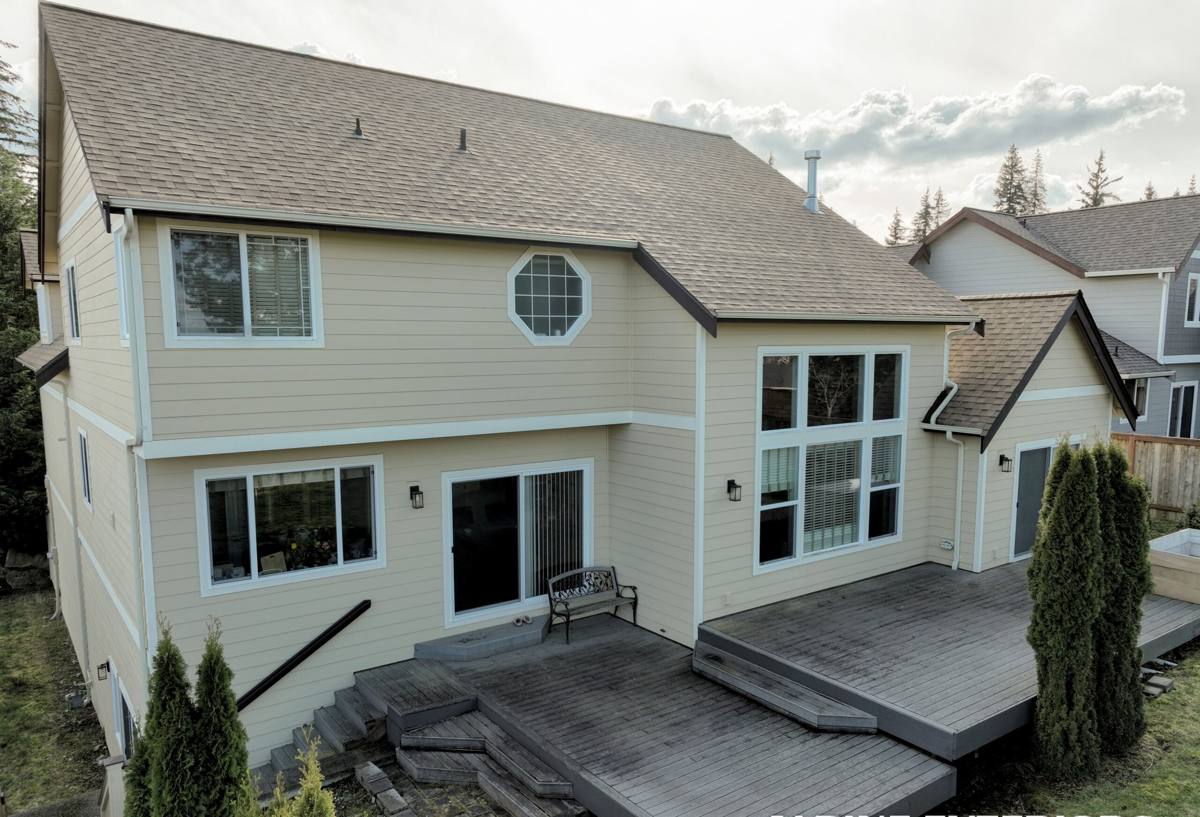
How Salt Air, Rain, and Moss Actually Damage Siding
Salt Air and Metal Fasteners
Airborne salt accelerates oxidation on exposed nail heads, flashing, and any metal trim components. Once a fastener starts rusting, it weakens, and water finds its way in around the corroded shank. This is a slow process, which is exactly why it goes unnoticed until siding panels start to loosen or streak with rust stains.
Driving Rain and Wind-Driven Moisture
Bellingham's weather doesn't just rain straight down — wind off the water pushes rain sideways into siding laps, corner trim, and anywhere caulking has shrunk or cracked. Over time, wind-driven rain finds the smallest gap and pushes moisture behind the siding, where it can sit against sheathing and framing long after the storm passes.
Moss, Algae, and Prolonged Dampness
Fairhaven's tree canopy and proximity to the water mean many homes get less direct afternoon sun than properties further from downtown. Combined with a moss season that runs from fall through spring, siding surfaces here can stay damp for days after a rain event. Moss and algae growth aren't just cosmetic — they hold moisture directly against the siding surface, which is a problem for any material not engineered to handle sustained wet exposure.
Signs Fairhaven Homeowners Should Watch For
- Soft or spongy spots when you press on the siding, especially near the bottom courses and around window trim
- Visible rust streaking below nail heads or metal flashing
- Persistent moss or algae growth that returns quickly after cleaning
- Cracked, peeling, or bubbling paint, particularly on the north and west-facing walls that see less sun
- Gaps or separation at butt joints, corners, and trim where caulking has shrunk or failed
- Visible warping, buckling, or panels that no longer sit flat against the wall
- Water stains or discoloration on interior walls near exterior siding sections
Any one of these on its own might be minor. Several showing up together, especially on the same wall, usually points to a moisture path that's been active for a while.
What a Correct Siding Repair Actually Involves
A repair that's done right starts with figuring out why the damage happened, not just patching what's visible. That means pulling back the damaged section to check the condition of the water-resistive barrier and sheathing underneath, not just swapping a cracked panel and moving on. If the sheathing underneath is already soft or discolored, replacing siding over it just resets the clock on the same failure.
Our Repair Process
- Assessment: We inspect the damaged area and the surrounding siding, checking for how far moisture has traveled and whether the cause is a flashing failure, a caulking failure, a fastener issue, or something else.
- Diagnosis of the underlying cause: We identify what let water in — this is the step a quick patch job skips, and it's the reason so many repairs fail again within a year or two.
- Removal of compromised material: Damaged siding, and any wet or deteriorated sheathing behind it, gets removed rather than covered over.
- Correction of the water path: Flashing gets re-detailed, house wrap gets repaired or replaced, and any drainage plane issues get fixed before new siding goes back on.
- Reinstallation to spec: New siding goes in with proper fastener placement, correct gapping at joints, and manufacturer-specified clearances — details that matter more in a wet climate than in a dry one.
- Finish work: Trim, caulking, and touch-up painting are matched as closely as possible to existing siding so the repair blends in rather than standing out as a patch.
Matching Existing Siding
One of the more common questions in a repair job is whether the new section will match the old. If your home already has James Hardie fiber cement siding, matching is usually straightforward since ColorPlus finishes are formulated for long-term consistency. If your home has an older or different material — vinyl, wood, or another fiber cement brand — matching exactly can be difficult, and that's a real conversation we have honestly rather than promising a perfect blend we can't deliver.
Why We Only Repair With and Recommend James Hardie Products
When a repair calls for replacing damaged sections, we use James Hardie fiber cement — it's the only siding product we install, full stop. That's not a marketing position, it's a standard we hold because of what a house near the water actually needs to hold up over decades, not years.
| Factor | Why It Matters in Fairhaven |
|---|---|
| Moisture resistance | Fiber cement doesn't absorb and swell with repeated wet-dry cycling the way some wood-based products can |
| Non-combustible material | Added protection that has nothing to do with moisture but matters for long-term home value |
| Factory-applied ColorPlus finish | Reduces the repainting cycle that salt air and UV exposure otherwise shorten |
| Climate-engineered HZ product lines | Formulated for regions with sustained moisture exposure, not just dry-climate installs |
| Transferable warranty | Backed by the manufacturer, which matters if you sell the home before the siding's useful life is up |
We get asked from time to time about vinyl, LP SmartSide, or other fiber cement brands like Cemplank or Allura. We don't install any of them, and we're upfront about why: in a climate that stays wet as long as Whatcom County's does, the long-term maintenance burden and moisture behavior of those alternatives don't hold up the way Hardie's engineered product line does when installed correctly. That's our standard, not a claim about any specific project failing — it's why every repair and full install we do uses one material system.
Repair vs. Replacement: How We Help You Decide
Not every damaged section needs a full re-side, and not every repair is worth doing instead of planning a replacement. We look at a few honest factors before recommending either path.
| Consider Repair When | Consider Replacement When |
|---|---|
| Damage is isolated to one or two sections | Multiple walls show moisture damage or rot |
| Existing siding is Hardie or in otherwise good shape | Existing material is at or past its expected service life |
| Underlying sheathing tested dry and sound | Sheathing shows widespread rot or soft spots |
| Cause of damage was a one-time or localized failure | Damage keeps recurring across different areas |
We'll tell you directly if a repair is the right call rather than pushing a bigger job than the house needs. We'll also tell you if patching one section is just going to shift the problem to the next section over.
Why Hiring a Crew That Already Works in Fairhaven Matters
Fairhaven's mix of older homes, tree cover, and proximity to the water means the failure patterns here aren't identical to what you'd see on a newer build out in the county away from the water. A crew that regularly works this neighborhood already knows to check flashing details around older trim profiles, knows how moss buildup behaves on shaded north walls, and isn't guessing at how quickly wind-driven rain off the bay can push moisture into a wall assembly.
That local familiarity shows up in small but important ways: knowing which areas of a Fairhaven home typically dry out slowest, understanding how salt air affects fastener choice, and recognizing early-stage moss growth before it's had a chance to hold moisture against the siding for a full wet season.
Maintenance That Extends the Life of a Repair
- Rinse siding periodically to remove salt residue, especially on walls facing the water
- Keep gutters clear so overflow doesn't run down siding surfaces repeatedly
- Trim back vegetation and tree limbs that keep siding shaded and damp longer than necessary
- Address moss growth early rather than letting it establish and hold moisture
- Recaulk trim and joints on the manufacturer's recommended schedule, not just when cracking is visible
- Have siding inspected after any major windstorm, since wind-driven rain events are when new gaps typically start
Getting Started
If you're noticing soft spots, rust streaking, persistent moss, or paint failure on your Fairhaven home's siding, it's worth having it looked at before the next wet season makes the problem worse. We offer a free, no-pressure estimate — we'll assess the damage, tell you honestly whether repair or replacement makes more sense, and walk you through what a correct fix actually involves. Fill out the form below to get started.