 Bellingham Roofing
 Siding Built for Fairhaven's Weather, Not Just Its Looks
Fairhaven sits close enough to the water that salt air is part of daily life on your home's exterior, whether you notice it or not. Add Bellingham's driving winter rain and a moss season that can stretch from October well into spring, and you've got a combination that punishes the wrong siding choice fast. Paint fails early, seams swell, and moss finds every horizontal ledge it can grab onto. Siding installation here isn't just a cosmetic upgrade — it's the first line of defense for the wall assembly underneath, and it has to be installed correctly to do that job.
We install siding in Fairhaven the way the climate demands: with attention to drainage, ventilation, and flashing details that generic installation crews often skip. The material matters, but so does the crew putting it on the wall.
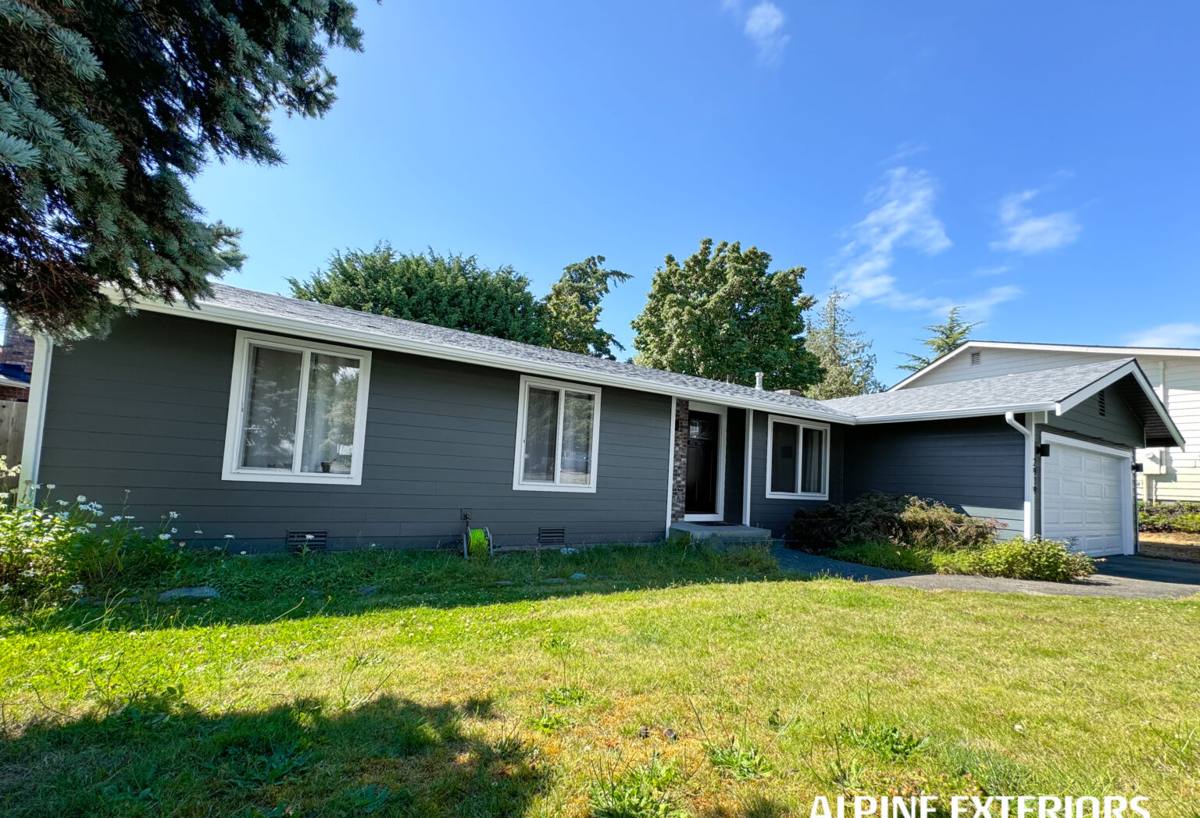
What Fairhaven Homes Actually Need From Their Siding
Moisture Management First
Whatcom County's rain doesn't just fall straight down — wind off the Salish Sea drives it sideways into wall surfaces, especially on exposed or elevated lots. Correct siding installation depends on a drainage plane behind the siding, not just the siding itself. Weather-resistive barrier, properly lapped house wrap, back-ventilated rainscreen furring where the assembly calls for it, and flashing at every window, door, and penetration are what actually keep water out of the wall cavity. Siding is the visible layer; the water management system behind it is what prevents rot.
Salt Air and Coastal Exposure
Homes closer to the water deal with airborne salt that accelerates corrosion on fasteners, trim, and unprotected wood. This is one of the reasons material choice matters as much as installation quality — a product that absorbs moisture or relies on field-applied paint will show wear faster in this environment than one engineered for it.
Moss and Organic Growth
Bellingham's long damp season gives moss and algae plenty of time to establish on north-facing walls, under eaves, and anywhere airflow is restricted. Siding with a factory-cured finish resists this far better than raw or site-primed material, and proper installation — keeping siding off grade, maintaining clearances from decks and roofing, and avoiding moisture traps — reduces how much moss has to fight in the first place.
Why We Install Only James Hardie Fiber Cement
We don't install vinyl, LP SmartSide, primed spruce, cedar, or other fiber cement brands. That's a deliberate standard, not a sales pitch. In a climate like Fairhaven's, the trade-offs of those products — moisture sensitivity in engineered wood, expansion and cracking in vinyl during temperature swings, ongoing maintenance in raw wood — show up faster and cost homeowners more over time than they expect.
James Hardie's fiber cement is non-combustible, dimensionally stable in wet-dry cycles, and available in HZ product lines engineered for specific climate zones, including the wet Pacific Northwest. The ColorPlus factory finish is baked on under controlled conditions, which holds color and resists the fading and peeling that field-applied paint struggles with in a marine climate. It's the product we're willing to put our installation standards behind, and it's backed by a strong transferable warranty when installed to Hardie's specifications — which is exactly what our crews are trained to do.
Hardie Siding Profiles Common in Fairhaven Installations
| Profile | Look | Best Fit |
|---|---|---|
| HardiePlank Lap Siding | Classic horizontal lap, several textures | Most Fairhaven homes, craftsman and traditional styles |
| HardiePanel Vertical Siding | Clean vertical lines | Modern builds, accent gables, mixed-material facades |
| HardieShingle | Staggered or straight-edge shingle look | Character homes, accent areas, dormers |
| HardieTrim | Fascia, corner boards, window trim | Finishing detail on every job, matched to siding profile |
What a Correct Installation Actually Involves
- Removal of old siding and inspection of sheathing for hidden rot or moisture damage before anything new goes up
- Repair or replacement of any compromised sheathing — never siding installed over a problem
- Weather-resistive barrier installed and lapped correctly, shingle-style, top to bottom
- Rainscreen or furring strips where the wall assembly and exposure warrant back-ventilation
- Properly flashed windows, doors, and all penetrations before siding contacts them
- Correct fastener type, spacing, and depth per James Hardie's published installation specs
- Minimum clearances maintained from grade, roofing, decks, and patios
- Factory-cut and factory-primed edges kept intact; field cuts sealed per manufacturer instructions
- Caulking limited to where it belongs — not used to compensate for poor fit or missed flashing
Skipping any one of these steps doesn't usually show up on day one. It shows up two or three winters later as a stain, a soft spot, or moss creeping in behind a poorly lapped seam. That's why installation discipline matters as much as the product on the truck.
Our Process for Fairhaven Siding Projects
1. On-Site Assessment
We walk the exterior with you, check existing siding and sheathing condition, note drainage and exposure issues specific to the lot, and talk through which Hardie profile and color fit the home.
2. Scope and Estimate
You get a written scope covering removal, any sheathing repair, water management upgrades, the Hardie products specified, and trim work — no vague allowances.
3. Preparation and Removal
Old siding comes off, sheathing gets inspected and repaired as needed, and any rot is dealt with before a single piece of new siding is measured.
4. Weather Barrier and Flashing
This is the step that determines how the house performs in a Bellingham winter. We don't rush it, and we don't cover it up until it's right.
5. Installation to Manufacturer Spec
Hardie products installed per fastening, clearance, and sealing requirements, with trim and details matched for a finished look, not just a functional one.
6. Final Walkthrough
We walk the completed job with you, cover care basics, and make sure everything matches what was scoped.
Signs Fairhaven Homeowners Should Watch For
- Paint that's peeling, bubbling, or chalking earlier than expected
- Soft or spongy spots when you press on siding near the bottom edge or corners
- Visible warping, cupping, or gaps between boards
- Persistent moss or algae staining that returns soon after cleaning
- Cracked caulking or trim separating at joints
- Rising energy bills that hint at a compromised wall assembly
Any one of these on its own isn't necessarily an emergency, but together they're usually a sign the current siding — or the way it was installed — isn't holding up to the local climate.
Cost Factors for a Fairhaven Siding Project
| Factor | Why It Matters |
|---|---|
| Home size and complexity | More linear footage, more corners, dormers, and gables all add labor |
| Sheathing condition | Rot discovered during removal adds repair scope before new siding goes on |
| Siding profile | Lap, panel, and shingle products have different material and labor costs |
| Water management upgrades | Adding a rainscreen or improving flashing detail increases labor but improves long-term performance |
| Trim and detail work | Corner boards, window trim, and accent details add finish-carpentry time |
| Site access | Tight lots, elevation, or landscaping near the house can affect setup and staging |
We give real numbers after seeing the house, not a phone-quote guess. Every estimate breaks down materials and labor so you know what you're paying for.
Why Local Experience in Fairhaven Matters
A crew that regularly works Fairhaven and the rest of Bellingham knows how exposure varies block to block — which lots take the brunt of wind off the water, which walls stay damp longest into spring, and how moss behaves differently on a shaded north wall than a sun-exposed south one. That knowledge shapes real decisions: where a rainscreen earns its keep, which trim details need extra attention, and how to sequence a project around Whatcom County's wet-season weather windows. It's the difference between siding that's installed and siding that's installed for this place.
Choosing a Siding Contractor in Fairhaven
- Ask what siding brand they install and why — and be wary of anyone who installs "whatever you want" without a stated standard
- Confirm they inspect and address sheathing condition before installing over it
- Ask specifically about their weather-resistive barrier and flashing approach, not just the siding brand
- Get a written scope that separates removal, repair, water management, and siding installation
- Check that they follow manufacturer fastening and clearance specs — this affects your warranty
- Ask how they handle unexpected rot found during removal, and how that's priced
If you're planning a siding project in Fairhaven, we're happy to take a look and walk you through what your home actually needs — no pressure, no scare tactics. Request a free estimate below and we'll schedule a time to assess the exterior and talk through James Hardie options that fit the house and the budget.