 Bellingham Roofing
 Why Fairhaven Roofs Wear Differently
Fairhaven sits close to Bellingham Bay, and that proximity to salt water changes how a roof ages compared to homes further inland in Whatcom County. Salt-laden air accelerates corrosion on exposed metal — fasteners, flashing, vent boots, and gutter hardware all take more abuse here than the same materials would see even a few miles east. Add in Bellingham's driving rain, which often comes in sideways off the water during winter storms, and you've got a roof system that needs tighter water-shedding details at every seam, not just a straight shingle-over-shingle job.
Then there's moss. Fairhaven's mix of mature tree cover, marine humidity, and long stretches of overcast, damp weather make it one of the more moss-prone pockets of Bellingham. Moss isn't just cosmetic — it holds moisture against the roofing material for months at a time, works its way under shingle tabs, and can shorten the useful life of a roof by years if it's never addressed. Any replacement done right here has to account for all three factors together: salt air, wind-driven rain, and a moss season that can run from fall through spring.
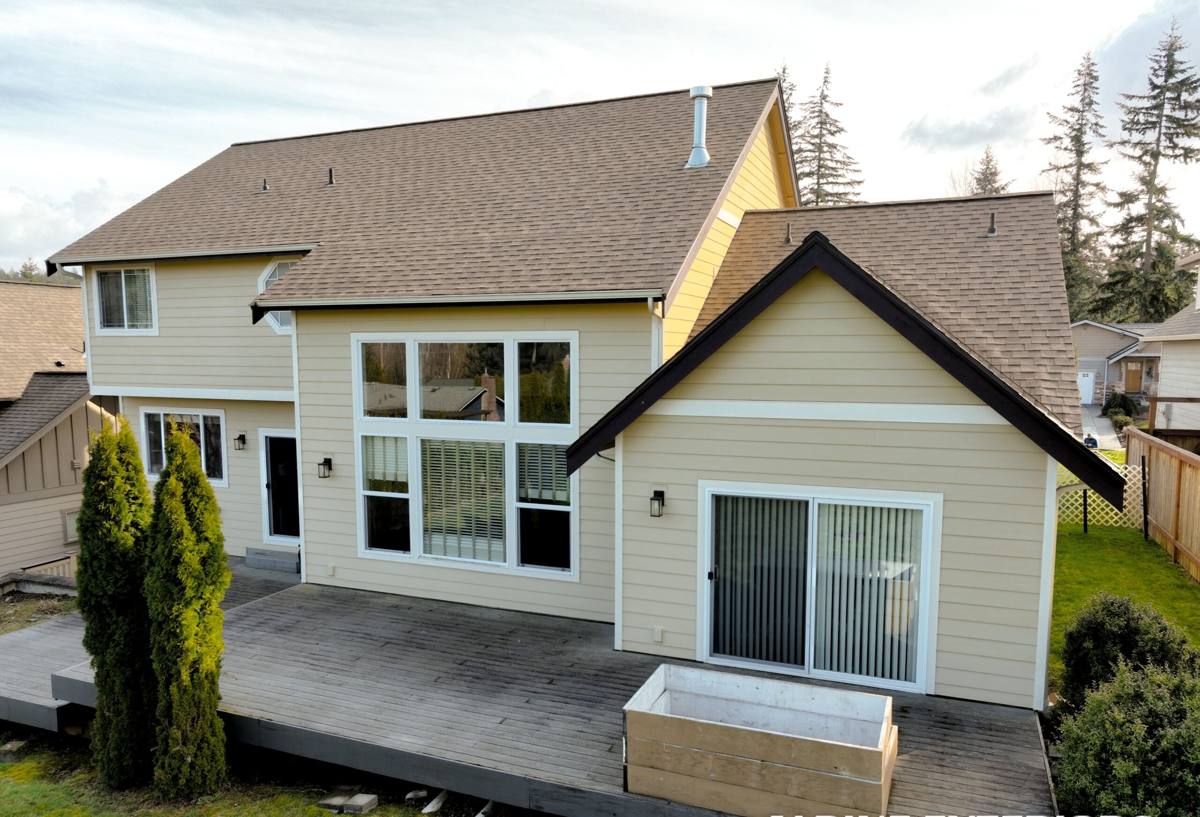
Signs a Fairhaven Home Needs Full Replacement, Not Just Repair
Not every roof problem calls for a full tear-off. But there are specific signs, especially common on older Fairhaven homes, that point to replacement being the more honest recommendation:
- Granule loss heavy enough that you can see bare asphalt mat on multiple slopes, not just one weathered section
- Soft or spongy decking felt underfoot during an inspection walk, especially near valleys or eaves
- Moss growth that has recurred after cleaning two years in a row — a sign the roof surface is holding moisture rather than shedding it
- Rusted or failing metal flashing around chimneys, skylights, and roof-to-wall transitions
- Daylight visible through the roof deck from inside the attic, or consistent staining on rafters
- A roof already past 20-25 years old for asphalt shingle, where patch repairs are becoming frequent and increasingly expensive relative to a full replacement
If a roof is showing one or two of these in isolation, repair is often still the right call. When several show up together, that's usually the point where continuing to patch stops making financial sense.
What a Correct Roof Replacement Actually Involves
Tear-Off and Deck Inspection
A proper replacement starts with a full tear-off down to the deck, not an overlay. Overlaying a new layer on top of old, moss-compromised shingles traps moisture between layers and voids most manufacturer warranties outright. Once the old roofing is off, the deck gets inspected board by board — any wood that's soft, delaminated, or water-stained gets replaced before anything new goes down. Skipping this step is one of the most common corner-cutting move in the trade, and it's the one that causes soft spots and leaks two or three years later.
Underlayment and Ice-and-Water Barrier
Given how often Fairhaven sees wind-driven rain, underlayment choice matters more here than in drier parts of the state. We install synthetic underlayment across the full deck and add self-adhered ice-and-water shield at eaves, valleys, and around every penetration — the places where wind-driven rain is most likely to force its way under standard shingle coverage.
Flashing and Fastener Selection
Because of the salt-air corrosion factor, fastener and flashing material choice isn't cosmetic here — it affects how long the roof actually lasts. We use corrosion-resistant fasteners and flashing rated for coastal exposure rather than standard-grade hardware, particularly around chimneys, skylights, and any roof-to-wall step flashing.
Ventilation Correction
Most tear-offs reveal ventilation that was never adequate to begin with. Correcting intake and exhaust balance during replacement is one of the few chances to fix a moisture problem at its source instead of treating symptoms for another 20 years.
Choosing a Roofing Material for a Marine Climate
There's no single "best" roofing material — the right choice depends on the home's structure, budget, and how much long-term maintenance the homeowner wants to take on. Here's how the common options compare for a Fairhaven property specifically:
| Material | Moss Resistance | Salt Air / Corrosion | Typical Lifespan | Maintenance Load |
|---|---|---|---|---|
| Architectural asphalt shingle | Moderate — improves with algae-resistant granules | Good if flashing/fasteners are upgraded | 25-30 years | Periodic moss treatment, gutter clearing |
| Standing seam metal | Very good — sheds moss more readily | Requires marine-grade coating or alloy | 40-50 years | Low, but coating needs monitoring near the water |
| Synthetic/composite shingle | Good | Good — low metal content | 30-40 years | Low to moderate |
| Cedar shake | Poor without frequent treatment | Neutral | 20-25 years in this climate | High — regular treatment needed to resist moss and rot |
We steer most Fairhaven homeowners away from untreated cedar shake specifically because of the moss and moisture combination — it's not that the product is bad, it's that the maintenance schedule needed to keep it performing well in this climate is more than most homeowners want to commit to. Standing seam metal and algae-resistant architectural shingle tend to be the more realistic long-term choices, depending on budget and the look the home is going for.
Our Replacement Process
- On-site assessment — we walk the roof and attic, check the deck condition, note flashing and ventilation issues, and take measurements
- Written estimate — a clear breakdown of material choice, scope, and price, with options explained rather than a single take-it-or-leave-it number
- Scheduling around weather windows — we plan tear-off days around Bellingham's rain patterns to minimize any period where the deck is exposed
- Tear-off and deck repair — full removal, deck inspection, and replacement of any compromised sheathing
- Underlayment, flashing, and ventilation install — the details that determine how the roof performs in driving rain and humidity
- Final roofing material installation — installed to manufacturer spec, not shortcut spec
- Cleanup and walkthrough — magnetic sweep for debris, gutter check, and a final walk of the finished roof with the homeowner
Ventilation and Moisture: The Step That Gets Skipped
A huge number of premature roof failures in this region trace back to poor attic ventilation rather than the roofing material itself. When warm, moist air can't escape properly, it condenses against the underside of the deck, which softens wood over time and creates the exact damp conditions moss thrives on from the top down and rot works from the bottom up. During a full replacement, correcting intake vents (usually at the soffits) and exhaust (ridge or roof vents) is one of the highest-value things we do — and it's invisible once the job is finished, which is exactly why it's the step some crews skip to save time.
What Drives the Cost of a Fairhaven Roof Replacement
| Factor | Why It Matters Here |
|---|---|
| Roof size and pitch | Steeper pitches near the water need additional fall protection and take longer to work safely |
| Deck condition | Rot found during tear-off adds material and labor that can't be fully known until the old roofing is off |
| Material choice | Metal and composite cost more upfront but reduce long-term maintenance in a moss-prone, salty climate |
| Flashing and fastener upgrades | Marine-grade hardware costs more than standard but avoids early corrosion failures |
| Number of penetrations | Chimneys, skylights, and vents each need individual flashing detail work |
| Access and staging | Some Fairhaven lots have limited access for equipment and material delivery |
We won't quote a number without seeing the roof — anyone who does is guessing. What we can say honestly is that upgraded flashing and fastener hardware for salt-air exposure adds a modest amount to material cost but is far cheaper than replacing corroded flashing again in ten years.
Keeping a New Roof Performing After Installation
A correct replacement buys years of low-maintenance performance, but a few habits extend that further in Fairhaven's climate specifically:
- Clear gutters at least twice a year — more often if the property has heavy overhead tree cover
- Have moss growth treated at the first sign of it rather than waiting for a visible mat to form
- Keep overhanging branches trimmed back to reduce shade and debris buildup on the roof surface
- Do a visual flashing check after major windstorms, since driving rain events are what typically expose a flashing weak point first
- Schedule a professional inspection every few years, even with no visible problems, so small issues get caught before they become deck damage
Why It Matters to Hire a Crew That Already Works in Fairhaven
Roofing crews that mostly work drier, inland areas of Whatcom County sometimes underbuild for what a waterfront neighborhood actually needs — standard-grade flashing where marine-grade is warranted, or ventilation specs that were adequate for a different microclimate. A crew that regularly works Fairhaven roofs already knows which details can't be shortcut here: the underlayment coverage that handles wind-driven rain, the fastener grade that resists salt air, and the ventilation balance that keeps moss and moisture from taking over a new roof within a few seasons. That familiarity isn't a marketing point — it shows up in fewer callbacks and a roof that's still performing well long after the workmanship warranty period ends.
If you're weighing repair versus replacement, or just want an honest read on where your roof currently stands, we're happy to take a look. Reach out for a free, no-pressure estimate using the form below.