 Bellingham Roofing
 Roof Repair Built for Fairhaven's Coastal Climate
Fairhaven sits close to Bellingham Bay, and that proximity to the water shapes everything about how a roof ages here. Salt-laden air moves inland off the bay and settles on metal flashing, fasteners, and vents. Driving rain off Puget Sound doesn't just fall straight down — it gets pushed sideways under eaves and around penetrations that a roof in a drier inland climate would never have to deal with. And Whatcom County's long, wet moss season means organic growth has months to work into shingle mat and wood shakes before a real dry stretch ever shows up. A roof repair done right in Fairhaven has to account for all three at once, not just patch the spot that's leaking.
We work on homes throughout Bellingham, and Fairhaven's mix of older, established homes and newer construction near the waterfront means we see a wide range of roofing ages and materials in this one neighborhood. What stays consistent is the exposure. If your roof is losing granules, staining dark green or black, or letting water find its way past a valley or chimney, the cause is almost always tied to one of these three regional stressors.
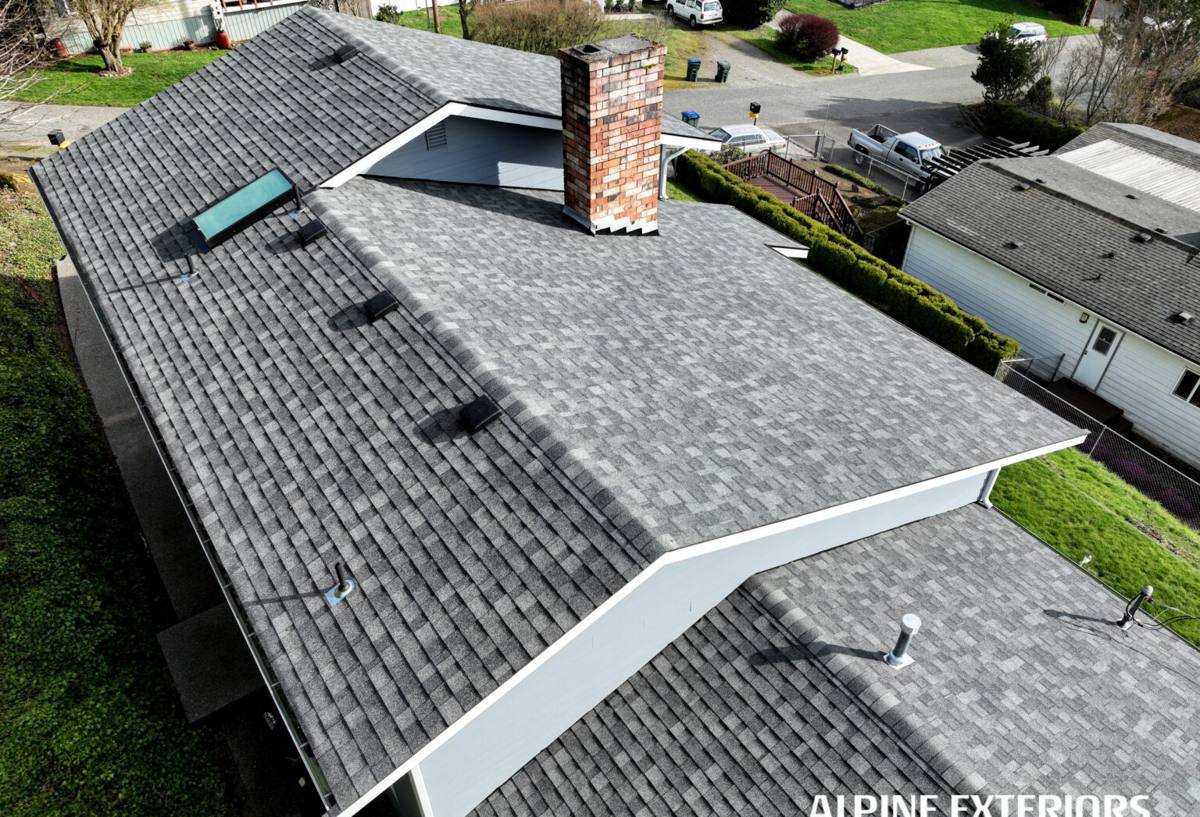
Why Roofs in This Part of Bellingham Fail Early
Salt Air and Metal Fatigue
Salt carried on the wind is corrosive to exposed metal — nail heads, drip edge, flashing, and the fasteners holding vents and pipe boots in place. Once corrosion starts, it doesn't stay cosmetic. Rusted-through flashing at a wall-to-roof transition or a corroded fastener backing out of a shingle both create direct paths for water. This is one of the more common reasons we get called out for a "mystery leak" that turns out to be a small, corroded metal detail rather than a failed shingle.
Driving Rain and Wind-Driven Exposure
Bellingham gets a lot of rain, but it's the wind-driven rain off the water that causes the real damage. It pushes moisture up and under laps in the roofing material, around skylight curbs, and along step flashing at chimneys and dormers — areas that rely on correct overlap and sealant, not just gravity, to stay dry. A roof that would perform fine in a calm rain can still leak in Fairhaven if those details weren't installed with wind-driven exposure in mind.
Moss, Algae, and a Long Wet Season
Whatcom County's moss season runs long — shade, moisture, and mild temperatures give moss and algae months to establish on north-facing slopes and anywhere debris collects. Moss doesn't just look bad. Its root structure lifts shingle edges, holds water against the roof deck, and accelerates granule loss. Left unaddressed, a mossy roof section ages years faster than a clean one nearby.
Signs a Fairhaven Roof Needs Repair
- Water stains on interior ceilings or upper walls, especially near chimneys, skylights, or where two rooflines meet
- Granules collecting in gutters or at downspout outlets
- Visible moss or dark algae streaking on north-facing or shaded slopes
- Curling, cracked, or missing shingles after a windy storm off the bay
- Rust staining on metal flashing, vents, or valley metal
- Soft or spongy decking felt underfoot in the attic near a known leak point
- Daylight visible through the roof deck from inside the attic
Any one of these on its own doesn't necessarily mean a full replacement is coming. It usually means a specific detail needs attention before the next wet stretch turns a small problem into water intrusion.
What a Correct Repair Actually Involves
A roof repair that holds up in Fairhaven's climate is more than swapping out a damaged shingle. We look at the whole assembly around the problem area, because a leak rarely starts exactly where the water shows up inside the house.
Matching Materials, Not Just Patching Color
Shingles and metal age and weather over time, so a repair patch should match the existing material's profile and, as closely as possible, its wear pattern — not just its color when new. We also make sure any replacement flashing is a metal type suited to coastal exposure rather than a lower-grade option that will corrode again in a few seasons.
Checking the Deck, Not Just the Surface
If a leak has been active for any length of time, the roof deck underneath can be softened or delaminated. Nailing a new shingle over compromised decking doesn't fix anything — it just hides the problem until it reappears. Part of an honest repair is confirming the deck is sound before the new material goes down, and replacing any damaged sheathing as part of the job.
Flashing and Sealant Details
Most Fairhaven leaks we trace back to flashing — around chimneys, skylights, dormers, and wall intersections — rather than the field of the roof itself. Correct step flashing, counter-flashing, and properly lapped underlayment matter more in wind-driven rain than in calm weather, so these details get extra attention on every repair.
Common Fairhaven Repair Scenarios
| Repair Type | Typical Cause Here | What the Fix Involves |
|---|---|---|
| Chimney or skylight leak | Wind-driven rain past aged step flashing or cracked sealant | Remove and reinstall flashing correctly, replace underlayment, re-seal with weather-rated materials |
| Valley leak | Debris buildup and moss holding moisture in the valley | Clear debris, inspect valley metal for corrosion, replace if pitted or rusted through |
| Missing or lifted shingles | Wind gusts off the bay catching an edge or corner | Replace shingles and check surrounding fasteners and adhesive seal |
| Soft spot on roof deck | Long-term slow leak that went unnoticed | Replace damaged sheathing, address the source leak, reinstall roofing material |
| Moss-damaged slope | Long wet season on a shaded, north-facing section | Physical moss removal, inspect for granule loss underneath, treat and repair as needed |
How We Approach a Repair Job
- Inspection first. We look at the roof from the ground, from the roof surface, and from inside the attic when accessible, so we're diagnosing the actual cause rather than guessing from the visible symptom.
- Honest scope. We tell you plainly whether this is a targeted repair, a larger section replacement, or something that's genuinely close enough to end-of-life that repair isn't the better investment.
- Written estimate. You get a clear description of the work and materials before anything starts — no guessing at what's included.
- The repair itself. Matching materials, correct flashing details, and deck repair if needed, done to hold up against the same conditions that caused the original failure.
- Cleanup and check. We clear debris and fasteners from gutters and the ground, and walk you through what was done.
Repair or Replace: How to Think About It
Not every roof problem in Fairhaven needs a full replacement, and not every roof is worth continuing to patch. A few honest factors we walk through with homeowners:
| Factor | Leans Toward Repair | Leans Toward Replacement |
|---|---|---|
| Age of roofing material | Well within expected service life | Near or past typical lifespan for the material |
| Extent of damage | Localized — one slope, one flashing detail | Widespread granule loss or multiple failure points |
| Deck condition | Sound, no active rot | Soft or delaminated decking in multiple areas |
| Leak history | First occurrence, clear single cause | Recurring leaks in different spots over time |
We'd rather do an honest, well-built repair on a roof that has years of life left than push a replacement that isn't needed yet — and we'll say so directly if that's the case.
Why a Bellingham Crew That Already Works Fairhaven Matters
A roofer who works Fairhaven regularly already knows which slopes tend to hold moss, which older homes are more likely to have flashing details that need updating, and how wind off the bay tends to hit certain roof orientations harder than others. That local pattern recognition shortens the diagnosis and means fewer surprises once the repair is underway. It also means we're using materials and methods suited to Whatcom County's coastal conditions specifically, not a generic approach borrowed from a drier climate.
Being local also matters after the work is done. We're not a crew that finishes a job and disappears out of the county — if something needs a follow-up look after the next big storm, we're close by.
What to Ask Before Hiring Anyone for Roof Repair
- Do they carry current licensing and insurance for roofing work in Washington?
- Will they put the scope of work and materials in writing before starting?
- Do they explain why a repair failed the first time, not just what they're replacing?
- Are they familiar with coastal-specific issues like salt air corrosion and moss buildup?
- Do they check the roof deck, not just the surface material?
- Will they give you a straight answer on repair versus replacement, even if repair is the cheaper answer for them?
Get a Free, No-Pressure Estimate
If you're seeing water stains, moss buildup, or missing shingles on a Fairhaven home, it's worth having someone take an honest look before the next stretch of driving rain off the bay turns a small repair into a bigger one. Fill out the form below and we'll set up a time to inspect the roof and give you a straightforward, written estimate — no pressure, no obligation.