 Bellingham Roofing
 Why Fairhaven Roofs Wear Differently Than Roofs Inland
Fairhaven sits close to the water, and that changes what a roof has to put up with year after year. Salt-laden air off Bellingham Bay accelerates corrosion on fasteners, flashing, and any exposed metal. Driving rain off the water doesn't just fall straight down — wind-driven moisture gets pushed sideways and upward under shingle tabs and around penetrations that would stay dry on a calmer inland lot. And the deep shade from mature trees on many Fairhaven properties, combined with our long Pacific Northwest wet season, gives moss and algae months on end to take hold on north-facing slopes.
None of that means a roof in Fairhaven needs to be exotic or overbuilt. It means the details — fastener choice, flashing metal, underlayment type, ventilation balance — have to be selected for this specific exposure instead of a generic spec sheet. That's the difference between a roof that looks fine for a couple of years and one that actually holds up through a full Whatcom County winter.
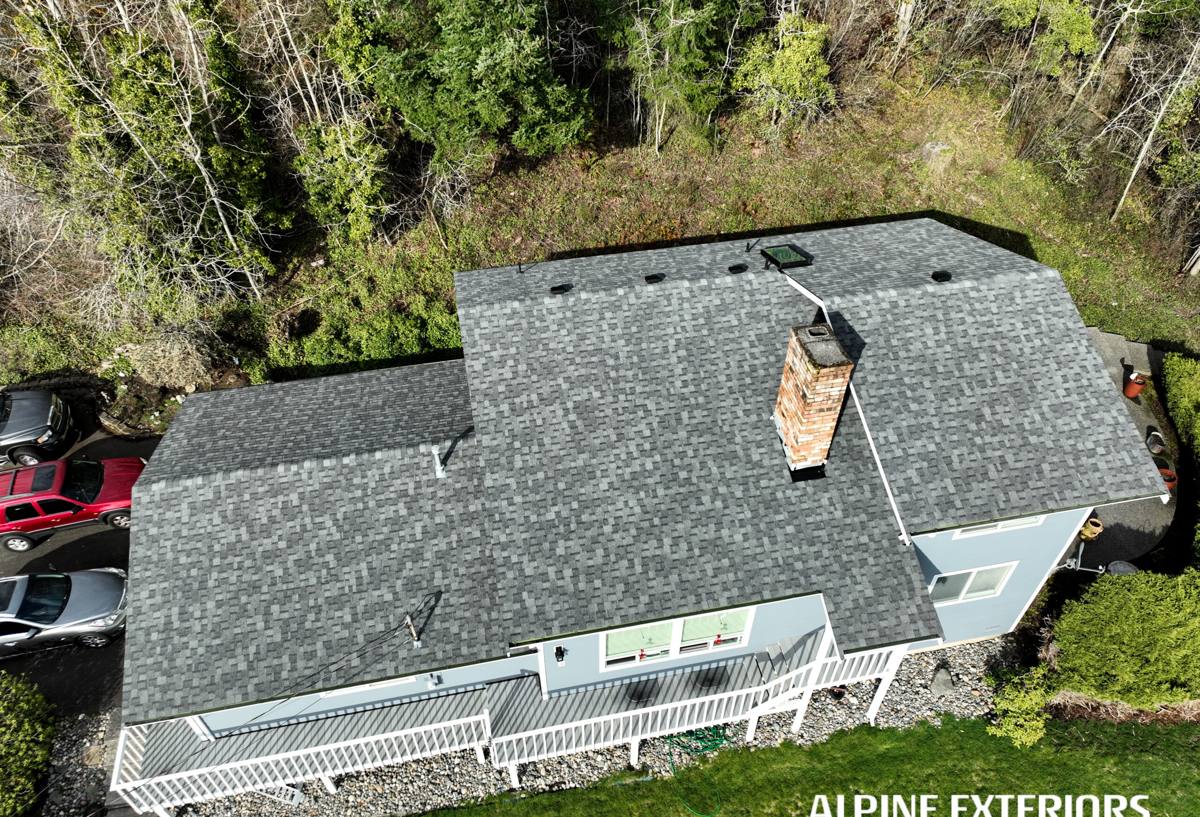
Signs a Fairhaven Roof Is Due for Full Replacement
Not every roofing problem calls for a full tear-off, and we won't tell you it does. But there are signs that patching is just delaying an expensive repeat visit:
- Granule loss heavy enough that you can see bare, shiny patches on shingles, especially on south and west-facing slopes
- Shingles that are curling, cupping, or cracking, particularly where the roof gets the most sun and salt exposure
- Persistent moss growth that keeps coming back within a season or two of cleaning, even after treatment
- Soft spots or visible sagging when walking the roof or viewing it from a ladder
- Daylight visible through the roof deck from inside the attic, or water staining on rafters and sheathing
- Flashing around chimneys, skylights, or vent pipes that's rusted, lifted, or was caulked over instead of properly re-flashed
- A roof approaching or past the manufacturer's expected service life for its material and this coastal exposure
If you're seeing two or more of these, it's worth a real inspection before deciding between repair and replacement.
What a Correct New Roof Installation Actually Involves
Full Tear-Off, Not Overlay
We remove the old roofing down to the deck rather than layering new shingles over old. An overlay hides the one thing that matters most in a place like Fairhaven — the condition of the decking underneath. You can't see rot, soft spots, or old water damage until the old material is off.
Deck Inspection and Repair
Once the deck is exposed, we check it board by board. Any sheathing that's delaminated, soft, or water-damaged gets replaced before anything new goes down. Skipping this step is the single most common shortcut that leads to early roof failure — a beautiful shingle job over a compromised deck is still a compromised roof.
Underlayment Built for Wind-Driven Rain
Given how often Fairhaven catches rain pushed sideways off the water, we pay close attention to underlayment coverage and how it's lapped — especially at valleys, eaves, and low-slope sections where wind-driven moisture is most likely to find a way in.
Flashing That Won't Corrode in Salt Air
Flashing around chimneys, skylights, sidewalls, and vent penetrations is where most roof leaks actually start, not out in the open field of the roof. In a salt-air environment, the metal and fastener choices for flashing matter more than they would ten miles inland — we select materials to resist corrosion, not just to meet minimum code.
Balanced Attic Ventilation
Intake at the eaves and exhaust at the ridge need to work together. Get this wrong and you trap moisture in the attic, which shortens the life of the new roof from underneath — no matter how good the shingles on top are.
Choosing Materials for a Coastal Bellingham Exposure
There's no single "best" roofing material for every home — it depends on your roof's pitch, sun exposure, budget, and how much maintenance you want to take on. Here's an honest comparison of the main options we install and how they hold up specifically to salt air, driving rain, and moss pressure:
| Material | Salt Air / Corrosion | Wind-Driven Rain | Moss Resistance | Typical Maintenance |
|---|---|---|---|---|
| Architectural asphalt shingle | Good with corrosion-resistant fasteners | Good when properly underlaid and sealed | Moderate — benefits from zinc/copper strips | Low to moderate |
| Standing seam metal | Excellent with correct coating and fastener spec | Excellent — few seams for water to find | Good — sheds moss easier than textured surfaces | Low |
| Synthetic composite (shake-look) | Good — doesn't corrode itself, check fasteners | Good | Moderate to good depending on product | Low |
| Cedar shake | Fair — natural material, exposure accelerates aging | Fair — more seams and edges for wind-driven moisture | Poor without regular treatment and cleaning | High |
We're upfront that we lean away from untreated cedar shake for homes with heavy shade and close water exposure, not because it's a bad product everywhere, but because the maintenance commitment needed to keep it performing well in this specific microclimate is significant — regular treatment, cleaning, and moss management that many homeowners underestimate going in. If you love the look, synthetic composite options give you a similar profile with less upkeep.
Moss and Algae: Prevention Built In, Not Bolted On
Fairhaven's tree cover and our long wet season mean moss pressure is a design consideration, not an afterthought. A few things we build into the installation itself:
- Zinc or copper strips near the ridge on shaded slopes, which release trace metals with rain to inhibit moss and algae growth over time
- Attention to slope and drainage detail so water doesn't pool or sheet-flow in ways that keep the roof surface damp longer than necessary
- Material selection that accounts for how textured versus smooth surfaces hold moisture and organic debris
None of this eliminates the need for periodic roof cleaning and gutter maintenance — no roof is maintenance-free under mature tree cover — but it meaningfully reduces how often and how aggressively you'll need to deal with growth.
Our New Roof Installation Process
- On-site inspection and estimate. We walk the roof (or use a ladder assessment where access is limited), check the attic for ventilation and moisture issues, and give you a written scope and price — no pressure, no scare tactics.
- Material selection. We go over the trade-offs for your roof's pitch, sun exposure, and budget so you're choosing with full information, not just a color swatch.
- Scheduling around the weather. Given how much rain this region sees, we plan tear-off and dry-in carefully so your home isn't left exposed longer than necessary.
- Tear-off and deck inspection. Old material comes off, the deck gets inspected and repaired as needed, with any additional findings communicated before we proceed.
- Underlayment, flashing, and ventilation installation. This is where the coastal-specific details we've covered above actually get executed.
- Final roofing material installation. Installed to manufacturer specification, which matters for both performance and warranty validity.
- Cleanup and walkthrough. Full site cleanup, magnetic sweep for stray fasteners, and a walkthrough so you know what was done and what to expect going forward.
What Drives the Cost of a New Roof
Every roof is different, but these are the factors that move the price up or down the most:
| Factor | Why It Matters |
|---|---|
| Roof size and number of planes | More square footage and more valleys/hips mean more material and labor |
| Roof pitch and access | Steep or hard-to-access roofs take longer and require more safety setup |
| Deck condition | Rotted or delaminated sheathing found during tear-off adds material and labor |
| Material choice | Asphalt, metal, and composite products span a wide price range |
| Layers to remove | Tearing off multiple existing layers takes more time than a single layer |
| Ventilation and flashing upgrades | Bringing older ventilation or flashing up to current standards adds scope but pays off in longevity |
We give a written, itemized estimate before any work starts, so you can see exactly where the cost is coming from — not just a lump-sum number.
Why It Matters That We Already Work Fairhaven
A crew that regularly works Fairhaven and the surrounding Bellingham neighborhoods already knows the patterns — which slopes tend to hold moss, how the water exposure affects flashing longevity, how local permitting and inspection works, and what tree cover and lot layout typically mean for material handling and dump truck access on these streets. That's not something you get from a crew passing through Whatcom County on a one-off job. It shows up in fewer surprises during the project and a roof that's actually specified for the conditions it has to survive, not a generic spec pulled off a national price sheet.
Before You Hire: A Practical Checklist
- Get a written, itemized estimate — not just a total price
- Confirm the contractor is licensed and insured in Washington State, and ask to see proof
- Ask specifically how they handle deck repair if rot is found — and how that's priced
- Ask what underlayment and flashing materials they use and why, given your home's exposure
- Confirm whether the manufacturer warranty requires certified installation, and whether they carry that certification
- Ask how they handle site cleanup and fastener sweep at the end of the job
- Get a realistic timeline that accounts for our regional weather, not a best-case-only estimate
A roof is one of the largest single investments you'll make in your home, and it's also the system standing between the rest of your house and Bellingham's weather year-round. If your roof is showing wear or you're just trying to plan ahead, we're happy to walk it, give you a straight assessment, and put together a free, no-pressure estimate specific to your Fairhaven home.