 Bellingham Roofing
 Building Decks That Actually Hold Up in Fairhaven
Fairhaven sits close enough to the water that homes here deal with a different set of conditions than decks built further inland in Whatcom County. Salt-laden air moves in off Bellingham Bay, driving rain comes in sideways more often than straight down, and the shoulder seasons bring long stretches of damp, low-light weather that keeps everything from lawns to deck boards perpetually a little wet. A deck built to a generic spec sheet often struggles here within a few years. A deck built with Fairhaven's specific exposure in mind can hold its finish, its footing, and its structure for decades.
This page covers what actually goes into a custom deck built for this neighborhood — not a generic deck-building overview, but the specific decisions that matter when the deck in question is going up a few blocks from the water in a historic, tree-shaded part of Bellingham.
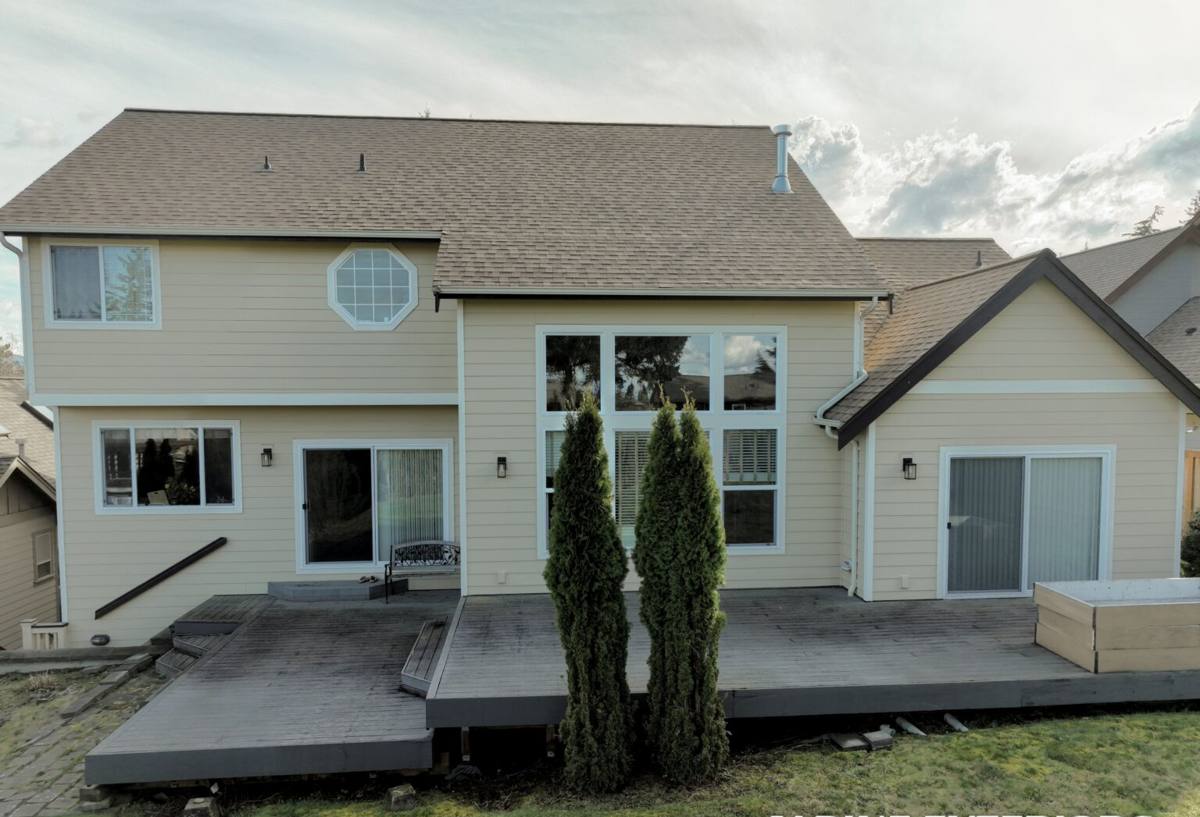
What Fairhaven's Climate Does to an Ordinary Deck
Three regional factors show up again and again when we inspect older or poorly built decks in this part of town:
Salt Air and Corrosion
Proximity to the bay means airborne salt settles on every exposed surface, including fasteners, hardware, and metal flashing. Standard zinc-coated screws and joist hangers corrode faster here than they would ten or fifteen miles inland. Once a fastener starts to rust, it weakens from the inside — often invisibly — long before there's a visible sign at the surface.
Driving Rain and Wind-Driven Moisture
Storms off the water frequently push rain at an angle rather than straight down, which means moisture gets forced into joints, under rail caps, and behind ledger boards that a vertical rain would never reach. Any gap in flashing or caulking becomes a moisture entry point, and once water gets behind a ledger or under a post base, rot can develop out of sight.
Moss, Shade, and Slow Drying
Fairhaven's mature tree canopy is part of what makes the neighborhood attractive, but it also means many decks sit in partial shade for most of the day. Combined with Bellingham's long wet season, that shade slows drying time on deck boards dramatically. Moss and algae take hold on any surface that stays damp for extended periods, and moss buildup between boards traps moisture against the wood or composite surface, accelerating whatever degradation is already underway.
What a Correctly Built Fairhaven Deck Requires
None of the issues above are unusual for coastal Pacific Northwest construction — they're simply things a deck has to be built to handle, not problems that show up because a deck was built incorrectly. The difference between a deck that lasts and one that doesn't usually comes down to a handful of choices made before the first board goes down.
- Stainless steel or coated corrosion-resistant fasteners and hardware throughout, not just at visible connections
- Proper ledger flashing with a drainage gap, sealed correctly at every penetration
- Footings sized and set below frost depth with drainage in mind, not just poured to minimum code
- Joist tape or a comparable moisture barrier on every joist top, not just the ledger
- Board spacing calculated for airflow and drying, not just visual tightness
- A decking material matched honestly to the amount of shade and moisture exposure the specific deck location will see
- Rail and post base details that shed water away from end grain instead of trapping it
Skipping any one of these doesn't necessarily cause a visible problem in year one. It shows up in year five or year eight, as soft spots near the ledger, rust streaks at fastener heads, or a slick green film that keeps returning no matter how often it's power-washed off.
Choosing a Decking Material for Fairhaven's Conditions
There's no single "best" decking material — the right choice depends on how much sun the deck gets, how the homeowner wants to spend their maintenance time, and the look they're going for. Here's an honest comparison of the main options as they perform under Fairhaven's specific conditions:
| Material | Performance in Shade/Moss Conditions | Maintenance | Typical Lifespan Here |
|---|---|---|---|
| Pressure-treated wood | Needs regular cleaning and resealing to resist moss and staining in shaded areas | Annual cleaning, periodic staining/sealing | 10-15 years with upkeep |
| Cedar | Naturally moisture-resistant but still needs sealing in damp, shaded spots to prevent graying and moss | Sealing every 1-2 years | 15-20 years with upkeep |
| Composite decking | Resists rot but can still develop surface algae/moss film in low-light areas; needs periodic washing | Occasional washing, no sealing/staining | 25-30 years |
| PVC/capped polymer | Best moisture resistance of the group; smoother surfaces shed moss film more easily | Low — occasional washing | 25-30+ years |
For decks that sit under heavy tree cover for most of the day, we lean homeowners toward composite or capped polymer options specifically because wood in constant shade struggles to dry between rain events, no matter how well it's sealed. That's not a knock on wood as a material — it's a maintenance-burden conversation, and we'd rather tell a homeowner that up front than have them dealing with moss and soft spots three years in.
Substructure and Footings: The Part No One Sees
The visible decking gets all the attention, but the framing and footings underneath determine whether the deck is still solid in fifteen years. In Fairhaven's older, established lots, we frequently find a mix of soil conditions and established landscaping that affects how footings need to be placed and sized. Getting this right up front means:
- Confirming frost depth and soil-bearing conditions for the specific lot before pouring footings
- Sizing footings to the actual load of the deck design, not a one-size-fits-all minimum
- Grading and drainage around footing locations so water doesn't pool against concrete or posts
- Using post bases that hold the post above grade and away from standing moisture
This is also where permitting matters. Whatcom County and City of Bellingham permitting requirements apply to most deck projects above a certain height or attached to the home, and footings are one of the first things an inspector checks. Building to code here isn't a formality — frost heave and moisture intrusion are real risks in this climate, and the code requirements exist specifically to address them.
Our Process for a Fairhaven Deck Project
1. On-Site Assessment
We walk the property, note sun and shade patterns throughout the day, check soil and drainage conditions, and talk through how the homeowner actually plans to use the space.
2. Design and Material Selection
We design the layout and recommend decking, rail, and hardware options based on that specific site's exposure — not a standard package applied to every job.
3. Permitting
We handle the permit application and coordinate required inspections with the City of Bellingham or Whatcom County, depending on the property's location.
4. Construction
Footings, framing, flashing, and decking go in with corrosion-resistant hardware and moisture-management details built in at every stage, not added as an afterthought.
5. Final Walkthrough
We walk the finished deck with the homeowner, cover basic care and cleaning expectations for the specific material installed, and answer questions before we consider the job done.
Cost Factors for a Custom Deck in This Area
Every deck project is different, but a few factors consistently move the price up or down for Fairhaven jobs specifically:
| Factor | Why It Affects Cost Here |
|---|---|
| Decking material choice | Composite and capped polymer cost more upfront than wood but reduce long-term maintenance costs |
| Site access and lot slope | Many Fairhaven lots have grade changes or limited access that affect equipment and labor time |
| Height and railing requirements | Elevated decks require engineered railings and additional structural work |
| Hardware specification | Stainless or marine-grade fasteners cost more than standard coated hardware but resist salt-air corrosion |
| Permitting complexity | Older lots or homes near setback lines may require additional survey or permitting steps |
We give homeowners a straightforward range during the estimate, based on the actual site and material selection, rather than a number that doesn't reflect the real project.
Maintaining a Custom Deck in a Marine Climate
Even a well-built deck needs some ongoing attention in this climate. A short seasonal routine goes a long way toward protecting the investment:
- Sweep debris and standing leaves off the deck surface regularly, especially in fall
- Rinse off salt residue and grime a few times a year, particularly on decks with direct water exposure
- Check and clear gaps between boards where moss and debris tend to accumulate
- Inspect fasteners and hardware annually for early signs of corrosion
- Reseal wood decking on the schedule appropriate to the product, and don't skip shaded areas that dry slower
Homeowners who stay on top of this short list get far more life out of their deck than those who treat it as maintenance-free, regardless of the material chosen.
Why Local Experience with Fairhaven Homes Matters
A contractor who builds decks all over Whatcom County but doesn't spend much time in Fairhaven specifically may not think twice about standard hardware or a generic ledger detail — because in a drier, less shaded part of the county, that standard approach often holds up fine. In Fairhaven, those same shortcuts show up as problems faster because of the salt air, the rain angle, and the tree cover. Crews who work in this neighborhood regularly know which details aren't optional here, and build accordingly from the first footing.
If you're planning a custom deck for a home in Fairhaven, we're happy to walk the site, talk through material options honestly, and put together a free, no-pressure estimate based on your specific property. There's a form below — reach out whenever you're ready to start the conversation.