 Bellingham Roofing
 Composite Decking Built for Fairhaven's Waterfront Climate
Fairhaven sits close enough to Bellingham Bay that homes here deal with a different set of conditions than decks built further inland in Whatcom County. Salt-laden air off the water, long stretches of driving rain through fall and winter, and a moss and algae season that can stretch for months all put real stress on an outdoor deck. A deck built without those specific conditions in mind will show it within a few seasons — soft spots, slick surfaces, fasteners that bleed rust, and a gray, tired look well before the structure is actually worn out.
Composite decking has become the go-to choice for a lot of Fairhaven homeowners precisely because it handles this climate better than wood, when it's installed correctly. But "composite" isn't one product — it's a category, and the difference between a deck that looks good in year eight and one that's already curling at the board edges usually comes down to material selection and installation detail, not the brand name on the box.
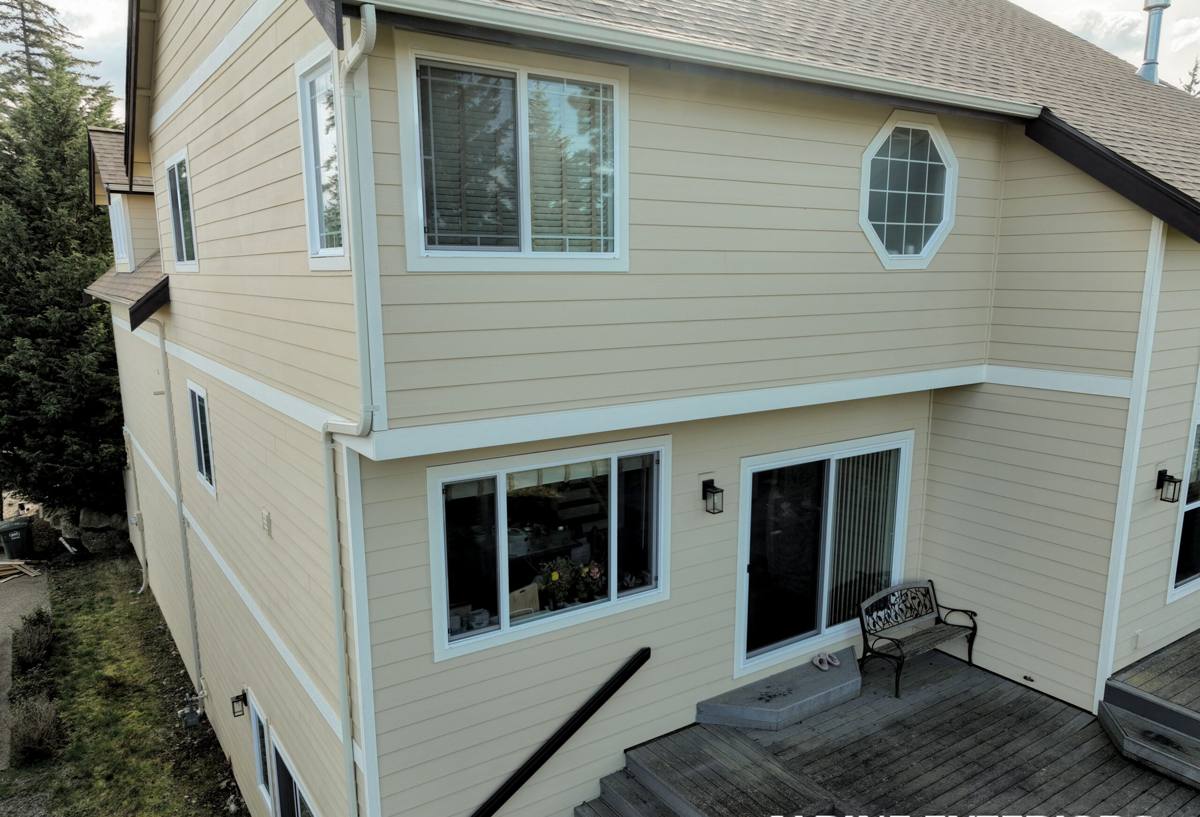
What Bellingham's Climate Actually Does to a Deck
Salt Air and Corrosion
Even a few blocks from the water, airborne salt accelerates corrosion on anything metal — screws, joist hangers, structural brackets. Over time this shows up as rust streaking on the deck surface or, worse, fasteners that have lost their grip inside the framing. It's a slow problem, which is exactly why it gets ignored until it's expensive.
Sustained Rain and Moisture Cycling
Whatcom County doesn't get brief downpours so much as long, saturating rain events. Decking material that absorbs water — or wood that isn't sealed every year without fail — spends much of the year in a swollen state, then dries and contracts when a sunny stretch finally shows up. That expansion-contraction cycle is what causes warping, cupping, and eventually structural loosening.
Moss, Algae, and Shade
Fairhaven's tree cover and marine-layer humidity create ideal conditions for moss and algae growth on horizontal surfaces, especially decks that don't get much direct afternoon sun. Beyond the appearance issue, a mossy deck surface is a genuine slip hazard, and moss holding moisture against the board surface accelerates whatever wear process the material is already prone to.
Why Composite Makes Sense Here — and Where It Doesn't Solve Everything
Composite decking's core advantage in this environment is that it doesn't absorb water the way wood does, so it isn't cycling through the same swell-and-shrink pattern. It also doesn't need annual staining or sealing to keep performing, which matters in a climate where a dry, workable weekend to do that maintenance isn't guaranteed every year.
That said, composite isn't maintenance-free, and we don't sell it that way. It still needs periodic cleaning to keep moss and algae from taking hold, and not every composite product handles moisture and mold resistance equally well. Lower-grade composites with a lot of exposed organic wood fiber content can actually be more prone to mold staining in a wet, shaded climate than a well-maintained piece of wood. This is a case where the specific product matters as much as the category.
What We Look for in a Composite Board for This Area
- A fully capped board (cap on all four sides, not just the top face) so no exposed wood-plastic core is left to wick moisture
- Manufacturer mold and mildew warranty language, not just fade warranty — fade isn't the risk here, mold is
- A surface texture with enough grip when wet, since a smooth composite face can get slick fast under Bellingham's rain and moss conditions
- Hidden fastener systems that don't rely on top-face screws, which reduces the corrosion and water-entry points that salt air exploits
- Manufacturer-specific ventilation and clearance requirements, since composite expands and contracts with temperature more than people expect
How We Approach a Fairhaven Composite Deck Build
1. Site and Structure Assessment
Before any decking material goes down, we look at what's underneath. A lot of composite deck problems trace back to substructure issues that had nothing to do with the decking itself — undersized joists, inadequate ledger flashing, or framing that was never rated for the additional weight some composite boards carry compared to wood. In a coastal-influenced area like Fairhaven, we're also checking existing fasteners and hardware for corrosion if this is a resurface rather than a new build.
2. Framing and Moisture Management
Correct ledger board flashing against the house is one of the most common failure points we find on older decks, and it's also one of the most damaging to ignore, since it can let water into the house structure itself, not just the deck. We flash properly at the ledger, use corrosion-resistant structural hardware rated for coastal exposure, and make sure joist spacing matches what the specific composite manufacturer requires — composite often needs tighter joist spacing than wood, especially at deck edges and stair stringers.
3. Ventilation Beneath the Deck
Composite decking needs airflow underneath it to manage moisture, more so than people assume. Low-clearance decks or decks built tight against grade trap humidity underneath the boards, which contributes to the very mold and mildew issues composite is supposed to avoid. Where clearance is limited, we address it in the framing design rather than hoping the decking material compensates.
4. Installation Detail
Board gapping, fastener spacing, and picture-framing at the perimeter all follow the specific manufacturer's installation guide — not a generic approach — because gapping tolerances that are correct for one composite product can be wrong for another, especially with how much boards move seasonally in this climate's temperature and humidity swings.
5. Finish and Walkthrough
Once the deck is complete, we walk the homeowner through what routine care actually looks like for the specific product installed — not a generic maintenance sheet, since cleaning recommendations and warranty conditions vary by manufacturer.
Composite vs. Wood vs. PVC — A Fairhaven-Specific Comparison
| Factor | Wood | Composite | PVC/Cellular |
|---|---|---|---|
| Moisture absorption | High — needs annual sealing | Low, capped boards resist absorption | Very low, fully synthetic |
| Moss/algae resistance | Depends on sealing upkeep | Good with quality capped product | Good, smooth surface but can be slick |
| Salt air/corrosion risk | Fasteners at risk over time | Reduced with hidden-fastener systems | Reduced with hidden-fastener systems |
| Upfront cost | Lowest | Mid-range | Highest |
| Long-term maintenance | Annual staining/sealing | Periodic cleaning only | Minimal cleaning |
| Feel/appearance | Natural wood grain, warmer | Wood-look, wide color range | More uniform, less wood-like |
There's no universally "right" answer here — a lot of it comes down to budget, how much maintenance a homeowner is realistically going to keep up with, and how the deck sits relative to shade and water exposure. We'll give you a straight read on which fits your specific property rather than steering everyone toward the same product.
Common Mistakes We See on Existing Fairhaven Decks
- Composite boards installed with wood-deck fastener spacing, leading to premature board movement or fastener pull-through
- No ventilation gap left beneath low-profile decks, trapping moisture and accelerating mold growth on the underside
- Standard (non-coastal-rated) structural hardware used near the water, showing rust within a few years
- Ledger flashing skipped or done incorrectly, allowing water intrusion behind the decking into the house wall
- Mixed-brand hardware and boards that void manufacturer warranties because the installation didn't follow that specific product's requirements
Most of these aren't visible until the deck is a few years old, which is exactly why the installation details matter more than they seem to at the time.
What a Correct Job Costs — and What Drives the Range
Composite decking costs vary widely based on square footage, framing condition, railing choice, and which composite product line is used. Broad ranges in this region run from a modest per-square-foot cost for basic capped composite on straightforward, code-compliant existing framing, up to significantly more for premium board lines, custom railing systems, multi-level designs, or projects that require substructure rebuilding. Rather than quote a number that doesn't reflect your actual deck, we walk the site and give you a written estimate based on what's really there.
Factors That Change the Price
| Factor | Impact on Cost |
|---|---|
| Existing substructure condition | Sound framing keeps costs down; rot or undersized joists add rebuild cost |
| Board tier selected | Entry-level capped composite vs. premium lines varies significantly |
| Railing system | Composite/cable/glass railing adds more than basic wood or aluminum |
| Deck height and stairs | Multi-level decks and stair construction add labor and material |
| Site access | Tight lots or limited equipment access can add labor time |
Why Hiring a Crew That Already Works in Fairhaven Matters
A lot of composite deck problems we get called to inspect weren't caused by bad material — they were caused by installation practices that would be fine in a drier, inland climate but don't hold up against Bellingham's rain volume, salt exposure, and moss pressure. A crew that regularly works this specific area already knows which framing details, hardware grades, and ventilation approaches actually hold up here, rather than working off a generic installation guide written for a different climate.
We also know the practical side of building in Fairhaven — permitting expectations, typical lot conditions in the neighborhood, and how to sequence a build around the wetter months so the project isn't fighting the weather the whole way through.
Get a Straight Answer for Your Deck
If you're weighing a new composite deck or replacing an aging wood deck in Fairhaven, we're happy to come take a look, tell you honestly what your framing can support, and walk you through material options that make sense for your specific site and budget. There's no pressure and no obligation — just a straightforward estimate based on what your property actually needs. Use the form below to request your free estimate.