 Bellingham Roofing
 Storm Damage on a Bellingham Bay Roof Is Its Own Problem
Edgemoor sits close to the water, and that changes what a storm actually does to a roof. Homes just a mile or two inland deal with wind and rain. Edgemoor roofs deal with wind, rain, and the steady presence of salt-laden air coming off Bellingham Bay, on top of the tree cover that shades much of the neighborhood's older, larger lots. That combination speeds up wear in ways a generic storm-damage checklist doesn't capture. A single windstorm rarely destroys a roof outright here. What it usually does is create small openings and weak points that salt air, moisture, and moss then work on for months before anyone notices a leak inside the house.
We work storm damage calls throughout Whatcom County, and Edgemoor roofs get evaluated a little differently than roofs in drier, more open parts of Bellingham. We're not just looking for missing shingles after a storm. We're looking for the places where wind lifted a shingle edge just enough to let water and salt air underneath, because those spots fail quietly and then fail badly.
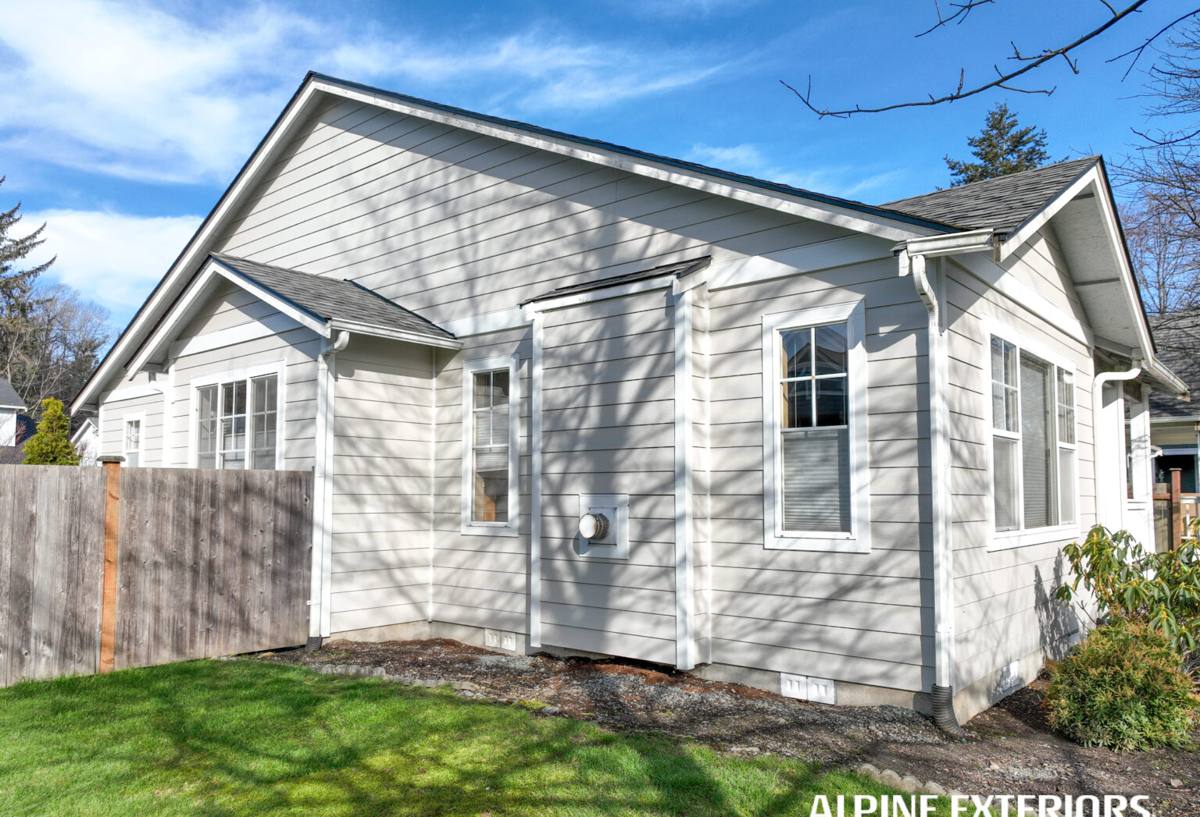
What Actually Counts as Storm Damage Here
Storm damage isn't only the dramatic stuff — a tree limb through the roof or shingles scattered across the yard. In Edgemoor, the damage that costs homeowners the most is usually the kind that isn't obvious from the ground.
Wind Damage
Coastal wind gusts don't need to be extreme to do harm. A sustained gust that lifts a shingle corner, cracks a ridge cap, or works a fastener loose is enough to start a leak path. Because Edgemoor gets more direct exposure off the water than sheltered inland streets, wind uplift on the water-facing slope of a roof is something we check closely after every significant storm.
Wind-Driven Rain
Rain that comes in sideways during a storm finds every gap a normal rain shower would never reach — under flashing, behind siding-to-roof transitions, around chimneys and skylights. This is the damage that shows up as a stain on a ceiling weeks after the storm has passed, once it has traveled and pooled somewhere.
Moss and Debris Load
Storms knock branches and needles into valleys and behind chimneys, and that debris traps moisture. Combined with Bellingham's long moss season, a storm that drops debris on an already moss-prone roof accelerates shingle breakdown fast — moss holds water against the shingle surface and lifts edges as it grows, which is exactly what lets wind and rain get underneath in the next storm.
Salt Air Corrosion
Metal roof components — flashing, fasteners, gutter hardware, vent caps — corrode faster in Edgemoor's salt-air exposure than they do a few miles inland. A storm that stresses already-corroding metal flashing can crack a seal that would have held up fine on a drier roof.
Signs Your Roof Took a Hit
Most storm damage isn't visible from the driveway. Here's what actually tells you something happened:
- Granules collecting in gutters or downspout splash areas after a storm — a sign of shingle surface wear
- A new stain, discoloration, or soft spot on an interior ceiling or wall, even a faint one
- Shingles that look curled, cupped, or lifted at the edges, especially on the side facing the bay
- Flashing around chimneys, skylights, or roof-wall joints that looks bent, separated, or missing sealant
- Visible daylight through the attic roof deck, or damp insulation near the roofline
- A sudden increase in moss growth concentrated in one area, which often means water is pooling there
- Debris — branches, needles, moss clumps — sitting in valleys or against the chimney base
None of these individually mean the roof needs full replacement. But each one is a place where the next storm does more damage than this one did, which is why timing matters.
Our Storm Damage Repair Process
1. Inspection, Not Guesswork
We walk the roof and the attic, not just the visible slopes from a ladder. Wind and water damage often start on the side of the roof you can't see from the street, which matters in Edgemoor where homes are frequently set back among trees or oriented toward the water. We check flashing, fasteners, valleys, and penetrations — the failure points that matter far more than whether a few shingles look scuffed.
2. Documentation
Every repair we recommend is backed by photos and a written description of what we found and why it needs attention. If you're filing an insurance claim, this documentation is what supports it — vague verbal descriptions don't hold up with adjusters, dated photos and specific findings do.
3. Emergency Mitigation, If Needed
If a storm has left an active leak or an exposed section of roof deck, our first job is stopping further water intrusion — tarping, temporary flashing, or sealing an opening — before the next rain, not weeks from now when the full repair is scheduled.
4. The Actual Repair
We replace only what's damaged — shingles, underlayment, flashing, decking — matched as closely as possible to the existing roof. We don't use storm damage as a reason to upsell a full replacement when a targeted repair will hold. If the damage is extensive enough that replacement genuinely is the more honest recommendation, we'll walk you through exactly why, in plain terms.
5. Follow-Up Check
Because Edgemoor's climate keeps working on a roof long after a storm has passed, we recommend a follow-up look during the next dry stretch to confirm the repair is holding and that the storm didn't leave secondary issues — like a section of moss or trapped moisture — behind.
Materials Matched to a Salt Air, High-Moss Climate
Not every repair material performs the same way this close to Bellingham Bay. We choose fasteners, flashing, and sealants with the corrosion and moisture exposure in mind, rather than defaulting to whatever is cheapest or fastest to install.
Flashing and Fasteners
Standard galvanized fasteners corrode faster in salt air than corrosion-resistant alternatives. On Edgemoor repairs we lean toward materials with better long-term resistance to that exposure, because a repair that needs to be redone in three years because of corroding fasteners isn't a good use of anyone's money.
Underlayment
Given how much wind-driven rain a bay-facing slope can see in a single storm, we favor underlayment products with strong water-shedding performance at seams and around penetrations — the areas most likely to see wind-forced water intrusion.
Moss Management
We don't recommend heavy chemical moss treatments as a substitute for actual maintenance. Zinc or copper strips at the ridge, paired with regular debris clearing, do more for long-term moss control than a one-time treatment — and they don't carry the runoff concerns that come with some moss-killing chemicals in a shoreline-adjacent neighborhood.
Storm Damage Repair Cost Factors
Every roof and every storm is different, so we won't quote a number without seeing the damage. What we can tell you is what tends to drive cost up or down on Edgemoor repairs specifically.
| Factor | Lower Cost | Higher Cost |
|---|---|---|
| Damage location | Isolated to one slope or section | Multiple slopes or water-facing exposure |
| Deck condition | Deck dry and intact under shingles | Deck softened or rotted from prior moisture |
| Flashing scope | Single flashing point (vent, small skylight) | Chimney, multiple valleys, or wall-roof junctions |
| Material match | Common shingle color/style still available | Discontinued or specialty material needing a wider blend repair |
| Access | Simple roof pitch and ground access | Steep pitch, tree cover, or limited equipment access |
| Timing | Addressed shortly after the storm | Delayed, allowing secondary rot or moss damage |
That last row is the one that matters most. A repair addressed within a few weeks of a storm is almost always cheaper than the same damage left through a wet season.
Insurance Claims for Storm Damage
Most homeowner policies cover sudden storm damage — wind, falling debris, wind-driven rain intrusion — though coverage details, deductibles, and exclusions vary by policy. We're not your insurance company and we don't promise claim outcomes, but we can give you documentation that accurately reflects what the storm did, which is the single most useful thing you can hand an adjuster. If you're not sure whether damage is worth filing a claim over, we'll give you an honest read on that before you start the process, not a reason to inflate the scope.
What to Do Right After a Storm
A short checklist for the days right after a windstorm or heavy rain event:
- Check the attic for damp insulation, water stains, or daylight around vents or the ridge
- Look at ceilings and upper walls for new staining or soft spots, especially near chimneys or skylights
- Note anything visible from the ground — displaced shingles, hanging gutters, debris caught in valleys
- Photograph anything unusual before cleanup, in case it's needed for a claim
- Avoid getting on the roof yourself, especially on wet or moss-covered surfaces — that's a fall risk, not a DIY inspection opportunity
- Call for an inspection sooner rather than later, even if nothing looks obviously wrong
Why a Crew That Already Works Edgemoor Matters
A roofer who mostly works drier, more sheltered parts of Whatcom County can still do competent repair work, but they're often applying general storm-damage habits to a roof that doesn't behave like a general roof. Edgemoor's bay exposure, tree cover, and moss pressure mean the failure points aren't always where a standard inspection checklist points. Knowing which slopes see the worst wind-driven rain, which flashing details corrode fastest in salt air, and how aggressively moss returns in shaded Edgemoor yards comes from working roofs in this specific setting repeatedly — not from a single visit.
That local familiarity also means fewer surprises during the repair itself. We know what tends to be under the shingles on homes of this area and era, what access challenges to expect on wooded or sloped lots, and how to sequence a repair around Bellingham's wetter storm months so the work actually holds.
Get a Straight Answer on Your Roof
If a recent storm has you wondering whether your roof took real damage or just came through fine, we're glad to take a look. We'll give you a clear, honest assessment — including telling you when a repair isn't urgent — and a free, no-pressure estimate if work is needed. Use the form below to get started.