 Bellingham Roofing
 Why Edgemoor Homes Need Siding Built for the Bay
Edgemoor sits on a bluff above Bellingham Bay, and that view comes with a trade-off: the same exposure that makes the neighborhood desirable also makes it one of the harder places in Whatcom County to keep siding looking good and performing well. Homes here take on salt-laden air off the water, wind-driven rain that hits walls at an angle instead of just falling straight down, and long stretches of gray, damp weather that keep siding wet for days at a time. Add in the mature tree canopy common throughout the neighborhood, and you get a climate that's tough on siding in three distinct ways at once: corrosion from salt, moisture intrusion from wind-driven rain, and moss and algae growth from shade and humidity.
None of this means Edgemoor homes need anything exotic. It means the siding product and the installation details both have to be right for a marine, wooded environment — not just whatever happens to be cheapest or fastest to install. A siding job done to a generic standard, without accounting for the bay-facing exposure, tends to show problems years sooner here than it would in a drier, more sheltered part of Bellingham.
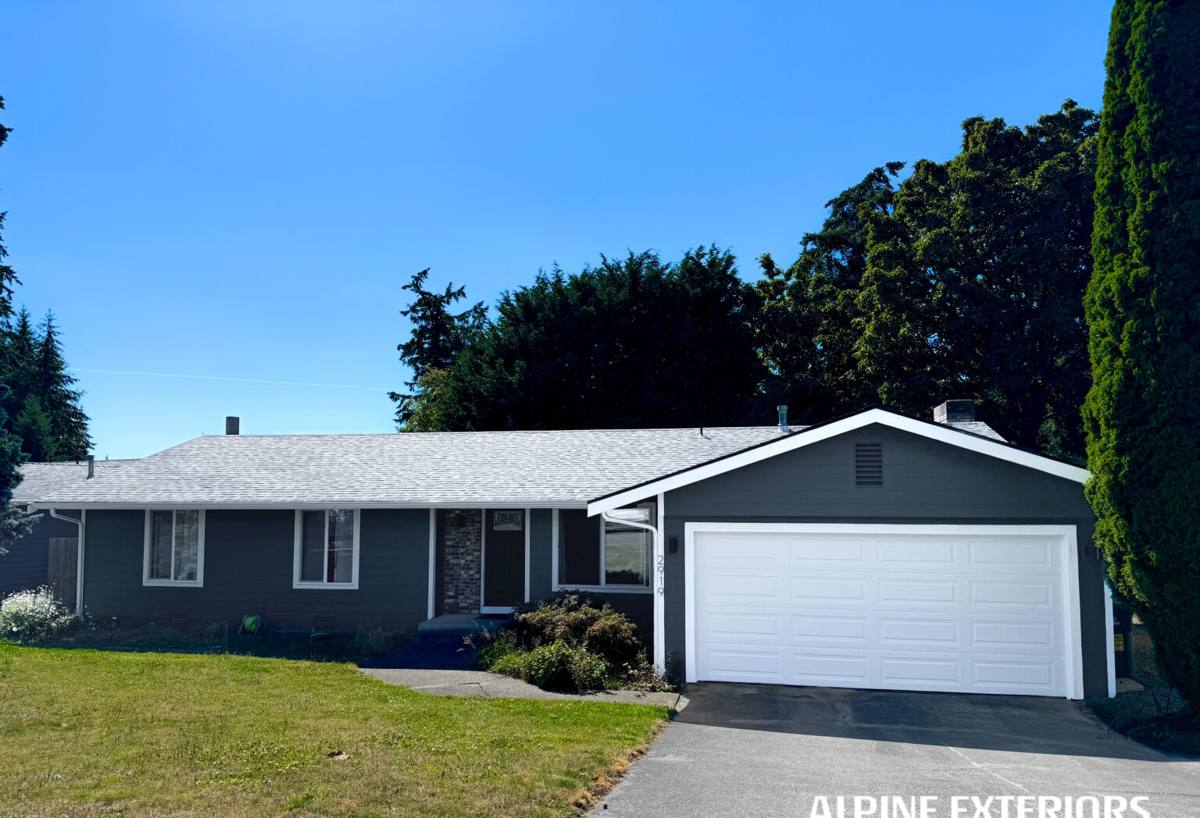
What Salt Air, Driving Rain, and Moss Season Actually Do to Siding
Salt Air
Airborne salt from Bellingham Bay settles on exterior surfaces and accelerates corrosion of fasteners, flashing, and any exposed metal trim. Over time it also breaks down cheap paint finishes and can leave a dull, chalky film on siding that isn't engineered to resist it.
Driving Rain
Bluff-top and near-water lots catch wind off the bay, which pushes rain sideways into wall assemblies instead of letting it run straight down and off. That means seams, laps, and penetrations (windows, doors, hose bibs, light fixtures) take more direct water pressure than they would on a sheltered inland lot. Any weakness in flashing or caulking shows up faster.
Moss and Algae Season
Whatcom County's wet fall-through-spring stretch, combined with tree cover common in Edgemoor's older, established lots, keeps shaded siding damp for long periods. That's exactly the condition moss and algae need to take hold, and once organic growth gets established on a wall it holds moisture against the substrate, which is how rot starts underneath siding that still looks fine from the street.
What a Correct Siding Installation Involves
Most siding failures we get called out to inspect in Bellingham aren't a product failure — they're an installation shortcut. On an exposure like Edgemoor's, the installation details matter as much as the material choice. A correct job includes:
- A continuous, properly lapped weather-resistive barrier behind the siding, installed shingle-style so water sheds outward at every seam
- Correctly flashed and integrated window and door openings, with head flashing that directs water out and away rather than behind the trim
- Proper fastener type, spacing, and depth — critical near the water where corrosion-resistant fasteners aren't optional
- Correct clearance between the bottom of the siding and grade, decks, and roof lines, so water and moisture aren't trapped against the material
- Factory-primed or factory-finished cut edges sealed in the field, not left raw and exposed to weather
- Ventilation gaps maintained where the siding system calls for them, so the wall assembly can dry out after wetting
Skip any one of these and the siding itself becomes almost irrelevant — water will find its way in regardless of what the surface is made of. This is the part of the job that separates a crew that regularly works Edgemoor's exposure from one that doesn't.
Why We Only Install James Hardie Fiber Cement
We install James Hardie fiber cement siding exclusively. We don't install vinyl, LP SmartSide, Cemplank, Allura, or unfinished wood siding like primed spruce or cedar, and on a lot like the ones in Edgemoor, that standard isn't arbitrary.
Fiber cement is non-combustible, dimensionally stable, and doesn't absorb and swell with moisture the way wood-based products can. James Hardie's ColorPlus factory finish is baked on under controlled conditions and backed by a real finish warranty — a meaningful advantage in a salt-air environment where field-applied paint tends to fail early. Hardie also makes climate-engineered HZ product lines built specifically for wetter, harsher exposures like the Pacific Northwest, which is directly relevant on a bluff that takes wind and rain off the bay.
Vinyl siding can warp, fade, and become brittle over time, and its seams and J-channels give wind-driven rain more places to work its way behind the wall. LP SmartSide and unfinished wood products are engineered or solid wood at their core, which means they're more sensitive to sustained moisture exposure — a real liability given how long siding stays wet during a typical Whatcom County winter. These aren't bad products in every setting. They're products whose weaknesses line up directly with Edgemoor's specific climate stresses, which is why we don't put them on homes here.
How the Common Siding Options Compare
| Material | Moisture Behavior | Salt Air / Marine Exposure | Finish Durability |
|---|---|---|---|
| James Hardie fiber cement | Doesn't swell or rot; engineered HZ lines for wet climates | Strong; non-combustible, corrosion isn't a substrate concern | Factory ColorPlus finish, long warranty |
| Vinyl | Doesn't absorb water, but seams allow intrusion behind panels | Can chalk and become brittle over time near salt air | Color molded in, but fades and can't be refinished cleanly |
| LP SmartSide | Engineered wood core; sensitive to sustained moisture at cut edges and seams | Requires diligent sealing and maintenance near water | Factory finish available, but core is moisture-sensitive |
| Primed spruce / cedar | Solid wood; absorbs moisture, prone to swelling and rot if not maintained | Needs frequent refinishing in marine air | Field-applied paint, shortest repaint cycle |
Our Siding Installation Process for Edgemoor Homes
1. On-Site Assessment
We walk the exterior and look specifically at how the house is exposed — bay-facing walls versus sheltered walls, tree cover, roofline drainage, and any existing moisture or rot signs around windows, doors, and the bottom courses of siding.
2. Removal and Sheathing Check
Old siding comes off and we inspect the sheathing underneath. This is where hidden problems from a previous installation — trapped moisture, soft wood, failed flashing — actually get found and fixed before anything new goes on.
3. Weather Barrier and Flashing
We install a continuous weather-resistive barrier and flash every penetration and opening so water is directed outward at every layer, not just at the surface.
4. Hardie Installation to Spec
Siding is installed following James Hardie's published installation requirements — fastener schedule, clearances, joint treatment, and caulking — because deviating from spec is also what can affect warranty coverage.
5. Final Walkthrough
We review clearances, trim, and caulking with the homeowner and point out anything that needs periodic attention, like keeping grade and plantings clear of the bottom siding course.
Signs Your Edgemoor Home's Siding Needs Attention
- Soft or spongy spots when you press on the siding, especially near the bottom courses or under windows
- Persistent moss or algae staining that keeps returning after cleaning
- Paint or finish that's chalking, peeling, or fading unevenly, particularly on bay-facing walls
- Visible gaps, warping, or separation at seams and corners
- Rusty streaking from fasteners or trim, a common sign of corrosion in salt air
- Rising energy bills that suggest the wall assembly is no longer keeping moisture and air where it belongs
Any one of these on its own isn't necessarily an emergency, but on an exposed lot they tend to compound quickly if left alone through another wet season.
What Affects the Cost of a Siding Job in Edgemoor
| Factor | Why It Matters Here |
|---|---|
| Home size and wall complexity | More corners, dormers, and roof-wall intersections mean more flashing detail and labor |
| Existing sheathing condition | Rot or moisture damage found during tear-off adds repair scope before new siding goes on |
| Siding profile and Hardie product line | Lap width, texture, and HZ line selection affect material cost |
| Access and site conditions | Bluff lots, slopes, and mature landscaping can affect staging and labor time |
| Trim and detail work | Window, door, and corner trim quality affects both cost and long-term water management |
Why a Local, Experienced Crew Matters
A crew that already works Edgemoor's bluff and waterfront lots has already seen how wind-driven rain behaves against these homes, where moss tends to establish first, and which details actually hold up over a full Whatcom County winter versus which ones look fine on installation day and fail two years later. That local pattern recognition is hard to replace with a generic install crew working from a manual alone. It shows up in small decisions — where extra flashing gets added even though it's not strictly required, how tight clearances get held near grade, which walls get extra attention because they take the brunt of the weather off the bay.
If your Edgemoor home's siding is showing its age or you're planning ahead for a replacement, we're happy to walk the exterior with you and give you a straightforward, no-pressure estimate — no invented urgency, just an honest look at what your home actually needs.