 Bellingham Roofing
 Siding That Has to Work Year-Round on Bellingham Bay
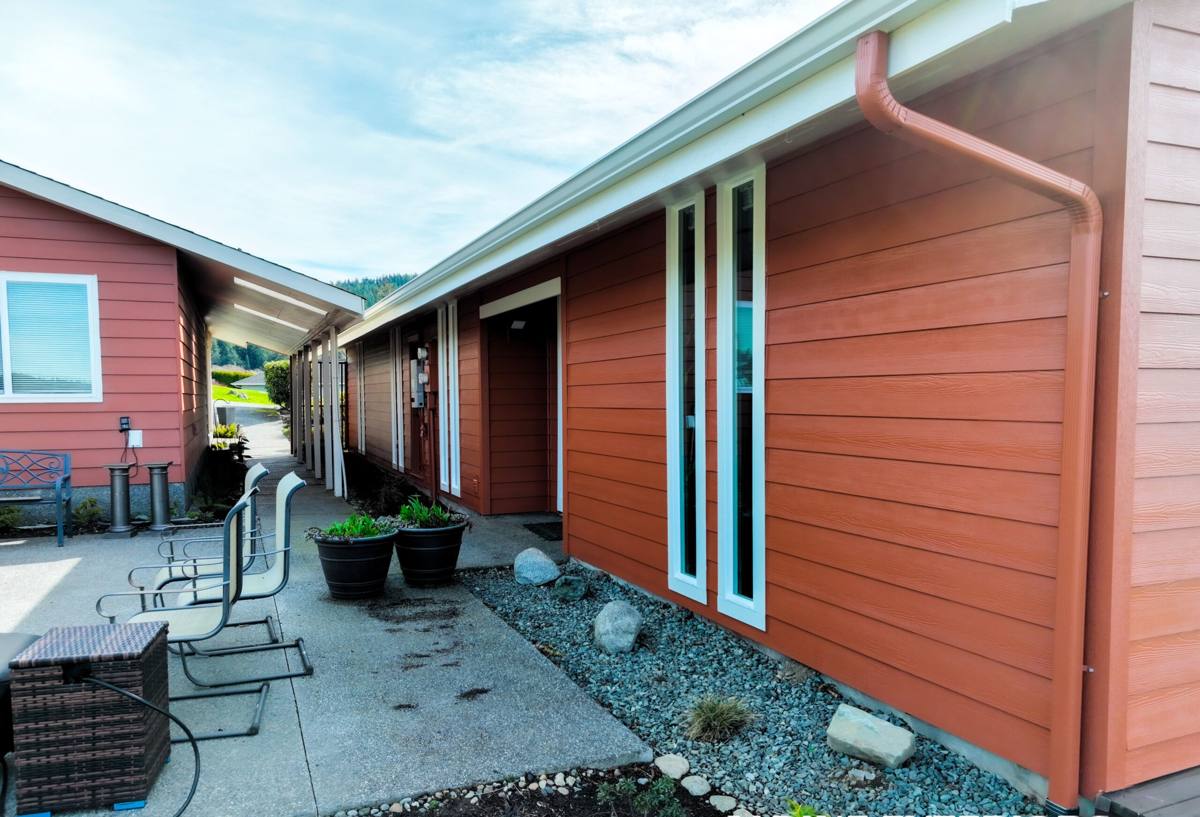
Edgemoor sits close to the water, on wooded, bluff-lined streets that catch weather straight off Bellingham Bay. That location is part of what makes the neighborhood desirable, and it's also exactly why siding here takes more abuse than siding a few miles inland. Homes get a steady mix of salt-laden air, wind-driven rain that hits walls sideways instead of straight down, and deep shade from mature trees that keeps north- and west-facing walls damp long after a storm has passed. Add Whatcom County's long, gray moss season and you have a combination that will find every weakness in a siding product or an installation shortcut, usually within a few years rather than a few decades.
We install fiber cement siding in Edgemoor on a regular basis, and the failures we get called out to fix follow a pattern: not dramatic storm damage, but slow moisture intrusion at seams, fasteners, and trim that were installed a little too fast. This page covers what Edgemoor homes specifically need from their siding, what a correct fiber cement installation actually involves, and how we approach the work.
Why This Climate Is Harder on Siding Than It Looks
Salt Air
Proximity to salt water accelerates corrosion on anything metal — fasteners, flashing, trim screws — and it also degrades cheaper paint films faster than inland exposure does. Siding materials and finishes that hold up fine in Whatcom County's inland towns can chalk, fade, or corrode noticeably sooner on a bayfront lot.
Driving Rain
Wind off the water doesn't just add moisture — it pushes rain sideways and up under laps, trim, and penetrations that would stay dry in a calm, straight-down rain. This is a wind-driven-rain environment, and siding systems have to be detailed for it: correct lap exposure, sealed and flashed penetrations, and drainage behind the cladding, not just on top of it.
Moss and Shade
Mature trees and marine cloud cover mean long stretches where walls simply don't dry out fully between rain events. That's the setup moss, algae, and mildew need to establish. On siding that absorbs moisture or has failed joints, that damp cycle also works its way into the substrate, not just the surface.
What Edgemoor Homes Need From Their Siding
Given all of the above, the priority list for siding in this neighborhood is different from a generic "what's the best siding" answer. We're looking for:
- A material that doesn't swell, rot, or delaminate when it stays damp for days at a time
- A factory-applied finish that resists salt-air fading and chalking better than field-applied paint
- Installation detailing built for wind-driven rain, not just vertical rain
- Corrosion-resistant fasteners and flashing appropriate for a coastal-adjacent property
- A surface that sheds moisture quickly enough to limit moss and algae growth between cleanings
This is why we install exclusively James Hardie fiber cement siding. We don't offer vinyl, LP SmartSide, primed spruce, cedar, or other fiber cement brands like Allura or Cemplank. Fiber cement as a category handles moisture, fire exposure, and impact far better than wood-based or vinyl products, and within that category, James Hardie's engineered-for-climate product lines and factory ColorPlus finish are what we've found perform best on exactly this kind of exposure — a coastal, high-moisture, low-drying environment. Refusing to install products we don't trust to hold up here is a deliberate standard, not a sales pitch.
What a Correct Fiber Cement Installation Actually Involves
Fiber cement is only as good as its installation. The material itself is durable; almost every early failure we see traces back to detailing, not the product. On an Edgemoor home, the details that matter most include:
Water Management Behind the Siding
Correct installation starts with a drainable weather-resistive barrier and, where called for, a rainscreen gap so any moisture that gets behind the cladding can drain and dry instead of sitting against the sheathing. In a wind-driven-rain environment, this layer is doing as much work as the siding itself.
Flashing and Fastening
Every window, door, deck ledger, and penetration needs proper flashing integrated with the water-resistive barrier — not just caulked over. Fasteners need to be corrosion-resistant and driven to Hardie's specifications: proper embedment, proper spacing, no over-driving that cracks the board or under-driving that leaves it loose.
Lap Exposure and Clearances
Minimum clearances from grade, roofing, and decks, plus correct lap exposure, keep water from wicking into the bottom edge of the boards or pooling where it shouldn't. These numbers are spelled out in Hardie's installation instructions for a reason, and skipping them is the single most common shortcut we find on failed jobs.
Joints and Caulking
Butt joints, trim intersections, and penetrations need to be treated as part of the water management system, not an afterthought sealed with a bead of caulk at the end of the day. Poorly detailed joints are where we most often find rot starting on homes exposed to this kind of driving rain.
Our Process on an Edgemoor Job
The steps don't change from house to house, but how carefully each one gets done does — and that's where jobs succeed or fail long-term.
- Assessment. We look at existing siding and sheathing condition, check for hidden moisture damage around windows, decks, and roof-to-wall intersections, and identify problem areas specific to the lot's exposure and shade.
- Tear-off or overlay decision. If the sheathing or water-resistive barrier is compromised, we tear off and rebuild the water management layer correctly rather than covering a problem. This is a judgment call we walk homeowners through, not a default.
- Prep and flashing. Barrier, rainscreen where appropriate, and flashing go in first, integrated at every window, door, and penetration before a single piece of siding is hung.
- Installation. HardiePlank, panel, or shingle siding installed to spec — clearances, fastening, lap exposure, and joint treatment done to Hardie's published requirements, not shortcuts.
- Trim and detail work. Corners, trim boards, and penetrations finished and sealed as part of the system, not patched afterward.
- Walkthrough and cleanup. We review the finished work with the homeowner and cover basic care so the siding performs the way it's designed to.
James Hardie Product Lines Suited to This Exposure
James Hardie engineers its HZ5 product line specifically for Pacific Northwest–type climates — the wet, temperate conditions that define western Whatcom County. That engineering, combined with the factory-baked ColorPlus finish, is what holds up to salt air and repeated wet-dry cycling better than field-painted alternatives, where the finish is only as good as the weather conditions on the day it was applied.
| Product | Typical Use | Why It Fits Edgemoor |
|---|---|---|
| HardiePlank lap siding | Primary wall cladding | Most common choice; wide color and texture range, engineered lap profile for water shedding |
| HardiePanel vertical siding | Accent walls, gables, modern facades | Clean lines for contemporary Edgemoor homes; same moisture and fire performance as lap |
| HardieShingle siding | Accent gables, Craftsman-style detailing | Cedar-shake look without the maintenance burden of real wood in a damp, shaded lot |
| HardieTrim boards | Corners, window and door trim, fascia | Matches siding durability so trim doesn't become the weak point in the system |
Cost Factors for Edgemoor Fiber Cement Projects
Every quote is specific to the house, but the variables below are what typically move the number up or down. We don't post fixed prices because they'd be misleading — a wide-open single-story wall and a two-story home with multiple gables and deep trim detail are not the same job.
| Factor | Effect on Scope |
|---|---|
| Tear-off vs. install over existing prep | Full tear-off adds labor but is often necessary if sheathing or the water barrier is compromised |
| Wall complexity (gables, dormers, cutouts) | More cuts, more flashing detail, more labor hours |
| Product line and profile chosen | Lap width, panel vs. plank, and shingle accents vary in material and install time |
| Color | Standard ColorPlus colors vs. premium or custom-match options |
| Access and site conditions | Sloped, wooded, or tight-access lots common in Edgemoor can affect staging and scaffolding |
| Trim and accessory scope | Full trim replacement vs. reusing sound existing trim |
Living With Fiber Cement Siding in a Moss-Prone Environment
Correctly installed Hardie siding is low-maintenance, not no-maintenance. In a shaded, damp, salt-adjacent neighborhood like this one, a little routine care goes a long way toward keeping it looking and performing the way it should.
- Rinse siding annually with a garden hose and soft brush to clear pollen, salt residue, and early moss or algae growth — avoid high-pressure washing, which can force water behind laps and damage the finish
- Keep gutters clear so overflow doesn't run down the wall face and feed moss growth at the top course
- Trim back branches and shrubs that keep specific wall sections shaded and slow to dry
- Re-caulk joints and check trim seals every few years, since caulk ages faster than the siding itself
- Address any cracked, loose, or missing boards quickly — a small gap is a quick fix; water sitting behind it for a season is not
Why It Matters That We Already Work in Edgemoor
Detailing for driving rain and salt air isn't something you improvise on site — it's something you get right because you've already seen what goes wrong when it's skipped. A crew that regularly works Edgemoor and the surrounding Bellingham Bay-facing neighborhoods knows which walls need extra flashing attention because of shade and exposure, understands how HOA or design guidelines in established neighborhoods like this one typically approach exterior changes, and isn't guessing at how the local climate behaves over a full year. That familiarity shows up in fewer callbacks and siding that's still performing well well past the point where a rushed job would already be showing moisture damage.
If you're weighing a siding replacement or repair in Edgemoor, we're happy to take a look and give you a straightforward, no-pressure estimate — what we'd recommend, why, and what it would involve for your specific house. There's no obligation, and no hard sell. Use the form below to get started.