 Bellingham Roofing
 Why Edgemoor Decks Wear Differently Than Decks Inland
Edgemoor sits close to the water, tucked under mature tree cover on the edge of Bellingham, and that combination is hard on a deck. Salt-laden air off Bellingham Bay accelerates corrosion on fasteners, brackets, and any exposed metal hardware. Driving rain off the water finds its way into end grain, fastener holes, and any spot where flashing was skipped or done wrong the first time. And the tree canopy that makes these lots so pleasant to live on also means shade, damp leaf litter, and a moss season that runs longer here than it does on more open, sun-exposed lots elsewhere in Whatcom County.
None of that means a deck can't last. It means a deck built or repaired without those specific pressures in mind will fail years before it should — usually starting with the parts you can't see from the top: ledger connections, joist tops, post bases, and the undersides of boards where moisture sits longest.
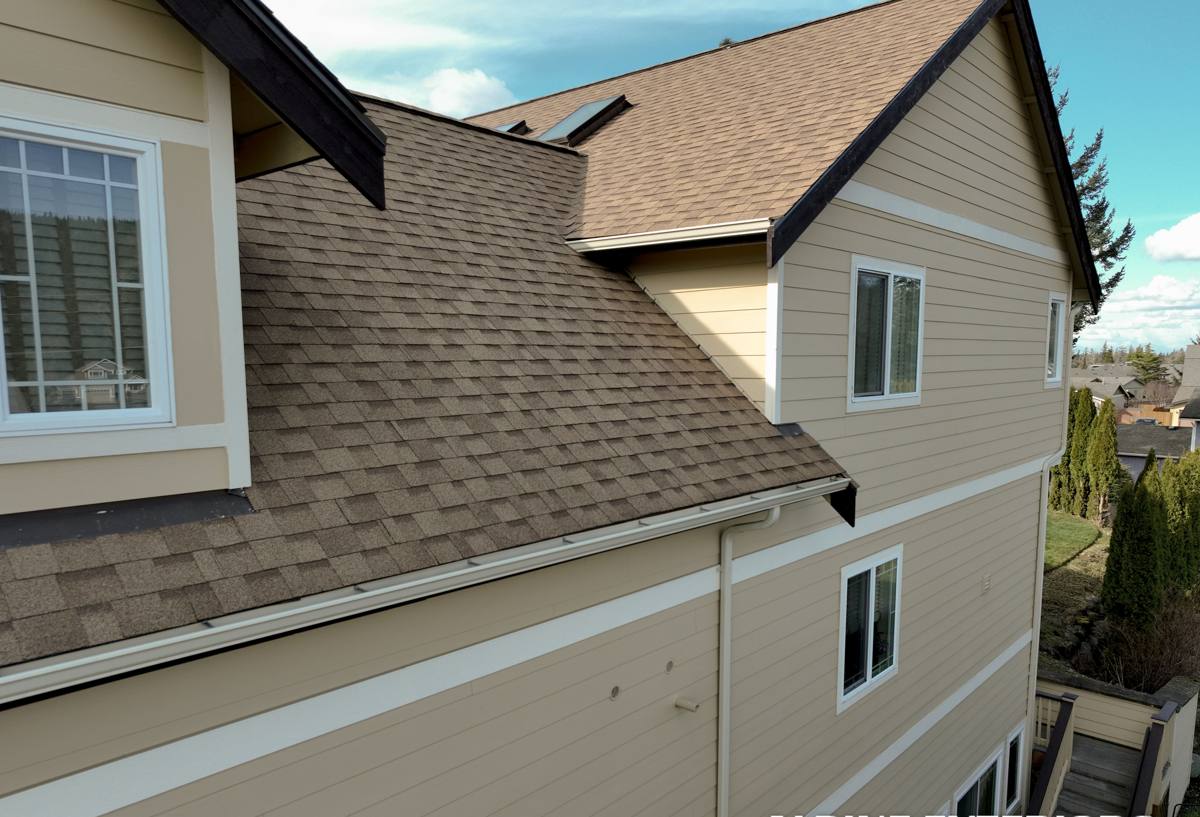
What Actually Fails First on an Edgemoor Deck
Moss and Organic Buildup
Moss isn't just a cosmetic nuisance. It holds moisture against wood and composite decking alike, keeps surfaces damp for days after rain has stopped, and on wood decking it accelerates rot at board edges and around fastener heads. On shaded, tree-covered lots like much of Edgemoor, moss can establish itself within a single wet season if a deck isn't cleaned and kept clear of debris.
Corroded or Failing Fasteners
Salt air oxidizes lower-grade screws, nails, and joist hangers faster than manufacturers' published lifespans assume. We regularly find hardware that's rusted, weakened, or backing out well before the wood around it shows obvious damage — which is exactly why a proper inspection checks the fasteners, not just the decking surface.
Rot at Ledger Boards and Post Bases
The ledger board (where the deck attaches to the house) and the base of support posts are where water tends to collect and linger. Poor flashing, missing post base standoffs, or decking boards that were never gapped properly all trap moisture in exactly these spots. This is structural, not cosmetic, and it's the most common reason a deck that "looks fine" fails a close inspection.
Cupped, Splitting, or Soft Decking Boards
Repeated wet-dry cycling — rain, then a few days of shade-slowed drying, then rain again — causes wood decking to cup, crack, and eventually go soft. Composite boards resist this differently but aren't immune to fastener and substructure problems underneath them.
Repair or Replace? How We Tell the Difference
Not every deck problem calls for a full rebuild, and we don't sell one when it isn't needed. The honest line usually comes down to whether the framing is sound.
| Condition Found | Usually Repairable | Usually Needs Replacement |
|---|---|---|
| Surface graying, moss, mildew staining | Yes — clean, treat, reseal | Rarely on its own |
| A handful of cupped or split boards | Yes — board-by-board replacement | Only if widespread |
| Rusted or popped fasteners | Yes — re-fasten with correct hardware | Only if it's caused board damage |
| Soft or spongy spots underfoot | Sometimes — depends on extent | If joists or beams are rotted |
| Rot at the ledger board connection | Sometimes — localized repair | If rot has spread into the rim joist |
| Leaning or wobbling railings/posts | Yes — re-secure or rebuild section | If post bases are rotted through |
| Structure over 20 years old with no maintenance history | Case by case | Often, once framing is opened up |
We won't know which column your deck falls into until we get underneath it and check the framing directly — a deck that looks solid from the top can still have compromised joists, and one with cosmetic wear can be perfectly sound structurally. That's the first thing we check, every time.
What a Correct Repair Actually Involves
Start Below the Surface
A proper repair doesn't start with the decking boards. It starts by checking the ledger connection and flashing, probing joists and beams for soft spots, and confirming post bases and hardware are rated for exterior, coastal-influenced use. Anything less is a cosmetic patch that hides the real problem for another season or two.
Use Hardware Rated for the Environment
Given the salt air this area sees, we use corrosion-resistant, code-rated fasteners and connectors rather than whatever's cheapest at the hardware store. This matters more here than it would on an inland deck, and it's one of the easiest things for a repair to skimp on without a homeowner ever knowing.
Address Drainage and Airflow, Not Just Damage
If moisture and moss are getting into a deck faster than the structure can dry out, replacing a few boards without improving drainage or airflow underneath just resets the clock. We look at board spacing, ground clearance, and whether debris is trapping water against the structure — and fix the underlying cause, not just the symptom.
Match Materials and Finish Correctly
Whether you're on wood or composite decking, patch repairs need to match existing board profiles and fastening patterns so the repaired sections perform — and age — the same way as the rest of the deck, not stand out or fail on a different timeline.
Wood vs. Composite: What Holds Up Better Here
Both materials can work well on an Edgemoor deck, but they demand different things from a homeowner given the local climate.
- Pressure-treated or cedar decking: Lower upfront cost, but needs regular cleaning, sealing, and moss removal to keep moisture out — especially under tree cover. Skipping a season or two of maintenance is what leads to the rot we see most often.
- Composite decking: Resists rot and doesn't need sealing, but still grows moss and mildew in shaded, damp spots if it isn't cleaned periodically, and the structure underneath still needs to be sound and properly fastened.
- Either material: Performs only as well as the framing, flashing, and hardware underneath it — which is where we focus most of our attention on a repair.
We won't tell you one material is "bad" — each has real trade-offs in maintenance, moisture behavior, and up-front cost, and the right call depends on how much upkeep you want to do and how the deck is exposed to sun, shade, and rain on your particular lot.
How Our Deck Repair Process Works
1. On-Site Inspection
We check the deck from the ground up — framing, ledger connection, post bases, fasteners, and surface condition — and tell you plainly what's cosmetic and what's structural.
2. Straight Assessment and Estimate
You get an honest read on whether repair makes sense, what a repair would include, and a written estimate before any work starts. No pressure to upgrade to a full rebuild if the framing doesn't call for it.
3. Repair, Not Just Patch
We fix what's actually causing the problem — rot, corroded hardware, poor drainage — using materials and fasteners suited to this area's salt air and rain exposure, not just whatever's fastest.
4. Walkthrough and Care Guidance
Before we leave, we walk the repair with you and go over simple upkeep steps that matter most for a shaded, near-water lot like yours — mainly around moss control and drainage.
Why It Matters That We Already Work in Edgemoor
A crew that regularly works Edgemoor and the surrounding Bellingham waterfront neighborhoods has already seen how the tree cover, shade patterns, and salt air here affect decks differently than they do further inland in Whatcom County. That means we're not guessing at which hardware grade to use or how aggressive the moss problem is likely to be — we're applying what consistently holds up on lots like yours. It also means faster, more accurate estimates, because we're not learning the neighborhood's quirks on your project.
Simple Upkeep That Extends the Life of a Repair
A good repair lasts a lot longer with a small amount of regular attention. Between inspections, this covers the basics that matter most here:
- Sweep leaves and debris off the deck regularly, especially in fall and through the wet winter months
- Treat moss and algae growth as soon as you see it rather than waiting until it's established
- Keep gutters and downspouts clear so runoff isn't draining directly onto or under the deck
- Check railings and stair posts periodically for looseness — an early sign of fastener or post-base issues
- Re-seal wood decking on the manufacturer's recommended schedule, not just when it looks faded
- Trim back overhanging branches and vegetation to improve airflow and sun exposure where practical
- Have the deck inspected every few years, especially before it's 15-20 years old with unknown maintenance history
Get an Honest Look at Your Deck
If your Edgemoor deck has soft spots, moss buildup, rusted hardware, or you just haven't had it checked in a while, we're happy to take a look and tell you straight what it needs — repair, partial rebuild, or nothing urgent at all. Reach out for a free, no-pressure estimate using the form below.