 Bellingham Roofing
 Building a Deck That Actually Holds Up in Edgemoor
Edgemoor sits close enough to the water that salt-laden air is a daily fact of life, not an occasional nuisance. Add in the driving rain that rolls off Bellingham Bay most of the fall and winter, plus the deep tree canopy that keeps a lot of yards shaded and damp long after a storm passes, and you've got a climate that is genuinely tough on outdoor structures. A deck built the way it would be built in a drier inland town does not last the same way here. It's not that the wood or hardware is bad — it's that the assumptions baked into a "standard" deck don't match what Edgemoor's weather actually does to a structure year after year.
We build and repair decks around Bellingham and Whatcom County regularly, and Edgemoor properties tend to share a few things: mature trees close to the house, sloped or elevated lots with a view worth protecting, and a mix of older homes with decks that were never really designed for the moisture load they've been carrying. A correct deck build here starts with respecting those conditions, not fighting them after the fact.
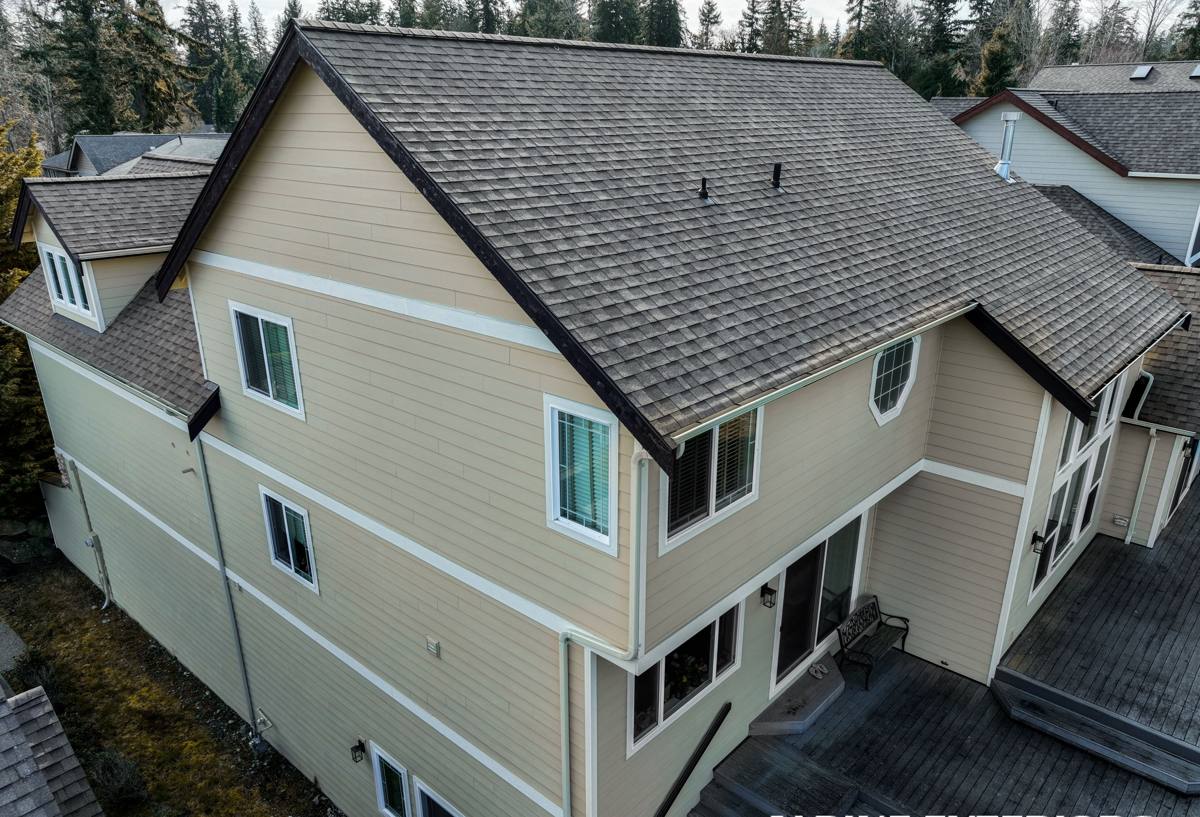
What Salt Air and Driving Rain Actually Do to a Deck
Corrosion you don't see until it's a problem
Salt air accelerates corrosion in fasteners, brackets, and railing hardware — sometimes years faster than a standard-rated product would suggest. A deck screw or joist hanger that's only rated for general exterior use can start rusting from the inside of the wood, where you won't spot it during a casual look. By the time surface rust shows up, the fastener has often already lost meaningful strength.
Driving rain finds every gap
Wind-driven rain off the bay doesn't fall straight down — it gets pushed sideways into ledger connections, under railing posts, and into any seam that wasn't properly flashed or sealed. Over time, water that should have shed away instead tracks into framing, and that's where rot starts, usually hidden under decking boards where nobody's looking.
Moss and algae on every horizontal surface
Bellingham's long wet season means moss and algae aren't limited to the roof — they build up on deck boards, stair treads, and railings too, especially in shaded spots under trees. Beyond looking bad, that buildup holds moisture against the wood surface and turns stairs and walkways slick and genuinely dangerous underfoot.
Choosing Decking Material for This Climate
There's no single "right" decking material for every Edgemoor property — it depends on sun exposure, tree cover, and how much upkeep you want to take on. Here's how the common options actually perform under local conditions, in plain terms:
| Material | Moss / algae resistance | Maintenance in this climate | Honest trade-off |
|---|---|---|---|
| Pressure-treated fir/hem-fir | Poor to fair — needs regular cleaning and treatment | Annual cleaning, periodic sealing | Lowest upfront cost, but the highest ongoing labor to keep moss and graying in check |
| Cedar | Fair — natural oils help some, shaded spots still grow moss | Sealing every 1-2 years to hold color and resist moisture uptake | Good look, but still an organic material that will rot if flashing and drainage aren't right |
| Capped composite | Good — solid cap resists moss adhesion, easy to hose off | Occasional washing, no sealing or staining | Higher upfront cost, but far less time spent maintaining it over the deck's life |
| PVC decking | Very good — non-organic surface, minimal moss growth even in shade | Lowest maintenance of the group | Highest material cost; can feel and flex differently underfoot than wood |
For heavily shaded Edgemoor lots — which is a lot of them — we typically steer homeowners away from bare pressure-treated boards as a final wear surface if low maintenance matters to them. It's not that treated lumber is a bad product; it's that in deep shade with constant moisture, it needs more attention than most people actually want to give it. Composite or PVC costs more up front but gives back a lot of weekends.
What's Underneath Matters More Than the Boards on Top
A deck's decking material gets all the attention, but the framing, flashing, and connections underneath are what actually determine whether it lasts 10 years or 30. This is especially true in a climate like ours, where the failure point is almost always moisture intrusion into structure, not the surface wearing out.
- Ledger board flashed correctly where the deck attaches to the house, with proper waterproof membrane behind it — this is the single most common failure point we find on older decks in wet coastal towns
- Joist tape or a comparable protective barrier on top of every joist to stop water from soaking into end grain and cut edges
- Hardware rated for coastal/corrosive exposure, not just general exterior use, on every hanger, bolt, and screw
- Footings sized and set to local frost and soil conditions, especially on sloped Edgemoor lots where drainage patterns aren't always obvious
- Proper gapping between boards so water actually sheds instead of pooling and feeding moss growth
- Ventilation underneath the deck so the structure can dry out between rain events instead of staying damp for weeks
Railings, Stairs, and Corrosion-Resistant Hardware
Railings take the brunt of salt air exposure because they're fully exposed on all sides, and they're also a safety-critical component — a corroded post connection is not something to discover by accident. We use stainless or coated fasteners and brackets rated for coastal exposure on every railing connection, not just where it's visible. Cable railing systems, which have become popular for their unobstructed views, need particular attention here: the cable and end fittings must be marine-grade stainless, or salt air will pit and weaken them well before a homeowner expects to replace them.
Stairs deserve their own mention. In a neighborhood with tree cover and slope, stair treads are where moss buildup turns into a real fall hazard. We build stair surfaces with drainage and traction in mind from the start, rather than relying on a homeowner to keep up with cleaning as the only line of defense.
Drainage and Moss Prevention Built Into the Design
Preventing moss is mostly a design problem, not a cleaning problem. Boards installed with correct spacing and slope shed water instead of holding it. Under-deck drainage systems can be added on lower or covered decks to keep the space below dry and usable, which also reduces the moisture load feeding moss growth. On heavily shaded lots, we'll sometimes recommend a decking color and texture that shows less algae staining between cleanings, since full sun exposure to naturally kill moss isn't realistic under mature trees.
Permits and Local Code in Bellingham and Whatcom County
Most new decks and significant deck rebuilds require a permit through the City of Bellingham or Whatcom County, depending on exactly where the property sits. Elevated decks, decks attached to the house, and anything with guardrails typically need engineering that accounts for guardrail height, baluster spacing, and structural load — this isn't optional paperwork, it's what keeps a deck safe over decades of use, especially on sloped or elevated Edgemoor lots where the drop below the deck can be significant. We handle the permit process as part of the job so homeowners aren't left figuring out jurisdiction-specific requirements on their own.
Our Process for an Edgemoor Deck Project
- On-site visit to assess the lot's sun exposure, drainage, tree cover, and existing structure if there is one
- Honest material recommendation based on how much maintenance you actually want to take on, not a one-size-fits-all pitch
- Permit drawings and submission to the correct jurisdiction — City of Bellingham or Whatcom County
- Demo of any failing structure, with a real look at ledger and framing condition before covering anything back up
- Framing built with coastal-rated hardware, proper flashing, and joist protection from the start
- Decking, railings, and stairs installed with drainage and traction as design priorities, not afterthoughts
- Final walkthrough covering what maintenance the material you chose actually needs, so there are no surprises
Why It Matters to Hire a Crew That Already Works in Edgemoor
A deck built without accounting for salt air and driving rain can look fine for a year or two before problems start showing up — by which point the fix is more invasive and more expensive than doing it right the first time. Crews who work Edgemoor and the surrounding Bellingham waterfront regularly already know which fastener grades hold up, which ledger details actually keep water out, and which decking choices are worth the extra upfront cost versus which ones just add maintenance without adding value. That local pattern recognition is hard to substitute for, no matter how good a contractor's general deck-building skills are.
We're not going to tell you the cheapest option is the wrong one across the board — sometimes a lower-cost material is genuinely the right call for a budget or a rarely-used deck. What we will do is lay out the real trade-offs for your specific lot, sun exposure, and how you plan to use the space, so the decision is an informed one rather than a guess.
Ready to Talk Through Your Deck Project?
If you're planning a new deck or need an honest look at whether an existing one is holding up the way it should, we're happy to walk the property with you. There's no pressure and no cost to get our take — just a straightforward assessment and a written estimate you can use to make the decision that's right for your home.