 Bellingham Roofing
 Why Decks in Birchwood Wear Out Faster Than the Brochure Says
Bellingham sits close enough to the water and gets enough overcast, wet weather that outdoor structures take a beating most manufacturers never design for. In Birchwood, like most established Bellingham neighborhoods, mature tree cover keeps yards shaded and decks damp for long stretches of the year. Add the salt-tinged air that drifts off Bellingham Bay and the driving rain that comes in sideways during fall and winter storms, and you have a climate that is genuinely hard on wood, hardware, and even some "low-maintenance" decking products.
Moss is the visible symptom, but it is not the real problem. Moss holds moisture against the deck boards and framing underneath, which is what actually causes rot, fastener corrosion, and slippery surfaces. A deck that looks fine from the yard can have soft joists, rusted-through hangers, or a ledger board pulling away from the house — none of which show up until someone steps wrong or a board gives way. When a deck in this area is more than 15-20 years old, or has had multiple rounds of patch repairs, replacement is usually the more honest answer than another repair.
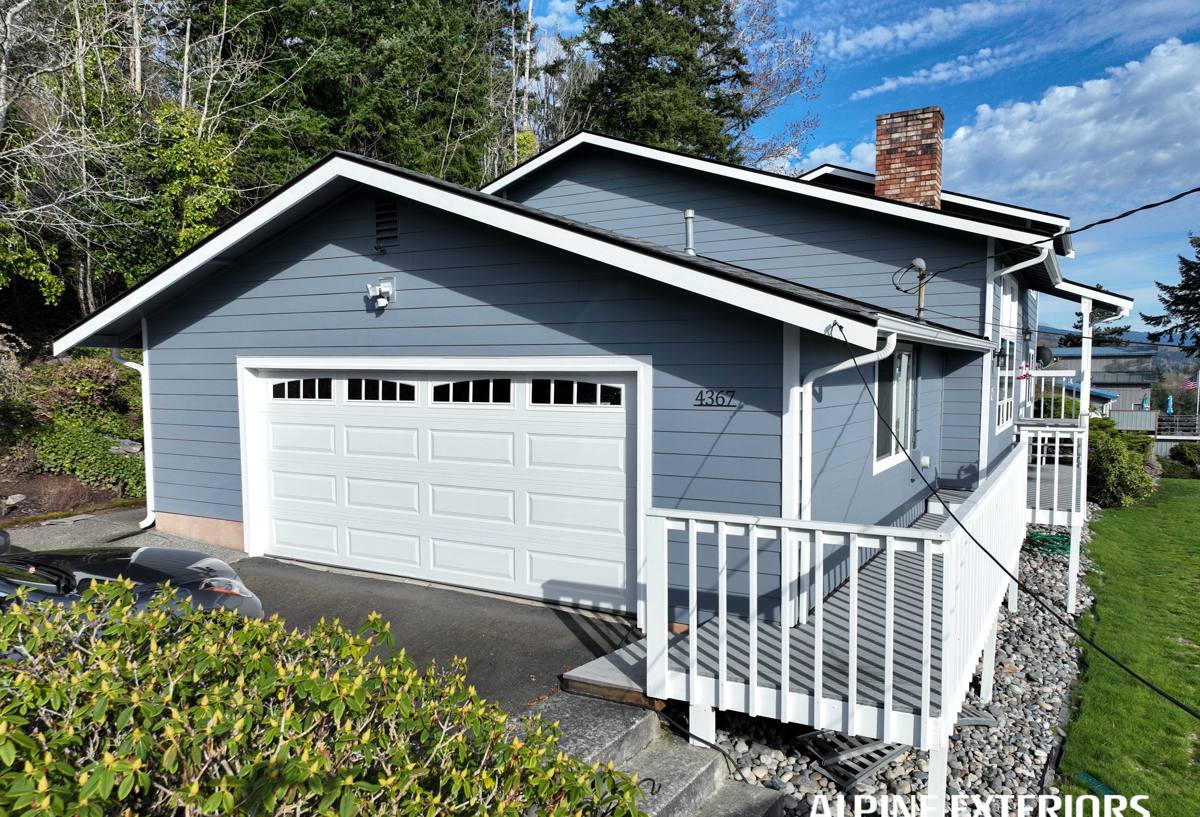
Repair or Replace: How We Make That Call
Not every tired-looking deck needs to come out. We look at three things before recommending a full replacement instead of a repair:
- The framing. If joists, beams, or posts are soft, cracked, or show fastener rust bleeding through, the structure is the problem — not just the surface boards.
- The ledger connection. This is where the deck attaches to the house, and it is the single most common failure point on older decks in wet climates. If flashing is missing or the ledger is punky, that's a structural issue, not a cosmetic one.
- The footings. Undersized or shifting footings on sloped Birchwood lots can mean the whole deck is out of level, which no amount of surface repair will fix.
If those three areas are sound and it's really just worn boards or a railing that needs updating, repair is the right call and we'll say so. If the bones are compromised, patching it just delays the same problem and spends money that should go toward a proper rebuild.
What a Correct Deck Replacement Actually Involves
A deck replacement done right is mostly about what you don't see once the new boards are down. The visible decking is maybe a third of the job.
Structure First
We remove the old decking and inspect the framing underneath in full daylight, not just from a ladder. Any framing that's soft, split, or undersized for current code gets replaced — this includes joists, beams, and posts. Footings are checked for size, depth, and level; in this soil and climate, undersized or shallow footings are a common shortcut from older builds.
The Ledger and Flashing
Where the deck meets the house is the highest-risk spot for water intrusion in our climate. A correct ledger installation uses proper flashing that sheds water away from the house framing, not just a bead of caulk covering a gap. This detail alone determines whether the connection lasts 25 years or rots out in five.
Fasteners and Hardware
Salt-influenced air and constant moisture corrode standard hardware faster than people expect. We use corrosion-resistant, code-rated joist hangers, structural screws, and fasteners rated for exterior and treated-lumber contact — the cheap galvanized hardware that shows up in big-box repair kits corrodes visibly within a few seasons out here.
Decking and Railings
Once the structure is sound, the decking, railings, and stairs go on last. This is the part that gets photographed, but it's the least likely part to fail if everything underneath was done correctly.
Decking Material Options for Bellingham's Climate
There's no single "best" decking material — it's a real tradeoff between upfront cost, maintenance commitment, and how the material handles constant damp shade. Here's how the common options actually perform in a Birchwood-type yard:
| Material | Upfront Cost | Maintenance | Moisture & Moss Behavior |
|---|---|---|---|
| Pressure-treated wood | Lowest | Annual cleaning, periodic sealing/staining | Prone to moss buildup if not cleaned; needs consistent upkeep to avoid rot |
| Cedar | Mid-range | Regular oiling or sealing to hold color and resist moisture | Naturally rot-resistant but still needs care to shed moss and staining |
| Composite | Higher | Occasional washing, no staining or sealing | Won't rot, but can still grow surface moss/algae in constant shade — needs periodic cleaning |
| PVC/capped polymer | Highest | Lowest — mostly rinsing | Best moisture resistance of the group; still benefits from occasional cleaning in deep shade |
We install all of these depending on the homeowner's budget and priorities. Our honest opinion: in a shaded, damp lot, composite or capped polymer earns its higher price back in avoided maintenance, but a well-built and properly maintained wood deck is a perfectly good choice for homeowners who don't mind the yearly upkeep.
Drainage: The Part That Determines How Long It Lasts
Whatcom County's rainfall doesn't need to be extreme to cause problems — it's the frequency and duration that matter. A deck that never fully dries out between storms is a deck that's constantly feeding rot and moss growth. Correct drainage detailing includes:
- Proper spacing between deck boards so water passes through instead of pooling on the surface
- Grading and airflow underneath the deck so the framing can actually dry out between rain events
- Flashing at the ledger and any post bases that directs water away from wood-to-wood or wood-to-concrete contact points
- Stair stringers and post bases kept off grade contact where possible, since ground-level wood dries slowest
This is also where a lot of DIY and budget rebuilds fall short — the decking looks new, but the underlying moisture path was never corrected, so the same failure shows up again in a few years.
Railings, Stairs, and Code Requirements
Any deck replacement that involves the structure — not just swapping boards — typically needs to meet current building code, even if the original deck predates it. In practice this usually means:
- Guardrails at a minimum height where the deck surface is a certain distance above grade
- Baluster spacing that meets current safety spacing requirements
- Stair rise, run, and handrail requirements if the deck includes steps
- Proper ledger attachment and footing sizing per current structural standards
Depending on the scope, a permit through the City of Bellingham or Whatcom County (depending on the property's exact jurisdiction) may be required. We handle permitting as part of the job rather than leaving homeowners to sort it out — it protects you if the deck is ever inspected for a home sale or insurance claim down the road.
Our Process, Start to Finish
- On-site assessment. We inspect the existing deck's framing, ledger, footings, and decking condition, and give you a straight answer on repair versus replacement.
- Written estimate. You get a clear scope and price before any work starts — no surprise add-ons for things we should have caught during the assessment.
- Permitting, if required. We pull and manage permits so the finished deck is documented and code-compliant.
- Demolition and framing inspection. Old decking comes off and we evaluate the structure in daylight before deciding what's reused and what's replaced.
- Rebuild. Framing, ledger flashing, footings, decking, and railings go in following the sequence above.
- Final walkthrough and cleanup. We walk the finished deck with you and clear the site of debris and old materials.
What Actually Drives the Cost
Every deck is different, so we won't quote a number without seeing the site, but these are the factors that move the price up or down the most:
| Cost Factor | Why It Matters |
|---|---|
| Deck size and height | More square footage and taller decks (more framing, footings, and stair complexity) increase material and labor |
| Condition of existing framing | Rot found once demo starts can mean replacing more structure than initially scoped |
| Decking material choice | Composite and PVC cost more upfront than wood but reduce future maintenance spending |
| Railing style and stairs | Custom railing designs and multi-flight stairs add labor and material |
| Site access | Sloped Birchwood lots or tight side-yard access can add time for material handling and equipment |
| Permit and inspection scope | Structural replacements typically require permits, which add time but protect the homeowner long-term |
Maintaining a New Deck in This Climate
Even a well-built deck needs some seasonal attention in a climate like ours. This keeps a new deck performing the way it should for its full lifespan:
- Sweep leaves and debris off the deck regularly, especially in fall — trapped organic matter is what feeds moss and mildew
- Rinse or gently pressure-wash surfaces at least once or twice a year to remove early moss growth before it takes hold
- For wood decking, reseal or restain on the schedule recommended for the product — skipping a cycle in our climate accelerates weathering
- Keep gutters and downspouts near the deck clear so runoff isn't dumping extra water onto or under the structure
- Check railings and stair connections annually for movement, even on newer decks
- Trim back overhanging branches where possible to reduce shade and speed up drying between rain events
Why a Crew That Already Works Birchwood Matters
Deck replacement isn't a one-size-fits-all job, and a crew that works Bellingham and Whatcom County regularly already knows how local soil, drainage patterns, and shade conditions behave on decks in neighborhoods like Birchwood. That familiarity shows up in practical decisions — how footings are sized for this ground, which hardware actually holds up to years of damp, salt-touched air, and how to detail flashing so it survives our wet season instead of just looking finished on installation day. It also means faster, more accurate estimates, since we're not guessing at how a material or detail will hold up here — we've already seen it.
If your deck is showing soft spots, persistent moss, or is simply old enough that you're not confident in it anymore, we're happy to take a look. We offer free, no-pressure estimates — use the form below to get one scheduled.