 Bellingham Roofing
 Deck Repair for Silver Beach Homes
Silver Beach sits close to the water, and that proximity shapes almost everything about how a deck ages here. Homes in this part of Bellingham deal with a steady mix of marine air, long stretches of driving rain, and shaded, moisture-holding pockets where moss and algae take hold and never really let go. A deck built the same way you'd build one in a dry inland climate simply won't hold up the same way out here — the wood moves more, the fasteners corrode faster, and anything that traps water becomes a problem within a few seasons instead of a few decades. Deck repair in this neighborhood isn't just patching boards; it's understanding how the local environment attacks a structure and fixing it in a way that actually stands up to Whatcom County weather.
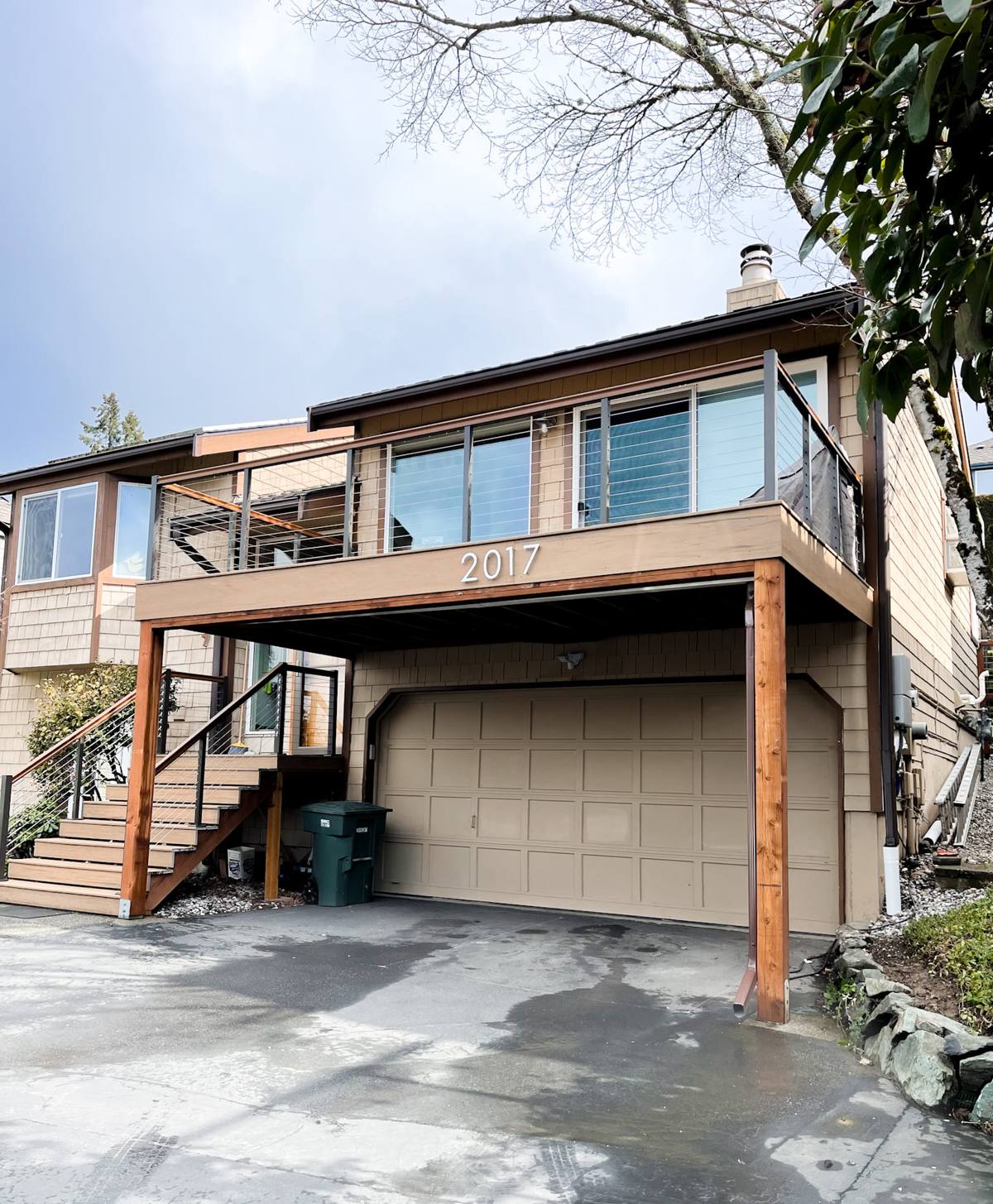
Why Bellingham's Climate Is Hard on Decks
Three things do most of the damage to decks in and around Silver Beach, and they compound each other.
Salt Air and Metal Corrosion
Being close to the bay means a fine, constant exposure to salt-laden moisture in the air. That air doesn't just sit on the surface of your deck — it works into every joint, every fastener head, and every piece of exposed hardware. Standard zinc-coated screws and nails that would last for years further inland can start rusting and losing grip much sooner near the water. Once a fastener corrodes, it stops holding wood tightly together, and that's when boards start to cup, squeak, and work loose.
Driving Rain and Trapped Moisture
Bellingham doesn't get flash floods — it gets long, sustained rain that finds its way into every gap, seam, and end-grain cut on a deck. Water that can't drain or dry out is the single biggest cause of rot in this region. Ledger boards where the deck meets the house, the undersides of joists, and the gaps between decking boards are the usual failure points because they hold moisture the longest after a storm.
Moss, Algae, and Surface Breakdown
Shaded areas near mature trees and homes close to the shoreline stay damp for extended stretches, which is exactly what moss and algae need to establish themselves. Beyond making a deck slippery and unsafe, moss holds moisture directly against the wood surface, accelerating decay in the boards underneath it. Left untreated over a full moss season, that surface growth can turn a cosmetic problem into a structural one.
Signs Your Deck Needs Repair
Most deck problems don't show up all at once — they build slowly, and homeowners often don't notice until something feels wrong underfoot. A few minutes of inspection twice a year can catch issues while they're still simple fixes.
- Boards that feel spongy, soft, or give slightly when you step on them
- Visible gaps, cracking, or splitting, especially where boards meet
- Rust streaks running down from screw or nail heads
- Railings or posts that wobble or flex when leaned on
- Green or black film building up on the walking surface, particularly in shaded corners
- A ledger board (where the deck attaches to the house) that looks discolored, swollen, or separated from the siding
- Stairs that feel less solid than they used to, or noticeable sagging in the deck frame
Any one of these on its own might be minor. Several together, or anything involving the ledger board or structural framing, usually means it's time for a professional look before the next wet season.
What a Correct Deck Repair Job Actually Involves
A repair that just replaces the boards you can see and leaves everything underneath alone tends to fail again within a couple of years in this climate. A repair done right starts from the structure and works outward.
Structural Inspection First
Before any board gets replaced, the framing underneath needs to be checked — joists, beams, posts, and especially the ledger board connection to the house. This is where rot does the most damage and where a small problem, if missed, becomes a safety issue.
Fastener and Hardware Replacement
If corroded fasteners are part of the problem, patching over them with new boards but leaving old hardware in place just delays the next repair. Hardware suited to a marine-influenced climate — stainless steel or properly rated coated fasteners and connectors — holds up significantly longer than standard-grade hardware.
Proper Drainage and Spacing
Board spacing, flashing at the ledger, and airflow underneath the deck all affect how quickly it dries out after rain. Part of a correct repair is making sure water has somewhere to go instead of sitting against wood or hardware.
Surface Treatment
Once structural and board-level repairs are done, addressing surface growth and sealing exposed wood protects the work you just paid for. Skipping this step is one of the most common reasons repairs don't last through a second moss season.
Repair vs. Replacement: What Actually Drives the Decision
Not every deck problem calls for a full rebuild, but not every problem can be safely patched either. The table below covers the main factors that go into that call.
| Factor | Leans Toward Repair | Leans Toward Replacement |
|---|---|---|
| Framing condition | Solid, no rot found in joists or beams | Rot or soft spots found in structural framing |
| Ledger board | Attached firmly, no water staining | Separated, swollen, or showing decay |
| Extent of damage | Isolated to a few boards or a section | Spread across most of the deck surface |
| Age of deck | Newer, damage is isolated and clearly caused by one issue | Older deck nearing the end of its practical lifespan |
| Hardware condition | Fasteners still sound, minor surface rust only | Widespread corrosion affecting multiple connections |
In many cases in Silver Beach, we find decks with sound framing but failing surface boards and corroded fasteners — a good candidate for a thorough repair rather than a full teardown. The inspection is what tells us which situation we're actually dealing with.
How Our Deck Repair Process Works
- On-site inspection: We walk the full deck, check the framing from underneath where accessible, and test boards, railings, and stairs by hand.
- Honest assessment: We tell you plainly whether you're looking at a targeted repair or something more extensive, and why.
- Written estimate: A clear scope of work and pricing before anything begins, no surprise add-ons.
- Repair work: Damaged boards, framing members, and hardware are replaced with materials suited to this climate, not just whatever is cheapest.
- Cleanup and surface care: Moss and algae are cleared, and exposed wood is treated so the repair holds up through the next wet season.
Choosing the Right Materials for a Coastal-Influenced Climate
Material choice matters more here than it would in a drier inland area. Pressure-treated wood remains a solid, cost-effective option when properly maintained, but it does require periodic sealing to keep performing well against sustained rain exposure. Composite decking costs more upfront but resists moisture absorption and doesn't need the same sealing schedule — a trade-off worth weighing based on your budget and how much upkeep you want to do. Whichever decking material you choose, the fasteners and structural hardware matter just as much. We don't cut corners on hardware grade for repairs in this area, because standard-grade fasteners are one of the most common reasons a repair job doesn't last near the water.
Why Local Experience in Silver Beach Matters
A crew that regularly works this specific area already knows which parts of a deck tend to fail first here, how quickly moss reestablishes itself after cleaning, and what hardware actually holds up against the marine air coming off the bay. That's not something you get from a general contractor working from a generic checklist. It also means we're familiar with Bellingham's permitting expectations for structural deck work, so repairs that involve framing or ledger board changes get handled correctly from the start, not flagged after the fact.
Maintaining Your Deck Between Repairs
A repaired deck lasts longest with a little regular attention, especially through Whatcom County's wetter months.
- Sweep debris and standing leaves off the surface regularly, particularly in fall
- Rinse off moss and algae buildup before it has a chance to spread
- Check fastener heads once or twice a year for early rust staining
- Keep gutters and downspouts clear so runoff isn't draining directly onto or under the deck
- Reseal or restain wood decking on the manufacturer's recommended schedule, not just when it looks worn
If your deck in Silver Beach is showing soft boards, rust stains, wobbly railings, or persistent moss, it's worth having it looked at before the next round of heavy rain makes things worse. We offer free, no-pressure estimates — fill out the form below and we'll take a look and give you a straight answer on what it actually needs.