 Bellingham Roofing
 Building Decks That Hold Up in Puget's Marine Climate
A deck in the Puget area of Bellingham lives a different life than a deck in a drier inland town. The proximity to the Salish Sea means salt-laden air settles on every exposed surface, fasteners and hardware corrode faster, and wood fibers stay damp longer between rain events. Add Whatcom County's long, low-angle rainy season and the shaded, moss-friendly conditions that come with mature tree cover, and you have a climate that is genuinely tougher on outdoor structures than most manufacturer warranties assume. We build decks with that reality in mind from the first footing, not as an afterthought once problems show up.
None of this means a deck in Puget can't last decades. It means the details that get skipped on a quick, budget build — flashing, fastener grade, airflow underneath, drainage away from the house — are exactly the details that determine whether a deck is still solid in ten years or soft and spongy in five.
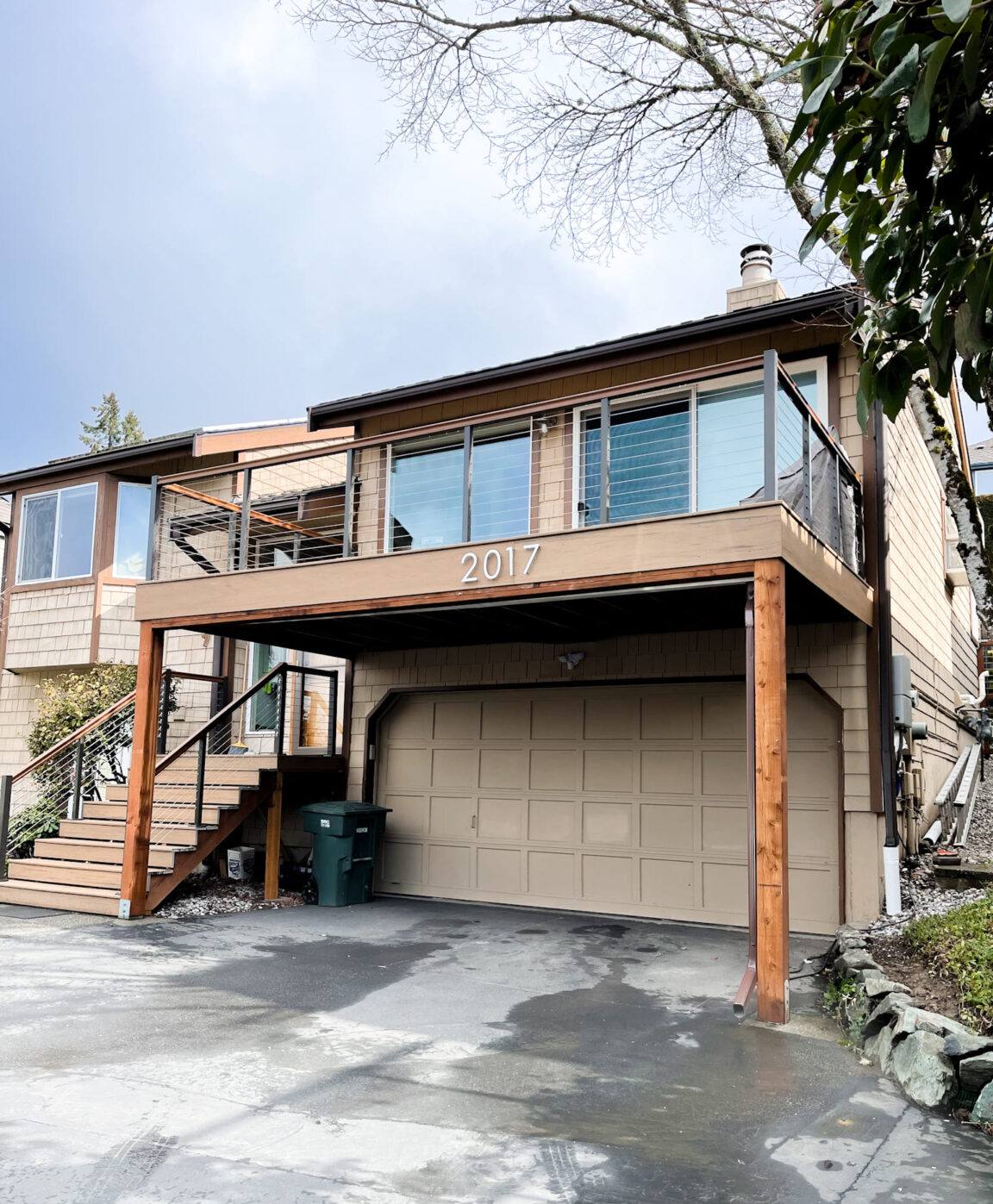
What Local Homes Actually Need From a Deck
Most Puget-area homes we work on share a few things in common: partial tree cover that keeps surfaces damp longer after rain, sloped or uneven yards typical of Bellingham's terrain, and a strong desire for outdoor living space that doesn't demand constant upkeep. That combination points toward a specific set of priorities:
- Fast water shedding — flat spots and low points collect standing water, which is where rot and moss both start
- Ventilation underneath the deck so framing can dry out between storms instead of staying wet for weeks
- Corrosion-resistant hardware, since salt air accelerates rust on cheaper fasteners and connectors
- A surface material that resists moss and algae growth in shaded, low-sun areas of the yard
- Railings and stairs built to handle year-round use, not just a few dry summer months
A deck designed around these priorities costs a little more attention up front and pays that back in fewer repairs, less pressure-washing, and a structure that doesn't need to be rebuilt within a decade.
Choosing the Right Decking Material
There's no single "best" decking material — there's a best material for a given budget, sun exposure, and maintenance appetite. Here's how the common options actually compare for a shaded, damp, salt-air lot:
| Material | Moisture & Moss Behavior | Maintenance | Typical Lifespan Here |
|---|---|---|---|
| Pressure-treated wood | Absorbs moisture readily; needs sealing to resist moss and staining | Annual cleaning, re-seal every 1-2 years | 10-15 years with upkeep |
| Cedar | Naturally rot-resistant but still needs sealing in shaded, damp spots | Seal or stain every 1-2 years | 15-20 years with upkeep |
| Composite decking | Won't rot, but can grow surface algae/moss film in constant shade if not cleaned | Occasional wash, no sealing | 25+ years |
| PVC / capped composite | Best moisture and moss resistance of the group; sheds surface water fastest | Occasional wash | 25-30+ years |
We're honest with homeowners about trade-offs rather than pushing one product line. Wood costs less up front and looks great when maintained, but in a shaded Puget yard it needs real, consistent upkeep to avoid moss and soft spots. Composite and PVC cost more initially but remove most of the maintenance burden — which matters if the deck sits under trees or on the shaded side of the house where sun never fully dries the surface.
Hardware and Fasteners Matter More Here Than People Think
Standard galvanized fasteners can start showing rust streaks within a couple of seasons this close to salt air. We use stainless steel or heavy-duty coated fasteners rated for coastal exposure, along with corrosion-resistant joist hangers and structural connectors. It's a small cost difference on the invoice and a large difference in how the deck looks and performs a decade out.
The Foundation Work Nobody Sees
The surface boards are the part everyone notices, but the parts that determine whether a deck lasts are underneath and behind it:
Footings
Footings need to go below the local frost line and bear on solid, undisturbed soil — not fill dirt or old footing remnants from a prior structure. On sloped Bellingham lots, this often means deeper or stepped footings rather than a uniform grid.
Ledger Board Flashing
Where the deck attaches to the house, the ledger board and its flashing are the single most common failure point we see on older decks in wet climates. Water that gets behind an improperly flashed ledger doesn't just rot the ledger — it can migrate into the house's rim joist and wall framing. Correct flashing (metal flashing under the siding, a water-resistant barrier behind the ledger, and proper fastener spacing) is non-negotiable on every deck we attach to a house.
Joist Spacing and Airflow
Tighter joist spacing than the material's minimum spec adds stiffness and reduces bounce, but the framing also needs enough clearance underneath for air to move and moisture to escape. A deck built too close to the ground, without ventilation, stays damp longer after every rain — which is exactly the condition moss and rot need.
Our Deck Building Process
- On-site assessment — we look at slope, drainage patterns, sun exposure, and how the deck will tie into the house before recommending a design
- Design and material selection — sized to the yard and budget, with an honest conversation about wood versus composite trade-offs for that specific spot
- Permitting — pulling the required permit and scheduling inspections with the local jurisdiction before work begins
- Footings and framing — footings set below frost depth, ledger flashed correctly, joists and beams sized for the actual load and span
- Decking and railing installation — boards fastened with corrosion-resistant hardware, railings built to current code height and baluster spacing
- Final walkthrough — checking level, fastener seating, railing rigidity, and drainage before we consider the job done
We don't skip steps to shave a day off the schedule. A deck that looks finished but has a rushed ledger connection or under-sized footing is a deck that causes problems within a few wet seasons — problems that cost far more to fix than they would have to do right the first time.
Drainage, Moss, and Salt Air: Designing Around the Climate
Three climate factors drive most of our design decisions on Puget-area decks:
Driving Rain
Wind-driven rain in this part of Whatcom County doesn't just fall straight down — it gets pushed sideways into ledger connections, under railing caps, and into any gap in flashing. We detail every transition point (ledger, post bases, stair stringers) assuming rain will hit it from an angle, not just from above.
Moss and Algae
Shaded areas that stay damp for days are where moss takes hold fastest. Beyond material choice, we grade decking surfaces with a slight pitch away from the house so water doesn't pool, and we space boards correctly for drainage and airflow between them.
Salt Air Corrosion
Beyond fasteners, this affects our choice of railing hardware, post bases, and any exposed metal brackets. Coastal-rated hardware costs more but avoids the rust streaks and weakened connections that show up within a few years when standard-grade hardware is used near the water.
Permits and Local Code Considerations
Most deck projects in and around Bellingham require a building permit, particularly for decks attached to the house or built above a certain height. Permitted work also means required inspections — typically at the footing stage and again at final completion — which catches problems like under-sized footings or missing flashing before they're buried under decking boards. We handle the permit application and inspection scheduling as part of the job so homeowners aren't navigating that process alone.
Deck Maintenance Checklist for Puget-Area Homes
Whatever material a deck is built from, a little seasonal attention goes a long way in this climate:
- Clear leaves and debris from between boards and off the surface before fall rains set in
- Check and clean gutters and downspouts near the deck so runoff isn't draining onto or under it
- Inspect the ledger board area and post bases once a year for staining, soft spots, or rust
- Wash the surface at least once a year to remove early moss and algae growth before it takes hold
- Reseal or restain wood decking on the manufacturer's recommended schedule — don't wait until it looks bad
- Tighten or replace any fasteners showing rust before they fail under load
- Confirm railings and stair connections are still rigid, especially after a hard winter
Why Hire a Crew That Already Works Puget
Deck building isn't complicated in the abstract — footings, framing, decking, railing. What's harder to get right without local experience is knowing which details actually matter for this specific climate: how deep footings need to go on Bellingham's clay-heavy soils, which fastener grade actually holds up near salt air, and where moss takes hold first on a shaded lot. A crew that builds decks across a range of climates might default to standard specs that are fine in a dry inland town but undersized for driving rain and a long moss season. We build here, for this climate, and we design every deck assuming it needs to survive a Whatcom County winter, not just look good for a summer photo.
If you're planning a new deck or replacing one that's showing its age, we're happy to take a look and talk through what makes sense for your yard, your budget, and how you actually plan to use the space. Reach out for a free, no-pressure estimate using the form below.