 Bellingham Roofing
 Building Decks in York That Actually Hold Up to Bellingham Weather
York is one of Bellingham's older, established neighborhoods, and a lot of the homes here have outdoor space that was built decades ago for a different climate reality — or for a deck that was never really engineered for one. When we get called out to York for a custom deck, we're usually looking at one of two situations: a homeowner replacing a tired, aging structure that's showing its age, or someone adding outdoor living space to a home that never had it. Either way, the approach has to account for what Whatcom County weather actually does to wood, fasteners, and footings over time — not just what looks good on installation day.
A deck in York isn't a cosmetic add-on. It's a structure that sits outside year-round, absorbs rain for eight or nine months, picks up salt-laden air off Bellingham Bay, and spends a good chunk of late fall through spring damp enough to grow moss on any surface that doesn't drain or dry properly. Building for that environment is a different job than building a deck in a dry inland climate, and it shows in the details — fastener choice, footing depth, ledger flashing, decking material, and even the gap spacing between boards.
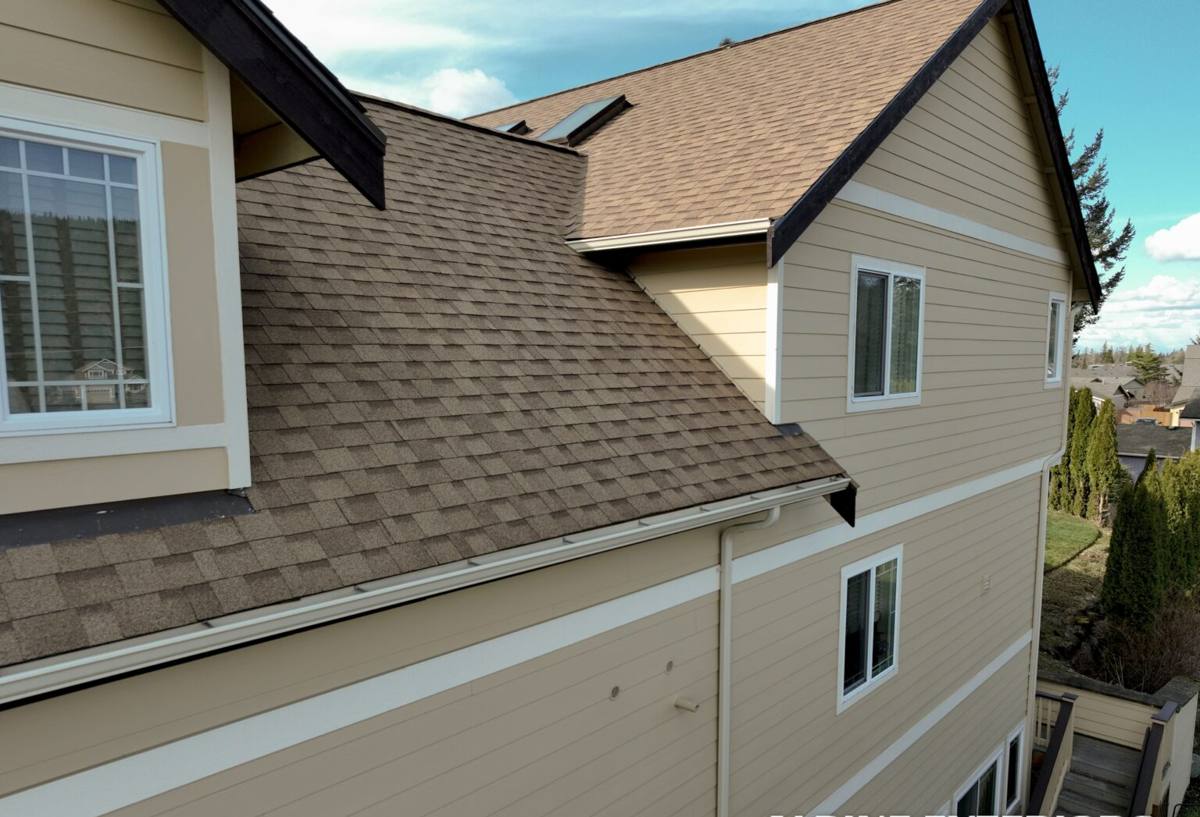
What Bellingham's Climate Actually Does to a Deck
Salt Air and Metal Corrosion
Bellingham Bay isn't the open ocean, but it's close enough that homes within a few miles of the water — including much of York — deal with a steady low-level dose of salt in the air. Over years, that salt accelerates corrosion on anything metal: joist hangers, screws, bolts, post bases. A deck built with standard interior-grade or even basic exterior-grade hardware can start showing rust streaks and weakening connections well before the wood itself is due for replacement. The fix isn't complicated, but it does require using the right-rated hardware from the start rather than trying to compensate later.
Driving Rain and Water Intrusion
Whatcom County rain doesn't always fall straight down. Wind-driven rain pushes water sideways into ledger boards, under flashing, and into any gap where two materials meet. On a deck, the ledger board — where the deck attaches to the house — is the single most common point of long-term water damage if it's not flashed correctly. We've seen more rot behind ledger boards in this region than almost any other failure point, and it's almost always traceable to a flashing detail that was skipped or done wrong the first time.
Moss Season
From roughly October through April, anything horizontal and shaded in Bellingham grows moss if it doesn't get sun or airflow. Decking surfaces, especially under overhangs or near fences and shrubs, are prime moss territory. Beyond looking bad, moss holds moisture against the decking material and turns a dry surface into a slip hazard the moment it rains. Board spacing, surface texture, and even deck orientation all affect how bad this gets over a Bellingham winter.
What a Correctly Built Deck Involves in This Climate
A deck built for York needs to get several structural details right that aren't always obvious from looking at the finished product:
- Footings below frost depth and sized for the actual soil — Whatcom County soil varies block to block, and older neighborhoods sometimes have fill soil from past grading that needs deeper or wider footings than a new-construction lot.
- Ledger flashing done as a system — proper flashing, house wrap integration, and a small air gap or drainage path so any water that does get behind the ledger has somewhere to go besides into the framing.
- Corrosion-resistant or stainless fasteners for anything near the water or exposed to weather year-round, not just at connection points that are easy to inspect later.
- Proper board gapping for drainage and airflow, sized to the decking material — composite and wood behave differently as they expand and contract with moisture.
- Post bases that keep wood off standing water, especially important on lots with drainage issues or where the deck sits low relative to grade.
- Structural connections rated for our snow and wind loads, not generic hardware sized for a milder or drier region.
Choosing a Decking Material for a York Home
Every material has real tradeoffs here — we'd rather walk you through them honestly than push whatever's easiest for us to install.
| Material | How It Handles Our Climate | Maintenance Reality | Typical Lifespan Here |
|---|---|---|---|
| Cedar | Naturally rot- and insect-resistant, handles moisture well when properly sealed | Needs re-staining or sealing every 2-3 years to resist moss and graying | 15-20+ years with upkeep |
| Pressure-treated pine/fir | Budget-friendly, treated for rot resistance, but more prone to warping/cupping in our wet-dry cycles | Regular sealing needed; fasteners and hardware must be rated for treated lumber's chemical content | 10-15 years |
| Capped composite | Excellent moisture and moss resistance, doesn't absorb water like wood | Occasional washing; no staining or sealing | 25-30+ years |
| Uncapped/early-generation composite | Can absorb moisture at cut edges and in humid conditions, more prone to mold in shaded, damp spots | More cleaning required than capped composite | 15-20 years |
For homes in York with mature trees or shaded lots — common in this neighborhood — we generally steer people toward capped composite or well-sealed cedar over uncapped composite or bare pressure-treated boards, simply because moss and moisture are a bigger issue here than in a drier, sunnier part of the state. It's a judgment call based on your specific lot, sun exposure, and budget, not a one-size-fits-all recommendation.
How Our Process Works
1. On-Site Consultation
We look at your existing structure or the space where the new deck will go, check drainage patterns, sun exposure, and how close you are to mature trees or the water. This tells us a lot about what maintenance burden you're signing up for with each material option.
2. Design and Material Selection
We talk through size, layout, railing style, and decking material with honest pros and cons for your specific lot — not just a catalog pitch.
3. Permitting
Most deck projects in Bellingham require a building permit, especially anything attached to the house or built above a certain height. We handle the permit submission and inspection scheduling so you're not stuck navigating City of Bellingham or Whatcom County requirements on your own.
4. Demolition and Site Prep (Replacement Projects)
If we're replacing an existing deck, we assess the ledger area and framing underneath as soon as the old decking comes off — this is often when hidden rot or past water damage shows up, and we'll walk you through it before proceeding rather than surprising you at the end.
5. Construction
Footings, framing, ledger flashing, decking, and railing, built to code and to the details above — not just to "pass inspection" but to actually hold up through a Bellingham winter.
6. Final Walkthrough
We go over the finished deck together, including basic care specific to whatever material you chose, so you know what to expect in year one versus year five.
Permits and Code in Bellingham and Whatcom County
Deck permitting requirements depend on height, size, and attachment to the structure, and requirements can differ slightly between City of Bellingham jurisdiction and unincorporated Whatcom County parcels. Rather than guess at what applies to your specific property, we pull the requirements for your address before we design anything, so the deck we build is the deck that will actually pass inspection — not a redesign after the fact. Skipping or fudging this step is one of the most common reasons homeowners run into problems reselling a house with an unpermitted deck attached.
Signs Your Current Deck Needs Attention
If you already have a deck in York and are trying to decide between repair and full replacement, a few warning signs tend to show up first:
- Soft or spongy spots underfoot, especially near the house or stair stringers
- Rust staining running down from screw heads or hardware
- Persistent moss or algae that comes back within weeks of cleaning
- Gaps or separation where the ledger board meets the house siding
- Visible cupping, warping, or splitting in individual boards
- Railing posts that wiggle or feel less rigid than they used to
Any one of these on its own might just need a repair. Several at once, especially combined with an older structure, usually points to underlying moisture damage that's worth a full inspection before you spend money patching the surface.
Why Hiring a Crew That Already Works in York Matters
A lot of deck problems we get called to fix started with a crew that built something perfectly reasonable for a drier climate and didn't account for Bellingham's specific combination of salt air, sideways rain, and a long wet season that keeps everything damp for months at a time. Working regularly in this area means we already know which fastener grades hold up near the water, which ledger flashing details actually keep water out during a real Pacific Northwest storm, and how local permitting offices want projects submitted. That familiarity translates into fewer surprises during construction and a deck that's built for the winters it will actually face, not a generic spec sheet.
If you're weighing a new deck or a replacement for your York property, we're happy to take a look and give you a straight, no-pressure estimate — including an honest read on materials, what your specific lot will demand, and what the permitting process looks like for your address. There's no obligation, and we'd rather walk you through the real tradeoffs up front than sell you something that doesn't fit the site. Use the form below to get started.