 Bellingham Roofing
 Barkley homes see the same weather the rest of Bellingham does — long stretches of driving rain, salt-tinged air moving in off the water, and a moss season that seems to start earlier every year. A deck built without that reality in mind starts showing problems fast: soft spots underfoot, black streaking on the boards, fasteners bleeding rust, and railings that wobble because the posts never had a real chance to dry out between storms. A deck built for Whatcom County conditions handles all of that without drama, year after year.
We build and repair custom decks for homeowners throughout the Barkley area, and we approach every project the same way: understand how water moves across the site, choose materials that actually suit our climate, and put the fasteners and flashing details in the right places the first time. That's the difference between a deck that needs babysitting and one you just use.
What Bellingham's Climate Does to a Deck
Before we talk about design or materials, it's worth understanding what a deck in Barkley is actually up against over the course of a year.
Moisture That Never Fully Leaves
Whatcom County doesn't get brutal winters, but it gets persistent dampness — weeks of drizzle, overcast skies that slow drying time, and shoulder seasons where a deck surface can stay wet for days at a stretch. Wood that can't dry out between rain events is wood that's setting up for rot, especially anywhere two pieces of lumber meet face to face.
Moss and Algae Growth
Shaded decks, north-facing decks, and decks tucked under mature trees are especially prone to moss and algae buildup. Beyond looking bad, a mossy deck surface is a slip hazard and it holds moisture against the wood longer than bare boards would. Board spacing, surface texture, and how much sun a deck gets all factor into how much moss pressure a given deck will face.
Salt Air and Corrosion
Barkley isn't right on the water, but Bellingham's proximity to Puget Sound means the air here carries more salt than an inland town would. Over years, that accelerates corrosion on cheap fasteners, connectors, and hardware. It's a slow process, but it's a real one, and it's why we don't cut corners on the metal that holds a deck together.
Freeze-Thaw Cycling
Whatcom County doesn't see deep freezes often, but it does see repeated cold snaps and thaws, particularly in shaded or low-lying yards. Water that gets into a crack, a fastener hole, or a poorly sealed joint can freeze, expand, and widen that opening a little more each cycle. Over a few winters that adds up.
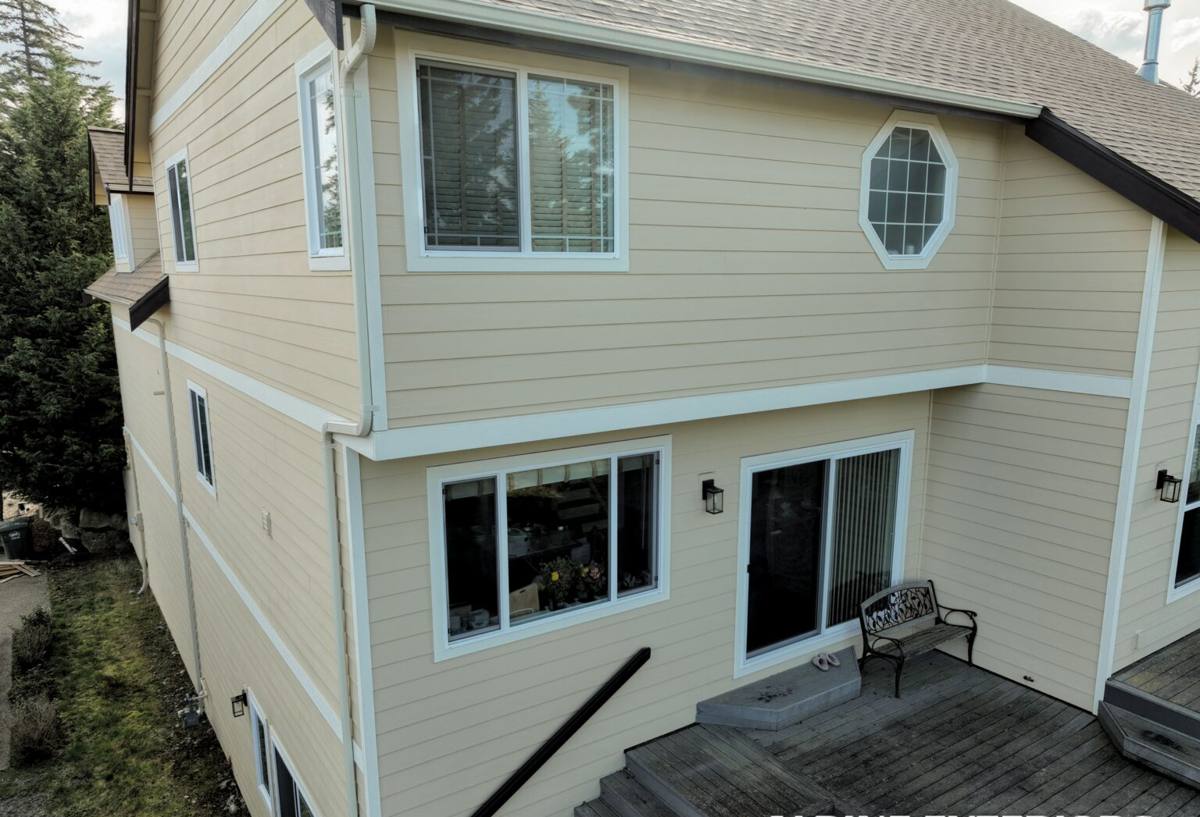
What a Deck Built for This Area Needs
None of the issues above are exotic — they're just the ordinary cost of building outdoors in a wet, marine-influenced climate. A correctly built deck accounts for each one.
- Framing lumber that's rated for ground contact or exposure where it's called for, not just "treated" in name only
- Stainless or hot-dip galvanized fasteners and structural connectors — not the cheaper coated fasteners that start showing rust streaks within a couple of seasons
- Proper flashing at the ledger board where the deck attaches to the house, so water can't work its way behind the siding
- Gapping and spacing between boards that allows real airflow and drainage, not just a look that matches on installation day
- Post bases that hold wood posts off the concrete rather than letting them sit in standing water
- A structural design that accounts for our snow load and wind exposure, not a generic spec pulled from a warmer climate
Decking Material Options for Barkley Homes
There's no single "right" decking material for every home — it depends on budget, how much maintenance you're willing to do, and how the deck will be used. Here's how the common options compare for our specific climate.
| Material | Moisture Performance Here | Maintenance | Typical Lifespan |
|---|---|---|---|
| Pressure-treated wood | Good if properly sealed and re-sealed; prone to moss without upkeep | Annual cleaning and re-staining/sealing | 15-20 years |
| Cedar | Naturally rot- and insect-resistant; still needs sealing in our rain | Sealing every 1-2 years to hold color and resist moss | 20-25 years |
| Composite decking | Excellent — doesn't absorb water or rot; can still get slippery with moss film | Periodic washing; no staining or sealing | 25-30+ years, often warrantied |
| PVC decking | Excellent — fully moisture-resistant | Lowest maintenance of the group | 25-30+ years |
We install all of these and will tell you honestly which one fits your situation. Composite and PVC cost more upfront but make sense for homeowners who want to spend weekends using the deck instead of maintaining it. Cedar and treated wood cost less initially and give a more traditional look, but they need real, consistent upkeep in our climate to reach their full lifespan — skip a season of sealing here and there and you'll see the difference in how the wood ages.
Our Process, Start to Finish
1. On-Site Assessment
We walk the site with you, look at drainage, sun exposure, existing structure (if it's a rebuild), and how you actually plan to use the space — dining, grilling, a hot tub, quiet mornings with coffee. All of that shapes the design and structural requirements.
2. Design and Material Selection
We talk through decking material, railing style, and layout, and give you an honest read on trade-offs — cost now versus maintenance later, look versus longevity. No pressure toward the most expensive option; we'll tell you what actually fits your goals.
3. Permitting
Most new decks and significant rebuilds in Whatcom County and the City of Bellingham require a building permit, particularly for anything attached to the house or elevated above a certain height. We handle that process so you don't have to chase it down yourself.
4. Demolition (If Applicable)
For rebuilds, we remove the old structure and inspect the ledger board area and any framing that will remain, since hidden rot at the house connection is one of the most common issues we find once the old boards come off.
5. Framing and Structural Work
This is the part nobody sees once the deck is finished, and it's the part that matters most. Correct footings, ledger flashing, joist spacing, and hardware selection all happen here.
6. Decking, Railing, and Finish Work
Boards, railings, stairs, and any built-ins go in last, with attention to consistent spacing and clean fastening patterns.
7. Final Walkthrough
We go over the finished deck with you, explain any maintenance the material you chose requires, and make sure you're clear on what to expect season to season.
Rebuild or Repair? How to Tell
Not every aging deck needs to come out entirely. Sometimes a repair — replacing a few boards, addressing a soft spot, upgrading corroded hardware — extends the life of an otherwise sound structure. Other times, the framing itself has been compromised and a rebuild is the honest recommendation. A few signs point toward rebuild territory:
- Soft, spongy, or spring-feeling spots in the decking or framing underneath
- Visible rot at the ledger board where the deck meets the house
- Posts that have shifted, leaned, or show rot at the base
- Railings that flex or feel loose when pushed
- Fasteners that are heavily rusted or corroded throughout the structure
- A structure that predates current code requirements for ledger attachment and guardrails
If you're not sure which category your deck falls into, that's exactly what a free assessment is for — we'll give you a straight answer rather than pushing toward the bigger job.
Railings, Stairs, and Code Requirements
Railings and stairs aren't just design details — they're safety-critical and governed by building code, particularly guardrail height and baluster spacing on any deck elevated above a certain height. Whatcom County and City of Bellingham permitting will check these details on new builds and major rebuilds. We build to code as a baseline, then work with you on the railing style — cable, traditional wood, metal, or glass panel — that fits the look of your home.
Maintaining a Deck Once It's Built
Whatever material you choose, a little seasonal attention goes a long way in this climate. General guidance for Barkley-area decks:
- Clear leaves and debris from between boards regularly, especially in fall, so moisture doesn't sit trapped against the wood
- Wash the surface at least once a year to knock back moss and algae before it takes hold
- Check and re-seal or re-stain wood decking on the schedule the product calls for — don't wait until it's visibly gray and weathered
- Inspect fasteners and hardware periodically for rust or corrosion, particularly on older builds
- Keep gutters and downspouts near the deck clear so runoff isn't dumping directly onto or under the structure
Composite and PVC owners get an easier version of this list, but even low-maintenance materials benefit from an annual wash to keep the surface from getting slick with moss film.
Why Local Experience on Your Deck Matters
A crew that already works in Barkley and the surrounding Bellingham neighborhoods knows how the local terrain, tree cover, and exposure patterns affect a deck before we even start digging footings. We know which yards hold moisture longer, which sites get hit harder by wind off the water, and how to size a structure so it holds up under our specific mix of rain, damp cold, and occasional snow load — not a generic spec sheet written for a drier climate. That local knowledge shows up in small decisions throughout the build that add years to a deck's life.
If you're planning a new deck or trying to figure out whether your current one needs repair or replacement, we're happy to take a look and give you a straightforward, no-pressure estimate. The form below is the fastest way to get started.