 Bellingham Roofing
 Board & Batten in Happy Valley: A Look That Has to Work as Hard as It Looks
Board and batten siding has a strong following in Happy Valley, and it's easy to see why. The vertical lines suit the mix of craftsman, farmhouse, and modern homes tucked into this part of Bellingham, and the pattern reads as clean and intentional from the street. But a board and batten look is only as good as what's behind it. On the South Bellingham side of Whatcom County, siding sits under a near-constant rotation of marine moisture, wind-driven rain, and shaded, slow-drying exposures — and a vertical siding pattern with more seams than a standard lap job has more places for water to find a way in if it's not built correctly.
This page covers what board and batten siding actually needs to hold up in Happy Valley, what we build into every installation, and why we only do this work in James Hardie fiber cement rather than the vinyl, engineered wood, or real wood versions of the same look.
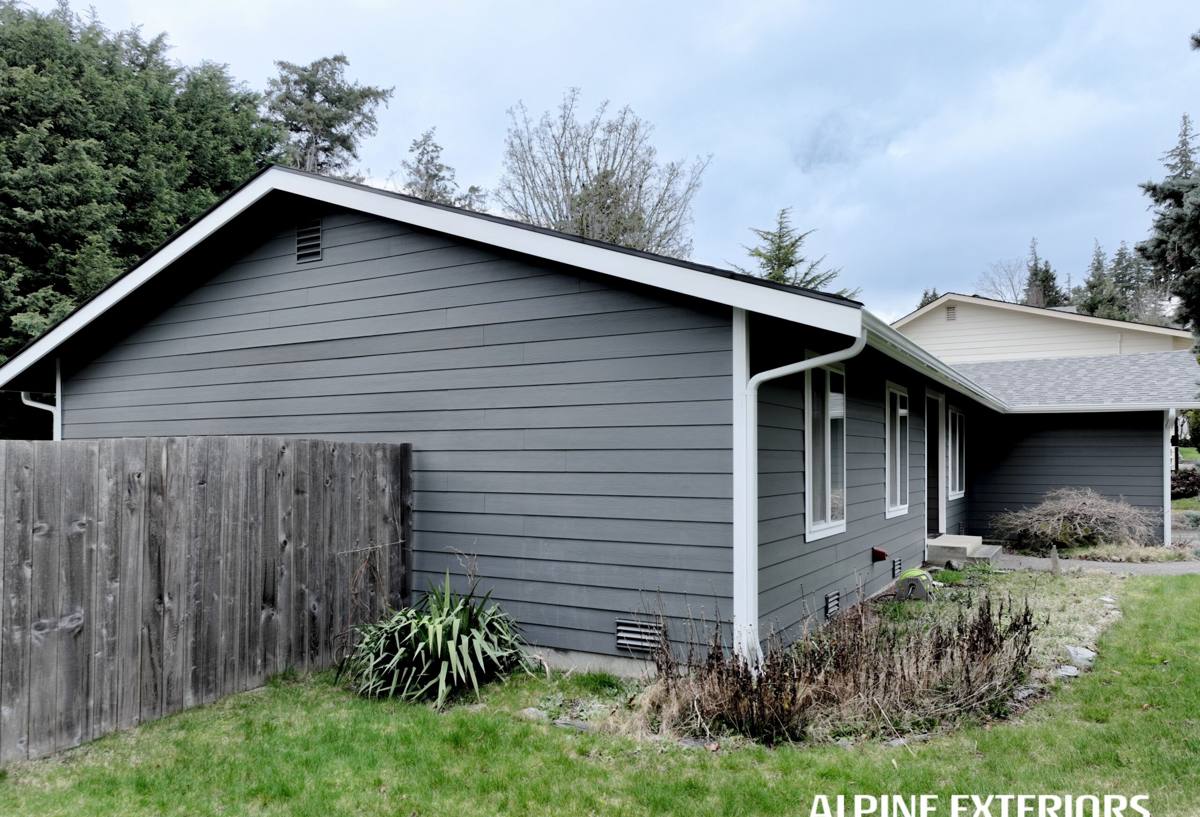
What Bellingham's Climate Does to Vertical Siding
Happy Valley sits close enough to the water and to Whatcom County's marine air pattern that homes here deal with a specific combination of stresses year-round:
- Salt-laden air that accelerates corrosion on exposed fasteners, cheap trim caps, and any metal flashing that isn't rated for the exposure.
- Driving, wind-pushed rain rather than straight-down rain, which forces water sideways into every vertical seam and batten joint if there isn't a real drainage plane behind the siding.
- Long stretches of shade and damp air under mature tree cover common to this part of Bellingham, which slows drying time and extends the season where moss, algae, and mildew can take hold on north- and west-facing walls.
None of that is unique to Happy Valley by itself. What matters is the combination, applied to a siding pattern — board and batten — that has more vertical joints per square foot than a horizontal lap profile. Every one of those joints is a decision point: get the gap, the fastening, and the flashing right, and the wall sheds water and dries fast. Get it wrong, and you're trapping moisture behind the very boards that are supposed to be keeping it out.
Why We Only Install Board & Batten in James Hardie Fiber Cement
Board and batten is available in vinyl, engineered wood (like LP SmartSide), real cedar, and James Hardie fiber cement. We install it exclusively in James Hardie, and it's worth being direct about why.
Vinyl vertical panel systems handle rain reasonably well when new, but they're a thin, flexible material that expands and contracts more than fiber cement, which opens gaps at the very seams that need to stay tight. In driving rain, those gaps are exactly where water gets pushed in. Real wood board and batten looks excellent on day one, but true cedar in a damp, shaded, salt-air climate needs a disciplined repainting and caulking schedule to avoid rot at the battens and board bottoms — a maintenance commitment most homeowners underestimate until the first repaint bill arrives. Engineered wood products use a wood-fiber core that performs well when detailed correctly, but they're more sensitive to installation error and prolonged moisture exposure than fiber cement, and repair after moisture intrusion is more involved.
James Hardie fiber cement doesn't expand and contract the way vinyl does, isn't organic like real wood, and comes with a factory-applied ColorPlus finish that doesn't need repainting on the schedule wood does. It's non-combustible, holds paint and caulk lines better over time, and Hardie's HZ product lines are engineered for the wet, mixed climate zones the Pacific Northwest falls into. That's the whole reason we standardized on it: fewer of the failure points that this specific climate goes looking for.
What a Correct Board & Batten Installation Actually Involves
Board and batten looks simple from the curb — vertical boards, battens over the seams — but the assembly behind the surface is where the job is won or lost. Every project we run in Happy Valley includes the following, regardless of home size or budget.
The Rainscreen Gap
Fiber cement siding installed flat against the weather barrier with no airspace behind it will trap whatever moisture gets past the seams, and in a shaded, damp neighborhood that moisture doesn't dry out on its own schedule — it dries on the wall's schedule, which can be slow. A furred-out rainscreen gap behind the siding gives that moisture somewhere to drain and air to circulate, which matters more here than in a drier inland climate.
Fastening and Batten Spacing
Board and batten depends on consistent batten spacing and correct fastener placement into solid backing, not just into sheathing. Fasteners driven at the wrong location or spacing become a stress point where boards can crack or pull loose in wind, and in salt air, the wrong fastener material corrodes and stains the siding around it well before the siding itself would ever fail.
Flashing, Trim, and Butt Joints
Every horizontal butt joint, window and door transition, and the bottom termination near grade needs flashing detail that directs water out and away, not just caulk that's expected to hold forever. Caulk is a backup, not the primary defense — flashing and lap sequencing are.
| Detail | Why it matters in Happy Valley |
|---|---|
| Rainscreen / drainage gap | Lets moisture and wind-driven rain drain and dry instead of sitting behind the siding in shaded, slow-drying exposures |
| Corrosion-resistant fasteners | Salt air accelerates corrosion of the wrong fastener grade, leading to staining and loosened boards over time |
| Batten and board fastening schedule | Keeps vertical joints tight under wind load so seams don't open and admit driving rain |
| Flashing at butt joints and openings | Directs water out of the wall assembly rather than relying on caulk alone in a high-moisture climate |
| Factory-finished, sealed cut edges | Protects against moss and algae staining during the long damp season under tree cover |
Sealed and Primed Cut Edges
Every cut end of a Hardie board exposes raw fiber cement that needs to be sealed before it's installed, not left bare and hoping the caulk covers it. This is a small, easy-to-skip step that has an outsized effect on how the siding performs in a climate this wet — it's one of the details we don't treat as optional.
Board & Batten Compared to Other Siding Options for This Neighborhood
Homeowners in Happy Valley often ask how board and batten stacks up against a standard horizontal lap profile, or how James Hardie compares to the vinyl and engineered wood versions of vertical siding. The honest answer depends on what you're weighing — appearance, maintenance, or long-term cost.
| Siding Option | Moisture Performance Here | Maintenance Burden | Fire Resistance |
|---|---|---|---|
| James Hardie board & batten (fiber cement) | Strong, with correct rainscreen and flashing detail | Low — factory finish, no repainting cycle | Non-combustible |
| Vinyl vertical panel | Moderate — seams open more under expansion/contraction | Low, but limited repair options if damaged | Combustible |
| Real wood (cedar) board & batten | Requires disciplined upkeep to avoid rot at joints | High — repainting, caulking, and inspection schedule | Combustible |
| Engineered wood (e.g. LP SmartSide) board & batten | Good when detailed correctly, sensitive to installation error | Moderate — periodic repainting and joint inspection | Combustible |
Horizontal lap siding will always have fewer vertical seams than board and batten, which is a genuine trade-off — board and batten is a look, not the lowest-maintenance profile available. What we can control is making sure the seams it does have are built to perform in this climate, which is where the installation details above matter more than the brand name on the board.
Our Process for a Happy Valley Project
We run board and batten projects in Happy Valley the same disciplined way every time, because skipping a step is exactly how a good-looking installation turns into a moisture problem two winters later.
- On-site assessment — we look at wall orientation, tree cover, drainage around the foundation, and existing moisture damage before quoting anything.
- Tear-off and sheathing inspection — old siding comes off and the sheathing underneath gets checked for rot or soft spots before anything new goes up.
- Weather barrier and rainscreen install — a correctly lapped weather-resistive barrier and furring for drainage go on before a single board is hung.
- Flashing at every penetration — windows, doors, and butt joints get flashed before trim and battens close them in.
- Board and batten installation — boards, then battens, fastened to spec with corrosion-resistant fasteners and sealed cut edges throughout.
- Final walkthrough — we check batten lines, caulk joints, and trim details with you before calling the job finished.
Why Local Experience in Happy Valley Matters
A crew that only occasionally works this side of Bellingham will build to a generic spec. A crew that works Happy Valley regularly already knows which walls sit in shade most of the day, which lots hold onto moisture longer because of tree cover and slope, and which orientations catch the wind-driven rain hardest. That's the difference between a rainscreen detail that's "in the manual" and one that's actually sized and placed for the wall in front of us.
Local, repeat experience also means fewer surprises with permitting and inspection through the City of Bellingham or Whatcom County, because we're not learning the process on your project. And practically, a local crew is one you can actually reach five years from now if you have a question about a trim detail or want a second opinion on a maintenance item — not a name that only shows up for the one job.
Maintaining Board & Batten Siding in This Climate
James Hardie board and batten is low-maintenance compared to wood, but "low-maintenance" doesn't mean "no maintenance" in a climate that runs a long moss season. A short annual routine keeps the siding — and the warranty — in good shape.
- Rinse siding annually (garden hose pressure, not a pressure washer) to clear moss spores, pollen, and grime before they take hold, especially on shaded north- and west-facing walls.
- Check caulk lines at trim, window returns, and butt joints each fall and have any cracked or shrunken caulk redone before the wet season sets in.
- Keep gutters clear and downspouts directed away from the wall — overflow onto siding is one of the most common causes of localized moss and staining.
- Trim back branches and shrubs that hold moisture against the wall or keep a section of siding in constant shade.
- Watch for chalking, fading, or lifting at seams, and address it early — small issues are inexpensive to fix, ignored ones aren't.
Get an Estimate for Your Happy Valley Home
If you're weighing board and batten for a home in Happy Valley, we're glad to take a look and give you a straight answer on what your walls need — no pressure, no upsell to a product we don't stand behind. Use the form below to request a free estimate.