 Bellingham Roofing
 Board & Batten in Fairhaven: A Style That Has to Earn Its Keep
Board and batten has always been a favorite look in Fairhaven — the vertical lines suit the neighborhood's mix of historic character and craftsman-influenced homes, and the strong shadow lines hold up well against the grey skies that roll in off Bellingham Bay most of the year. But in this part of Whatcom County, board and batten siding is not just a style choice. It's a system that has to manage water, salt, and organic growth better than almost any other siding profile, because the vertical battens create dozens of extra seams and transitions compared to standard lap siding.
We install board and batten siding exclusively in James Hardie fiber cement, and we've built our installation process around what Fairhaven homes specifically face: proximity to salt water, heavy driving rain off the Sound, and a moss season that can run eight months out of the year in shaded, north-facing exposures. Get the details right and board and batten is one of the most durable, attractive sidings you can put on a home here. Get them wrong, and every one of those vertical seams becomes a place for water to sit.
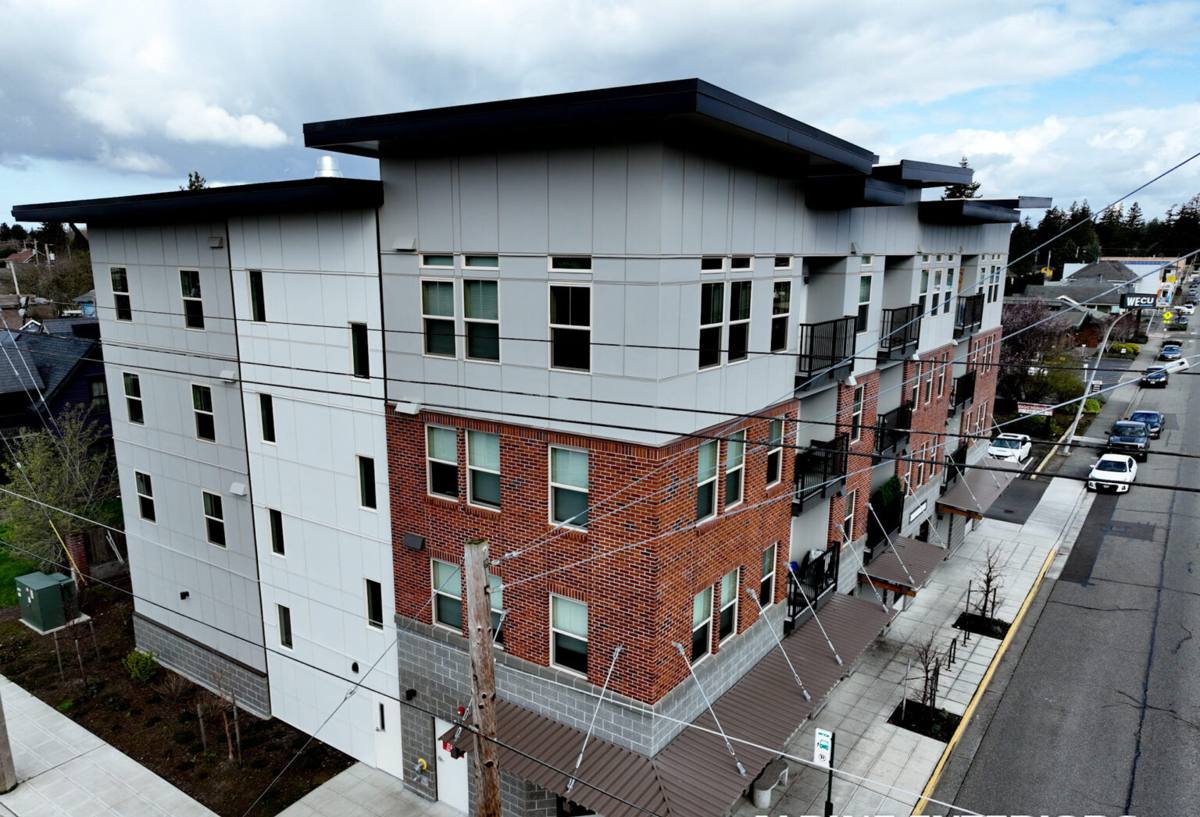
What Fairhaven's Climate Actually Does to Siding
Salt air and marine moisture
Fairhaven sits close enough to Bellingham Bay that homes in and around the neighborhood deal with a steady drift of salt-laden air, especially on west- and south-facing walls. Salt air accelerates corrosion on exposed fasteners and metal flashing, and it also holds moisture against building surfaces longer than drier inland air would. Siding materials and fasteners that aren't rated for a marine-adjacent environment tend to show their weaknesses here first — chalking, streaking, and corrosion around nail heads and trim joints.
Driving rain
Storms coming off the water don't just fall straight down — wind-driven rain gets pushed sideways into wall assemblies, which is exactly the condition vertical board and batten needs to be detailed for. Every batten joint, every panel seam, and every window and door transition is a potential entry point if it isn't flashed and sealed correctly.
A long moss season
Bellingham's damp, mild winters and shaded lots — common in older, tree-covered Fairhaven yards — create ideal conditions for moss and algae growth on north-facing and heavily shaded walls. Moss holds moisture against the siding surface far longer than open sun exposure would, which is hard on any material that isn't dimensionally stable or that absorbs water into its substrate.
What Correct Board & Batten Installation Actually Involves
Board and batten is often installed as vertical panels (typically 4x8 or 4x9 sheet stock) with narrow battens covering the seams between panels, or as individual boards spaced with battens over the gaps. Either way, the assembly behind the visible surface matters more than the surface itself.
- Rainscreen gap: A furring strip or drainage mat behind the panel creates an air gap so any moisture that does get past the surface can drain and dry out instead of sitting against the wall sheathing.
- Weather-resistive barrier: A continuous, properly lapped water-resistive barrier goes behind the furring, with all seams taped and integrated with window and door flashing.
- Batten spacing and fastening: Battens need to land on framing or furring with corrosion-resistant fasteners driven to the manufacturer's specified depth — overdriven or underdriven fasteners are one of the most common causes of early siding failure.
- Panel and batten joints: Vertical joints, corners, and butt seams need to be flashed or caulked with a product rated for the exposure, not just caulked and painted over.
- Bottom edge and flashing details: The transition where siding meets foundation, decks, and roof lines needs kick-out flashing and proper clearance so water sheds away from the wall rather than wicking up into the panel edge.
- Ground and hardscape clearance: Manufacturer-specified clearance from grade, patios, and roofing keeps the bottom edge of the siding from sitting in standing water or splash-back.
None of this is visible once the job is finished, which is exactly why it's the part that gets cut corners on lower-bid jobs. A board and batten wall can look identical from the curb whether it was installed with a rainscreen and correctly flashed seams, or without — the difference only shows up five to ten years later.
Why We Use James Hardie for Board & Batten
We install James Hardie fiber cement exclusively, and for board and batten specifically that means HardiePanel vertical siding paired with HardieTrim battens, or Hardie's dedicated board and batten profile depending on the look a homeowner wants. A few reasons this matters for a Fairhaven job specifically:
- Climate-engineered HZ formulation: Hardie's HZ5 product line is engineered for the Pacific Northwest's wet, moderate climate, which matters directly for a marine-influenced neighborhood like Fairhaven.
- Non-combustible material: Fiber cement doesn't feed a fire the way wood-based sidings can, which matters for insurance and for peace of mind regardless of coastal exposure.
- Dimensional stability: Fiber cement doesn't swell, cup, or rot the way wood battens and boards can when they stay damp through a long moss season.
- ColorPlus factory finish: A baked-on finish applied under factory conditions holds color and resists the chalking and fading that field-applied paint struggles with in damp, low-sun climates.
- Transferable warranty: Hardie's warranty structure is one of the strongest in the fiber cement category, and it stays with the house if it sells — relevant in a neighborhood where older homes change hands often.
We don't install vinyl, LP SmartSide, cedar, primed spruce, or competing fiber cement brands like Cemplank or Allura. That's a deliberate standard, not a sales pitch — we've made the call that Hardie's combination of moisture performance, factory finish, and warranty backing is what a Fairhaven exterior needs to hold up over decades, not just look good on installation day.
Board & Batten Options: How They Compare for a Fairhaven Home
| Material | Moisture Behavior in Marine Climate | Finish Durability | Long-Term Maintenance |
|---|---|---|---|
| James Hardie fiber cement | Dimensionally stable, doesn't absorb and swell | Factory ColorPlus finish resists chalking/fading | Occasional wash; repaint not needed for many years |
| Cedar boards and battens | Absorbs moisture, prone to cupping and rot in shaded/damp areas | Field-applied stain or paint, fades and needs reapplication | Regular refinishing, moss and mildew treatment |
| Vinyl board and batten panels | Doesn't rot, but can trap moisture behind panels if not detailed properly | Color molded in but can fade and become brittle over time | Low, but cracks/warps in impact or heat and can't be repainted easily |
| LP SmartSide / engineered wood | Wood-based substrate vulnerable to moisture intrusion at cut edges and seams | Factory finish available, but edge sealing is critical | Moderate; edge and seam maintenance is important |
Our Installation Process for Fairhaven Projects
- On-site assessment: We look at wall exposure, existing moisture damage, roofline and deck transitions, and shading patterns that drive moss growth before recommending a scope of work.
- Tear-off and substrate check: Removing the old siding lets us inspect sheathing for rot or hidden moisture damage — common on older Fairhaven homes — and address it before new siding goes up, not after.
- Water-resistive barrier and flashing: We install a continuous barrier and integrate it properly with every window, door, and penetration before any furring or panels go on.
- Rainscreen furring: Furring strips create the drainage gap behind the panel and battens, which is especially important on shaded or west-facing walls that stay damp longer.
- Panel and batten installation: HardiePanel and HardieTrim battens go up to Hardie's fastening specifications, with corrosion-resistant fasteners suited to a marine-influenced environment.
- Seam and edge detailing: All joints, corners, and bottom edges are sealed and flashed according to manufacturer requirements, not generic caulk-and-paint shortcuts.
- Final inspection and walkthrough: We walk the finished job with the homeowner and confirm clearances, flashing, and finish before calling it done.
Living With Board & Batten Siding in Fairhaven
Once it's installed correctly, board and batten in James Hardie fiber cement is a low-maintenance siding, but "low-maintenance" doesn't mean "no attention." A few things are worth staying ahead of, especially given the local moss season and salt exposure:
- Rinse shaded, north-facing walls periodically to keep moss and algae from establishing, especially under trees or in narrow side-yard gaps that don't get much sun or airflow.
- Keep gutters and downspouts clear so water isn't sheeting down wall surfaces or overflowing onto siding during heavy driving-rain events.
- Trim back vegetation and tree limbs that hold moisture against the wall or block airflow across the siding surface.
- Inspect caulking at trim, corners, and penetrations every year or two, since sealant is the one component that ages faster than the fiber cement itself.
- Watch for any staining or discoloration around fastener heads, which can indicate a flashing or fastening issue worth checking early rather than later.
What Board & Batten Typically Costs to Do Right
| Cost Factor | Why It Matters |
|---|---|
| Wall prep and substrate repair | Older Fairhaven homes may need sheathing repair before new siding goes on, which affects overall project cost |
| Rainscreen and furring system | Adds labor and material but is essential for long-term moisture management in this climate |
| Panel vs. individual board-and-batten style | Sheet panel systems with battens are generally more economical than true individual board installations |
| Trim, corners, and flashing detail | More complex rooflines, dormers, and window trim increase both material and labor |
| Color and finish selection | ColorPlus factory colors vs. field-painted finishes affect both upfront cost and long-term touch-up needs |
Exact pricing depends on the size of the home, the condition of the existing wall assembly, and how much trim and detail work the project involves. We provide a specific, written estimate after seeing the home in person rather than quoting a number sight unseen.
Why Local Experience in Fairhaven Matters
A crew that already works in and around Fairhaven understands which walls take the worst of the driving rain, which lots stay shaded and damp long enough to grow moss year-round, and how salt-influenced air behaves differently here than it does even a few miles inland in Bellingham. That local knowledge shapes real decisions — where to add extra flashing attention, which fastener spacing holds up best, and how to sequence a tear-off around this area's weather windows so the wall isn't left exposed to a sudden rain event mid-project.
Board and batten siding rewards a contractor who treats the details behind the panel as seriously as the finished look in front of it. That's the standard we hold every Fairhaven project to, and it's the reason we've committed to installing James Hardie fiber cement only — because in a climate like this one, the material and the installation both have to be right.
If you're considering board and batten siding for a home in Fairhaven, we're happy to walk the property with you, look at your specific exposure and existing siding condition, and put together a clear, no-pressure estimate. Use the form below to get started.