 Bellingham Roofing
 New-Construction Windows Built for Birchwood's Coastal Climate
Birchwood sits close enough to Bellingham Bay that salt air is a daily fact of life for anything metal, wood, or painted on the outside of a house. Add Whatcom County's long wet season, driving rain off the water, and the moss that colonizes anything shaded or north-facing, and you've got a climate that is genuinely hard on window installations that weren't detailed correctly the first time. New-construction windows — the kind installed with a nailing fin directly into a framed rough opening, as opposed to a retrofit unit dropped into an existing frame — give a builder or homeowner the best shot at getting the water management right from day one. But "new-construction" only means the window has a fin; it doesn't guarantee a correct install. We've been called out to Birchwood additions and new builds where the window itself was fine and the flashing sequence around it was not, and that's where the leaks and rot start.
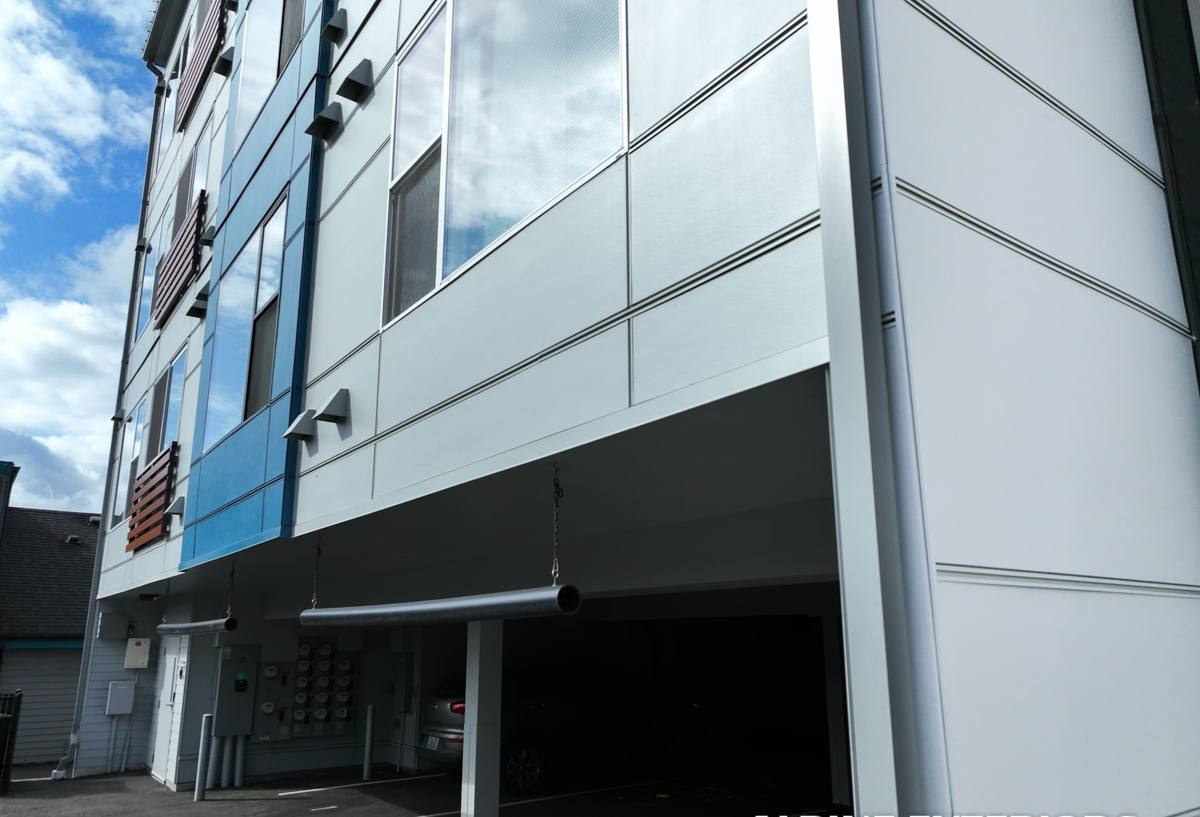
What Birchwood Homes Need From New-Construction Windows
Salt Air and Corrosion
Homes within a few miles of the water deal with airborne salt that accelerates corrosion on unprotected fasteners, aluminum trim, and lower-grade hardware. It's not dramatic — you won't see rust overnight — but over a decade it shows up as pitted screws, chalky aluminum, and window hardware that starts to bind or stick. We spec corrosion-resistant fasteners and hardware for Birchwood installs as a matter of course, not as an upsell, because replacing a $4 screw now is a lot cheaper than replacing a window frame later.
Driving Rain and Water Management
Bellingham doesn't get the heaviest rainfall in the state, but it gets a lot of wind-driven rain off the bay, and wind-driven rain finds every gap a straight-down rain would never reach. That means head flashing, sill pans, and side-leg integration with the water-resistive barrier (WRB) matter more here than they would in a drier, calmer inland climate. A window that's watertight in a lab test can still leak on a Birchwood lot if the flashing laps are backwards or the sill pan wasn't dammed at the ends.
Moss Season and Shaded Lots
Birchwood has plenty of mature tree cover and lots with real shade, which is nice for the yard and rough on anything that stays damp. Moss and algae growth on window sills, trim, and the tops of frames isn't just cosmetic — sustained moisture against wood trim or under-sealed joints is exactly what leads to soft spots and rot over a few seasons. Good detailing at install (drainage gaps, proper slope on sills, the right sealant in the right places) keeps moss from getting a foothold in the first place.
New-Construction vs. Retrofit Windows: Which Applies to Your Project
This distinction matters because it changes the entire scope of the job, not just the window itself.
| Factor | New-Construction (Nail-Fin) | Retrofit / Insert |
|---|---|---|
| Best for | New builds, additions, full wall re-sides down to the studs | Replacing an old window where siding and trim stay in place |
| Water management | Full flashing and WRB integration, built into the wall assembly | Relies on the existing frame and surrounding siding being sound |
| Long-term performance in salt air / driving rain | Stronger, when detailed correctly, because it's a complete system | Good, but only as good as what it's tying into |
| Disruption | More — siding and trim around the opening are affected | Less — often a one-day-per-window swap |
| Typical use in Birchwood | New construction, additions, room bump-outs | Standalone window replacement on an existing wall |
If you're building an addition or a new home in Birchwood, new-construction windows are almost always the right call — you have the wall open anyway, so there's no reason to compromise on the flashing detail. If you're just swapping out a failing window in an otherwise sound wall, a retrofit unit may be the more practical and less invasive option, and we'll say so plainly if that's your situation.
What a Correct New-Construction Window Install Involves
Flashing and Water-Resistive Barrier Integration
Every new-construction window install starts with the rough opening and the sequencing of the WRB (housewrap or building paper) around it. The order matters: sill pan flashing goes in first, dammed at the ends so water can't run out sideways behind the siding; the WRB laps over the top of the side flashing; the window's nailing fin goes over that; then head flashing laps over the top of the fin, shingle-style, so water is always directed outward and down, never trapped behind a layer. Get this sequence backwards anywhere and you've built a path for water to get behind the siding — one that won't show up as a visible leak for months or years.
Nail Fin Installation and Rough Opening Prep
The rough opening has to be square, correctly sized, and shimmed so the window sits plumb and level without racking the frame — a racked frame binds hardware and stresses seals over time. Fasteners go through the nail fin at the manufacturer's specified spacing, into solid framing, not just tacked at the corners.
Sealants and Backer Rod
Interior and exterior sealant joints use backer rod where the gap calls for it, and we leave the bottom of the exterior sill joint unsealed or fitted with a weep path in most assemblies — sealing it solid traps any water that does get in rather than letting it drain back out. This is a detail that's easy to get wrong if a crew is optimizing for a tidy caulk line over correct drainage.
Frame Material Options for New Construction
| Material | Strengths in Birchwood's climate | Trade-offs |
|---|---|---|
| Vinyl | Won't corrode or rot, low maintenance, good value | Limited color/finish options, can flex on very large units |
| Fiberglass | Very stable in wet/temperature swings, strong, low maintenance | Higher upfront cost than vinyl |
| Wood (clad exterior) | Warm interior look, classic for some home styles | Exposed wood needs diligent upkeep in salt air and shade — we recommend full exterior cladding, not bare wood, on any Birchwood install |
| Aluminum | Strong, slim sightlines | Conducts heat/cold and is more prone to corrosion near the bay unless it's a marine-grade, properly finished product |
There's no single "right" material for every project — it depends on the home's style, budget, and how much upkeep the owner wants to take on. What we won't do is install bare, unclad wood exterior trim on a shaded, salt-air lot and call it low-maintenance, because it isn't in this climate.
Our Process for Birchwood New-Construction Projects
- On-site walkthrough of the rough openings (or framing plans, for pre-construction estimates)
- Discussion of frame material, glass package, and performance needs specific to the lot's sun/shade and wind exposure
- Written estimate with product specifications, not vague allowances
- Sill pan flashing and WRB integration installed to manufacturer and code-required sequencing
- Windows set, shimmed, and fastened to spec — checked for square, plumb, and level before trim goes on
- Head flashing and sealant details completed, with weep paths preserved at the sill
- Final walkthrough with the homeowner or builder before trim and siding close in around the opening
Why a Crew That Already Works Birchwood Matters
Flashing details that work fine in a dry inland climate can fail here because they weren't built for sustained wind-driven rain and salt exposure. A crew that regularly works Birchwood and the surrounding Bellingham neighborhoods has already seen which details hold up over a Whatcom County winter and which ones come back as callbacks. That's not a marketing line — it's the difference between a flashing sequence copied from a generic install guide and one that accounts for the specific way rain hits a wall a few blocks from the bay. It also means we're familiar with the permitting and inspection process local to Bellingham, so new-construction window rough-ins pass inspection without back-and-forth delays.
Cost Factors on a New-Construction Window Job
Costs vary by project size, frame material, glass package, and how many openings are involved, so we don't quote a number without seeing the actual scope. In general, the factors that move the price most are:
| Factor | How it affects cost |
|---|---|
| Frame material | Vinyl is typically the lowest-cost option; fiberglass and clad wood run higher |
| Glass package | Upgraded low-E coatings and gas fills add cost but pay off in comfort and moisture control |
| Number and size of openings | Larger units and more openings mean more flashing detail work, not just more glass |
| Site access and timing | Coordinating with a framer or builder's schedule can affect labor efficiency |
We'll walk through these trade-offs honestly during the estimate rather than steering toward the most expensive option by default.
Maintenance After Installation
A correctly installed new-construction window in Birchwood still needs some seasonal attention given the climate. Rinse salt residue and moss buildup off frames and sills a couple of times a year, especially on shaded elevations. Check exterior caulk joints annually for cracking or separation, since UV and moisture cycling will eventually wear any sealant. Keep gutters and downspouts clear so roof runoff isn't dumping extra water onto window heads. None of this is heavy labor, but skipping it is how a well-built window ends up with an avoidable problem five or ten years down the road.
If you're planning new construction or an addition in Birchwood and want windows detailed correctly for this climate from the start, we're happy to walk the site and put together a free, no-pressure estimate — just fill out the form below.