 Bellingham Roofing
 Roofing in Birchwood: A Different Set of Conditions
Birchwood is a quieter, tree-lined residential pocket of Bellingham, and that setting shapes what a roof here has to survive. Homes are close enough to Bellingham Bay to pick up salt-laden air on windy days, tucked under enough tree canopy to stay shaded and damp for long stretches, and exposed to the kind of driving, wind-pushed rain that Whatcom County sees for months at a stretch every fall and winter. None of that is dramatic on its own. Together, over years, it's exactly the combination that wears out an asphalt shingle roof faster than it should — not through one big failure, but through slow moisture intrusion, algae growth, and fastener corrosion that homeowners often don't notice until there's a stain on a ceiling.
An asphalt shingle roof built for Birchwood isn't a different product than what you'd put on a house in a drier part of the state — it's the same shingle installed with more attention to the details that matter here: ventilation, underlayment, flashing, and fastener choice. Skip those details and you get a roof that looks fine for a few years and then fails early. Get them right and a quality shingle roof will comfortably outlast its warranty in this climate.
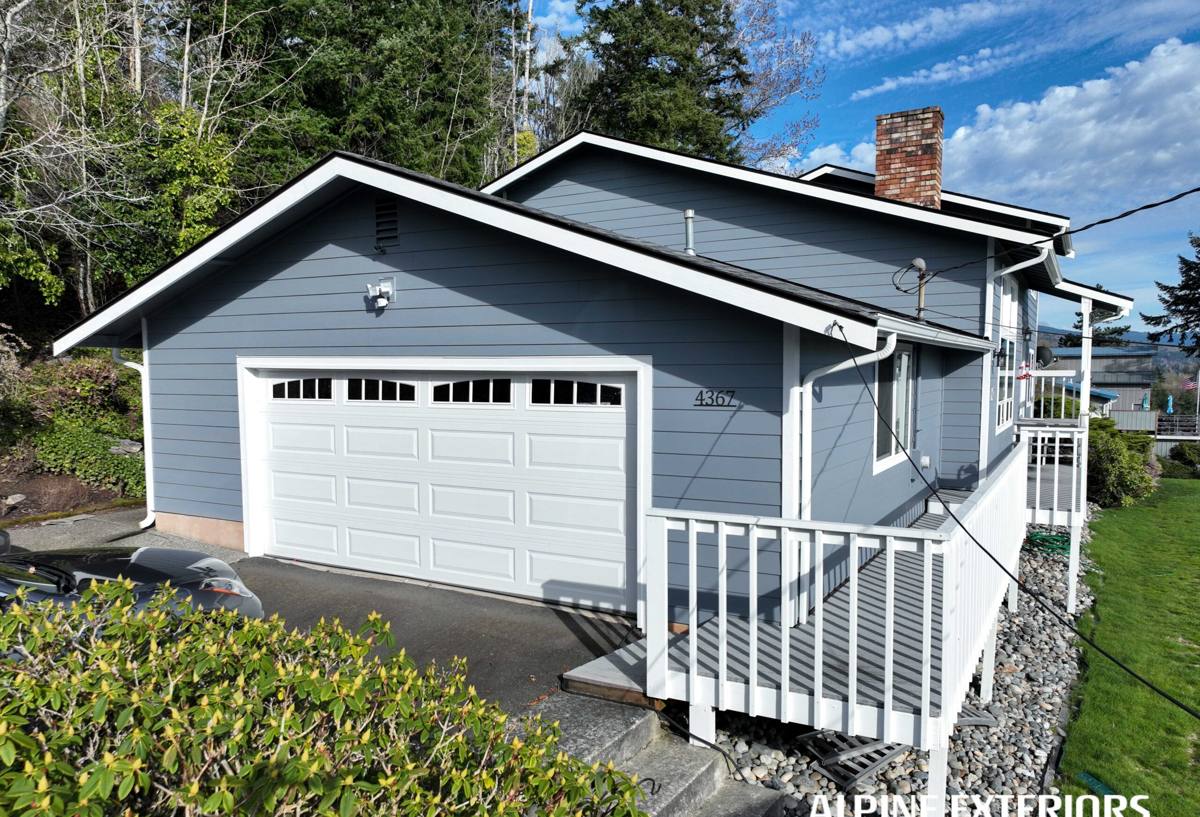
What Birchwood Homes Actually Need From a Shingle Roof
Moisture Management Comes First
The biggest threat to a shingle roof in this part of Whatcom County isn't wind or hail — it's sustained moisture. Shaded roof sections that don't get direct sun for days at a time stay damp longer, which is exactly what moss and algae need to take hold. A correct installation accounts for this from the deck up: proper attic ventilation so heat and humidity don't build up under the shingles, ice-and-water shield membrane at eaves and valleys where water concentrates, and a synthetic underlayment across the rest of the deck that won't degrade if it's exposed to moisture longer than expected during a wet install week.
Wind-Driven Rain Resistance
Rain here rarely falls straight down. When it's coming sideways off the Bay, water gets pushed up and under shingle edges, into nail lines, and around any flashing that's slightly loose. That means fastener placement and count matter more here than in calmer inland climates, and every flashing detail — chimneys, sidewall step flashing, valleys, plumbing boots — needs to be installed to shed water in a crosswind, not just in a straight-down rain.
Corrosion-Resistant Hardware
Salt air accelerates corrosion on any exposed metal — nail heads, flashing edges, drip edge, vent boots. It's a slow process, but over a 20-30 year shingle roof's life it adds up. We spec corrosion-resistant fasteners and flashing metals on homes in this area rather than treating it as an upgrade, because replacing rusted-through flashing on an otherwise sound roof is an avoidable repair.
Signs a Birchwood Roof Needs a Closer Look
Because the damage here tends to be gradual, most homeowners catch problems late. A few things worth checking, or asking us to check, before they turn into interior repairs:
- Dark streaking or green-black patches on north-facing or shaded slopes — early algae and moss growth, not just cosmetic
- Moss actually rooted between shingle tabs rather than just sitting on the surface
- Granules collecting in gutters or at downspout outlets — a sign shingles are wearing thin
- Shingle edges that look lifted, curled, or cupped, especially on the side of the roof that takes the worst weather
- Rusty streaking below flashing or vent boots
- Soft spots or discoloration on interior ceilings under valleys or chimneys
- Visible daylight or gaps around attic ventilation when viewed from inside the attic
Any one of these on its own might be minor. Two or three together usually mean it's time for a real inspection rather than a wait-and-see approach.
Shingle Options: What We Actually Recommend Here
Not every asphalt shingle is a good fit for a shaded, damp, coastal-influenced neighborhood. The table below reflects how we think about the tradeoffs for Birchwood specifically, not a generic national comparison.
| Shingle Type | Moss/Algae Resistance | Wind Rating | Best Fit For |
|---|---|---|---|
| Standard 3-tab | Low unless algae-resistant (AR) rated | Lower | Budget-driven projects on sun-exposed roofs |
| Algae-resistant (AR) laminate/architectural | High — copper-infused granules deter growth | Higher, class-rated | Most Birchwood homes, especially shaded roof planes |
| Impact-resistant (Class 4) laminate | High (AR-rated versions) | Highest | Homes with overhanging trees dropping limbs or debris |
For most Birchwood properties, an algae-resistant laminate shingle is the practical middle ground — it costs more upfront than a basic 3-tab but noticeably slows the moss and streaking problem that this climate causes, and it holds up better in wind. On lots with mature trees overhanging the roof, we'll also talk through impact-resistant options, since falling limbs and cones are a more realistic risk here than hail.
What Drives Cost on a Real Job
Every roof is different, but the honest cost factors on a Birchwood shingle replacement usually come down to a short list: roof size and number of layers to remove, pitch and difficulty of access, how much rotten decking gets uncovered once old shingles come off, how many penetrations (vents, skylights, chimneys) need new flashing, and which shingle tier you choose. We'd rather walk your roof and give you real numbers than quote a price range that doesn't mean anything for your specific house.
Our Installation Process
- Roof and attic assessment. We look at the shingles, decking, flashing, and attic ventilation together — not just the surface — because moisture problems in this climate usually start below the shingles.
- Tear-off and deck inspection. Old shingles come off, and we check the decking underneath for soft spots or rot, which is common on older Birchwood roofs that have carried moss for years.
- Deck repair as needed. Any damaged sheathing gets replaced before anything new goes down — covering rotten decking with new shingles just hides a problem that gets worse.
- Underlayment and ice-and-water shield. Synthetic underlayment across the field, with ice-and-water membrane at eaves, valleys, and other water-concentration points.
- Flashing. New corrosion-resistant flashing at every chimney, sidewall, valley, and penetration — reused flashing is a common source of leaks we get called out to fix on other people's work.
- Shingle installation. Installed to the manufacturer's nailing pattern and wind-rating requirements, with attention to exposure and alignment for a clean, even finish.
- Ventilation check. Ridge and soffit ventilation confirmed to be balanced and unobstructed, since poor attic airflow is what turns a good shingle roof into an early moss and moisture problem.
- Final walkthrough. We walk the finished roof and the property with you, including gutters and downspouts, before calling the job done.
Moss and Algae Maintenance Between Roofs
Even a well-installed roof in Birchwood benefits from periodic upkeep, because the tree cover and dampness that make this neighborhood pleasant to live in are the same conditions that grow moss. Keeping gutters clear so water doesn't back up under shingle edges, trimming back branches that keep a section of roof in permanent shade, and gently removing moss buildup before it roots into the shingle mat all extend a roof's life. We're straightforward with clients about this: a roof isn't a one-time purchase you can forget about for 25 years in this climate, it's a system that does best with occasional attention.
Why It Matters That We Already Work Birchwood
A shingle roof that's engineered for a dry inland climate and one that's engineered for Bellingham Bay's salt air, tree shade, and driving rain are installed differently, even if the shingle bundle on the pallet looks identical. A crew that regularly works this neighborhood already knows which roof orientations here hold moisture longest, which flashing details tend to fail first under wind-driven rain, and which shingle lines actually perform against moss rather than just claiming to. That's not something you can fully substitute with a generic install checklist — it comes from working on the same kind of roofs, in the same weather, repeatedly.
It also means we're not guessing about what your neighbors' roofs have already taught us. If a certain valley detail or vent placement causes problems on one Birchwood roof, we carry that lesson to the next one instead of learning it over again on your house.
Get a Straight Answer on Your Roof
If you're not sure whether your current roof needs a repair, a partial re-cover, or a full replacement, we're happy to take a look and give you an honest read — no pressure, no upsell. Use the form below to request a free estimate for your Birchwood home.