 Bellingham Roofing
 Windows in Barkley Face a Different Set of Demands
Barkley homes sit inside Bellingham's marine climate, and that means windows here work harder than windows almost anywhere inland. Whatcom County's proximity to the Salish Sea puts salt-laden air into constant contact with exterior trim, hardware, and glazing seals. Add in the region's long stretch of driving rain from fall through spring, plus a moss and moisture season that can run six months or more, and you have a climate that tests every seam, flange, and sealant joint a window has. A window that's rated fine for a dry inland climate can still fail early here if it wasn't installed with Pacific Northwest conditions in mind.
This page is specifically about window installation for homes in Barkley — not a general overview of windows everywhere. The moisture management details, flashing sequencing, and product choices below are the ones that matter for this particular pocket of Bellingham.
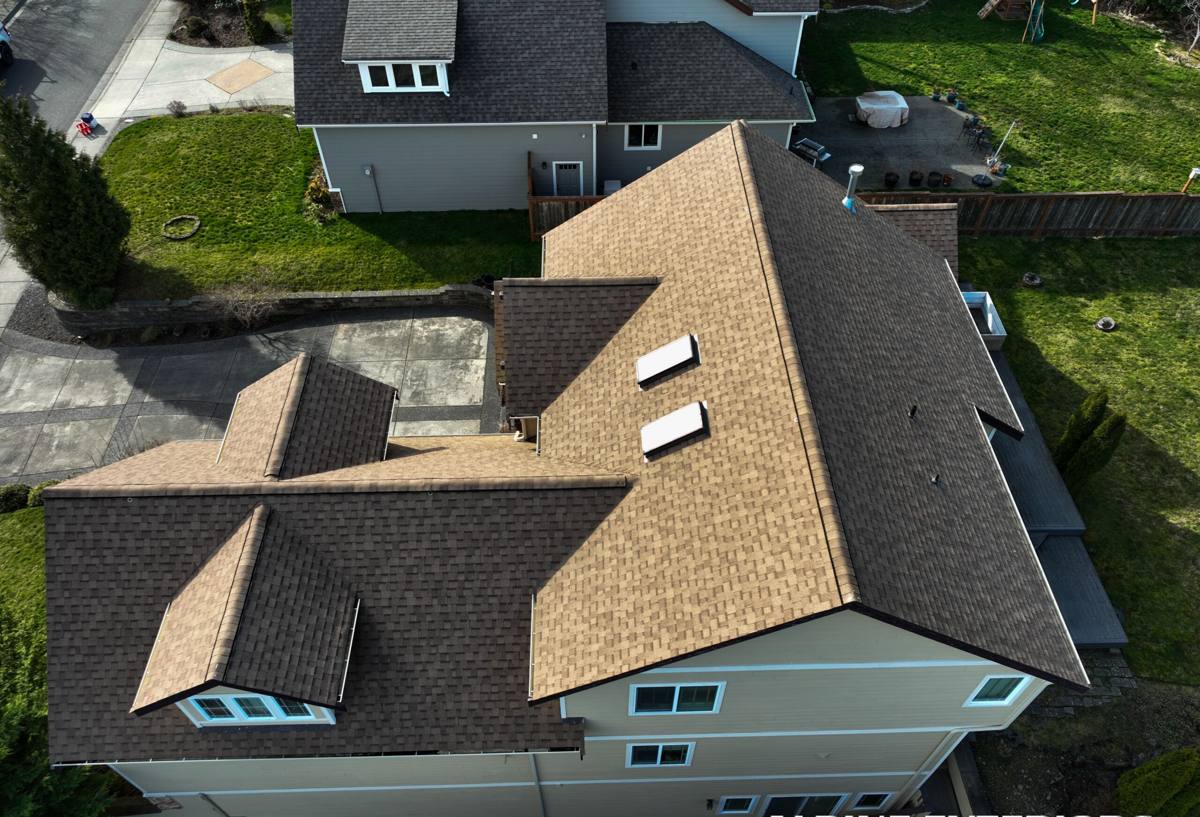
What Barkley's Climate Actually Does to a Window Opening
Salt Air and Hardware
Salt-carrying moisture accelerates corrosion on anything metal — window locks, hinges, screen frames, and especially cheaper mill-finish aluminum components. Over years, that corrosion can bind moving hardware or pit finishes even on windows that otherwise look fine from the curb. It's a slow process, which is exactly why it gets ignored until a window won't latch properly anymore.
Driving Rain
Bellingham's rain rarely falls straight down. Wind-driven rain hits window openings at an angle, which means it's testing the flashing and the water-resistive barrier behind the trim, not just the glass and frame. A window can be a perfectly good product and still leak if the opening underneath it wasn't flashed to shed water outward and downward, layer over layer, the way a shingled roof does.
Moss and Prolonged Damp
Whatcom County's long damp season keeps north- and shade-facing walls wet for extended stretches. That constant moisture is what lets moss and algae establish on siding and trim around window openings, and it's also what finds any gap in caulking or flashing and turns it into a slow rot problem in the framing behind the window. By the time staining or soft trim shows up on the inside, the damage underneath is often already established.
What a Correct Window Installation Involves
Replacing a window is not just pulling the old sash and dropping in a new unit. A proper installation for this climate follows a specific sequence, and skipping steps is exactly how leaks happen two or three years down the road, after the caulk line still looks fine.
- Remove the old window and inspect the framing, sill, and sheathing underneath for hidden rot or soft wood before anything new goes in
- Repair or replace any compromised framing — never install a new window over damaged structure
- Install or verify the water-resistive barrier and integrate it correctly with the window flange, shingle-style, so water sheds outward
- Set sill pan flashing to catch and redirect any water that gets past the primary seal, rather than letting it pool at the sill
- Set the window level, plumb, and square, and confirm proper shim placement so the frame isn't under stress that can crack seals over time
- Seal and flash the head and side jambs in the correct order — head flashing last, over the side flashing, never under it
- Insulate the gap between the frame and rough opening without overpacking, which can bow the frame
- Apply interior and exterior sealant at the appropriate joints only — sealing everything solid can trap moisture instead of letting it drain
- Test operation, locks, and weep holes before calling the job done
Every one of those steps matters more in Bellingham than it would in a dry climate, because there's more water testing the assembly, more often, for more months of the year.
Choosing Materials That Hold Up in Barkley
Frame material and glazing package both affect how a window performs against salt air, rain, and prolonged dampness. There's no single "best" answer for every home — it depends on exposure, budget, and how the rest of the house is built — but here's how the common options generally compare in this climate.
| Frame Material | Salt Air / Corrosion Resistance | Moisture Behavior | Maintenance |
|---|---|---|---|
| Vinyl | Very good — no metal hardware exposed to corrode | Doesn't absorb moisture or rot | Low — occasional cleaning |
| Fiberglass | Excellent — dimensionally stable, resists pitting | Very stable through wet/dry cycles | Low |
| Wood (clad exterior) | Good if cladding is intact; interior wood needs protection | Vulnerable if the clad seal ever fails | Higher — watch seams and finish |
| Aluminum (uninsulated) | Prone to corrosion and pitting near the coast over time | Poor thermal and condensation performance in a wet, cool climate | Moderate to high |
For most Barkley homes, we lean toward vinyl or fiberglass for their consistent long-term performance against salt air and moisture without demanding much upkeep. Where a homeowner wants a wood interior for appearance, a quality clad exterior can still work well — the key is making sure that cladding and its seal are genuinely sound, since a compromised clad seal is harder to catch early than a problem on an all-vinyl or all-fiberglass unit. We'll walk through the honest trade-offs for your specific exposure rather than pushing one product across the board.
Glazing and Weatherstripping
Dual-pane, low-E glazing is the practical standard for this region — it manages condensation and heat loss reasonably well without the added cost of triple-pane, which is rarely necessary in Bellingham's moderate coastal temperatures. Good compression weatherstripping, not just a foam strip, matters more here than in drier climates because it's fighting wind-driven rain, not just air infiltration.
Our Process for a Barkley Installation
- On-site assessment — we look at each opening individually, checking exposure direction, existing trim and siding condition, and any signs of past moisture issues before recommending anything.
- Product and scope walkthrough — we go over frame material, glazing, and installation scope in plain terms, including what we expect to find once old windows come out.
- Removal and inspection — old units come out carefully, and we inspect the framing before proceeding. If we find rot or damage, we'll show you and explain the repair before moving forward, not after the fact.
- Flashing and installation — full flashing sequence, proper shimming, and correct sealant placement as outlined above.
- Final check — operation, hardware, and weatherproofing are tested before we consider the job complete.
Why a Crew That Already Works Barkley Matters
Window installation done wrong doesn't usually show itself right away. A poorly flashed opening can look perfect for a year or two before water finds its way into framing that's now hidden behind new trim. A crew that regularly works Barkley and the surrounding Bellingham neighborhoods has already seen how this specific climate — the salt exposure, the driving rain angles, the long moss season — plays out on real homes over years, not just at installation. That experience shows up in small decisions: how much flashing overlap to use, where to add extra sealant versus where to leave a drainage path open, which trim details tend to trap moisture on this type of home. It's the difference between a window that's installed and a window that's installed correctly for where it actually sits.
Signs Your Current Windows May Be Failing
- Fogging or condensation between panes, indicating a failed seal
- Soft or discolored trim and sill areas, especially on shaded or north-facing walls
- Windows that are difficult to lock, latch, or slide smoothly
- Visible gaps, cracked caulk, or daylight around the frame
- Drafts or noticeably cold spots near the window in winter
- Musty smell or staining on interior walls below or beside a window
Any one of these on its own isn't necessarily an emergency, but in a climate like this, catching them early is what keeps a window problem from becoming a framing problem.
Cost Factors Worth Understanding
Window installation pricing varies based on a handful of factors, and it's worth knowing them before comparing quotes so you're comparing like for like.
| Factor | Why It Affects Cost |
|---|---|
| Frame material chosen | Vinyl, fiberglass, and clad wood carry different material costs |
| Existing framing condition | Rot repair discovered during removal adds labor and material |
| Number and size of openings | More or larger windows mean more flashing, labor, and material |
| Access and site conditions | Second-story or hard-to-access windows take more time and equipment |
| Existing siding and trim work | Whether trim needs to be removed and reinstalled or rebuilt affects scope |
We won't quote a firm number without seeing the openings in person, but we're happy to talk through general ranges and what typically drives cost up or down for a project like yours.
Ready for an Honest Look at Your Windows?
If you're noticing drafts, sticking hardware, fogged glass, or just want a second opinion on windows that are getting older, we're glad to take a look. Fill out the form below for a free, no-pressure estimate — we'll assess your Barkley home's specific exposure and give you a straight answer on what it actually needs.