 Bellingham Roofing
 Storm Damage in Barkley: What Whatcom County Weather Actually Does to a Roof
Barkley sits close enough to Bellingham Bay that salt-laden air is a constant factor on roofing materials, and far enough into the Pacific Northwest storm track that wind-driven rain and winter windstorms show up every season. That combination is harder on a roof than either factor alone. Salt air accelerates corrosion on fasteners, flashing, and metal roofing panels. Driving rain finds any gap in a roof's defenses and pushes water sideways, not just down, which is why storm damage here often shows up as a leak nowhere near the actual point of failure. And Whatcom County's long, damp moss season means a roof that's already carrying moisture and organic growth has less resilience left when a real storm event hits.
None of this means Barkley roofs are unusually fragile. It means storm damage repair in this neighborhood has to account for conditions that are different from, say, a drier interior climate where a roof only has to shed water straight down. A repair that doesn't respect that reality tends to fail again in the next storm cycle.
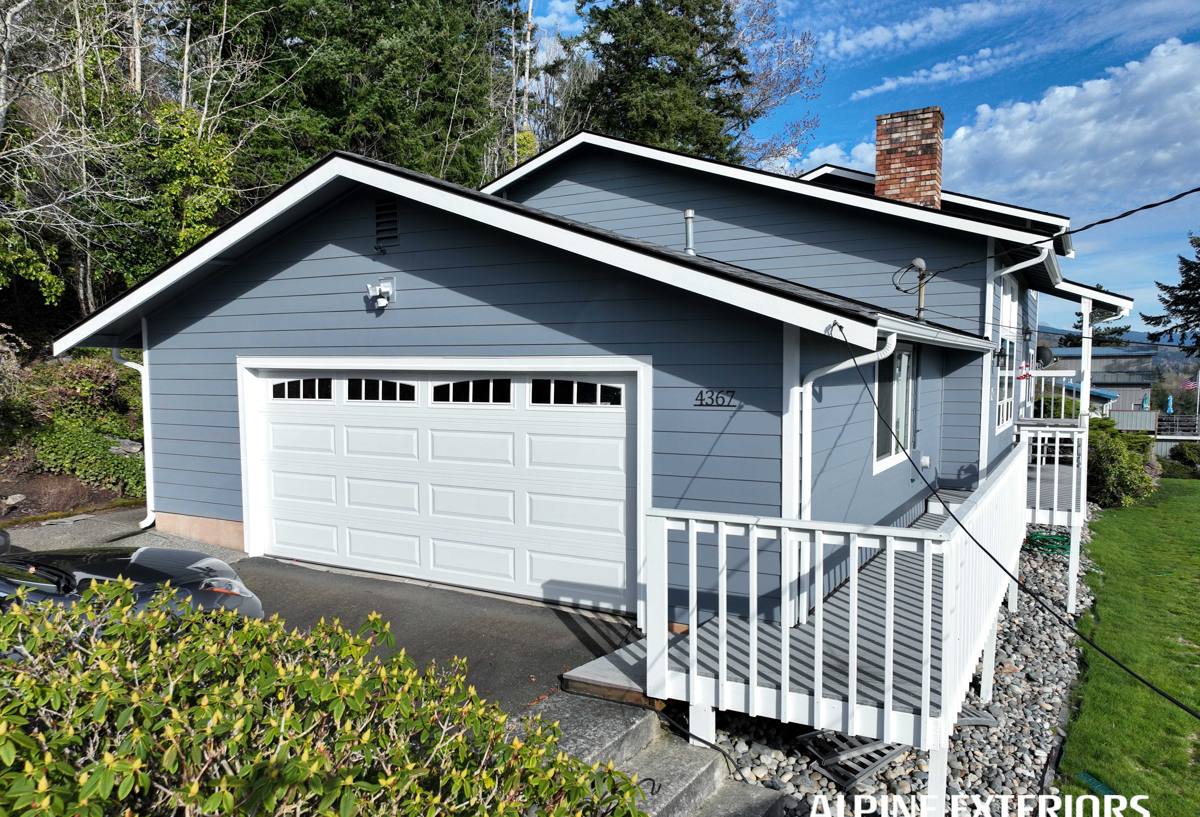
What Actually Counts as Storm Damage
Homeowners often assume storm damage means a visibly missing section of roofing, but most of what we find after a windstorm or heavy rain event in Barkley is less obvious than that.
Common storm damage we see
- Shingles lifted or creased by wind, sometimes without any pieces actually blowing off — the seal is broken even though the shingle is still in place
- Flashing around chimneys, vents, and roof-to-wall transitions worked loose by repeated wind loading
- Debris impact damage from branches or cones, especially on roofs under mature tree cover
- Granule loss on asphalt shingles from driving rain and hail-adjacent impact, which shortens the shingle's remaining life even without a leak yet
- Water intrusion at ridge caps and hip lines where wind uplift is strongest
The tricky part is that several of these can exist for months without an interior leak showing up. A broken shingle seal or a loosened piece of flashing doesn't always leak on the first rain after the storm — it leaks on the third or fourth rain, once wind has had more chances to drive water underneath. That's the main reason we recommend a roof gets looked at after a significant wind event, not just after someone notices a stain on a ceiling.
Why an Inspection Matters Even When Nothing Looks Wrong
Barkley is an established neighborhood with a good amount of mature tree cover, which is a mixed blessing for roofs. Trees provide shade and reduce some UV degradation, but they also mean more debris fall during wind events and more shaded, damp roof sections where moss gets a foothold faster. A roof that looks fine from the ground can have lifted shingle tabs, compromised flashing, or granule loss that's only visible up close.
We inspect the whole roof system after storm damage is suspected — not just the section a homeowner points to. That includes checking valleys, flashing, penetrations, and the attic side where accessible, because that's where early water intrusion actually shows up first, often well before any ceiling stain.
What a Correct Storm Damage Repair Involves
Not every storm-damaged roof needs the same scope of work. A correct repair matches the fix to the actual extent of damage, rather than defaulting to the most expensive option or, just as bad, patching over damage that's more extensive than it looks.
| Damage Type | Typical Cause | Correct Repair Approach |
|---|---|---|
| Lifted or creased shingles, seal intact | Wind uplift without full detachment | Re-seal or replace individual shingles; check surrounding tabs for hidden lift |
| Missing shingles | High wind gusts, aged or poorly sealed roofing | Match and replace affected shingles; inspect underlayment for exposure damage |
| Damaged or loosened flashing | Wind loading, corrosion from salt air over time | Re-secure or replace flashing; re-seal transitions with proper materials, not just caulk |
| Debris impact (branch, cone strike) | Wind-driven falling debris from overhead trees | Localized shingle and, if needed, decking repair at the impact point |
| Widespread granule loss | Repeated driving rain and wind abrasion over years | Full roof section evaluation for remaining service life, not a single-shingle fix |
| Active interior leak | Any of the above, undetected for a period of time | Trace the water path to its actual entry point before repairing — the leak location and the damage location are often different |
That last point is worth repeating: the spot where water shows up inside a house is very often not the spot where it's getting in. Chasing the visible symptom instead of the actual entry point is the single most common reason a "repaired" roof leaks again.
Our Storm Damage Repair Process
1. Inspection and documentation
We walk the roof and document what we find with photos, both for your records and for insurance if you're filing a claim. This includes noting damage that isn't yet causing a leak but will if left alone.
2. Temporary protection if needed
If a roof has active exposure — missing shingles, exposed decking, a compromised area during an active weather pattern — we get it tarped or otherwise protected before the next rain, rather than leaving it exposed while paperwork gets sorted out.
3. An honest scope of repair
We tell you what actually needs to be fixed and what doesn't. If a roof section has enough cumulative wear that a repair is only a short-term fix, we'll say so plainly rather than repairing it as if it were a new roof.
4. The repair itself
Matching materials as closely as possible, correct flashing technique at transitions, and proper fastening for our wind exposure — not just visually plausible patchwork.
5. Follow-up
After a repair, especially one tied to an insurance claim, we're available to answer questions if anything comes up in the next storm cycle.
Insurance and Storm Damage: What to Know Going In
Many storm damage repairs in Barkley are filed as insurance claims, and the process goes more smoothly when the documentation is thorough from the start. A few things worth knowing:
- Adjusters work from what's documented — clear photos of the specific damage and its likely cause matter more than a general description
- Not all storm-related roof wear qualifies as a covered event; a roof that was already near the end of its service life may have a claim reduced or denied for pre-existing wear, and we'll tell you honestly if that's what we're seeing
- Getting a professional assessment soon after a storm, rather than weeks later, makes it easier to connect the damage to the specific weather event
- We can provide documentation to support a claim, but the claim itself is between you and your insurer — we won't inflate a scope of work to chase a bigger payout
Preventing Repeat Damage Between Storms
A storm damage repair is only half the job if the underlying conditions that made the roof vulnerable aren't addressed. In Barkley's climate, that mostly comes down to moisture management and debris control.
- Keep gutters and downspouts clear so wind-driven rain has somewhere to go besides under the shingles
- Address moss growth before it lifts shingles or holds moisture against the roof deck through the wet months
- Trim back branches that overhang the roof, both to reduce impact risk and to cut down on shaded, damp areas that grow moss faster
- Have flashing and seals checked periodically, since salt air corrosion is gradual and easy to miss until it fails
- Get a post-storm check after any significant wind event, even if nothing looks obviously wrong from the ground
Why a Crew That Already Works Barkley Matters
A roofer who knows this specific stretch of Bellingham knows what its storms typically do — which direction the prevailing wind-driven rain usually comes from, how much salt air exposure to expect this close to the bay, and how aggressive moss growth gets under the tree cover common in this neighborhood. That local pattern recognition speeds up diagnosis and helps us catch damage that an outside crew unfamiliar with Whatcom County conditions might miss on a quick look. It also means faster response when a storm passes through and several homes in the same area need attention at once.
If you've had storm damage — or you're not sure but want a roof checked after a recent windstorm — we're happy to take a look. Fill out the form below for a free, no-pressure estimate.