 Bellingham Roofing
 Roof Repair in Barkley: What This Climate Does to a Roof
Barkley sits inside the same weather pattern that shapes every roof in this part of Bellingham and Whatcom County: salt-tinged air drifting in from the water, rain that gets driven sideways more often than it falls straight down, and a moss season that runs long enough to settle into any roof plane that stays shaded or damp for weeks at a time. None of that shows up as a dramatic failure overnight. It shows up as a slow accumulation — a flashing seam that finally lets go, a shingle edge that's been lifting a little more with each windstorm, a patch of moss that's been quietly holding moisture against the roof deck since last fall.
That's the specific reality behind most roof repair calls we get in Barkley. The roof usually isn't failing everywhere at once. It's failing at one or two specific points, and the job is finding those points, understanding why they failed, and fixing them correctly — not just patching the symptom and hoping it holds through the next wet season. Barkley also has a real mix of housing stock — older roofs that have already been through several decades of this cycle, and newer roofs that haven't faced their first real test yet — and what a repair needs to address often depends on which situation you're in.
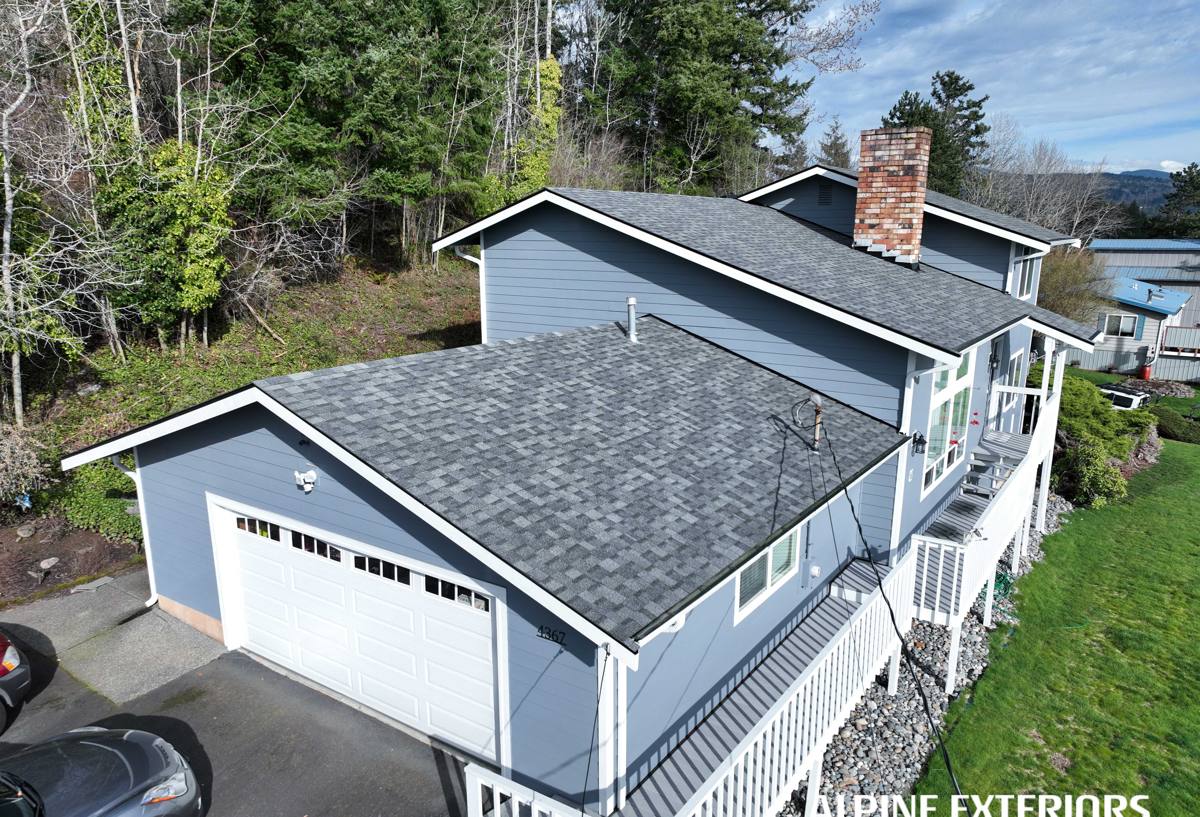
Where Barkley Roofs Actually Fail First
After years of repair work in this area, the failure points tend to repeat themselves. Understanding where a roof is likely to fail first makes it easier to know what to ask a contractor to check, and why a "just patch it" approach so often comes back as a second, more expensive repair.
Flashing and Roof Penetrations
Valleys, chimneys, skylights, vent pipes, and the transitions where a roofline meets a wall are where most leaks in this region actually start — not in the open field of shingles. Flashing metal that's undersized, poorly lapped, or simply caulked over instead of properly integrated with the underlayment is the single most common repair we find behind an interior water stain.
Moss and Trapped Moisture
Shaded and north-facing roof planes hold moisture long after the rest of the roof has dried out, and that's exactly the condition moss needs to take hold. Left alone, moss doesn't just look bad — it lifts shingle edges as it grows, holds water against the roof surface, and can work its way into seams that were otherwise sound, turning a cosmetic issue into a real leak path over a season or two.
Wind-Lifted or Damaged Shingles
Driving rain in this area is almost always paired with wind, and wind finds any shingle edge that isn't sealed down properly or that's aged past the point where its factory adhesive still holds. Once a shingle starts lifting at a corner, rain gets pushed underneath it during the next storm instead of running off, and the damage spreads from there.
Repair or Replace? How to Tell the Difference
Not every roof problem in Barkley calls for a full replacement, and not every leak can be reliably fixed with a repair. The honest answer depends on how localized the damage is, how the roof's remaining materials are holding up, how old the roof already is relative to its expected lifespan, and whether the problem you're seeing is an isolated failure or a symptom of the whole roofing system wearing out at once.
| Roof Condition | Usually Points To |
|---|---|
| One or two isolated leaks, roof under 15 years old | Targeted repair |
| Localized flashing failure at a single valley or penetration | Targeted repair |
| Widespread granule loss, curling shingles across multiple planes | Full replacement usually more cost-effective |
| Repeated leaks in different locations over a year or two | Sign the roofing system itself is failing, not just one spot |
| Soft or spongy decking found during inspection | Replacement, at least in that section |
We won't recommend a full replacement when a properly done repair will genuinely hold — that's not how we want to run a job. But we'll also tell you honestly when a repair is just going to buy a short amount of time on a roof that's already past the point where patching makes sense, because that ends up being the more expensive path in the long run.
What a Correct Roof Repair Actually Involves
A roof repair that actually lasts through Barkley's wet season takes more than swapping out the shingles that are visibly damaged. It starts with understanding why the failure happened in the first place.
Diagnosis Before Patching
Interior water stains rarely show up directly below the leak — water travels along rafters and sheathing before it drips somewhere visible. A real diagnosis means getting on the roof and, where possible, into the attic to trace the actual path of the water, not guessing based on where the ceiling stain happens to be.
Matching Materials and Technique
A repair section needs to tie into the surrounding roof correctly — matching shingle profile and exposure, integrating new flashing with the existing underlayment rather than laying it on top, and re-fastening to the same wind-resistance standard the rest of the roof was built to. A repair that doesn't match the surrounding system just creates a new weak point at the edge of the patch.
Not Just Caulk and Tar
Sealant has a place in roofing, but it's a short-term fix when it's used to cover a flashing or fastening problem instead of correcting it. Caulk and roofing cement break down under UV exposure and repeated wet-dry cycling, and a repair that relies on them as the primary defense tends to need redoing within a season or two, right as the next round of driving rain arrives.
Cost Factors for a Barkley Roof Repair
Roof repair costs vary more than people expect, mostly because "repair" covers a wide range of actual scope, from a single re-sealed flashing detail to a section of the roof that needs to be opened up and rebuilt. Understanding what drives the number helps you evaluate an estimate instead of just comparing a single total.
| Factor | What It Affects |
|---|---|
| Size and number of affected areas | Labor time and material quantity |
| Roof pitch and accessibility | Staging, safety equipment, and time on the roof |
| Extent of deck damage found underneath | Whether sheathing needs replacing before that section is re-roofed |
| Flashing scope | How much of the repair involves rebuilding flashing versus shingle work alone |
| Shingle availability and matching | Whether the existing shingle is still in production or a close match is needed |
| Moss or debris removal required first | Added labor before the actual repair work can begin |
An honest repair estimate should walk through these factors specifically, not just quote a flat number for "roof repair." If a contractor can't explain what's driving the cost of your particular repair, that's worth asking about directly before you sign anything.
How Our Repair Process Works
We keep the repair process straightforward, because a leak is already stressful enough without an unclear timeline on top of it. We also build reasonable flexibility into scheduling, since wet-season delays are a normal part of working in this region rather than an excuse we reach for after the fact.
- In-person inspection: We get on the roof and into the attic where possible to trace the actual source of the problem, rather than estimating from the ground or from photos.
- Honest diagnosis: We explain what we found, why it happened, and whether a targeted repair or a broader fix makes more sense for your specific roof.
- Written estimate: You get a clear scope covering exactly what will be repaired, what materials will be used, and what it costs — before any work starts.
- The repair itself: Flashing, underlayment, and shingles are integrated with the surrounding roof to the same standard as new construction, not patched over with sealant alone.
- Final check: We confirm the repair is holding and walk you through what we did before we consider the job finished.
Why Hiring a Crew That Already Works in Barkley Matters
A crew that regularly repairs roofs in and around Barkley has already seen how salt air speeds up corrosion on undersized flashing, how wind-driven rain finds the one shingle edge that isn't sealed down, and which roof orientations hold moss longest through the wet months. That's the kind of knowledge that shows up in the small decisions made on the roof itself, not in a sales pitch beforehand.
It also matters after the repair is done. A repair warranty only means something if the company behind it is still around and reachable a year or two later, not a crew that worked the area briefly and moved on. An established, ongoing presence in Whatcom County is part of what makes a workmanship warranty worth something in practice, not just on paper — and it means a faster response if a repair needs a second look after a hard storm.
A Practical Checklist Before You Hire Someone to Repair Your Roof
- Do they physically inspect the roof and attic, or quote from a description over the phone?
- Does the estimate explain what caused the leak, not just what they plan to patch?
- Does the repair scope include flashing and underlayment work where needed, not shingles alone?
- Do they carry current WA contractor licensing, liability insurance, and workers' compensation?
- Will they tell you honestly if a repair won't hold and a larger fix is the more sensible option?
- Is there a clear workmanship warranty on the repair itself, separate from any material warranty?
Signs Your Barkley Roof Needs Repair Now
Most roof problems give warning signs before they turn into an active leak inside the house. Catching them early is usually the difference between a modest repair and a much larger one.
- Water staining on ceilings or in the attic, especially near valleys, chimneys, or vent penetrations
- Visible moss buildup on shaded or north-facing roof planes
- Shingles that are curling, cracking, or lifting at the edges
- Granules collecting in gutters or at downspout outlets
- Daylight visible through the roof deck from inside the attic
- A musty smell in the attic that wasn't there before, which often points to trapped moisture
If any of this sounds familiar, it's worth having the roof looked at before the next stretch of heavy weather rather than waiting for the leak to show up somewhere you can see it.
If you're dealing with a leak or a roof that's showing its age in Barkley, we're glad to come take an honest look and put together a written estimate with no pressure attached. Use the form below to request a free estimate.