 Bellingham Roofing
 Asphalt Shingle Roofing Built for Barkley's Weather
Barkley sits close enough to Bellingham Bay to catch the salt-tinged air rolling in off the water, and far enough into Whatcom County's tree cover to stay shaded and damp for long stretches of the year. That combination is hard on a roof. Salt-laden moisture accelerates corrosion on exposed metal fasteners and flashing, tree cover keeps shingles from drying out between storms, and the region's long, driving rain events push water into every gap a roof leaves open. An asphalt shingle roof done right in Barkley isn't just about picking a shingle color — it's about details that hold up specifically to this climate.
We've worked on homes throughout this part of Bellingham long enough to know which corners get skipped on a rush job and which ones actually cause callbacks two winters later. This page covers what a correctly built asphalt shingle roof looks like here, what our process involves, and why it matters to hire a crew that already knows the neighborhood.
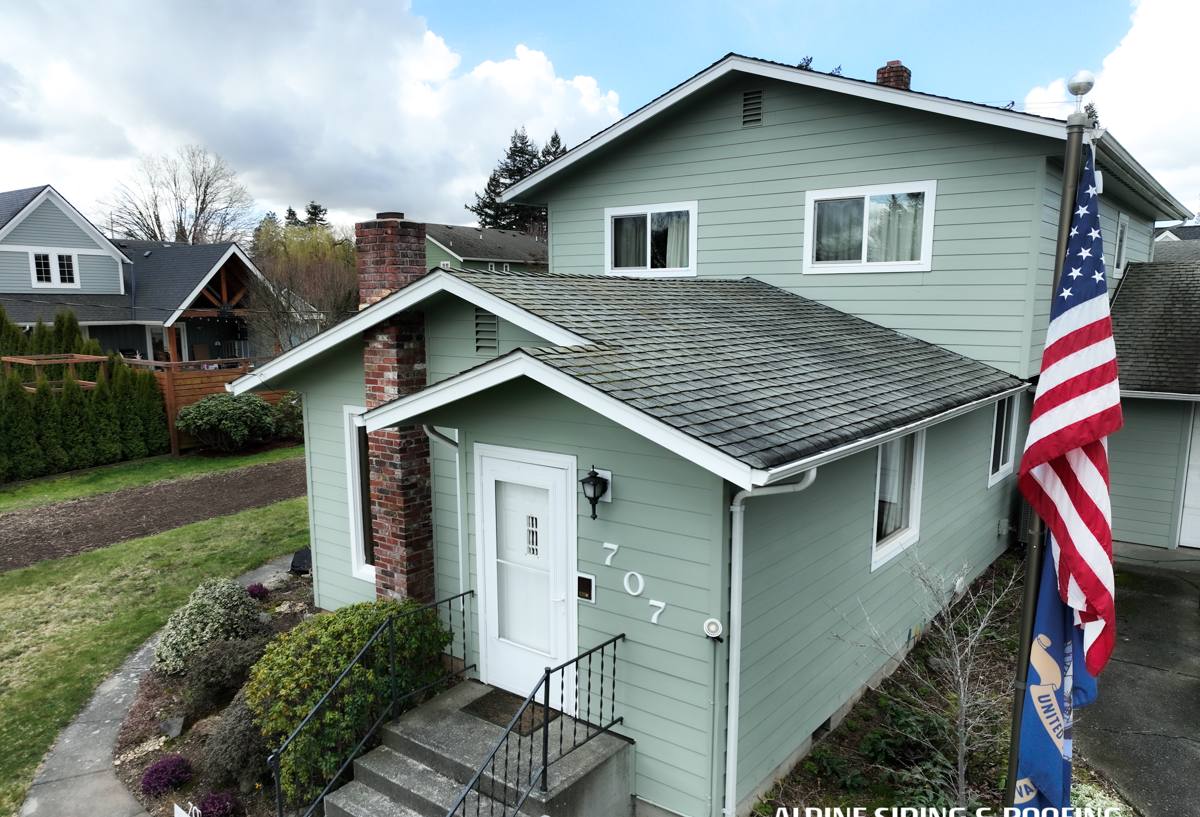
Why Barkley's Climate Is Tougher on Roofs Than It Looks
Salt Air and Metal Fatigue
Homes closer to the water deal with airborne salt that settles on roofing metal — nail heads, flashing, vent stacks, and gutter hardware. Over years, that salt exposure speeds up corrosion on lower-grade fasteners and thin flashing. It's not dramatic or sudden; it's a slow weakening that shows up as rust streaks, pinhole leaks around penetrations, or flashing that's gone brittle at the edges.
Driving Rain
Bellingham doesn't just get rain — it gets wind-driven rain that comes in at an angle instead of falling straight down. That matters for roofing because it pushes water sideways under shingle tabs, into exposed nail lines, and up under poorly lapped flashing. A roof that would be fine in a calmer climate can leak here if the underlayment, flashing laps, and shingle nailing pattern aren't built with that sideways pressure in mind.
Extended Moss Season
Shade from mature trees plus consistent moisture gives moss a long growing window in this area — often most of the year, not just a few wet months. Moss holds water against the shingle surface, works into the granule layer, and can lift shingle edges as it grows. Left unaddressed, it shortens the useful life of a roof well before the shingles themselves would otherwise wear out.
What a Correctly Installed Asphalt Roof Includes Here
A shingle roof is a system, not just a layer of shingles nailed to plywood. For Barkley homes, we pay particular attention to:
- Ice-and-water shield or high-quality synthetic underlayment at eaves, valleys, and around every penetration — not just where code requires the minimum
- Corrosion-resistant flashing and fasteners, especially on homes with any bay-facing exposure
- Proper shingle nailing pattern and nail placement, since improperly placed nails are one of the most common causes of early wind and rain damage
- Balanced attic ventilation, so moisture from inside the home doesn't add to what the shingles are already dealing with from outside
- Valley and step flashing detail work sized for sideways-driven rain, not just vertical runoff
- Drip edge and gutter apron installed to move water fully off the fascia instead of behind it
None of this is unusual or specialty work — it's simply doing the standard details correctly and choosing materials suited to a wetter, shadier, saltier microclimate than you'd find further inland.
Shingle Choices That Make Sense for This Area
Asphalt shingles vary quite a bit in how they handle moisture and algae growth over time. For Barkley, we generally steer homeowners toward shingles with algae-resistant granules, since the long moss and moisture season here gives algae and moss more opportunity to take hold than in drier parts of the state. We also weigh wind ratings more heavily than we might in a more sheltered inland location, given the exposure some Barkley lots get.
| Factor | Why It Matters in Barkley |
|---|---|
| Algae-resistant granules | Reduces (does not eliminate) how fast moss and algae take hold given the area's shade and moisture |
| Wind rating | Driving rain often comes with gusting wind; a stronger wind rating helps tabs stay sealed |
| Warranty structure | Some manufacturer warranties reduce coverage without proper ventilation or if algae-resistant products aren't used in high-moss regions — worth reading before you pick a shingle |
| Color and heat absorption | Less critical here than in sunnier climates, but darker shingles can help shed light moss growth slightly faster by drying quicker between rains |
We're happy to walk through specific shingle lines and their trade-offs during an estimate — the right choice depends on your roof's sun exposure, slope, and how much tree cover surrounds the house.
Our Process for Barkley Roofing Projects
1. On-Site Inspection
We walk the roof (weather permitting) and check the attic from inside, since ventilation and moisture problems often show up there before they're visible on the surface. We look at flashing condition, moss coverage, granule loss, and the state of the decking underneath.
2. Honest Assessment
We'll tell you plainly whether you're looking at a full replacement, a repair, or a maintenance plan to buy more years out of the current roof. We don't upsell a replacement when a repair is the honest answer.
3. Written Estimate
You get a clear, itemized estimate — materials, labor, and scope — before any work starts. No vague allowances or surprise change orders for work we should have scoped up front.
4. Installation
Old roofing is removed, decking is checked and repaired where needed, underlayment and flashing go in first, then shingles. We follow manufacturer nailing specs, not shortcuts, since that's what keeps warranties valid and roofs sealed against wind-driven rain.
5. Cleanup and Walkthrough
We clear debris and nails from the property and walk the finished roof with you so you know what was done and what to expect going forward, including any moss-prevention steps worth keeping up with.
Repair, Maintenance, or Full Replacement?
Not every roof in Barkley needs a full tear-off. Common scenarios we see:
- Isolated leak or damaged flashing: Often a targeted repair, especially if the shingles elsewhere are still in good shape and under 15 years old
- Heavy moss with otherwise sound shingles: Careful moss removal and treatment, plus a look at ventilation and tree exposure, can extend the roof's remaining life
- Widespread granule loss, curling, or multiple past repairs: Usually a sign the roof is near the end of its service life and full replacement is the more cost-effective path long-term
- Persistent leaks despite past patch jobs: Sometimes the underlying underlayment or flashing system has failed broadly enough that patching keeps treating symptoms rather than the cause
We'll give you our honest read on which category your roof falls into rather than defaulting to the most expensive option.
Maintenance That Actually Extends Roof Life Here
Given how long the moss season runs in this part of Whatcom County, a bit of regular upkeep goes further here than in drier climates:
- Keep gutters clear so water isn't backing up under the lower shingle courses
- Trim back overhanging branches where practical to reduce shade and debris buildup on the roof surface
- Have moss treated (not power-washed, which can strip granules) before it spreads across large sections
- Schedule a walk-through inspection every couple of years, especially after a particularly wet or windy winter
Why Hire a Crew That Already Works in Barkley
A roofing crew that mainly works drier, more exposed parts of Washington may not think twice about moss-resistant granules, extended underlayment coverage, or corrosion-resistant fasteners near the water — because their usual jobs don't demand it. Working regularly in Bellingham and the surrounding Whatcom County communities means we build these details in as standard practice, not as an upsell. We also know how local permitting and inspection expectations run, which keeps projects moving without avoidable delays.
If you're comparing quotes, it's worth asking any contractor directly how they handle underlayment coverage, fastener material, and moss-resistant shingle options for a home in this specific area. The answers tell you a lot about whether they've actually accounted for the climate or are quoting a generic install.
Get a Free, No-Pressure Estimate
If your roof in Barkley is showing moss buildup, granule loss, aging flashing, or you simply want a second opinion before committing to a repair or replacement, we're glad to take a look. Use the form below to request a free estimate — there's no obligation, and we'll give you a straightforward assessment of what your roof actually needs.