 Bellingham Roofing
 Why York Homes Need a Metal Roof Built for This Climate
York sits close enough to the water and the weather patterns that roll in off Bellingham Bay that roofing decisions here can't be made the same way they'd be made in a drier, inland part of Whatcom County. Salt-laden air, long stretches of driving rain, and a moss season that can run most of the year all put steady pressure on a roof. Metal roofing, installed correctly, handles that pressure better than most other options — but "installed correctly" is doing a lot of work in that sentence. A metal roof is only as good as the underlayment, flashing, fastening, and ventilation details underneath it, and those details matter more in a climate like ours than almost anywhere else in the state.
This page covers what metal roofing specifically means for homes in York: what the local climate actually does to a roof over time, what a correct installation looks like, how our process works from first look to final walk-through, and why familiarity with this specific neighborhood's housing stock and exposure makes a real difference.
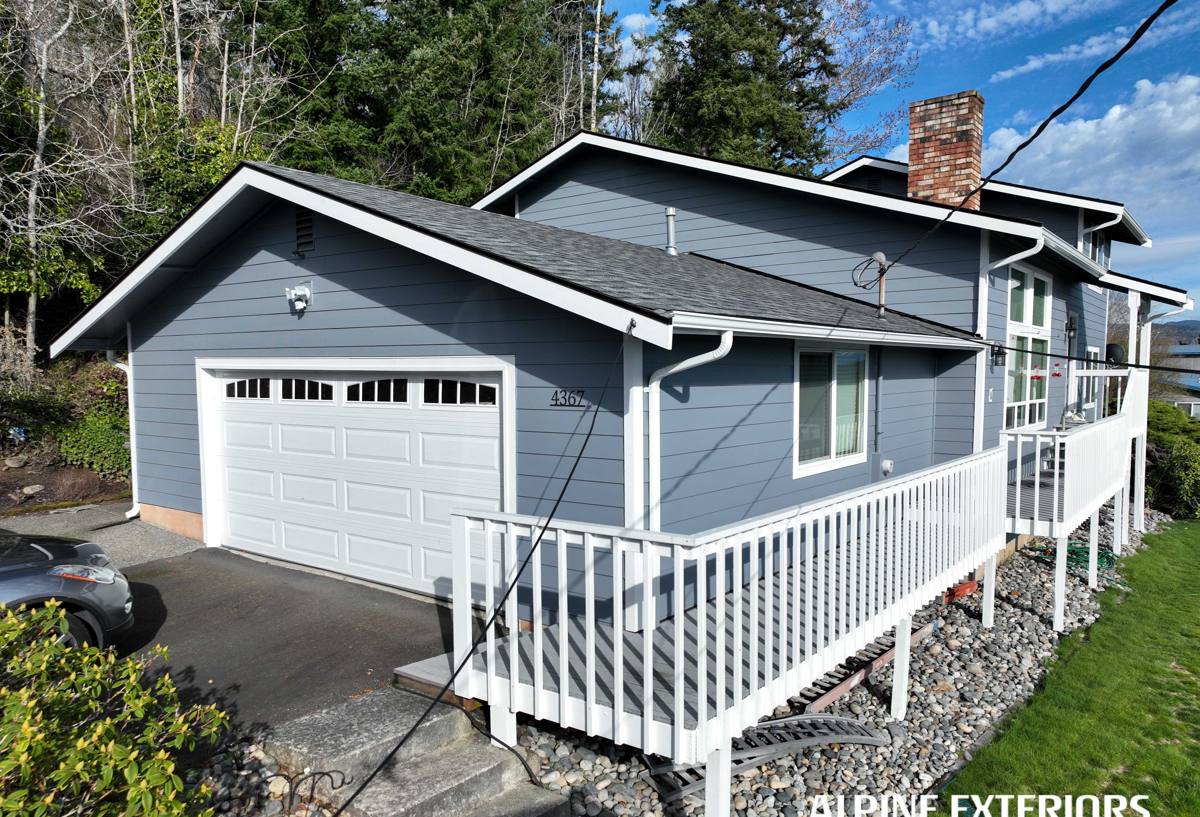
What Salt Air, Rain, and Moss Actually Do to a Roof Here
Every roofing material in Whatcom County is fighting the same three things, just in different proportions depending on how close a home sits to the water and how much shade it gets.
Salt Air and Corrosion
Homes in York that catch airborne salt off the bay see accelerated corrosion on any exposed metal — fasteners, flashing, gutters, and lower-grade roofing panels included. This isn't a dramatic, fast process; it's slow surface oxidation that, over years, weakens fastener heads, discolors uncoated edges, and eventually opens small paths for water. The fix isn't avoiding metal roofing — it's specifying the right coatings and fastener grades for a coastal-influenced environment from the start.
Driving Rain and Wind-Driven Water
Bellingham doesn't just get rain, it gets rain pushed sideways by wind off the water, which means water finds its way under laps, around penetrations, and behind flashing that would stay dry in a calmer climate. A roof here has to be detailed assuming water will reach places a manufacturer's minimum spec doesn't fully account for.
Moss and Organic Growth
Shade from mature trees, combined with near-constant moisture for much of the year, gives moss and algae exactly what they need to take hold. On asphalt shingles, moss lifts tabs and traps moisture against the roof deck. On metal, the risk is different but not zero — moss and debris can build up in valleys, around low-slope transitions, and in areas with poor water shed, holding moisture against seams and fasteners longer than the roof was designed to tolerate.
Choosing the Right Metal Roofing System for York
"Metal roofing" isn't one product — it's a category, and the right choice depends on the home's roofline, budget, and how much low-maintenance performance the owner wants over the next few decades.
| System | How It's Fastened | Best Fit | Trade-Offs |
|---|---|---|---|
| Standing seam | Concealed clips, no exposed fasteners on the field | Homes wanting maximum longevity and minimal maintenance | Higher upfront cost, requires a skilled installing crew |
| Exposed-fastener panel | Screws driven through the panel face | Budget-conscious projects, outbuildings, simpler rooflines | Fasteners and washers need periodic inspection and eventual replacement |
| Metal shingle/shake panels | Interlocking panels, fasteners concealed or semi-concealed | Homes wanting a traditional look with metal's durability | More seams and details than standing seam, so installation quality matters even more |
For York homes specifically, we lean toward recommending standing seam or well-detailed interlocking panel systems on primary roofs, because the concealed-fastener design removes the single biggest long-term weak point in a salt-air, high-rain environment: exposed screw penetrations. Exposed-fastener panels aren't wrong for every application — they're a legitimate, cost-effective choice for garages, shops, and secondary structures — but on a primary residence taking direct weather off the bay, we explain the maintenance trade-off honestly before recommending one.
What a Correct Metal Roof Installation Involves
A metal roof looks simple from the ground — panels, seams, done. What actually determines whether it lasts 40+ years or starts leaking in year eight happens in layers most homeowners never see.
Deck Inspection and Prep
Before any panel goes down, the existing roof deck needs to be checked for soft spots, delamination, or moisture damage — especially on older York homes where a prior roof may have trapped moisture for years without visible signs indoors. Any compromised sheathing gets replaced, not covered over.
Underlayment and Moisture Barrier
In a climate with this much wind-driven rain, we don't treat underlayment as an afterthought. A high-temperature, self-adhering synthetic underlayment at eaves, valleys, and penetrations gives the roof a real second line of defense if wind ever pushes water past the panel seams — which, over decades on a coastal-exposed home, it eventually will.
Fasteners, Flashing, and Edge Detail
This is where salt air does the most damage if it's skipped. We specify corrosion-resistant fasteners rated for coastal exposure, not general-purpose hardware. Flashing at valleys, chimneys, skylights, and wall transitions gets formed and layered so water sheds over each piece in sequence, never relying on sealant alone to do a metal detail's job. Sealant fails eventually; correct lapping and mechanical flashing don't depend on it.
Ventilation
Metal roofs perform best with balanced intake and exhaust ventilation. Poor ventilation traps moisture in the attic, which condenses against the underside of the deck — a problem that shows up as rot and mold long before it ever shows up as a visible roof leak. We check and correct ventilation as part of every metal roof project, not as an upsell.
Our Process for a York Metal Roofing Project
- On-site assessment. We walk the roof, check the deck and attic where accessible, and look specifically at exposure — how much direct salt air and wind-driven rain that particular roofline takes.
- System recommendation. Based on the roofline, budget, and exposure, we recommend a panel system and coating, and explain the trade-offs plainly rather than steering toward the most expensive option by default.
- Written estimate. A clear, itemized estimate covering materials, tear-off (if needed), underlayment, flashing, and labor — no vague allowances.
- Tear-off and deck repair. Old roofing comes off, the deck is inspected, and any damaged sheathing is replaced before anything new goes down.
- Underlayment and flashing installation. The moisture barrier and all flashing details go in first and get inspected before panels are installed over them.
- Panel installation. Panels are installed to manufacturer spec with corrosion-resistant fasteners appropriate to our coastal exposure.
- Final walk-through. We walk the finished roof with the homeowner, review the work, and go over basic maintenance expectations for the specific system installed.
Cost Factors for Metal Roofing in York
Every roof is different, so we don't quote a flat number without seeing the job — but the main variables that move cost on a York metal roofing project are consistent:
- Roof size and pitch — steeper or more complex rooflines take more labor and material to detail correctly.
- Panel system chosen — standing seam typically costs more upfront than exposed-fastener panel systems.
- Tear-off scope — whether the old roofing and any damaged decking need to be removed and replaced.
- Number of penetrations and transitions — chimneys, skylights, and multiple roof planes all add flashing work.
- Coating and gauge — heavier-gauge metal and higher-grade coatings cost more but hold up longer against salt air.
- Ventilation corrections — adding or fixing intake/exhaust venting as part of the project.
We walk through these factors with every homeowner before finalizing a scope, so there are no surprises between the estimate and the invoice.
Maintenance: Keeping Moss and Salt Air From Shortening Roof Life
Metal roofing needs far less maintenance than shingles, but "far less" isn't "none," especially this close to the water. A little attention once or twice a year goes a long way:
- Clear leaves, needles, and debris from valleys and low-slope transitions before they hold moisture against seams.
- Check gutters and downspouts for clogs that can back water up under eave flashing.
- Look for moss or algae staining in shaded valleys and address it before it spreads.
- Watch for any fastener heads showing early corrosion or backing out, particularly on exposed-fastener systems.
- After major windstorms, do a visual check for lifted flashing or displaced panels.
- Trim back overhanging branches that keep sections of the roof shaded and damp longer than the rest.
Why a Crew That Already Works in York Matters
Roofing crews who work across a wide mix of climates tend to default to manufacturer minimums, because minimums are what works most places. York doesn't get "most places" weather — it gets sustained salt exposure, sideways rain, and a moss season that punishes shortcuts. A crew that already works this neighborhood knows which details need to be upgraded past the minimum spec before the first panel ever goes on, and knows what this particular housing stock — the roof pitches, the tree cover, the age of typical decking — tends to need. That familiarity shows up less in the sales pitch and more in the parts of the job nobody sees once the panels are on: the flashing laps, the fastener grade, the underlayment coverage at the eaves.
Signs a York Home May Be Ready for a New Metal Roof
A few signs are worth a professional look sooner rather than later:
- Visible rust or corrosion on an existing metal roof's fasteners or panel edges
- Persistent moss buildup in valleys that keeps returning after cleaning
- Interior water stains after wind-driven rain events specifically, not just heavy rain in general
- Daylight visible through the roof deck from inside the attic
- A roof approaching or past the manufacturer's expected service life for its material and coating
None of these mean a roof needs replacing tomorrow, but they're worth an honest assessment rather than waiting for a leak to force the decision.
If you're in York and thinking about a metal roof — whether it's a full replacement or you just want a straight answer on what your current roof needs — we're happy to take a look and put together a free, no-pressure estimate. There's a form below to get that conversation started.